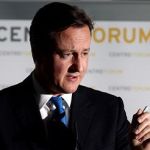
Ed miliband

Johnson resigns as Shadow Chancellor

From our UK edition

James Kirkup is reporting a rumour that Alan Johnson is to resign. More to follow. UPDATE: He has resigned. Sky News is reporting that Johnson has gone for personal reasons. That may be so - and because of the timing (the government was having the day from hell until ten to five this evening) I suspect that it is - but it will be a hard line to hold, given Johnson's fraught tenure and his very public disagreements with a leader he didn't back in the first place. A serious problem for Miliband, then, just as his fledgling leadership was beginning to pick up after Oldham.

A soporific session

From our UK edition

Labour are on the up. They strolled Oldham. They’ve recruited great armies of Clegg’s defectors. And they’d win a majority if a general election were held tomorrow. There’s been a lot of excited talk in Westminster about Tom Baldwin, Labour’s new communications attack-dog, coming in with his fangs bared and sharpening up their tactics. Well, it ain’t working so far, if PMQs is anything to go by. Ed Miliband had his dentures in today. He was humourless, slow to react and sometimes inaudible. His questions didn’t resemble even the most basic PMQs battle-plan, namely, a pre-meditated onslaught culminating in a simple powerful message presented in a memorable one-liner.

PMQs live blog | 19 January 2011

From our UK edition

VERDICT: No winners, and no real losers, from this week's PMQs. Miliband's questions were insistent and straightforward. Cameron's answers were forceful and, in themselves, fairly persuasive. A no-score draw, then, if you want to look at it like that. There were one or two worrying leitmotifs for the coalition, though. First, the PM's tendency towards grouchiness under fire; far less pronounced than it was last week, but still present. And then the continuing absence of any clear explanation of the NHS reforms, beyond "well, we had to change what was there previously." The PM has a point about cancer survival rates and the like, but he's not yet setting out how the coalition's policies will make a difference. 1230: And that's it. My quick verdict shortly.

Miliband can’t credibly complain about both inflation and growth

From our UK edition

Today’s shocking inflation figures have sparked a fascinating debate. I laid out my take earlier, and I thought CoffeeHousers may appreciate a different perspective. Matthew Hancock MP is a member of the Public Accounts Committee, former economist at the Bank of England and former chief of staff to George Osborne. Fraser Nelson. Last week, growth. This week, inflation. Ed Miliband is complaining about both. But the trouble is: the two can’t be taken in isolation. For the main weapon against inflation is for the Bank of England to raise interest rates. Yet the main weapon to support growth is for the Bank of England to keep interest rates lower for longer. You can’t credibly complain about both.

Laws: the 50 percent rate should be abolished asap

From our UK edition

David Laws has penned a robust defence of the coalition’s economic policies for The Guardian. He points out that the big dividing lines in politics are on the economy and then goes onto say: 'Ed Miliband is betting that economic recovery will be derailed, and while trying to reconcile many divergent views in his party, he has generally taken the position that cuts should be delayed and that high tax rates (including the 50% tax rate) should be retained. Ed is getting all the big economic decisions wrong, and leading his party into an economic policy cul-de-sac.

Dorrell: I have reservations about the Health Reforms

From our UK edition

Stephen Dorrell, the former Health Secretary and current Chairman of the Health Select Committee, and Chuka Umanna appeared on the Daily Politics to debate Lansley’s latest reforms. Judging by this interview, Dorrell’s reservations seem to be of the constitutional rather than institutional variety. And Umanna avoided the question about whether these reforms have their genesis in the Blair/Milburn era, which suggests that Ed Miliband will denounce yet more of Blair’s record in the quest to detoxify his party’s brand.

Labour may be doing alright, but Miliband is still dodgy on the public finances

From our UK edition

Ed Miliband's leadership may be young, but his trickery on the public finances is already well worn. We got it all in his interview with Andrew Marr earlier – and then some. There was the claim that Labour "paid down the debt" (that I dealt with here). There was the claim that Labour's spending was responsible (my response here). And there was a straight-up lie about Miliband's forecast for a double-dip. So far, so Brown. What caught my ear, though, was this exchange: Andrew Marr: I mean Tony Blair said in his memoir that by 2005, he was worried that the party was spending too much. And Alistair Darling said actually it was about 2007, he was worried that the party had been spending too much - before the crash happened.

Breaking the curious silence on upcoming tax changes

From our UK edition

This week, Nick Clegg added his name to the fast-growing list of politicians addressing the critical question of living standards. His phrase of choice was ‘alarm clock Britain’, in effect his version of Ed Miliband’s ‘squeezed middle’. It is, of course, a clunking label for what is a serious topic (hardly the first time a politician has achieved such a feat). But quibbles over terminology aside – and as Miliband’s article on Friday confirmed – these are the first serious shots in the political battle to frame the coalition’s crucial March Budget.

How it’s going right for Ed Miliband

From our UK edition

Ed Miliband has had three launches in three months – but, much as I hate to admit it, things are getting better for him. His party are now consistently ahead in the polls, so in my News of the World column today I look at what’s going right. Here are my main points: 1) Cameron’s embrace has, alas, proved toxic for the Lib Dems. I have been impressed by Nick Clegg since he entered government. I’d like to see him rewarded for the tough decisions he took, and in more ways than being named ‘politician of the year’ by the Threadneedle/Spectator awards. But it just isn’t happening. The ‘merger’ model of coalition that they have chosen (as opposed to the Holyrood model used in Scotland in 1999-07) has robbed them of their identity.

Miliband in denial

From our UK edition

Did he get cold feet? Or was his new spin-team overenthusiastic in their pre-briefing? We were told we'd get an apology from Ed Miliband in today's speech, but instead he entrenched himself in his position that Labour did nothing wrong on the deficit. I'm surprised at this decision. Surely Ed Miliband understands, as his Shadow Chancellor understands, the central importance to an opposition party of economic credibility. That credibility will not return while Miliband bases his economic argument on a denial of the facts. First, and critically, he argues that Britain's deficit was not a problem going into the crisis. Not only is this disputed by an impressive array of domestic and international experts, from Tony Blair to the European Commission and Mervyn King.

Miliband’s compliment to Thatcher

From our UK edition

Ed Miliband’s speech today contained an interesting compliment to Margaret Thatcher. He said that the challenge for Labour now was to ‘change the common sense of the age’ as the Tories had done in the 1970s. Miliband’s argument is that Labour need to articulate an entirely new political economy. As he put it,’ we can’t build economic efficiency or social justice simply in the way we have tried before.’ What I find interesting about Miliband is that he trying to move the centre ground from opposition, something than no one has done successfully since Thatcher. Both Blair and Cameron moved towards it in opposition and only tried to shift it in government.

Is Labour really back in the game?

From our UK edition

The Oldham East and Saddleworth by-election now raises the distinct possibility that Labour could win the next election by default. People on the left have been wondering for some time what could unite the multiple and often contradictory tribes of the Labour Party and it looks like “Tory cuts” and “Lib-Dem broken promises” could do the trick. Simple, crude, disingenuous – perfect. Krishnan Guru-Murthy is half-right when he tweets “paradoxically, real danger may be for Labour...if they conclude they are 'back in the game' already”. Collectively (and morally) this is true. But the bizarre situation we find ourselves in is that the electorate remains unconvinced by Ed Miliband and yet his party is trouncing the coalition in the polls.

Miliband talks the language of cuts

From our UK edition

Much of Ed Miliband's Grand Confession on the economy is wearily familiar. I mean, we've known his take on the deficit for some time: that the drop in tax receipts from a crumbling financial sector was to blame, rather than Brown's spending. And to have him argue that Labour should have made the economy less dependent on the City is just another way of saying exactly the same thing. But there is something new in there, too. Miliband is set to admit that Labour didn't "talk the language of cuts" soon enough. Not that he's saying Labour should have – or still should – cut deeper and faster, mind. It's simply that Brown and his ministers didn't breath the c-word early enough.

A shock for Dave

From our UK edition

Wow. Dave had a real wobble at the start of PMQs today. Ed Miliband stood up, looking as mild as a puppy, and asked about the ‘tip’ of two million quid recently paid to the boss of Lloyds. ‘In opposition,’ said Ed, ‘the prime minister promised, “where the tax-payer owns a large stake in a bank, no employee should earn a bonus of over £2,000”.  Could he update us on how he’s getting on with that policy?’ He was already seated when the first peals of laughter echoed around the chamber. Dave had stood up but he didn’t speak. Nothing came out. Silence seemed to have mastered him for a micro-second.

An ill-tempered exchange

From our UK edition

The first PMQs of the year was a bad tempered affair. The Prime Minister had clearly decided that attack was the best form of defence, hurling insult after insult across the despatch box. He accused Ed Miliband of being a ‘nothing man’, told him that his Shadow Chancellor can’t count and that he doesn’t count and mockingly brought up Miliband’s brother. But Cameron didn’t do anything to politically detoxify the bonus issue, which is going to carry on haunting this government, note that Lloyds — partly state owned — is going to award its boss a £2million pound bonus.

PMQs live blog | 12 January 2011

From our UK edition

VERDICT: Woah. If you ever needed a PMQs to brush away the last morsels of festive cheer, then this was it. Every question and answer came laced with some sideswipe or other, and it made for a scrappy exchange between the two party leaders. Both struck blows against each other, but both were also guilty of errors and mis-steps. Miliband squandered an easy attack on bankers' bonuses, even allowing Cameron to turn it back against Labour. While, for his part, the Prime Minister was so relentlessly personal that it came across as unstatesmanlike. I don't think either one really emerged victorious, or well, to be honest. It was simply unedifiying stuff. 1230: And that's the end of the first PMQs of 2011 - and what a heated one it was, too. My verdict shortly.

Illsley’s untenable position

From our UK edition

After David Chaytor's conviction last week, the dominoes just keep on tumbling. Today, it was Eric Illsley's turn to confess to his expenses-related sins – and he did so by pleading guilty to three "false accounting" charges in Southwark Crown Court. Given that he's still MP for Barnsley Central – although now as an independent, rather than the Labour MP he was elected as – that makes him the first sitting parliamentarian to face sentencing as a receipt offender. A dubious accolade, to be sure. In terms of day-to-day politics, the next question is whether Illsley will be able to hang on to his seat. He could, theoretically, remain in place if his sentence is under a year's jail time.

Mixed attitudes towards the cuts

From our UK edition

Forget the voting intentions, the real action in YouGov's latest poll comes in the supplementary results. There, as Anthony Wells suggests, are attitudes towards spending cuts that will both perturb and hearten the coalition. Let's take the bad stuff first: "Asked if the government’s cuts will be good or bad for the economy only 38% now think they will be good, compared to 47% who think they will be bad. In comparison between October and December last year it was roughly even between people thinking the cuts would be good and those thinking they would be bad. On whether the cuts are being done fairly or unfairly, 57% now think the cuts are being done unfairly, again the highest we’ve shown so fair.

Ed Miliband’s Tartan Roots

From our UK edition

At some point it seems wise to suppose that Ed Miliband isn't playing any devious or subtle long game and that, far from being baffling, his public pronouncements are probably a pretty reasonable guide to what he actually, truly believes. And he really doesn't think that Labour made any significant errors while in office. Surpluses are for wimps; real men run deficits even in boom times. In this, as in so much else, Miliband rejects Tony Blair's analysis and sides with his old mentor Gordon Brown. Fair enough. Iain Martin finds this perplexing, not least from any electoral/political perspective and he's right. Miliband's views are touchingly old-fashioned. So much so, in fact, that perhaps he's in the wrong parliament. He'd be quite at home at Holyrood.

Johnson running out of his nine lives

From our UK edition

Ed Miliband's press conference today was a classic example of clever opposition politics. He and Alan Johnson said that Labour would continue the bonus tax on the banks for one more year. This policy has the twin advantage of maximising the coalition's discomfort over the whole issue of bankers' bonuses and expiring well before the next election. The rest of Miliband's press conference was devoted to an attempt to defend the record of the previous Labour government. Miliband kept making the valid point that in the years before the crash Cameron and Osborne weren't saying that Labour was spending too much but were instead committed to matching Labour's spending plans.