Ed miliband

What’s Labour’s alternative to the Big Society?

From our UK edition

After a difficult few weeks for the Big Society, culminating in Liverpool’s nakedly political ‘withdrawal’ from the vanguard projects, Peter Oborne has already drafted an obituary for the Conservative's policy agenda.   As Oborne says, the Big Society goes to the heart of this government’s reason for existence, and its (real or perceived) failure would damage the Conservatives. But it's notable Labour has yet to come up with an alternative to the Big Society, or even a substantive critique of the idea. The problem for Miliband is that the Big Society agenda captures the centre ground of social policy – neither pro nor anti-state – and risks sidelining his party.

Clegg stands up for deficit reduction

From our UK edition

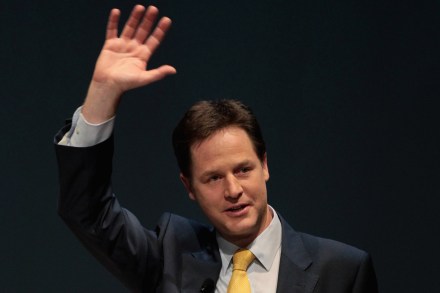
Cleggologists will mark down the Deputy PM's speech today as a typical effort. There was basically nothing in it that was new – but Clegg still put it across with more punch, and more persuasively, than most of his colleagues could manage. All of the slogans and pre-announced policies added up to something that sounded, fleetingly, like a plan for growth. Although we'll still have to wait for Vince Cable's review to see the outlines of that plan shaded in. Clegg's main point was straightforward enough: that the government has to, and will, go beyond deficit reduction to stoke the embers of the British economy. He then ranged across everything from the national infrastructure to – a theme of this week – endowing the British workforce with skills.

Miliband angles for the youth vote

From our UK edition

For those who don't have the inclination to delve behind the paywall, Ed Miliband's interview with the Times can be summarised in four words: think of the children. Yep, the Labour leader is out a-courting the youth vote – and who, really, can blame him? The recent student protests have made Westminster's strategists realise that these people aren't apolitical after all. It was inevitable that someone would try to reach out to them. The problem for Miliband is that he doesn't really have a prospectus to offer. He rattles off three familiar policies – a graduate tax (of uncertain design, and even more uncertain worth), votes at 16, more apprenticeships – but concentrates on simply attacking what the government is doing.

Coffee House interview: Julian Astle

From our UK edition

Open any mass-circulation newspaper and you will find plenty of insider's information about the Tory party. But precious little is known about their coalition partners, the Liberal Democrats. After decades in the political wilderness, most editors reasoned that it wasn't really worth their while finding out what the party thought. After all, what difference did it make?   Well, times have changed. What the party thinks, what it does, and, crucially, what it won't do, really does matter. So to help us here at Coffee House, Julian Astle, a friend of the Lib Dem leadership and director of CentreForum, the liberal think tank, has agreed to answer a few questions.

As the oldest parliament yawned, the oldest civilisation erupted

From our UK edition

One yawn every minute. That’s how PMQs felt today. Foreign affairs dominated the session as Ed Miliband and the Prime Minister exchanged lofty words about the Cairo demonstrations and the spread of democracy around the world. Doubtless they felt they struck a suitably elevated tone but to the viewers they came across as a pair of prep school smart-alecs trying to sound like great statesmen disposing of liberated peoples after the fall of empires. Egypt and Afghanistan were both treated to a torrent of high-minded vacuities. David Cameron found the demonstrations ‘incredibly moving.’ Ed Miliband was impressed by the sight of ‘hundreds of thousands of people facing overwhelming odds to ask for their democratic rights.

Consensus reigns over PMQs

From our UK edition

A very different PMQs this week: six questions on foreign affairs and almost total consensus between Cameron and Miliband. Miliband’s office had given No 10 advance warning of the topics they wanted to raise and the two agreed on pretty much everything. Miliband argued that ‘the best route to stability is through democracy.’ Cameron agreed but stressed that democracy means more than just elections. You get the picture. At the risk of disagreeing with Pete, I must say that the exchanges were a reminder of just how dull PMQs would be if it was not confrontational.

PMQs live blog | 2 February 2011

From our UK edition

VERDICT: What a refreshing change that was. After several weeks of Punch 'n' Judy rivalry, the two party leaders finally put down their batons and stumbled upon a new way to do it. Much of the credit must go to Ed Miliband, for asking pacific questions about Egypt and Afghanistan in the first place. But credit, also, to Cameron, for answering them in a straightforward and statesmanlike manner. The rest of the House, for its part, was stunned into silence by this peculiar scene. Some of the blood rushed back into proceedings with the backbench questions, and as Cameron directed attacks at Ed Balls, but this must still go down as the most decourous PMQs in recent memory. Less spice, more meat – not a bad trade-off in this case.  1231: And that's it.

Ten points about the Ed Balls interview

From our UK edition

Ed Balls gets personal in his interview with the Times (£) today, but not in the way you might expect. For most of the piece he dwells on what the paper calls his "hidden vulnerability" – the effort to contain his stammer. And from there on, the politics seems a touch softer than usual. There are surprisingly few overt attacks on his opponents, and those that make the cut are considerably less violent that we're used too. Which isn't to say that the interview lacks politics. No sirree. Here's a ten-point selection of some of the political highlights (so to speak), with my added comments:      1) Doubling back on a double dip.

The Limits of Hefferism. (And of Ed Miliband)

From our UK edition

Anthony Wells sifts through IPSOS Mori's latest poll: For David Cameron, 30% of people like both him and his party, 39% like neither. 17% like Cameron but not his party, 7% like the Conservatives but not Cameron. Hence, in total Cameron is liked by 47% of people (down 6 since before the election) and the Conservatives by 37% (down 1) – while Cameron’s likeability has dropped somewhat since the election, he is still viewed considerable more positively than the party he leads. Emphasis added. Like everyone else, I'm an admirer of Simon Heffer's style (and he is sound on cricket too) but it might be worth remembering that his pro-Conservative, reliably anti-Cameron position seems to be a minority view that should not be thought more widespread than it seems to be.

The Lib Dems reject Ed Miliband’s overtures (again)

From our UK edition

What a joy it is to watch Ed Miliband contort and twist so that he can offer a hand of friendship to the Lib Dems. It has been a three-act show, so far. First, during the Labour leadership contest, he described the Lib Dems as a "disgrace to the traditions of liberalism," adding that, "I can see the death of the Liberal party to be honest". Then, he said that he would actually work with those dying Liberals, but only if they ditched Nick Clegg first. And then today, in an interview with the Independent, he suggests that Clegg might be able to stay on, after all. As turnarounds go, this one is predictable and sensible - but it's no less amusing for that. The Lib Dem response has once again come from Tim Farron; almost certainly for the same reasons as before.

This Ed’s no Goliath

From our UK edition

Ed Milliband took up his position at PMQs today flanked by Caroline Flint and Ed Balls. Between a rock and a hard face. His proximity to so many colleagues who wish him ill can hardly have helped his performance. He was like a stale doughnut. Layers of stodge surrounding a hole in the air.   His battle-plan wasn’t entirely useless. He wanted to tempt the prime minister into foolish speculation about the causes of last quarter’s poor growth figures. Cameron stood up and admitted that the numbers were pretty lousy whether the weather were blamed or not. And that whether-the-weather left Miliband completely stuffed.

PMQs live blog | 26 January 2011

From our UK edition

VERDICT: Ed Miliband had it all, going into today's PMQs: weak growth figures, the uncertain demise of control orders, rising youth unemployment, and more. And yet, somehow, he let most of it go to waste. Barely any of his attacks stuck – or, for that matter, stick in the mind – and Cameron rebuffed them with surprising ease. It helped that the Prime Minister seemed more comprehensively briefed than usual, with a decent compliment of statistics, and one or two sharp lines, at his disposal. (Although, measuring by the Labour cheers, I doubt he will thank Jacob Rees-Mogg for invoking Thatcher immediately after his exchange with the Labour leader.) In the end, a victory for Cameron – although that won't defuse the issues that Miliband should have detonated.

Brown takes the opportunity to peddle his “global growth plan”

From our UK edition

As Iain Martin and Guido have noted, Ed Balls – and, for that matter, Ed Miliband – could probably have done without Gordon Brown hovering from the political graveyard to cast judgement on today's growth figures. But hover he has, as the above video of his appearance on CNBC News testifies. It's almost as though he wants to remind people that his spirit lives on in Labour's rearranged top team. As for the content of his interview, it was stodgy mix of the arguments in his recent book and the attacks that Balls was making earlier. "Europe and America, but particularly Europe," he said, "are now implementing policies that are more reminiscent of the 1930s, than reminiscent of the lessons we should have learnt from previous decades.

Ed Balls is Having a Good Day

From our UK edition

Well, the government would have done better to read Fraser's response to the fall in GDP before they went and blamed much of the 0.5% decrease on the inclement weather. Cue "Wrong kind of snow" jokes everywhere. And, frankly, Tories would be laughing all the way to the nearest TV studio had Gordon Brown ever suggested something similar. Better, surely, to agree that the figures are disappointing but stress that they are the first and therefore somewhat provisional numbers that may well be revised in due course. Not a great line to sell but some days you take a beating and just make things worse by trying to wriggle out of it. But what this shows, I think, is how Labour have benefited from Mrs Alan Johnson's adventures.

Re-introducing Ed

From our UK edition

We already knew Ed Balls was behind Gordon Brown’s economic policy. He devised the policy on spending that left Britain with the worst deficit heading into the crisis, and wrote the bank regulations that his colleague Douglas Alexander attacked earlier today.   What we have discovered today, from Balls’ first foray into economic policy as Shadow Chancellor, is that he was also behind the old Brown ploy of twisted facts and absurd assertions.   First, he claimed the public finances are better than the Treasury forecast. Yet the independent Office for Budget Responsibility found that the structural deficit – the hole we have to fix - was worse than Labour admitted.

And what about the Lib Dems?

From our UK edition

After the gales of recent weeks, the past few days must have been relatively blissful for the Lib Dems. No fake constituents with hidden dictaphones. No massive student protests. No especial focus on their opinion poll ratings. But, instead, a mephitic heap of problems, or at least embarrassments, for Labour and the Tories. Warsi, Johnson, Coulson, even EMAs – Clegg & Co. have been spared the worst of it. Which isn't to say that the Lib Dems will be unaffected by recent events. For instance, as Paul Goodman suggests, Andy Coulson's departure unsettles the delicate balance of the coalition – and that will always have ramifications, however minute, for the yellow half of it. Yet it's the rise of Balls that may prove more significant for the Lib Dems.

How things are different now that Balls is shadow chancellor

From our UK edition

The timing could hardly have been more resonant. On the day that Tony Blair is paraded, once again, in front of the Iraq Inquiry, Team Brown is firmly back in charge of the Labour party. For, I'm sure you've noticed CoffeeHousers, three of the four great shadow offices of state are occupied by former members of the Brown coterie: Ed Miliband, Ed Balls and Yvette Cooper. The fourth belongs to someone who doesn't sit easily in either half of the TB-GB divide: Douglas Alexander. The question, of course, is what this means for Labour's economic policy. And the answer according to Miliband is "nothing much". The Labour leader has been keen to stress that his party's fiscal plans remain largely unchanged by Balls' ascension.

Johnson story takes another turnĀ 

From our UK edition

Both The Mail and The Sun are running on their front pages that Alan Johnson’s wife is allegedly having an affair with his bodyguard. There are, though, other rumours referenced in other papers. The Tory view this evening is that they now face a tactically harder fight but a strategically easier one. They fully expect Balls to snap at Osborne’s ankles more effectively than Johnson did. But they think that Balls’ previous on the economy and his oft-expressed views on a double dip and the Darling plan will help them overall. One thing worth noting this evening is that Liam Byrne’s appointment to shadow Iain Duncan-Smith shows that Ed Miliband remains committed to offering broad support to IDS’s welfare reforms.

Renaissance Balls

From our UK edition

Balls is back. The author of Gordon Brown's economic policies for 15 years. The man who bears more responsibility for anyone else - other than Brown - for the asset bubble and the consequent crash. But I suspect that, right now, Theresa May is doing cartwheels and George Osborne cursing. Balls, for all his many drawbacks, is the most ferocious attack dog there is. His brilliance (and I hate using that word) at using numbers as weapons far surprassed anything the Tories could manage in Opposition. His policies are reckless: to borrow, and to hell with the consequences. His modus operandi is to launch around-the-clock attacks. He has powerful media contacts, and uses them to full effect. He is the most able fighter in Labour's frontbench, as he proved in the leadership contest.

Balls replaces Alan Johnson

From our UK edition

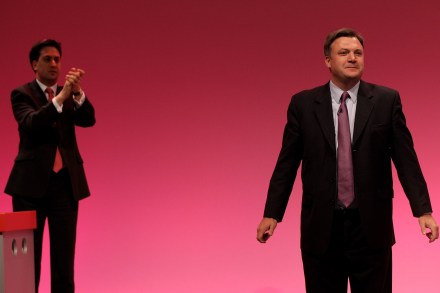
Ed Miliband has just taken the biggest risk of his leadership in appointing Ed Balls as his shadow Chancellor. Balls’ is not a man who take orders and his view on the deficit is noticeably different from Ed Miliband’s. He is also the person most closely associated with Gordon Brown’s economic record. George Osborne will relish this fight. During the vacuum between Ed Miliband winning the leadership and the shadow Cabinet elections, Osborne prepared for facing Balls. He told friends, ‘we’ve circled around each other long enough. It is time to get on with it now.