Ed miliband

Cameron leaves the goal open for Clegg and Miliband on tax avoidance

From our UK edition

It's fashionable to say Downing Street isn't very good at strategy. So fashionable, in fact, that sometimes journalists worry they're being unfair to the Tory leadership. But today we saw yet another example of the Prime Minister leaving an open goal for not just the opposition party but also his own Coalition partners to score. On Monday, Google's Eric Schmidt visited Downing Street for the regular Business Advisory Group meeting. He was allowed to leave by the back door, and the Prime Minister's aides were adamant that David Cameron wouldn't 'confront' the Google boss on his company's tax arrangements. All he planned to do was to take the group through his agenda for the G8, they said. So today, Nick Clegg and Ed Miliband jumped into the void left by Cameron's reluctance.

Lord Mandelson gives Miliband two big tasks

From our UK edition

There is always something quietly devastating about a pronouncement from Lord Mandelson. Today more polls reveal the Labour party is failing to make headway when the Tories are in an almighty flap, and the New Labour peer gave his tight-lipped, politely-delivered prescription on the Marr Show for how Ed Miliband can salvage things: 'I think that Ed Miliband has two tasks. He has one, to continue building up his economic credibility and confidence people have in Labour's ability to manage the public finances and people's own money. He has made a very good start at doing that.

The Speccie at the heart of Ed Miliband’s operation

From our UK edition

‘Red Ed’ invited the great and good of the media into his Westminster den for hummus and natter last night. No one knew what they were celebrating. Poor local election results? His rescue of a cyclist? Christmas? Who cares; no hack ever passed up a free drink. Ed glided through the room, flirting with friend and foe in an easy manner that does not translate to television. And, unlike Cameron and Clegg, Ed is not one for an early bed. He stayed right to the bitter end, even after the wine and beer had dried up, just as he did at last year's Spectator summer bash. Incidentally, the Labour leader has a soft spot for The Spectator. There, on his is desk, in pride of place, was our Parliamentarian Award.

The Tory party holds its nerve – for now

From our UK edition

The dust is settling from the County Council elections and, crucially, the Tory party seems to have stayed steady. Yes, David Davis has had a pop at the number of Old Etonians surrounding the PM and 20 MPs have called for a mandate referendum. But there is no sense of mass panic or revolt. Partly this is because David Cameron had already started doing the things he was going to be told to do after this result. As one Downing Street source remarks, ‘the shift is already well under way.’ He points to the tougher measures on immigration and welfare coming up in the Queen’s Speech and Number 10’s new efforts to involve Tory MPs in policy-making. Another thing steadying the Tory party’s nerves is that Labour did not do that well on Thursday.

Tory MPs think they’re psychic. But Cameron’s exciting them with false omens.

From our UK edition

Even though there has been some reeling back today from the suggestion that David Cameron is on the brink of wowing his party with a bit of legislative red meat on an EU referendum, it won't stop Tory backbenchers trying to force the leadership's position on this matter. The problem is that Conservative MPs are starting to see themselves as psychic agents. They vote for something that their party doesn't want to happen and get called a rebel. A few months later, that rebellion becomes official party policy. One rebel joked to me earlier this week that 'I don't rebel against my government, I just vote two or three weeks ahead of it'.

Labour is being forced to talk about ‘good borrowing’ before it is ready

From our UK edition

It's not a case of will they, won't they when it comes to whether Labour would borrow more, but will they admit it and try to sell this plan to voters? In the past few days, we've seen the party trying to work this out in public. Ed Miliband, in his awkward World at One interview, knew that saying 'yes, we'd borrow more to fund the VAT cut' would provoke triumphant howls from his opponents, and so ended up nervously jabbering away as Martha Kearney asked the same question over and over again. But yesterday he told Daybreak that 'I am clear about this: a temporary cut in VAT, as we are proposing, would lead to a temporary rise in borrowing'. He added that 'I suppose I felt it was rather a commonplace' to make that clear the first time around.

The glass houses of parliament

From our UK edition

The Labour Party is most exercised by the news, broken by the Spectator, that Economist journalist Christopher Lockwood has been appointed to the Downing Street Policy Unit. Poor old Lockwood is charged with being a bit posh, knowing David Cameron personally and attending a good school. This amounts to a crime against humanity in Labour land. Rent-a-quote Rachel Reeves, who moonlights as shadow chief secretary to the Treasury, took time off her maternity leave to lambast the elitist chumocracy at the heart of Dave’s government. All of which is a bit rich because the Labour Party indulges this particular establishment vogue to a tee.

Ed Miliband’s Coldplay bid to voters

From our UK edition

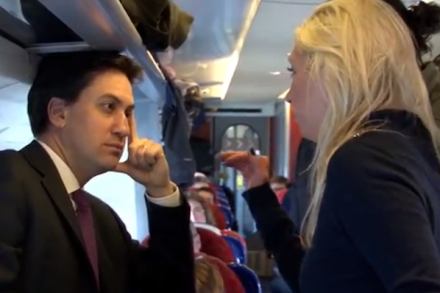
Whether you like Ed Miliband's latest party political broadcast depends very much on whether you're the sort of person who openly weeps while listening to Coldplay. It's got plenty of the Chris Martin playing Wembley factor: emotional piano music, people saying things like 'please, give people some hope', and the Labour leader leaning comfortingly against luggage racks, nodding knowingly. He talks about 'a country that comes together, a country that joins together, a country that works together', and even employs a 'yes, we can!' theme. But what do we learn about what Labour is going to do to address this hunger for hope?

Today’s PMQs fails to interrupt the mini-Tory revival

From our UK edition

There has been a distinct shortage of PMQs recently and after today, there’s only one more until June. This will add to Ed Miliband’s disappointment that he didn’t shift the political mood today, nothing happened to interrupt the mini-Tory revival. Though, tomorrow’s GDP figures will be crucial in whether it continues. Miliband went on the NHS, one of Labour’s strongest subjects, only for David Cameron to counter that if Labour got in again there would be another Mid-Staffs. This was a distinct change of tone from Cameron’s initial response to the Francis Report, when he went out of his way to avoid trying to blame the previous government. The questions planted by the Tory whips were, tellingly, nearly all about benefits.

At home with the Balls family

From our UK edition

Do you recall The Politician’s Wife by Paula Milne? It was a TV drama that aired in the dying days of the Major government. Milne recognised that Major’s government was more Basic Instinct than ‘Back to Basics’, emphasising the toxicity, hypocrisy and general sordidness of the era. It was tremendous stuff. So praise the Lord: Milne is back with a sequel. The Politician’s Husband gets underway this week on BBC2. The subject has set tongues wagging. Of whom was Milne thinking when setting her drama in the court of a grumpy and doomed prime minister, with leadership rumours swirling and one family destroyed by lust for power?

What will Ed Miliband do on spending?

From our UK edition

The political mood has shifted these past few weeks. There’s now, as the Sunday papers demonstrate, far more focus on Labour than there was a couple of months back, something which pleases Number 10 which is confident that Labour is ill-equipped to deal with much scrutiny. Ed Miliband is coming under pressure to be far more specific about what he would do in government. Much of this is being driven by the coalition’s spending review for 2015/16, the results of which will be announced on June 26th. If Labour wins the next election, it’ll be in office when these cuts are being implemented. This leads to the question of whether or not Labour will accept these spending plans.

Ed Miliband needs to talk about 2015, not what he would do now

From our UK edition

Ed Miliband’s speech to the Scottish Labour conference is another illustration that he intends to depict ‘One Nation Labour’ as the answer to so-called Tory divisiveness. Miliband told the conference: ‘As leader of the Labour Party [I] will never seek to divide our country and say to young person in Inverness or the older worker laid off in Ipswich desperately looking for work, that they are scroungers, skivers or somehow cheating the system.’ But in the context of today’s Independent story about Labour planning to go into the next election committed to higher spending than the Tories, a story which Ed Balls crossly contested on the radio this morning, what struck me about the speech was the way Miliband talked about Labour’s policies.

A ‘lurch to the left’ or a wise appointment?

From our UK edition

One interesting decision that Ed Miliband made this week was to appoint Karen Buck as his PPS, following the long-planned departure of John Denham. Tory MPs have told me they were very quickly given 'lines to take' on how this represented a big 'lurch to the left' on the Labour leader's part. CCHQ is right that Karen Buck is on the left of her party: as a shadow welfare minister she pushed for the party to oppose the £26,000 benefit cap when Liam Byrne's official line was to leave it be (one he later reversed). But the line to take conveniently forgets that one of the principal purposes of a PPS is to act as a conduit between a leader or minister and the opposite side of the party. So a minister on the right of their party should in theory appoint a PPS on the left.

Ed Miliband shouldn’t dismiss husky-hugging out of hand

From our UK edition

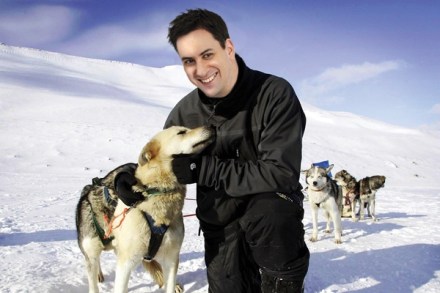
Today's Ipsos MORI finding that voters can't see Ed Miliband as Prime Minister underlines how much hard work the Labour leader really has to do. The poll for the Evening Standard found 66 per cent of those asked didn't believe he was ready to rule the country, against 24 per cent who did. He is also polling behind his party, with 58 per cent disagreeing that Labour is ready to form the next government against 29 per cent who do. As the general election draws closer, voters will find their minds focus more on this question of whether they can imagine the party governing rather than simply on Labour as what Tony Blair described as a 'repository for people's anger'. And as they do that, they'll want to know what it is that Labour stands for rather than simply what it is that Labour opposes.

The Blairites bite back | 14 April 2013

From our UK edition

Ed Miliband may have politely told Tony Blair what to do with his advice about the direction of the Labour party, but the former Labour Prime Minister's allies aren't quite so keen to let his New Statesman piece disappear into the party recycling bin just yet. On today's political programmes, they popped up to drive home their belief that Blair should jolly well be listened to, not ignored. Tessa Jowell was so keen to make this point on Murnaghan that she managed to turn the discussion on Margaret Thatcher around to how much Blair had to offer politics twice.

Blair’s warning to Miliband about the policy abattoir

From our UK edition

Nothing like a former PM poking their nose into your business, eh? John Major experienced what Daniel Finkelstein this week delicately described as 'sub-optimal' behaviour from Margaret Thatcher when he was in office, and today Ed Miliband has his own helpful little missive from his own former leader, telling him that if only he were just like Tony Blair, then everything would be OK. Blair's piece in the New Statesman isn't surprising in many ways as it articulates the former Prime Minister's firm belief that his party must engage with the centre of politics as it is at the moment, rather than trying to move that centre in the direction it would prefer.

Margaret Thatcher: How the Left responded to her death

From our UK edition

In 1983, a Spectator piece argued that 'the most faithful followers of the Thatcher cult are to be found within the Labour Party'. Baroness Thatcher's passing was always going to be as much of a test for the Left as it would be a sad day for the Right. The Labour leadership knew this, and took care to craft statements and tweets which, while acknowledging the glaringly obvious political differences, praised Thatcher the woman. The party has suspended its political campaigning ahead of the local elections as a mark of respect. Ed Miliband's tribute in particular made clear that he had no sympathy with those in his party tempted to celebrate the death of the Iron Lady.

Liam Byrne tries to answer Labour’s welfare question

From our UK edition

One can’t help but feel sorry for Liam Byrne. He is a fish out of water in Ed Miliband’s Labour party, something he implicitly acknowledged when he announced his intention to run for Mayor of Birmingham. But then Birmingham voted against having a mayor so he had to stay in the shadow Cabinet, albeit having lost control of Labour’s policy review. In The Observer today, Byrne floats the idea of increasing the contributory element in welfare. Now, Labour keep musing about this without setting out any details. I suspect this is because it’ll be very expensive if it simply leads to higher payments for those who’ve paid in over the years.

Welfare Reform is this government’s most difficult but most popular policy.

From our UK edition

I always enjoy Peter Oborne's columns not least because his opinions are as entertaining, predictably unpredictable, quixotic and changeable as his cricket captaincy. This is not a bad thing. This week he's back in full-on Cameron as Disraeli mode, arguing that the coalition's reforms of education (in England, though sadly the Peter and the Telegraph refer to "Britain's schools") and welfare (across the UK) are so important that success here dwarfs any failure anywhere else. I think he may be right. Coincidentally, I've an article in today's Scotsman that, though chiefly concerned with Iain Duncan Smith and welfare reform, makes passing reference to Gove too.