Ed miliband

Ed Miliband is wrong: we need more, not less rail competition

From our UK edition

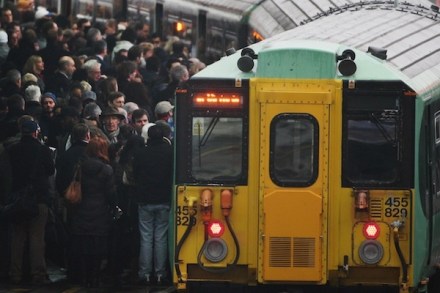
Last month the Labour party moved two debates in the Commons pushing for Government to keep running the important East Coast Main Line (ECML) rail franchise between London King’s Cross, Newcastle and Scotland. The state has run this service since National Express East Coast was hit by the downturn in 2008 when it became unable to make the necessary government repayments for operating the franchise. Tory ministers want to quickly see the franchise back in private hands. Labour’s more vocal stance on rail has important undertones; the party is increasingly echoing the left-wing rail unions and the TUC in its policy towards the sector.
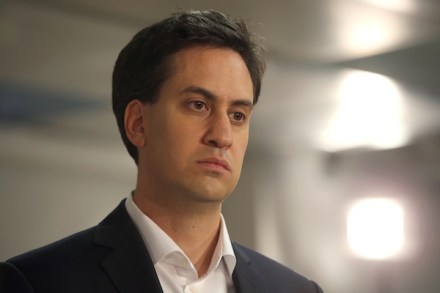
PMQs sketch: Another wretched day for Ed Miliband

From our UK edition

Today Ed Miliband headed for the favourite destination of faltering leaders: abroad. Any crisis-stricken banana republic will do. At PMQs the Labour leader decided that Egypt would fit the bill. Knitting his brows into a gap-year frown of munificent superiority, Miliband asked the PM to tell us how Britain is encouraging President Morsi ‘to secure a negotiated settlement in advance of the army deadline.’ Yes, Ed. Absolutely. The whole of Tahrir Square is hanging on your every word. Cameron might have come clean at this point and told us what Ed was playing at: ‘I may not save Egypt from its looming civil war but its looming civil war may save me.’ Cameron didn’t, however. Bogus statesmanship is a plague no politician is immune to.

Ed Miliband and David Cameron get personal in PMQs

From our UK edition

When Ed Miliband began at PMQs by asking about Egypt, it looked like he was going to do six high-minded questions on foreign affairs and thus dodge the political attack the Tories had lined up for him. But that wasn’t Miliband’s plan, after a couple of questions on Egypt he shifted to education. I suspect that by the end of session, he wished he stuck to what’s going on in Tahrir Square. For Cameron took the return to domestic politics as an opportunity to relentlessly batter Labour over its links to Unite and Unite’s behaviour in Falkirk. Cameron and Miliband went at each other with real needle. There was a level of personal animus between the two of them that you don’t normally see.

‘Who governs Labour?’ is perfect new Tory attack line on Miliband’s weakness

From our UK edition

A row in Labour over union influence that doesn't benefit the Tories in some way is as rare as hen's teeth. But the latest revelations about Unite's attempt at 'transforming Labour' (as reported by Rachel Sylvester in her explosive Times column) are even more of a gift to the Conservative party than usual because they feed perfectly into the line of attack the party has chosen. As Coffee House reported recently, Lynton Crosby told Tory MPs that he wanted to focus on Miliband's weaknesses as leader, identifying clear weak spots rather than the 'he makes the coffee' line. That the unions are enjoying such success in stitching up the selection process contributes to that impression of weakness, particularly if Miliband finds himself unable to do anything decisive.

Miliband’s EU referendum dilemma

From our UK edition

Friday’s vote on James Wharton’s EU referendum bill is going to push the whole Europe question right back up the political agenda. The Tories will try and use it to highlight their support for a vote and the opposition of the other major parliamentary parties. It will be very hard for Ed Miliband to go into the next election opposed to a referendum. It would look like he was opposed to giving the public a say. I also suspect that it will become almost politically impossible to oppose a referendum after the European Elections in 2014. Patrick Wintour reports today that Labour is toying with the idea of either amending the Wharton Bill to back an instant In / Out vote or committing to one within the six months of the next election.

George Osborne’s big idea

From our UK edition

What are the Ashes? This question was put to former England cricket captain Ted Dexter, the guest of honour at the launch last night of the writer and broadcaster Simon Hughes’s latest book. Dexter replied that the Ashes is an idea; the terms of engagement that had united two sporting nations in rivalry for nearly 150 years. Few things in life are more durable than a simple idea. The idea of ‘austerity’ drives our political debate and yesterday's spending review has extended the life of the idea deep into the next parliament. It is a political concept rather than a purely economic issue.

PMQs sketch: Tasered choirboys and hilarious failings

From our UK edition

listen to ‘Spending review 2013: the Coffee House analysis’ on AudiobooShock news at PMQs. Miliband scored a hit. He succeeded in making Cameron look silly. True, he enjoyed his triumph a little too much, but his performance will have cheered his party enormously. For weeks they’ve had to watch their leader bungling at the despatch-box like an octopus trying to make a pancake. Miliband’s weapon of choice: statistics. It’s hard to use mere mathematics to hurt a politician but Miliband handled his materials with deadly aplomb. He uncovered woeful failures in government programmes. And the revelations weren’t just bad. They were hilariously bad.

Most opinion polls are junk: blame the ignorant general public for that.

From our UK edition

One of the very good things about Lord Ashcroft is that he is happy to commission large-scale opinion polls. Sometimes these are mischievous. Take today's example, for instance. It is always useful to be reminded that most members of the public can only recognise a handful of politicians. One would expect David Cameron and Boris Johnson to be at the top of the public recognition table. They are the only politicians in Britain recognised - and correctly identified - by more than 90% of those surveyed. 89% of respondents claim to recognise Ed Miliband but only 77% can actually identify him (some think he's actually his brother which, given David has been out of the public eye for the best part of three years does not say much for Ed).

PMQs sketch: In which Labour join the coalition

From our UK edition

This was a card-shredder of a performance by Ed Miliband. He’s had some difficult outings lately but he barely even showed up at PMQs today. His team of phrase-makers and sloganeers have abandoned him too. Either they’re in the Priory, taking emergency anti-depressants, or they’ve quit the party altogether. And those in Labour’s heartlands watching their leader floundering today are probably composting their membership cards right now. Ed’s central attack looked like an attempt to give Cameron a relaxing massage. He accused the government of offering tax-breaks to the rich. Yet Labour’s top tax-rate was lower for most of their 13 years than it is today. Cameron took the opportunity to gloat over Labour’s woeful economic record.

Ed Miliband’s negative approach at PMQs looks set to become the norm

From our UK edition

Ed Miliband’s approach at PMQs today was rather odd. He led, aggressively, on whether the government would implement the Parliamentary Commission on Banking Standards’ recommendation of a new criminal offence for negligent bankers. He asked the question in a manner that expected the answer no, but Cameron—predictably—said he would. At which point, the wind rather went out of Miliband’s sails. Cameron’s answer was eminently predictable because the idea of a new criminal offence for negligent bankers was first floated by George Osborne’s former chief of staff Matt Hancock at the start of last year.

Someone has got to win the next election

From our UK edition

It is easy to make a case for why all three main parties should do badly at the next election. After five years of austerity, who will vote for the Tories who didn’t in 2010? And how will they stop those dissatisfied with the compromises of coalition from sloping off to Ukip? As for Labour, why would the public want to put them back in charge just five years after booting them out? This question has special force given that the Labour leadership is so identified with that failed belief that boom and bust had been ended. Then, there’s the Liberal Democrats—they’ve alienated their left-leaning supporters and lost their status as the protest party of British politics. Oh, and they’ve broken one of their most memorable pledges: no increase in tuition fees.

The Tory plan to beat Miliband

From our UK edition

The Tories are chuffed with yesterday's Prime Minister's Questions (the knockabout, that is, not the serious bit), and with Labour's continuing struggle to make any impact in the polls. Earlier this week, Lynton Crosby spoke to the parliamentary party about how they should aim to beat Miliband. He told them that while Miliband is a weak leader, the way to beat him is to highlight his areas of weakness, rather than his personal flaws. This means that the party will be focusing on how Labour is faring on welfare and the economy, rather than mocking Miliband for making his colleagues coffee (which is a line David Cameron really should drop).

PMQs sketch: David Cameron lashes out at Labour

From our UK edition

Oh dear. Another lousy day at the races for Ed Miliband. It began as soon as he stood up at PMQs. The mournful angularities of his face settled into a frosty grimace as the Tories greeted him with ironic whoops and cheers. And on they went, yelling and braying. Miliband seems to believe that adopting a look of injured decency will bring the house to order. But the more he glowered at the Tories the more they crowed back at him. It was awful to behold. He stood there, immobile, like a man returning from a difficult hour at the dentist only to find his house is on fire. His woes today were compounded by a set of economic indicators which seem to be inching in the coalition’s direction. With little else to complain about, he accused the PM of overseeing a fall in living standards.

Cameron wins PMQs… or does he?

From our UK edition

Well, that was an easy Prime Minister's Questions for David Cameron, wasn't it? Sometimes the PM just turns up for work and knocks it out of the park. It helped, of course, that for once he had his own team cheering him along, with backbencher after backbencher leaping up to ask loyal questions. The whips will be toasting a win in their office this afternoon. The Prime Minister had some very good retorts to Ed Miliband indeed. If Labour had a good week on welfare last week, the happy feelings will have evaporated today as Cameron managed to ridicule them not just on the detail of their spending pledges - while hinting that he's not quite as open to movement on pensions spending as she might have hoped - but also on their attitude.

Ed Miliband’s welfare plans will hit young people. Here’s how he could fund them fairly

From our UK edition

Ed Miliband thinks a contributory principle in welfare is the way to show voters that his party supports a 'something-for-something' approach. Yesterday he proposed to restore that principle, with higher entitlements for those with good records. This was at the heart of the Beveridge settlement, but has been diluted by successive governments, the current one included. Labour has to show that it can pay for this sort of system, though, and Miliband's answer is to raise the hurdle for contributory welfare, so that claimants must have worked longer than the current two-year period to qualify for the contributory benefit. The implication is that more people will go straight through the means test. Fewer people will be eligible, so the system can afford to be more generous.

How Ed Miliband avoided open warfare on welfare

From our UK edition

For months, right-wing politicians and commentators have been licking their lips waiting for the Labour party to face up to reality. We all assumed that the sort of speeches delivered by Ed Balls and Ed Miliband this week, in which the two men abandoned the party's commitment to universalism and promised to cap welfare spending, would send Labour into orbit. There was even a revolt in the Commons which appeared to be a harbinger of doom about Labour and welfare. So where's the open warfare? Sure, Peter Hain spent most of Monday having a grump into various cameras and microphones about the winter fuel payment. But the party has stayed remarkably peaceful. The answer is the amount of groundwork that Ed Miliband and his team did for this speech.

Want to know what the next election will be like? We saw this week…

From our UK edition

Tory MPs were in buoyant mood as they dashed off to the 7 p.m. vote on Monday night. They shouted out hearty greetings to each other, slapped backs and had a spring in their step. They were buzzing in the way a fielding team does just after the fast bowler has hit a star batsman a painful blow on the body. The cause of this excitement: No. 10’s display of brute political force over the lobbying bill. When news first broke of Patrick Mercer’s troubles, the Cameroons could barely conceal their schadenfreude. They were not going to mourn the political demise of Cameron’s most vituperative backbench critic. But the headlines were still about Tory sleaze. Labour began demanding to know why the government had abandoned plans for a statutory register of lobbyists.

PMQs sketch: moaning and groaning from Ed Miliband

From our UK edition

Thwack! That was the sound of Ed Miliband being knocked for six at PMQs. He didn’t stand a chance. Even before he could get to his feet, David Cameron had put a question to him. Against the rules. But so what? Cameron wanted to know if the Labour leader would withdraw his constant attacks on Tory plans to remove child benefit from high earners? Miliband stood up midst a barrage of Tory jeers, (and a few supplementary squawks from LibDems too). The humiliation of Labour’s U-turn showed on his face. He looked like an elevator-boy with his conk caught in the closing doors. The chamber was in full cry and the decibel levels were rising. And he still hadn’t spoken a word!

The political centre just moved, to the right

From our UK edition

Today must count as one of the most encouraging days for the centre right in British politics in recent times. Labour’s apparent abandonment of universal child benefit is a massive blow to the 1945 settlement. It is akin in significance to when Labour began to accept the privatisations of the Thatcher era. Now, there’s no intellectual difference between declaring that better off pensioners won’t receive winter fuel payments and that better off mothers won’t receive child benefit. But in symbolic terms, the difference is huge. The winter fuel payment is a recent addition to the welfare state, introduced by the last Labour government. It is not fundamental to it.