Ed miliband

PMQs sketch: Cameron kick-starts a Miliband recovery

From our UK edition

Cunning work from Milband at PMQs. He played Syria like a fixed-odds betting machine and came away with a minor jackpot. Last week he had urged the prime minister to accept a few hundred of the neediest Syrian refugees. Cameron duly said OK. Today Miliband was quick to claim a victory for decency, for humanity, and for Miliband. ‘I welcome this significant change of heart,’ he said. Choice word, heart. He’s got it. And Cameron hasn’t. That’s the implication. Miliband tried the same tactic with the 50p tax rate. When Ed Balls unfurled this this new policy he got a mixed bag of reviews. Economists put their fingers in their ears and ran around wimpering. The popular response suggested it was a top ten hit.
Class war at PMQs leaves Labour in better heart

From our UK edition

It was back to business as usual at PMQs today. Gone was Miliband’s effort to raise the tone, which Cameron ruthlessly exploited last week, to be replaced by an old-fashioned, ding-dong with a bit of class war thrown in. The result: Labour MPs leaving the chamber in far better heart than they did last week.

BuzzFeed does politics. Watch out, Westminster

From our UK edition

It’s startling how few young people feel aligned to a particular newspaper. Gone is the idea of ‘taking a paper’. Today, we are far more likely to use Flipboard to browse stories from hundreds of different newswires, blogs and websites. We turn to Twitter to see what people are saying about the day’s news, before logging into Facebook to share commentary on it. We care about what our friends are reading, and what the people we respect are reading. We couldn’t care less about loyalty to a publication. The explanation for this lack of loyalty is two-fold. There is plenty to suggest that the young feel abandoned by traditional news sources.

As Ed Miliband knows, the 50p tax rate will not fix a broken market

From our UK edition

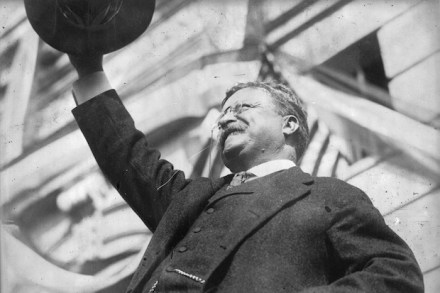
Labour’s confirmation that it would restore the top tax rate to 50p was not that much of a surprise, Ed Miliband has always been clear that was what he wanted. But it does raise an interesting question about Miliband’s attitude to the market. Those close to the Labour leader passionately argue that his agenda is actually pro-competition and pro-market, that it not a throwback to the 1970s. As Stewart Wood wrote in these pages recently, they see him as the heir to Teddy Roosevelt. But the 50p rate will hit any successful business person regardless of how open and competitive the market they operate in is. This isn’t action to fix a broken market but a view about how much tax successful people should pay.

Any other business: How François Hollande let France miss the global recovery train

From our UK edition

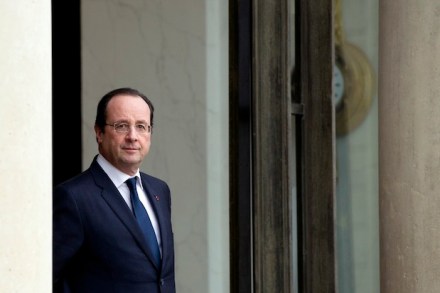
I’ve always respected stationmasters, but that sentiment is not universally shared. A distinguished friend of mine across the Channel described François Hollande the other day as ‘un chef de gare, sans aucune dignité’ — and it’s not difficult to picture the little president, peaked cap awry, trousers unbuttoned, haplessly waving his whistle as the last train à grande vitesse departs for the Eurotunnel laden with talented compatriots who see no future in France. As modern socialist leaders go, Hollande is beginning to make Gordon Brown look statesmanlike. Nicknamed ‘Flanby’ after a cheap custard pudding, he has left decision-making to his ragbag of ministers and done nothing to steer France towards economic recovery.

Ferdinand Mount’s diary: Supermac was guilty!

From our UK edition

You have to hand it to Supermac. Fifty years after the event, he is still running rings round them. The esteemed Vernon Bogdanor (The Spectator, 18 January) tells us that Iain Macleod was wrong in claiming that Sir Alec had been foisted on the Conservative party by a magic circle of Old Etonians. On the contrary, the soundings had ‘revealed a strong consensus for Home. So Macmillan was not slipping in a personal recommendation when he advised the Queen to send for him — he was doing precisely what he was supposed to do.’ This is a deliciously selective account.

The top level of government isn’t riddled with personal hatred – thanks to Osborne

From our UK edition

Now that the economic statistics are looking better, people are beginning to rediscover the once-fashionable thought that George Osborne is a great strategist. Things are coming together before the 2015 election in a way which makes life uncomfortable for Labour. I am not sure that ‘strategist’ is the right word, but I do think Mr Osborne deserves praise for something else. If you compare this government with the last, you will see that it is not dysfunctional in its internal relations. The coalition has constant frictions, but these are, as it were, built into the system. After nearly four years, there is no serious split or even known personal hatred at the top of the government.

PMQs sketch: Miliband begins to run out of arguments

From our UK edition

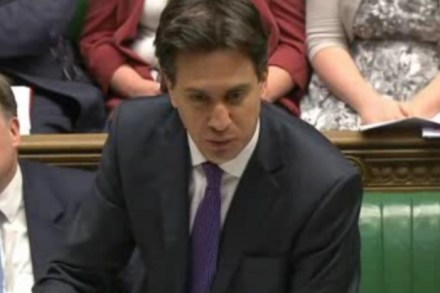
Syria overshadowed PMQs today. The chamber was quiet and sombre. And both leaders were clearly about to do their world-statesman bit. Ed Miliband rose to his feet with an air of ineffable goodness. He looked like St Peter on his way to donate the dead Judas’s sandals to a charity shop. He asked about Britain’s readiness to accept Syrian refugees in accordance with a UN directive. Britain, said Cameron, is already the second largest donor to Syria. And the crisis can’t be solved by few hundred refugee placements. Miliband used two more questions to press the case for ‘orphans who had lost both parents.’ Cameron said he was prepared to ‘listen to the arguments’. ‘I feel we are gradually inching forward on this issue,’ said Miliband.

Despite Miliband’s best efforts, Cameron still has the upper hand at PMQs

From our UK edition

Ed Miliband is still trying to keep his reasonable tone going at PMQs. He led on Syria, pushing David Cameron on the government’s refusal to join in a UN resettlement scheme. Cameron argued that given how many refugees the Syrian conflict had created, a resettlement scheme could only ever deal with a tiny part of the problem. Labour, though, were not happy with Cameron’s answers and will hold a Commons vote on the matter next Wednesday to try and force the government into changing its position. But when Miliband moved onto the economy, he found it far more difficult to keep his tone civil. Tories cheered him saying unemployment had fallen while a confident Cameron took every chance to remind Miliband of just how positive the figures were.

Ed ‘Teddy’ Miliband: Labour is the party of competition

From our UK edition

Ed Miliband tends to enjoy success when he's either stealing someone else's clothes or offering a possibly unworkable policy that sounds catchy. This morning on the Andrew Marr Show he tried both tactics. Having nicked One Nation from the Tories and repeated the phrase so often that they probably don't want it back, Miliband is now trying to ape a Republican president, Theodore Roosevelt. His close colleague Lord Wood sets out why Labour thinks this is a space it can jump into in a piece for Coffee House. listen to ‘Ed Miliband on the Andrew Marr Show’ on Audioboo The catchy line from this Roosevelt-style crusade is that Labour is now the party of competition, with Miliband planning to appoint consumer groups such as Which?

Ed Miliband is better placed than the Tories to follow Roosevelt

From our UK edition

On Friday, Ed Miliband pledged to introduce greater competition in our banking market. Last September, he pledged to freeze energy prices for 20 months while our broken energy market is reset to expand competition and consumer choice. Reforming broken markets to increase competition and address the long-term sources of our cost-of-living crisis might seem an unusual theme for Labour to champion. In fact it is an approach that has learnt from a progressive conservative tradition, one that understands the importance of reform to ensure that markets remain open and competitive. Noone understood this idea better than the American President Theodore Roosevelt – a passionate believer in free enterprise, and a tenacious advocate of market reform.

Coming soon – the Bank of Miliband. Be very afraid.

From our UK edition

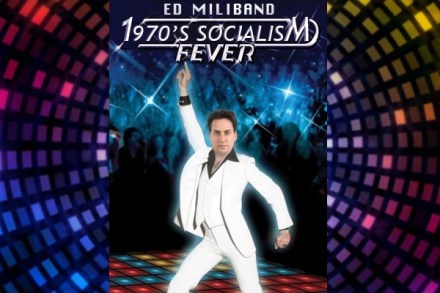
If you think bankers do a bad job of banking, just wait until government tries its hand. This seems to be what Ed Miliband is proposing today: a Labour government would set up two new banks, to challenge the existing five big ones. And so his 1970s revival continues. There’s no evidence that new banks would help much, as the Bank of England Governor has already indicated. But as I say in my Telegraph column today, Ed Miliband isn't too worried about lack of evidence. He's proposing to be a different kind of political leader. His list of ‘predators’ – ie, nasty businesses to whom he promises to give six of the best - grows longer all the time.

Ed Miliband’s tricky second album

From our UK edition

Ed Miliband has spent the past few months celebrating the success of his conference pledge to freeze energy prices. He was so pleased with the disruption that this caused that he referenced it in his speech on banking reform today. He is right to be pleased with that pledge. It was a hit. It's just that today's speech, built up by the Miliband camp as the sequel to the price freeze, was the political equivalent of a difficult second album. You could see what he was trying to do. Sections of the speech were straight from the Obama playbook, just as his conference speech was, with appeals such as 'Britain can do better than this' and lines such as 'we believe we can tip the balance away from struggle and towards hope'. But the playbook lines weren't played very well.

Ed Miliband’s ‘One Nation Economy’ speech: full text and audio

From our UK edition

listen to ‘Ed Miliband's ‘One Nation Economy’ banking reform speech’ on Audioboo Today I want to tell you what the next election is about for Labour. It is about those families who work all the hours that God sends and don’t feel they get anything back. It is about the people who go to bed anxious about how they’re going to pay their bills. It is about the parents who turn to each other each night and ask what life their sons and daughters are going to have in the future. It is about those just starting out who can’t imagine they will ever afford a home of their own. It is about the most vulnerable in our country who feel they are just being tossed aside.

Miliband’s big speech challenge isn’t Mark Carney

From our UK edition

Even though Labour is quite clearly rather peeved by George Osborne's minimum wage announcement, it is, in one way, a compliment to Ed Miliband that the Chancellor felt it strategically important to try to sabotage the Labour leader's speech on banking, which he will deliver shortly. The Conservatives are aware that even if Miliband has a knack of coming up with policies that sound potty, he also has a knack of framing them in a way that disrupts the political debate. Thus a pledge by a party leader in the autumn to control prices in a market where he has no control of worldwide wholesale markets still managed to cause significant trouble.

Ed Miliband’s problems are mounting

From our UK edition

Today’s PMQs has left Ed Miliband with a strategic headache. Miliband’s new less-Punch and Judy approach to PMQs isn’t working. In large part, this is because Cameron — who thinks he wins more of these sessions than he loses and that the facts on the ground now favour him — isn’t interested in cooperating. So Miliband is faced with the choice of continuing with this approach and being beaten up every Wednesday or abandoning it after just two sessions. If Miliband does continue with it, expect to see the Tories continue to try to goad Ed Balls, one of the Commons’ most enthusiastic hecklers, into responding to them in kind — note how Cameron took repeated jabs at the ‘newly silent shadow Chancellor’.

Does Ed Miliband feel betrayed by Francois Hollande?

From our UK edition

President Hollande’s private life continues to fascinate the whole world (other than the French press pack, obviously); but it is worth noting that the embattled president signalled a major shift in economic policy yesterday. France is a couple of years late to the austerity party; but it will experience €50 billion worth of cuts in 2015 - 2017, on top of the €15bn scheduled for this year. When Hollande won the Élysée, he promised ‘another way’. But he’s been mugged by reality. Austerity est arrivé. All of which is a little embarrassing for Ed Miliband, who told ITV in May 2012: ‘I congratulate Francois Hollande.

Labour’s poll woes as economy grows

From our UK edition

Is the improving economy harming Labour’s standing? According to a new Guardian/ICM survey out today, Labour is still ahead of the Conservatives by three points — but the gap is slowly shrinking. Since the last ICM poll in December, Labour’s lead has dropped to just three points, down from an eight point lead in November: Today’s poll also looks at how assured people are feeling about their own financial position and their ‘ability to keep up with the cost of living’. 52 per cent now feel confident about the state of their personal finances — the highest level since October 2010.

Miliband returns to the ‘promise of Britain’ with pitch to middle class

From our UK edition

Ed Miliband's cost of living crisis campaign has, so far, tended to focus more on those who are seriously struggling and turning to food banks or turning off their heating in cold weather. But today the Labour leader turns to the middle classes in a Telegraph op ed. His assessment is downbeat as you would expect: Miliband needs pessimism in order to succeed in 2015, while the Tories need an upbeat vision (but not, as most senior party figures accept, so upbeat an economy that voters think it safe to back Labour). It is interesting that Miliband sees the middle class as a group worth bidding for: he clearly feels there has been a sufficient gap left by the other parties for Labour to sneak into.