Economy

Tories remain on the front foot over national insurance

From our UK edition

A copy of a letter that George Osborne sent to Alistair Darling today: Alistair Darling The Labour Party 39 Victoria Street London   SW1H 0HA 9 April 2010 Dear Alistair, In the course of today, the Labour Party’s economic policy has collapsed in a heap of contradictions. In the morning, you attacked our efficiency plans on the grounds that they would reduce public sector headcount – but by lunchtime your own Treasury Minister, Stephen Timms, admitted that your own spending plans meant that “there will be some job losses” (The Daily Politics, BBC 2, 9 April 2010).
Three lessons for the Tories on immigration

From our UK edition

The witterings of Phil Woolas about immigration yesterday - where he accused The Spectator of contorting immigration figures and double-counting immigrants - have landed him in plenty trouble. Stephen Timms was on the Daily Politics today and conceded that Woolas was talking out of his hat. They weren't our figures, they were from the ONS - and compiled under orders from Eurostat with its Labour Force Survey (LFS) scheme. Andrew Neil has written it up in a blog here. The government is at sea because even ministers in charge of the relevant departments have no idea about the scale of immigration in Britain. This wee farrago brings three lessons for the Conservatives. 1. Honesty about immigration is crucial.

Labour’s high risk, high reward strategy on national insurance

From our UK edition

Labour today has tried to shift the National Insurance debate from whether you should cut waste to prevent a tax rise, to whether the Tories’ sums add up. When the Tories announced their plan to avoid the worst of Labour’s NICs rise by cutting waste they made a conscious decision not to offer details on how they would make these efficiency savings. As one shadow Cabinet minister explained to me, they had no desire to repeat the experience of the James Review when they were going on Newsnight to argue the toss over individual savings. The Tories think that the argument that government can save one pound in every hundred that it spends is credible and that combined with the endorsement of two men who have advised the government on efficiency so recently is enough.

Woolas on the rack

From our UK edition

Phil Woolas has just been confronted on Daily Politics about immigration figures which we uncovered on Coffee House yesterday, showing 99 percent of new jobs since 1997 are accounted for by immigration. His response is (unintentionally) hilarious. He is immigration minister, yet appears not to know what immigration figures mean. Here's the transcript: Phil Woolas: I think that the Spectator's analysis, perhaps not surprisingly, is confusing two completely separate things Andrew Neil: These are Office of National Statistics figures.which we checked this morning. Do you accept that there are 1.7 million new jobs for people of working age between 16 and 64, correct? PW: Yes AN: And according to the Labour Force Survey, compiled by the Office of National Statistics. 1.

Brown comes under heavy fire on Today

From our UK edition

Woah. I doubt Brown will endure many tougher twenty-minute spells during this election campaign than his interview with on the Today Programme this morning. You could practically hear the crunching of his teeth, as John Humphrys took him on over Labour's economic record; practically smell the sweat and fear dripping down his brow. It was compulsive, and compelling, stuff. Humphrys started by putting a grim story to Brown: that his "handling of the economy was not prudent ... your record suggests that the economy is not safe in your hands."  The PM's mission was to deny all this, and he did so with his usual stubborness and disingenuity.  His pitch here was all about inflation: about how we'd avoided the high inflation of recessions past, and how we should be grateful for that.

How the Tories are decontaminating their associations with Big Business

From our UK edition

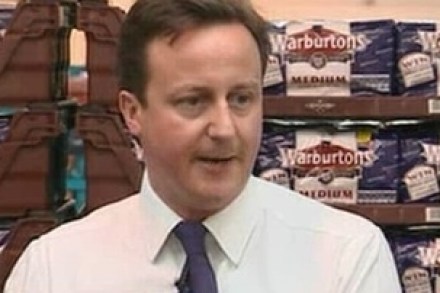
Over the past couple of years, Big Business (as in, "being in hock with...") has been deployed almost as an insult against the Tories.  But they've now used their campaign on national insurance to turn their business associations into an advantage.  Exhibit A: the above picture (via PoliticsHome) of Cameron's visit to the Warbutons HQ in Bolton, where the company owner has come out in support of Tory proposals.  It sends the message that Big Business doesn't just mean the financial services, and a lot of people, in a lot of regions, rely heavily upon it for their livelihoods.  And too right, too.  Expect plenty more like this from the Tories over the next few weeks.

British jobs for British workers…

From our UK edition

Did you know that there are fewer British-born workers in the private sector than there were in 1997? I'd be surprised if so: these official figures are not released. The Spectator managed to get them, on request from the Office of National Statistics. We use the figures in tomorrow's magazine, but I thought they deserves a little more prominence here. See the graph above, which shines a new light on the boasts Gordon Brown has been making. He said his Glasgow speech last month that: "If we had said twelve years ago there would be, even after a global recession, 2.5 million more jobs than in 1997 nobody would have believed us.

The Tunnel Ridge Fault election

From our UK edition

At times the chasm between Britain’s political parties is as great as the San Andreas Fault. Sometimes the difference is more like a small rift, a matter of tone not policy. In this year’s election, the difference between the parties is somewhere in between, like the lesser-known Tunnel Ridge Fault in Eastern California. In part, the appearance of only minor differences may explain why the polls are showing such different things; some predict that Labour will hang on to power, others that the Tories will be able to win.

Quote for the Day*

From our UK edition

Courtesy of Stephanie Flanders, the BBC's Economics Editor: Welcome to the election. If we're to believe Alistair Darling, the Conservatives' 'credibility gap' on tax and spending has shrunk by 34% since January, or about £11bn. If they carry on like this, they might be thoroughly credible by election day. Naturally, that is not how the chancellor put it in his press conference this morning, as he released more than 180 pages detailing the Conservative Party's (new and improved) "Credibility Deficit". Back in January, Labour said there was a £33.8bn hole in the Conservatives' plans. Now it's fallen to £22.2bn - suggesting a 34% rise in credibiliy. But, to coin a phrase, Labour's numbers really don't add up. Quite.

The true cost of Brown’s debt binge

From our UK edition

When Alistair Daring admitted last week that there would indeed be job losses arising from the proposed National Insurance hike, it would have struck Gordon Brown and Ed Balls like root canal surgery. This blows wide open the main part of Brown's election deceit: asking the public to look at the advantages of the borrowing, and not contemplate the flip side to the debt coin. Not to ask where the repayments will come from, or the impact of those repayments on the jobs of the future. No wonder Darling is today being made to claim the opposite. The grim truth is that every job "protected" now, due to debt, will be more than balanced out by money taken away from the economy in the form of the interest needed to serve that debt.

Brown helps Cameron to define his Big Idea

From our UK edition

Gordon Brown has walked straight into George Osborne’s trap. After bleating that the national insurance tax cut is unaffordable, he has decided to make this a massive election dividing line – claiming that this teeny (1 percent of state spending) tax cut somehow poses a mortal danger to an economic recovery.  Please, God, let him keep on this message through the campaign. “The Tories are proposing to cut your taxes and make you better off – stop this lunacy, and vote Labour”. But Alastair Darling has taken it further, with a significant piece of language on the radio this morning. The Tory tax cut, he says, is “taking money out of the economy” at a vulnerable time. As he said at 7.

The Tories’ campaign is sharpening up

From our UK edition

As declaration day (the rather pompus name that news organisations have come up with for the moment when Gordon Brown actually calls the election) draws nearer, the Tory campaign is sharpening up. This morning’s operation on National Insurance was impressive, enabling the party to get a second set of headlines out of its plan to stop Labour’s National Insurance rise. The letter from 23 business leaders supporting the Tory position worked on several levels. First, it got the Tories’ tax cut back on the top of the news agenda along with its clear message: seven out of ten workers will be better off under the Conservatives. Second, it strengthened the Tory case that the risk to the economy is to increase the tax on jobs not cutting government waste.

A morning of to-and-fro

From our UK edition

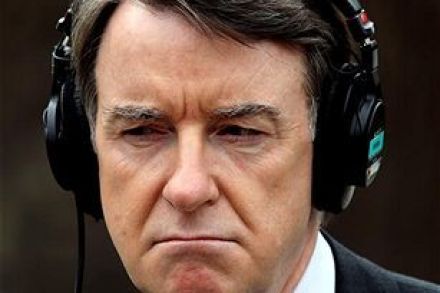
Who’s in the ascendant this morning? As Pete noted earlier, David Cameron’s barnstorming morning stalled on the Today programme when pressed to cost his National Insurance tax cut. The government went to it press conference scenting blood – understandably vague Tory tax pledges can be easily represented as indicative of general incoherence. Mandelson was in political warlord mode, flanked by Liam Byrne and Alistair Darling, his unlikely musclemen. But they blew it. First, Byrne and Mandelson asserted, with absolute certainty, that the Tories will raise VAT. Opaque pledges cannot be successfully criticised by baseless soothsayings.

Hammond’s honesty

From our UK edition

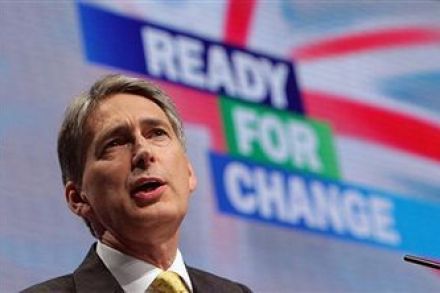
Philip Hammond gave the first presentation at this Big Society event, and he admitted something that the Tories don't admit too often.  First, he attacked Gordon Brown for doubling the national debt. And then he added that, "unfortunately, we're on a trajectory where the national debt will double again over the next few years." Hammond's right to highlight this. The danger for a Tory government is that their attacks on Brown in 2010 could look hypocritical in 2015, when they would have presided over rising debt as well. The key thing is to pin the blame for this situation on Brown, and ask whether he can be trusted to keep it under some sort of control.

Whitehall’s hung parliament contingency plans vindicate Tory alarm over the economy

From our UK edition

There it is. The Tories' premier weapon emblazoned across the front pages of the Guardian and the Telegraph: Brown could stay on as PM in a hung parliament, even if the Tories win more seats. To be fair to Brown, the headlines are misleading. It is his duty to remain in office until it is clear that David Cameron or another politician commands the confidence of the House, which may take weeks in current circumstances. Mandarins are drawing up radical contingency plans to ensure that some modicum of economic stability is maintained during that period. These measures include temporarily proroguing parliament for 18 days after the election (rather than the usual 6) and allowing the Chancellor to remain in office for that period even if he has lost his seat.

Tomorrow is a Big Day for the Tories

From our UK edition

Tomorrow's Word of the Day is 'Big'.  That is to say: the Tories are holding a Big Event, on the theme of the Big Society, and they've got all their Big Hitters out for the occasion.  In all, there'll be presentations from eleven shadow Cabinet members, followed by a speech from David Cameron.  You don't often see such a concentration of Tory firepower outside of conference season. What's clear, then, is that the Tories regard tomorrow as an important day for their election campaign.  And so they should.  Their Big Society agenda – aka, decentralisation – spans across some of their most encouraging policy ideas.

Osborne’s silent victory

From our UK edition

I think Osborne’s main victory tonight would be to reassure those who thought him a clueless idiot. The left demonise him, and it’s easy for the right to despair at him too (yes, guilty). But the figure we saw tonight was calm, collected and assured – and I reckon this was his achievement. He allayed fears. Expectations of his performance would have been rock bottom, and he’d have surpassed them easily. He was playing it safe. Vince Cable did his after-dinner speaking comedy act (I met William Hague in the ‘spin room’ afterwards, who swears that some of Cables lines were nicked from his repertoire), and the studio audience loved him for it. But Cable is not going to be Chancellor, he can afford to take risks.

Brown and Cameron’s Commons clash serves as the warm-up for tonight’s debate

From our UK edition

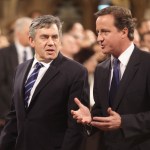
Gordon Brown and David Cameron have just been facing each other in the Commons chamber. Brown was notionally reporting back on the European summit meeting, but in relaity Brown and Cameron were setting the stage for the Chancellor’s debate tonight. Cameron claimed that there was a new dividing line in British politics, the Tories for ‘efficency and aspiration’ and Labour for ‘waste and taxes.’ Brown claimed that the Tories were indulging in panic measures and that their plans announced today would ‘withdraw the support that is necessary for the economy to have a sustained recovery.’ Brown might have some Keynesian economists on his side when he says this.

The Tories have a clear message on taxation

From our UK edition

The Tories now have a clear message on personal taxation, ‘you’ll pay less under the Conservatives.’ Their announcement today that they will reverse, for seven in ten workers, Labour’s increase in the tax on jobs is welcome news. As I said in the Mail on Sunday, turning the spotlight on the National Insurance hike shows that Labour’s tax rises aren’t just going to hit people who earn more than £150,000 a year who are going to buy a house costing more than a million but anyone who earns more than £20,000 a year. Some are questioning whether National Insurance is the most effective tax to cut since  it is a hidden tax; most people have no idea how much NI they and their employers pay.

Back to his Tory best

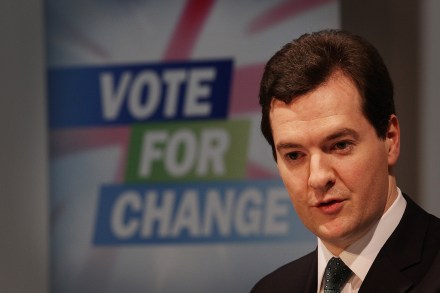
From our UK edition

George Osborne has just set the scene for tonight's Chancellors' debate by announcing something neither Darling or Cable will be able to match: a tax cut. It's a real one, it will benefit some 20m workers and (best of all) it will be paid for by spending cuts. While the amount is not huge - everyone on under £43,000 will be £150 better off - it indicates the route the Conservatives would go down in government.   Trusting people with their own money, and stoking the recovery by cutting the tax on jobs. Here are the main points: 1) Osborne would raise National Insurance threshold in Apr11. One of the many booby traps Brown laid for the country after the next election is a national insurance hike of 1 percent, for both employer and employee.