Economy

Osborne’s weak response

From our UK edition

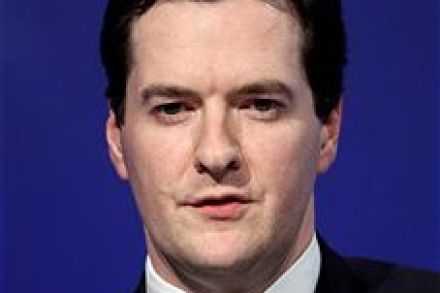
I was all set up to Fisk the post-Budget analysis which Darling normally gives to the Today programme after the Budget - but he wasn’t there. The Treasury refused to have him debate with Osborne which is what Today (unusually) seems to have assumed. Well, we’d best get used to hearing Osborne post-Budget day. At first, I thought it was a coup for the Tories - but as Evan Davis sharpened his claws, it soon appeared to have been a net negative. Osborne just didn’t sound confident. A series of exchanges left him looking unprepared. His line - that he will eliminate ‘the bulk’ of the annual overspend over the lifetime of the parliament - was challenged: what does it mean?

Darling, what about the deficit?

From our UK edition

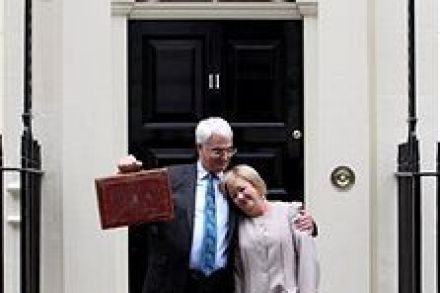
Alistair Darling was terribly proud of the Government's record in his Budget speech today.  But he again dodged the question of how he'll get the deficit under control.  Ruth Lea has called this his "do little" Budget. With the country still facing hundreds of billions in borrowing, the few billion being saved are virtually neglible.  There are huge downside risks for those borrowing forecasts as we get onto the more contentious growth projections from 2011-12 onwards, which are way above City expectations.  And everything will get much worse if borrowing costs rise - Mike Denham has explored the frightening possibilities in a blog for the TPA. We had a proud boast that Britain has "the fastest deficit reduction plan of any G7 country", a massive Brownie.

Another dangerous Quango in the offing

From our UK edition

This government’s love of quangos reached new heights in today’s Budget when Darling announced the creation of a ‘credit adjudicator service’. This will allow companies who feel they have been unfairly denied credit by their bank to appeal the decision to the credit adjudicator service which will have the legal power to order the bank to lend the money.    The Treasury is quick to stress that businesses will have to have claims referred to the credit adjudicator service by their regional business body. But this quango, which will cost five million pounds a year to run, strikes me as a quite absurd attempt to second guess commercial lending decisions. It is also unaccountable.

Spotting the Budget deceptions

From our UK edition

There are, lest you need reminding, two levels of deception on Budget Day.  First, there's the Chancellor's Budget statement, which is pretty obviously spun to put the best light on things.  I refer you to when Brown triumphantly announced a 2p cut in the basic rate of income tax in his final Budget statement, while somehow forgetting to mention that the 10p rate has been abolished.  And then there's a Budget document itself, in which much of the most revealing content is tucked away in appendices and footnotes.  Even straightforward spending figures are hard to come by in the Red Book. In which case, we'll be doing our best to catch out Darling in our live-blog of his statement from 1230.

All quiet on the Westminster front

From our UK edition

If there's one thing distinguishing this morning, then it's just how placid everything feels.  The clouds are moving sluggishly across the sky; there's little excitement about the measures expected in the Budget; and there are no stories about rifts between the Prime Minister and the Chancellor.  Indeed, Downing St insiders tell the FT that relations between Gordon Brown and Alistair Darling have been "pretty good" in the run up to the Budget, because both are "broadly agreed on the strategy of halving the deficit in four years while backing growth initiatives." Many are taking this as a sign that Darling and Peter Mandelson have won out in their efforts to coax Brown away from the crude "investment vs cuts" thinking of yesteryear.

Darling’s Budget preview emphasises private sector-driven growth

From our UK edition

Exactly what you want at the end of the working day: Alistair Darling's video preview of the Budget.  I've watched it so that you don't have to, and it's striking just how much emphasis the Chancellor places on "unlocking private sector investment" to "ensure growth".  There's probably nothing in it, but it does make you wonder whether Labour have some secret business tax cut ready to spring tomorrow.  And, if so, how that sqaures with increasing the rates of tax on workers.

Both Labour and the Tories need to get stuck into Vince

From our UK edition

The public remains infatuated with Vince Cable. A Politics Home poll reveals that 31 percent want Cable to be chancellor. It’s a crushing endorsement: Don’t Know is his nearest rival on 24 percent, followed by Ken Clarke on 16 percent. Cable’s reputation rests on his sagacious airs and an apparent contempt for party politics. His eminence is baffling. Fleet-footed fox-trotter he may be; economic guru he is not. Andrew Neil's interview shattered Cable’s invincibility. The Sage of Twickenham admitted to changing his mind over the HBOS Lloyds merger and his constantly shifting position on cuts was exposed. Add to that the ill-thought out Mansions Tax and Cable begins to look leaden. The Tories and Labour should emphasise Cable’s intellectual shortcomings.

Osborne steps up his game

From our UK edition

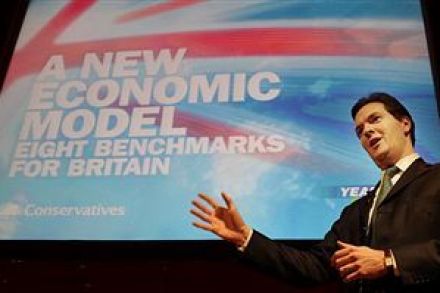
George Osborne must have changed breakfast cereals, or something, because he's suddenly a different man.  After the Tories muddied their economic message to the point of abstraction a few weeks ago, there's now a new clarity and directness about the shadow chancellor's languange.  Exhibit A was his article in the FT last week.  And Exhibit B comes in the form of his article for the Sunday Telegraph today. It sets out five deceptions that we can expect from the Budget this week, and are all punchy and persuasive in equal measures.  But it's the first which, as I said on Friday, is the most important: "The Chancellor might be so brazen as to claim he has a 'windfall' because it turns out he has to borrow a few billion pounds less than he forecast in the autumn.

Pot, kettle, black

From our UK edition

George Boateng, Alan Milburn and Andrew Smith have written a letter to George Osborne, calling him to task over the contradictions in his policy. 'It is not clear to us whether these mixed messages are a deliberate attempt to obscure your plans or a symptom of a confused approach to policy but either way the public deserves better.' Fair enough. Osborne's policy has become more concrete in recent weeks, but much remains still to do. Peversely, I think they've given too much detail, and have been found out because they haven't seen the nation's books.The reduction in the amount of cuts that are planned is a case in point. But talk about hypocrisy: take a look at Labour's economic policy in the run-up to the budget. They are certainly clear on cuts: there aren't going to be any.

Mr Blond goes to Washington

From our UK edition

The Red Tory, Phillip Blond, is spreading the faith in the States. The New York Times’s David Brooks is impressed, very impressed. In fact, he is a proselytising convert. ‘Britain is always going to be more hospitable to communitarian politics than the more libertarian U.S. But people are social creatures here, too. American society has been atomized by the twin revolutions here, too. This country, too, needs a fresh political wind. America, too, is suffering a devastating crisis of authority. The only way to restore trust is from the local community on up.’ Blond’s premise is unanswerable – the twin revolutions of left (prescriptive rights) and right (free market liberalism) have, perversely, centralised power. Everything is highly contestable.

It’s turning into an extremely good week for Osborne

From our UK edition

The gods are smiling on George Osborne. On Monday, he wrote an excellent article in the FT, explaining why he opposed the government’s fiscal plans and giving a brief sketch of his alternative vision. It was a short, sharp, shock article that contrasted with the tentative and nebulous announcements that characterised the Tory post-New Year slump. They were immediate benefits. On Tuesday, the EU Commission broadly supported the Conservative position on reducing public spending, and today a City AM poll indicated that 77 percent of a panel of City experts think that cuts must be made this year. Indeed, many panellists rejected Samuel Brittan’s contention, elucidated in last week’s Spectator, that the markets expect the continuation of current strategy.

The Chancellor’s debate is an opportunity for Osborne

From our UK edition

So, we have a date for the Chancellor’s debate. Channel 4 News will host Darling, Cable and Osborne on Monday the 29th of March at 8pm.   I have a suspicion that George Osborne will come out of this debate rather well. He doesn’t have an expectations problem, unlike Cable, and is quick on his feet. Most importantly, the facts are on his side. It is also worth remembering, as one Tory MP reminded me earlier this week, that since becoming shadow Chancellor Osborne has never failed on a set-piece occasion.   One thing that Osborne must do in the debates is make sure he takes on Cable as well as Darling. Cable’s reputation is over-inflated and Osborne has an opportunity to score some points by highlighting the contradictions in Cable’s record.

Clarke and Osborne are working well

From our UK edition

The Daily Politics featured a telling exchange between Stephen Timms and Ken Clarke. Their arguments were unclear and their hypotheticals relentless - they were debating deficit reduction. A football phone-in DJ had been invited onto the programme to adjudicate. After 7 minutes he broke his befuddled silence and declared, understandably, that Clarke and Timms were a turn-off to ordinary voters. Immediately, Clarke responded clearly and directly, making a case for reducing the deficit with reference to the chillingly close reality of Greece’s collapse. He avoided patronising, homespun economics; and simply delivered bald analysis and a statement of intent with his characteristic gusto. By contrast, Timms remained silent. Clarke is the Tories’ prize-fighter.

Osborne tries to kickstart a mature economic debate

From our UK edition

David has already blogged about George Osborne and Jeffrey Sach's article in the FT this morning.  But it's worth returning to what is as clear and as unalloyed a statement of Tory policy on the public finances as you'll have seen over the past few months.   What I find most impressive about the article isn't so much its loose, perhaps nebulous, prescriptions for the economy - although they're sensible enough - but rather the way it acknowledges how some prominent academic and public figures hold a different view of things, and explains, in straightforward terms, why the Tories don't agree with them.  For instance: "The financial models underpinning the two camps differ.

Brown sets the stage for a scorched earth Budget

From our UK edition

Gordon Brown must be feeling generous today, for he did the Tories two favours on Woman's Hour earlier.  David has already mentioned the first one: Brown saying that he would "keep going" as party leader even if Labour loses the next election, which ups the potential for more summertime Sturm und Drang on his own side.  But the second, as Ben Brogan points out, is his claim that the state of the economy makes it difficult for the government to detail any spending cuts.  The Tories will happily seize on that to justify their own "wait until we see the books" approach. More broadly, Brown's claim also sets the stage for next week's Budget.  The obvious insinuation is that it won't contain much by way of cuts or new deficit reduction plans.

Osborne colours the water blue

From our UK edition

George Osborne has long been in the City’s crosshairs, and criticism peaked last week when less than a quarter of a City panel believe he has the mettle to be Chancellor. Today, Osborne fights back in the FT, with a piece co-penned by Jeffrey Sachs. The pair set out an argument for immediate ‘frugality’, rather than ‘cuts’, and damn Brown’s economic policy as short-term politicking: ‘We are sceptical that a sustainable economic recovery can be based on either reinflating the sectors that have declined or believing future job creation can come simply from the public sector payroll.

The Tories should ignore Byrne’s tax fantasy

From our UK edition

Liam Byrne told The Daily Politics yesterday that Labour would reduce the deficit without raising additional taxation to that which is already planned. Iain Martin describes this pledge as being akin to a chocolate fireguard. He’s right. It’s less realistic than a Jeffrey Archer novel. As Andrew Neil notes, Labour plans to reduce £82bn from the deficit by 2014 with £19bn in tax rises and £38bn in cuts. They bank on economic growth eradicating the remaining £25bn. The government’s optimism for Britain’s economic prospects is touching but scarcely credible on the basis of 0.3 percent growth and the frightening trade deficit. Andrew Neil observed that Byrne was armed with books of notes and briefings.

Clegg’s conditions

From our UK edition

Nick Clegg is the rage of the papers this morning. His interview with the Spectator is trailed across the media and the Independent has an interview where Clegg once again lists the four demands that would be his initial negotiating tests for backing a minority government. They are: - Raising the income tax threshold to £10,000 through taxes on the rich. - An education spending boost for the poorest in society through the 'pupil premiums'. - A switch to a Green economy, less dependent on financial services.  - Political reforms at Westminster, including electoral reform. What to make of that quartet? There is much that is sensible, much that is not, and still more that is unworkable.

The Budget will be on 24 March

From our UK edition

So now we know.  Gordon Brown has just announced that the Budget will be on 24 March – which strongly implies an election date of 6 May.  Brown could dissolve Parliament on 6 April, the manifestos would be published on 12 April, and then we'd be into the campaign proper.  Which means even more speeches, polls and dread speculation than we're getting now. As for the Budget's general flavour, we'll probably get an idea of that today, too.  Brown's currently giving a speech in which he's brushing over recent tremors in the markets, to say that we are "weathering the storm; now is no time to turn back".  Which comes straight off the same old hymnsheet: let's stick to our current deficit reduction plan (such as it is), and turn up the spending taps this year.

Bring on the serious economic debate

From our UK edition

Why does Britain fall for financial spin so often? The question goes well beyond the great confidence trick of Gordon Brown's ten years in the Treasury. I'm just back from three weeks in Australia. What’s always struck me in the years I’ve gone there is how different the newspapers/news shows/political debates are. They are well informed about macro-economics, and there is much less of the spin/personality culture of the mainstream media in the UK. Canada is exactly the same. Last week, the Canadian budget was published – a very clear and credible path to getting budget back to balance within three years.