Economy

Image is the least of Ed’s worries

From our UK edition

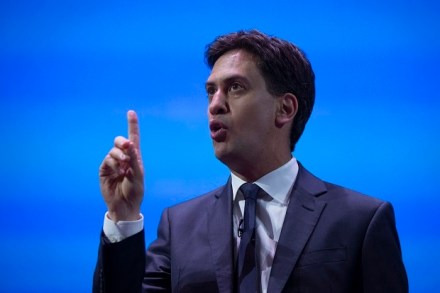
What were Labour thinking? Against the background of Ukraine and Gaza, the only domestic story likely to cut through is an economic one. The news today is dominated by David Cameron, George Osborne and Nick Clegg wallowing in the success of the British economy. So what did Ed Miliband do? He made a speech about presentation for the Westminster village, of course. The SAS is on standby to land in Ukraine, Gaza crumbles and the IMF gives the UK a gold star for economic performance; but, look over there, Ed's got something to say about the political-media nexus! Miliband's war on photo-ops is utterly laughable given that it came just days after he flew half-way round the world to pose for a picture with President Obama at a pointless meeting.

The economy is above its pre-crisis level – but when will voters feel the benefit?

From our UK edition

The economy is now, at last, larger than its pre-recession peak. The coalition parties are keen to claim vindication this morning. Nick Clegg has declared that 'The rescue has worked' and used today's numbers to justify the Liberal Democrat's decision to go into coalition. While George Osborne is celebrating a 'major milestone in our long term economic plan'. But he's also keen to warn that 'there is still a long way to go' and to emphasise that 'the mistakes of the past' must not be repeated. In other words, don't let Labour back in. [datawrapper chart="http://static.spectator.co.uk/okYiQ/index.html"] Political symbolism aside, GDP is still lower in per capita terms today than it was before the recession.

Ed Miliband stakes all on his ‘big choice’

From our UK edition

Labour will launch its summer campaign later today. The centre-piece is Ed Miliband’s speech. He will present a ‘big choice’ to the British public, arguing that they cannot afford 5 more years of Conservative rule. Miliband’s argument is simple: the economy is broken, only we can fix it; the NHS is threatened, only we can save it; the Tories represent the few, only we care for the many. You will have heard these mantras many times before; but, this time, the presentation is different. The speech bears the mark of David Axelrod, who is busy ‘reframing’ Ed Miliband as an honest yeoman of the shires rather than a metropolitan oddball. Rafael Behr of the Guardian has an extensive account of this ‘reframing’ effort.

Forecasting is a mug’s game – but I was right about the economic revival

From our UK edition

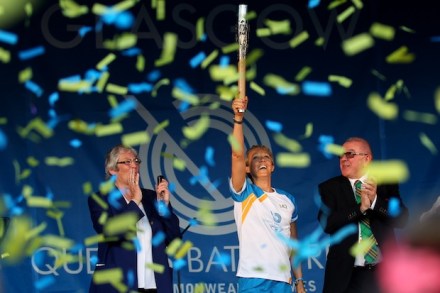
‘Perhaps I should shift my prediction to 23 July 2014,’ I wrote in April 2012. ‘That’s the opening of the Commonwealth Games in Glasgow, and we must all start thinking positively about it.’ I was talking about the moment when the nation would at last shake off its economic gloom, which I had previously pinned to the opening of the London Olympics. But that spring we fell back into negative GDP territory (avoiding a technical two-quarter ‘double dip’ only when the first-quarter result was revised upwards to zero) and I felt obliged to ‘elasticate my timetable’. Since the beginning of last year we have had 18 months of robust growth — but pundits less cheerful than me have continued to report a persistent absence of feelgood.

Why we’ll mostly be supporting Germany on Sunday

From our UK edition

If you’re walking through any built-up area in England between 8 and 10pm this Sunday and you hear a cheer you can be pretty sure it means one thing – Germany have scored yet again. One of the great myths we were fed as children in the 1980s and ‘90s was that the English don’t like the Germans, and in particular the living representatives of all things Teutonic on earth, the German national football team. We love ‘em, and I imagine most English people will be supporting Germany on Sunday. I remember being stuck in the countryside in 2006 and watching the Argentina-Germany quarter-final in a pub; the place went wild when Germany equalised and then won.

Britain must realise George Osborne’s vision of a northern powerhouse

From our UK edition

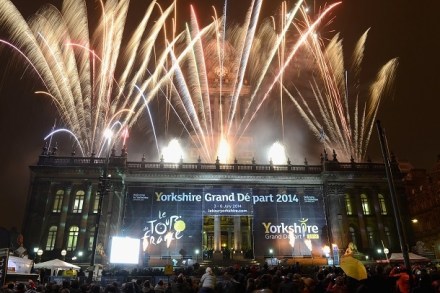
If you walk around our great northern cities, you’ll see stunning examples of civic pride. Albert Square in Manchester and Leeds Town Hall reflect resurgent local confidence. Old narratives of northern decline are out of date. When Guardian writer Andy Beckett launched a hatchet job on the north-east a few weeks ago, claiming that the region was the ‘next Detroit’, the response was visceral and immediate. Beckett managed to write an entire article about the north-east without mentioning Nissan – the most productive car plant in Europe. The North is home to new tech hubs, advanced manufacturing, superb universities and world-leading culture, from sport to music to art. The north-east was the fastest growing economic region in the Lloyds index last month.

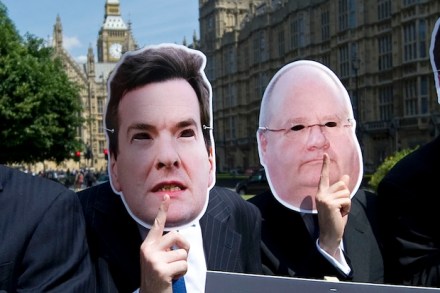
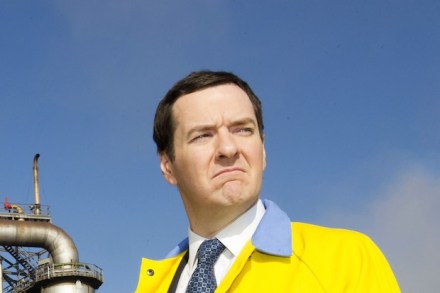
George Osborne has won over the IMF to austerity. Now can he win over Eric Pickles to planning reform?

From our UK edition

Fresh from celebrating the Tories' victory in Newark, George Osborne is continuing a very joyful day by celebrating the International Monetary Fund admitting that it got it wrong on austerity. Christine Lagarde today conceded that 'we underestimated the growth of the UK economy in our growth forecast a year ago'. The report the IMF published today contains its usual mix of things that all parties can celebrate: plenty of compliments for the Government such as 'the economy has rebounded strongly and growth is becoming more balanced', along with criticisms that Labour finds useful for its press releases. Osborne has very little to worry about immediately from the main criticism, which unsurprisingly relates to the Help to Buy scheme.

Tax Freedom Day is a reminder of the choice in 2015: high tax Labour, low tax Conservatives

From our UK edition

Tax Freedom Day, which falls today, is cause for celebration. It marks the point in the calendar when someone's income stops paying for their tax bill and they start keeping the money they have earned. It is an annual reminder that people who work hard and play by the rules deserve to keep their hard won earnings. It is why cutting tax has always been a priority for Conservatives. Four years ago we inherited a tax system that was designed to be as complicated as possible. Gordon Brown's stealth taxes doubled the revenue the Treasury raised through taxation and National Insurance. In total, Labour put up taxes 178 times, and the myriad of extra charges was as complicated as the methods used by corporate tax avoiders today - and as morally compromising.

At last, it’s Tax Freedom Day… but just wait until you find out when Cost of Government Day is

From our UK edition

Today is Tax Freedom Day. That means that the average person in Britain has to work 148 days of the year solely to pay taxes. Only on Tax Freedom Day do we at last start earning for ourselves. This year there is a faint chink of cheer, in that Tax Freedom Day falls three days earlier than it did in 2013. But we still have to labour for nearly five months just to meet the demands of the tax collectors. But what you pay in taxes this year isn't the whole story. Remember that the government spends even more than it raises, and it borrows the difference. Despite all the talk of ‘austerity’, the current government borrows about £1 for every £5 it spends.

Inflation rises – should the coalition be worried?

From our UK edition

Inflation has risen for the first time in ten months, with the consumer prices index growing by 1.8 per cent in the year to April 2014, up from 1.6 per cent in March. [datawrapper chart="http://static.spectator.co.uk/09O5L/index.html"] On the surface, this looks like bad news for the Coalition, which has boasted that falling inflation shows that Ed Miliband's cost-of-living crisis is coming to an end. And certainly Labour has tried to capitalise on the rise already, with Shadow Treasury Minister Catherine McKinnell saying: 'These figures underline why this Tory-led government is wrong to be so complacent about the cost-of-living crisis.

Should London leave the union?

From our UK edition

We're four months away from Scotland's day of destiny, with the London-Scottish media fraternity becoming increasingly alarmed, and ironically (considering their total unionism) far more noticeably Scottish. At the Telegraph Graeme Archer made a characteristically elegant appeal to Sir Malcolm Rikfind to step forward, and there would indeed be something touching and rather beautiful about the grandson of Jewish immigrants being the man who saves Britain. The film script would write itself, if someone were to make a film about the Scottish referendum (which I admit is pretty unlikely).

Wales, sleepwalking to independence?

From our UK edition

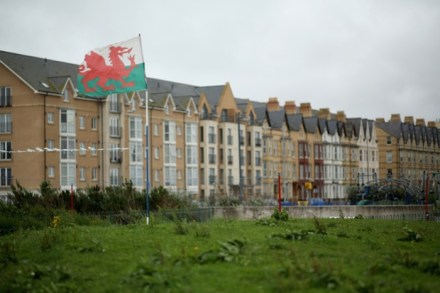
Independence is a fringe issue in Wales. Just 12 per cent of Welsh voters support it, and that figure has been stubbornly consistent. But it is far from implausible that within a decade Wales could find itself standing alone, not through any conviction that independence is the best bet, but because the UK has marginalised Wales. Wales is in a weak negotiating position already, as the Scottish referendum campaign has shown. Take the Barnett Formula, which adjusts the amount of money received from the Treasury by Scotland, Wales and Northern Ireland. An expert commission, led by respected economist Gerald Holtham, pointed out that if Wales were treated on the same basis as an English region it would get some £300million more a year.

The politics of interest rates

From our UK edition

The Bank of England’s inflation report will be published later this morning, which will reveal how strong the bank believes the recovery to be. All eyes will be on its estimate of the remaining ‘slack’ in the economy, which will govern policy on interest rates. The bank’s Monetary Policy Committee has already said that the bank may have to raise rates earlier than expected if strong growth is creating inflationary pressure. City analysts appear to be working on the basis that rates will increase in the first quarter of next year; but there are rumours that the decision might have to be brought forward to the last quarter of this year, such is the speed of growth.

Portrait of the week | 1 May 2014

From our UK edition

Home The British economy grew by 0.8 per cent in the first quarter of 2014, disappointing hotheads who’d expected 1 per cent. It was 3.1 per cent bigger than a year earlier, but 0.6 per cent smaller than in 2008. Pfizer, the American pharmaceutical company, said it wanted to take over AstraZeneca, with a £60 billion bid that would make it the biggest ever foreign takeover of a British-based company. The Labour party said it was leaving the Co-op Bank and taking its £1.2 million overdraft elsewhere. UK Financial Investments, which manages the Treasury’s 81 per cent stake in the Royal Bank of Scotland, blocked a plan for 200 per cent bonuses.

David Cameron is linking Ed Miliband to Labour’s past mistakes

From our UK edition

What a very long PMQs today, presided over by a very bumptious John Bercow. The Speaker let the exchanges run into what he called 'injury time', made a rather poisonous jibe at Labour MP Fiona Mactaggart over her private schooling, and told the Prime Minister that as far as he was concerned, he had finished an answer when the PM didn't believe he had.

UK GDP rises by 0.8 per cent

From our UK edition

The first estimate of the UK’s economic growth for the first quarter of this year is out – and despite missing analysts’ expectations of 1 per cent growth, it’s good news for the Coalition, with the size of the economy increasing by 0.8 per cent. Manufacturing output was up 1.3 per cent, and services output up 0.9 per cent – but growth in services (the dominant sector of the UK's economy) made up most of the increase. [datawrapper chart="http://static.spectator.co.uk/dnCTg/index.html"] But this is only a first estimate, and the figure is subject to revision. Since the crash, GDP figures have been revised by an average of 0.26 percentage points between their first and most recent estimates.

Today’s GDP growth figure could mean a political dividend for the Tories

From our UK edition

Today's GDP figures are another sign that the recovery is strengthening. The 0.8 per cent growth in the first quarter is equivalent to more than 3 per cent annual growth. This means that the UK is on course to have the fastest growing economy in the G7 this year. The rapid fire press releases from Osborne, Alexander and Clegg this morning all strive to avoid saying that the job is done. But with the economy having grown 3.1 per cent since this time last year, it is clear that the economy is now on a far healthier trajectory. No one can say that it is bumping along the bottom anymore. The crucial political question is, as always, when and how many voters will feel the benefits of the recovery. My sense is that by the autumn more people will be beginning to feel it.

New Labour’s greatest failure

From our UK edition

My friend and critic Jonathan Portes obviously took exception to my remarks about Keynesianism having been disproven. His entertaining rebuttal claims to have exposed my misreading of data. That's not quite how I see it. I agree with him that the appalling build-up of out-of-work benefits happened before 1997. The Tories badly miscalculated incapacity benefit; thinking it would be a one-off way to help those affected by deindustrialization. But, in fact, it created a welfare dependency trap, and the 1992 recession caught too many people in it. John Major had an excuse: a recession. Tony Blair had no such excuse. I wasn't joking about a quarter of Liverpool and Glasgow being on the dole at the height of the Labour boom.

Inflation falls again

From our UK edition

Wages in the private sector are now rising faster than inflation. The latest CPI inflation figures show that it now down to 1.6 per cent, comfortably below the Bank of England’s 2 per cent target. This is the sixth time in a row where inflation has fallen. An interest rate rise this side of the election is becoming ever more unlikely. Tomorrow, the Office for National Statistics provides it figures for average wage growth in the last three month. This is expected to show that wages are now increasing faster than prices, easing the cost of living squeeze. Labour argues that the cost of living crisis is about far more than this. But there’s no doubt that if this trend continues between now and May 2015, people will feel better off on polling day than they do today.

Ukraine increases mistrust and misinformation between Russia and the West

From our UK edition

The tense situation in Ukraine has escalated overnight. A deadline has passed for pro-Russian agitators to vacate government buildings in eastern Ukraine or face military action. There is no indication that the agitators have retreated. Meanwhile, reports from Kiev suggest that the government is trying to raise volunteer militias – perhaps in an attempt to avoid deploying the country’s armed forces, which would antagonise Russia. Last night a special session of the UN Security Council, called by Russia, was the scene of disagreement between Russia and the western powers. Ukraine and the western powers say that Russia is behind this unrest; as Vladimir Putin tries his hand at provatskiya (as described by Anne Applebaum in the Spectator recently).