Economy

The spectre haunting George Osborne

From our UK edition

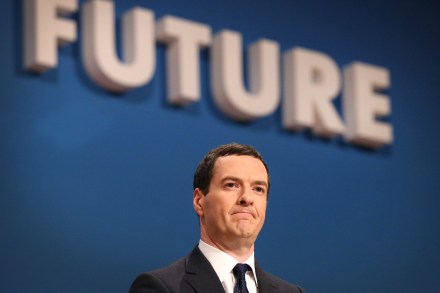
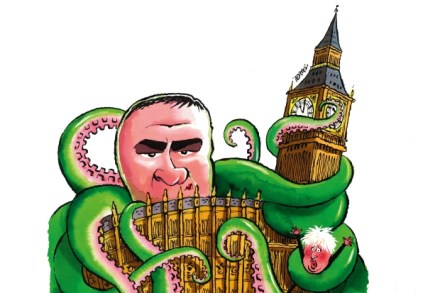
Rather more attention was paid last week to the strange position of George Osborne’s feet than to the dark shape lurking behind him. My own theory about his stance on the conference platform is that he was imagining himself as a operatic tenor, belting out an aria in praise the magic elixir he has administered to the formerly consumptive heroine, the UK economy, and pitching to be her next prince. But operas, like political careers, tend to end badly: so why the rumbling bass notes from the orchestra pit, and what is that sinister thing in the shadows? I’m not talking about Corbyn and McDonnell fighting in a sack with their own colleagues: they’re a comic subplot.

David Cameron: Corbyn poses a threat to Britain’s financial security

From our UK edition

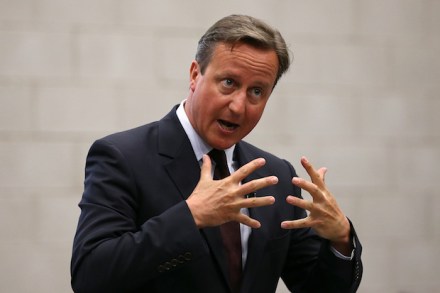
Jeremy Corbyn hasn’t even been elected Labour leader but the campaign to undermine him begins today. David Cameron will give a speech on the economy, in which he will warn that Corbyn will threaten Britain's security — a strategy I wrote about earlier this week. According to today’s Times, the Prime Minister will make his first significant attack on a Corbyn-led Labour by focusing on the threat to Britain’s financial security: ‘I have watched with some bewilderment the Labour leadership election of the past few months. 'Whoever wins . . . this is now a party that has completely vacated the intellectual playing field and no longer represents working people.

Even China can’t buck the market

From our UK edition

Some years ago, I sat with an old China hand in a Beijing teahouse sipping oolong. An American director at a local education firm, his face was grey, creased by decades of pollution and office politics. But when talk turned to the country’s first spacewalk, recently completed, his brow furrowed. 'Have you ever noticed that the government is trying to do everything the United States did, but 50 years later?' He ticked off a list of the mainland’s aims and achievements, from manned space travel, to plans to place a Chinese citizen on the surface of the Moon. But the comparisons don’t end there. For all of its trumpeted exceptionalism, this is a country desperately striving to catch up with and copy the West. A network of Chinese motorways mimic Dwight D.

China’s ‘Black Monday’ is just the start

From our UK edition

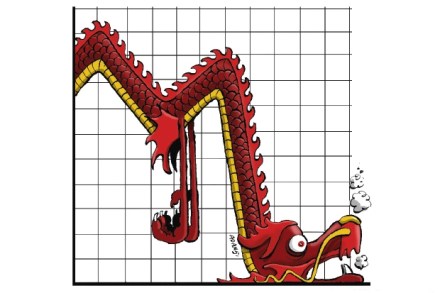
One-party states are rarely any good at admitting to any form of blunder. It is certainly the case with China’s prickly political leaders, who love to flood domestic media with jolly tales of fashion shows and bamboo-chomping pandas – anything to divert people’s attention from a flagging economy and rising unemployment. This makes today's main headline on China Daily's website all the more arresting: 'Stocks plunge most since 2007 as state support measures fail' the state-run newspaper blared, after the Shanghai Composite share index lost 8.5 per cent in a single day. The wider world followed China’s lead: all major Asian stock indices fell on Monday, with oil tumbling to a six-year low.

Exit the dragon

From our UK edition

[audioplayer src="http://rss.acast.com/viewfrom22/chinasdownturn-labourslostvotersandthesweetestvictoryagainstaustralia/media.mp3" title="Elliot Wilson and Andrew Sentance discuss China's economic slump"] Listen [/audioplayer]I stood alongside the chairman of the board of a state-owned enterprise in eastern China. The factory floor, partially open to the elements, stretched out far in front of us, littered with towers and blades designed for some of the world’s largest wind turbines. It was an impressive sight, one to which regular visitors to mainland factories are accustomed: China as the workshop of the world. But something was missing: workers. ‘They’ve been given the day off,’ the chairman said with a slight cough, as we stared out over the vast compound.

Osborne rules

From our UK edition

[audioplayer src="http://rss.acast.com/viewfrom22/theosbornesupremacy/media.mp3" title="Isabel Hardman and George Parker discus how George Osborne rules Westminster" startat=38] Listen [/audioplayer]Against the heavy artillery fire of the Labour leadership battle, the struggle of the Conservative leadership contest goes almost undetected outside Westminster. It is no less intense, even though the Conservatives will not elect a new leader for at least three years. After a week of the parliamentary recess, there is no question about who is winning. This week, for the first time, George Osborne overtook Boris Johnson as William Hill’s favourite. Not so long ago, Osborne was a mere limpet on David Cameron’s wetsuit, clinging on thanks to the patronage of his boss.

The New Labour influences on Osborne’s Budget

From our UK edition

George Osborne had a ringside seat for New Labour’s dominance of British politics and you could see the influence that this has had on him in the Budget. First, there was Osborne’s determination to unpick the structural changes that Gordon Brown had made to move British politics to the left. So, Osborne took the axe to tax credits not only limiting the numbers who’ll receive them in future, down from nine out of ten families with children in 2010 to five in ten by 2020, but he also attacked the intellectual rationale for them, arguing that they have actually kept wages down. But the Budget also owed something to Tony Blair.

The glory that was Greece

From our UK edition

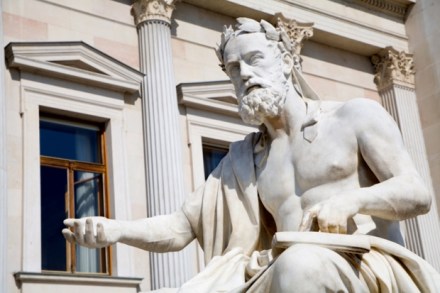
Financial crises are nothing new in Greece. Back in 354 BC, at a time when Frankfurt was still a swamp, the Athenian general Xenophon wrote a briefing paper designed to help his city negotiate the aftermath of a disastrous war. His proposals mixed supply-side reform with Keynesian stimulus. The regulatory powers of Athenian officials, so Xenophon suggested, should be streamlined and enhanced; simultaneously, the city should invest in increasing its commercial and housing stock. The economy, boosted by these measures, would also benefit from encouraging foreign investment. ‘Imports and exports, sales, rents and customs’: all would then surely flourish.

Time running out for a Greek deal warns Osborne

From our UK edition

Right now, Britain is sitting on the side-lines waiting to see if there is, to use George Osborne’s phrase, an ‘11th hour’ deal between Greece and the rest of the Eurozone. Britain isn’t part of the Greek bailout or the Eurozone so is peripheral to this process; David Cameron isn’t invited to the emergency Eurozone meeting on Tuesday. But Osborne has just told the House of Commons that the UK government expects the Eurogroup to discuss a new proposal from the Greek government at tomorrow’s meeting. As Osborne pointed out, the problem is that the political timetable for a deal isn’t moving as fast as the financial timetable in Greece. A deal between Athens and its creditors will take weeks not days.

Ed Balls hired by Harvard to ‘research financial stability’

From our UK edition

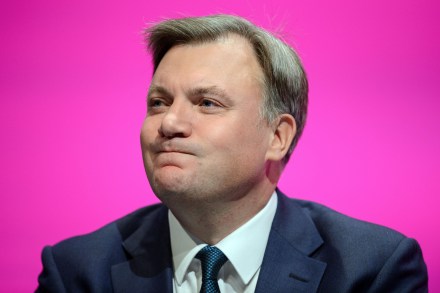
During the election, Ed Miliband's opponents regularly criticised the Labour leader for naming his life experience outside the Westminster bubble as 'teaching at Harvard'. Still, the naysayers haven't put his former sidekick Ed Balls off returning to the university he once studied at. Today the ousted Labour MP has confirmed reports that he is joining the Ivy League establishment as a senior fellow. In a statement John Haigh, the executive Dean of the Kennedy School, announced the appointment: 'We’re delighted to welcome Ed Balls to the Mossavar-Rahmani business and government centre.

Portrait of the week | 30 April 2015

From our UK edition

Home The British economy grew by 0.3 per cent in the first quarter of 2015, the slowest quarterly growth for two years. The Institute for Fiscal Studies pointed out many absurdities in party election promises, noting that most people would see tax and benefit changes that reduced their income; it said that the Conservative and Liberal Democrat plan to increase the personal allowance to £12,500 would not help the 44 per cent of people who now pay no tax, that Labour’s promised 10p tax band would be ‘worth a princely 50 pence a week to most income-tax payers’ and that it could not be sure whether the reintroduction of a 50p rate for high earners would raise any extra money for the Treasury.

Vote Tory | 30 April 2015

From our UK edition

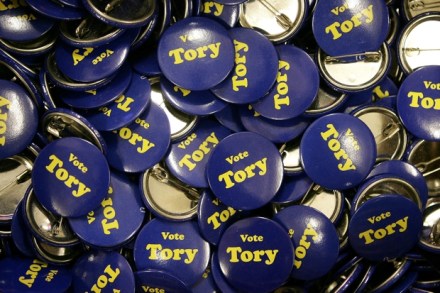
Andrew Roberts  Biographer The Cameron ministry of 2010-15 will go down in history as having made Britain as the most successful economy in the developed world, despite it having inherited a near-bankrupt nation from a Labour party that spent money like a drunken sailor on shore leave. Ordinarily that should be enough to have it returned to power with a huge majority, but we live in gnarled, chippy, egalitarian times.

At last, tax receipts are surging as Osborne’s recovery continues

From our UK edition

The economic good news continues. Until now, the Achilles' heel of the recovery was weak tax revenue – in part deliberate, as Osborne’s tax cuts meant the thousands moving into work got to keep more of their money. But figures out today (pdf) show that the tax haul was up 5.3 per cent in the second half of the financial year, twice the rate of the first half. Wages are finally rising – in the private sector (i.e. most jobs) wage growth is at a six-year high. All this means a deficit of £87bn last year, better than the OBR’s forecast £90bn. In short: it’s all coming good for George Osborne. But at this stage in the election campaign, he’ll be lucky if anyone notices.

Exclusive: watch a preview of the Conservatives’ manifesto launch video

From our UK edition

David Cameron will take to the stage in an hour to launch the Conservatives’ 2015 manifesto. Before he does, a short video will roll to introduce the themes of the document. We can bring you a teaser of that video now — watch above. The message in the short clip is based on how the Tories have turned around the economy over the last five years: 'When Labour left power it left a note. It read: "there is no money". 'Five years on, notes of a different kind are turning people's lives around. Job offers. Lower tax bills. Apprenticeship offers. Mortgage approval letters. Confirmation of school places. 'These notes are the result of a plan that's about giving you security of every stage of your life.

Is Labour really wise to take on the Tories on the economy?

From our UK edition

Ed Miliband gave a good, forceful, well-received speech at Labour’s manifesto launch this morning. It couldn’t have been anything else, given how close we are to polling day. There were some very well-delivered moments, particularly when it came to zero hours contracts and non-doms. The peroration was particularly energetic, with the Labour leader saying: ‘Over the last four and a half years, I have been tested. It is right that I have been. Tested for the privilege of leading this country. I am ready. Ready to put an end to the tired old idea that as long as we look after the rich and powerful we will all be OK. Ready to put into practice the truth that it is only when working people succeed, that Britain succeeds.

Dear Mary | 9 April 2015

From our UK edition

Q. For ten years, I have made a reasonable freelance income working from home. During this time my husband has gone out to an office to work, leaving home in the early morning. Now my husband has announced that he is going to retire and will be at home with me all day. I feel guilty and disloyal saying this, but the truth is it means the end of my reasonable freelance income. Our marriage has been great for many years but I know it won’t survive this kind of annoyance. My husband just chuckles and says I am being neurotic and must learn to be more tolerant. I can’t afford to rent an office anywhere near where we live. — B.B., London W11 A. Don’t feel guilty. No woman wants her husband or partner at home by day.

George Osborne’s press conference leaves questions unanswered

From our UK edition

This is supposed to be the week when people start thinking about the General Election. George Osborne certainly thinks voters are only just switching on as he used his press conference this morning to reiterate a number of claims about Labour’s economic policies that the Tories made last week, including one that the Institute for Fiscal Studies politely described as ‘unhelpful’. The Chancellor launched something called ‘Labour Party Fiscal Plans: An Analysis’, which he presented with the help of a nifty PowerPoint that splashed the words ‘SPENT’ over every funding stream Ed Miliband’s party has come up with so far.

David Cameron: ‘This is a high stakes, high risk election’

From our UK edition

The Tories want to frame this election as a straight choice between David Cameron and Ed Miliband. So, today Cameron delivered some of his most direct attacks on Miliband yet. Anticipating criticism, he said, ‘Some might say “don’t make this personal” but when it comes to who’s Prime Minister, the personal is national.’ Cameron warned that Labour could reverse everything that has been achieved in this parliament, the ‘painstaking work of the last 5 years – they could undo in just 5 months.’ He attacked Labour as ‘the welfare party’ and derided Miliband as a ‘Hampstead Socialist’.

That’s not a ‘sharing economy’: that’s an invitation to sell your whole life

From our UK edition

Technology businesses have a genius for inflicting indignities on us and spinning them as virtues. When they don’t want to respect copyright, they talk about the ‘democratisation of content’. When they want to truffle through our contact lists and browsing histories, they talk about ‘openness’ and ‘personalisation’. A hundred years ago, when a widow had to take in lodgers to pay the bills, it was called misfortune. Today, when an underemployed photographer has to rent out a room in his house or turn his car into a taxi, it’s called the ‘sharing economy’. First Google took his job. Now Airbnb wants his house. Next they’ll be after his pets. In fact, they already are.

A typical coalition Budget – designed to put the Tories back in power

From our UK edition

George Osborne usually tells his aides to prepare for each Budget as if it were his last. This time round, the Chancellor and those around him needed no reminding of what is at stake. They knew that this statement had to boost the Tory election campaign and define the choice facing voters in May, otherwise it really will be the last Budget he gives. As one Tory MP put it, ‘The Budget’s got to deliver some political momentum or we’re done for.’ Osborne has long been aware of the importance of this Budget for his career. If David Cameron returns to No. 10 after the election, Osborne will take the applause. His stock will rise in the party; recollections of his disastrous 2012 Budget will be put aside. He will be hailed as the pilot who weathered the storm.