Economy

Has coronavirus killed the Democrats’ healthcare referendum?

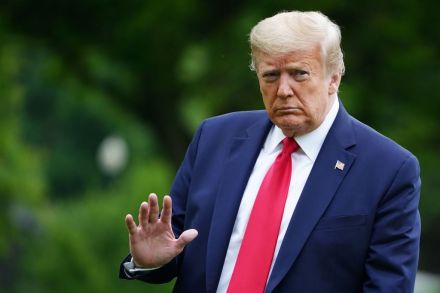
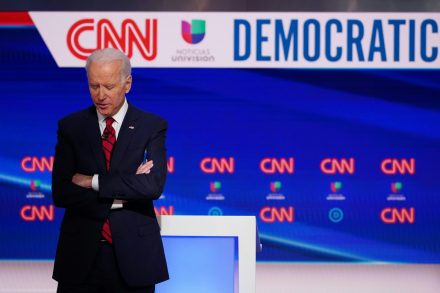
Late last December, Democrats were heading into the homestretch of their presidential primary optimistic that although they faced an internal battle about their party's position on healthcare, they could easily outrun President Trump on the issue. Healthcare proved to be a winning issue during the 2018 midterms when Democrats took back the House, catching Republicans flat-footed on a policy issue they had failed to present a new, cohesive idea on since 'repeal and replace Obamacare'. Democrats hoped they could replicate this success in 2020, as Trump repeatedly floated the possibility of a new Republican plan on healthcare but had yet to actually unveil one. The strategy seemed good on its face; healthcare was constantly polled as the top issue for voters in late 2019 and early 2020.

healthcare Joe Biden

Can we rely on a V-shaped recovery?

From our UK edition

Can the UK expect a V-shape recovery? The Bank of England has this morning published data revealing very deep V, suggesting a complete economic recovery in a matter of months: a 25 per cent plunge in growth in Q2, followed by a 14 per cent and 11 per cent boom in Q3 and Q4. That would be the sharpest collapse in 200 years followed by the sharpest recovery in 300 years: more of a bungee jump than a V. That’s the good news. The bad news is that it’s an ‘illustrative scenario’ rather than a forecast. Source: Bank of England Monetary Policy Report May 2020 It’s not just lockdown: living with the virus takes a big economic toll The Bank’s decision to hold interest rates at (an ultra-historic low) 0.

Why we’ll all be fleeing to Nigeria

From our UK edition

I keep thinking what I’ll do when we regain our liberty — and I picture that beer at the end of Ice Cold in Alex, when after surviving his trek through the Sahara, a sweaty John Mills traces his finger up the frosted schooner, drinks the golden liquid down in one and says: ‘Worth waiting for.’ A month ago I had big ambitions for the future at home on the farm in Kenya. We were planting thousands of avocado trees, we were about to start rearing organic broiler chickens, there was a tilapia farm to expand, a new dairy project, and preparations for the Nairobi livestock breeders’ show later this year, when we hoped to compete with a string of Boran beef cattle. The event was cancelled and all my farm plans were delayed when the flights home to Kenya were closed.

Dear politicians, life must go on

The worst day of my childhood was in 1995 when my father lost his job. He worked close by as a cook in a local restaurant, just a mile or two from our modest home in Cranston, Rhode Island. I recall what it felt like when he broke the news:  I felt my legs start to go under me. I still see him walking up the small hill that led to our home: his head down, his spirit crushed. I still see the look on his face, a man whose purpose had been taken away. My mother cried. We had to sell our house. Nothing would ever be the same. I suspect many American families know what I’m talking about. Nearly 30 million have lost their jobs in just six weeks alone. Millions more will follow.

life unemployment job

How many 100th birthday cards does the Queen send?

From our UK edition

Multiplying by hundreds The Queen penned a personal 100th birthday message to Captain Tom Moore, who has raised money for NHS charities by walking around his Bedfordshire garden. — The tradition of the monarch sending 100th birthday greetings began with George V in 1917, when he sent out a telegram with the words: ‘His Majesty’s hope that the blessings of good health and prosperity may attend you during the remainder of your days.’ That year he sent out 24 such cards. — By the time Elizabeth II became Queen in 1952 the number had grown to 273. — In 2014 the office which sends out cards on her behalf had to hire extra staff when the number reached 7,517.

The changes to come in the post-COVID world order

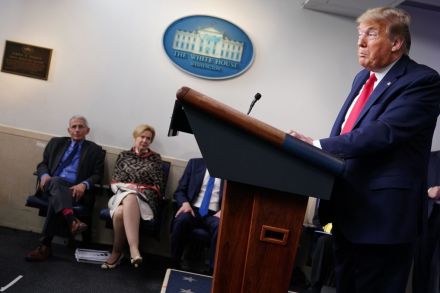
The Democrats are taking their stand on the coronavirus crisis in an untenable position. It is like building a defensive redoubt in a valley surrounded by hills in the hands of the enemy (like the French at Dien Bien Phu in 1955, as President Eisenhower warned them). Whether this is tactical stupidity by the president’s enemies or strategic genius by the president or — more likely — a bit of both, is not clear except to insiders. Readers will recall that the Democrats charged out of the gate on the issue of taking science seriously and reacting comprehensively; the president picked up the gauntlet, brought prominent scientists forward, and 'flattened the curve'.

changes come covid pakistan

Brexit, if used properly, can speed Britain’s post-Corona recovery

From our UK edition

Will the recovery be shaped like a V or a U, some other letter or perhaps the Nike swoosh? This is a much-discussed question among economists right now — but it is not the most important question. We’re familiar with the idea of an up-and-down financial crisis where things return to their starting point: we had roller-coasters in the mid-1980s. Even after the global financial crash of 2008-09, financiers still kept their place as masters of the universe. Global supply chains were repaired and the old power structures remained in position. This time might be very different. Old fixes are being applied to a new crisis. Central banks, for example, have less scope to cut interest rates than they did ten years ago.

Trump walks the recovery tightrope

President Trump’s decision to set the United States back on the path to work will be decried as mere politics, but it is the right decision. It is the task of politicians to consider the general welfare. This consideration sets the current emergency against the coming one, the need to reduce deaths from COVID-19 against the need to forestall the human cost of an economy in open-ended limbo. The data on COVID-19 remains insufficient and will probably remain so. The economic prognosis is, however, clearer, and we have the data too.The IMF is warning that a prolonged shutdown will lead to a Thirties’-style Depression.

recovery
breakdown lockdown

After the lockdown, the breakdown

We are told that ‘we’re in this together’ by people who can afford to wait out the epidemic in the way the aristocrats of old retreated to their estates when the plague arrived in the city. It is more accurate to say that we are, as this edition’s cover puts it, ‘together, alone’. The coronavirus has revealed that people today can live in ‘connected solitude’, as Sam Leith describes. It has never been easier to retreat from society if you have the money. But it has never been more vital to sustain real-world connections. We may feel atomized but the truth is we can no more insulate ourselves entirely from other people than we can from the economic effects of an unprecedented shutdown.

OBR analysis reveals staggering impact of Covid-19 on UK economy

From our UK edition

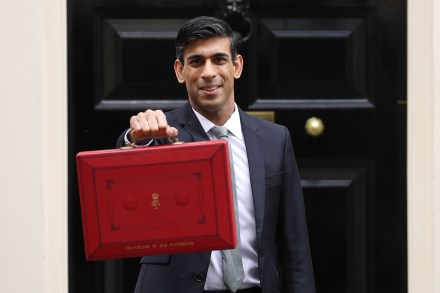
Just days after the Office for Budget Responsibility announced its economic forecasts in March, the reality of Covid-19’s impact on the UK economy sunk in, and its projection was rendered completely obsolete. A month later, with a clearer picture of the toll the virus and lockdown have taken, the OBR today released its new coronavirus analysis, showing a staggering 35 per fall in real GDP in the second quarter, and an unemployment spike of up to 10 per cent – that is, 2 million additional people out of work.

Has Fauci become the James Comey of the scientific community?

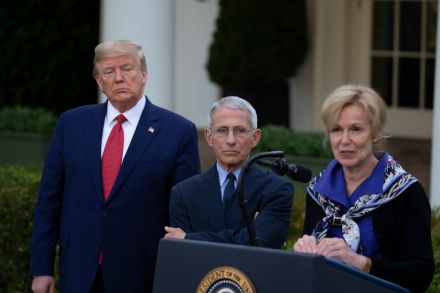
Is the Trump White House fired up? Not exactly. White House spokesman Hogan Gidley tried to douse the speculation that Anthony S. Fauci is about to be sacked for his incautious remarks on CNN’s State of the Union about the merits of an earlier shutdown: 'This media chatter is ridiculous. Dr Fauci has been and remains a trusted adviser to President Trump.'The problem is that the White House has issued similarly indignant statements in the past, only to watch Trump’s wrath turn pustular on Twitter. Any future transgressions are not likely to be forgiven. For now, Trump, who prevented Fauci from responding to a question about hydroxycholoroquine a week ago at a news conference, has sent a warning shot in Fauci’s direction.

fauci

The case for reopening the country now

More and more people, I suspect, are padding about muttering lines from Psalm 13: 'How long, O Lord,...How long must I take counsel in my soul/ and have sorrow in my heart all the day? How long shall my enemy be exalted over me?' These are good questions. As of April 9, 2020, however, we do not have a reliable answer. You might think that the reason we don’t have an answer to these questions is because we don’t really know the insidious strength of the enemy, the new coronavirus that, with the help of the Chinese back in December and January, has made its way around the world, sickening hundreds of thousands, from Prime Minister Boris Johnson on down. I think that is only part of the answer.

country

At least some of the Chancellor’s promises are actually working

From our UK edition

The phrase ‘sharing economy’ was coined a decade or so ago to describe collaborative new business models made possible by the internet, from Airbnb and Uber to crowdfunding, peer-to-peer lending and skill bartering sites. It was about ways of monetising assets, circulating capital and earning casual livings that boosted economic activity after the ‘great recession’ and it will be a hive of creativity in the next recovery — even though its partner is the ‘gig economy’ whose insecurity has left so many people in hardship now.

The longer lockdown continues, the more imperilled we become

From our UK edition

Comically, Chinese Communist party officials have speculated that Covid-19 was planted by the US army. Yet a respectable conspiracy theorist would deduce that a virus sending the rest of the world into an hysterical, wholesale economic shutdown has ‘Made in China’ written all over it. After all, China didn’t flat-line its entire economy to contain the contagion. At the end of this debacle, then, China could rule the world — although it won’t have many solvent customers left to buy its products. The only other countries calling the shots in future could be South Korea, Japan and Sweden, having thus far resisted the stampede to lockdown.

Coronomics: Ordinary remedies won’t be enough for a surreal crash

From our UK edition

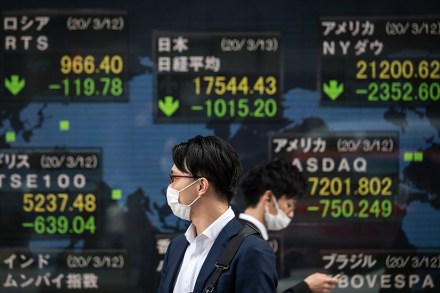
We have seen crashes before, recessions and depressions, but nothing like this. Our fear of coronavirus has hindered and halted every aspect of daily life. We look out of our windows and barely recognise the country we’re in: police film dog-walkers and pour black dye into lagoons to deter swimmers. We wait in queues for empty-shelved supermarkets. The stock market collapses, surges, then collapses again. None of the old rules make sense. Welcome to the world of Coronomics. If this were a normal recession, the remedy would be simple: encourage people to go out, spend money and boost the economy. But today’s public health concerns require the government to repress the economy, while trying to keep it afloat at the same time.

Biden lets Trump write his own political epitaph

It’s time to take stock of Congress. Georgia Sen. Kelly Loeffler’s new financial disclosures indicate that in recent months she hastily divested herself of even more stocks than was previously apparent. A riveting new report from the Atlanta Journal-Constitution has the goods: it indicates that even as Loeffler — reputed to be worth about $500 million together with her husband Jeff Sprecher who, incidentally, is the chairman of the New York Stock Exchange — was issuing panegyrics to Trump for his visionary leadership, she was dumping millions, including $18.7 of Intercontinental Exchange stock and investments in T.J. Maxx and Lululemon, in late February and early March. She also invested in a company producing coronavirus protective wear.

trump disinfectant
airline

Will American workers see enough of the $58 billion airline bailout?

The recently passed coronavirus stimulus bill offers $58 billion in aid to the airline industry to survive the massive decrease in travel caused by the COVID-19 outbreak, but workers are already concerned that airlines are taking advantage of taxpayer money while failing to live up to promises to their employees and customers. The Treasury Department on Tuesday issued its guidelines for the $29 billion loan and $29 billion grant programs, reiterating that companies who apply for money must agree not to layoff or furlough their employees until after September 2020. Treasury also required recipients of grant money, which is earmarked for payroll assistance, to only use that money for American workers.

Donald Trump’s wishful Easter deadline is a trap for Democrats

Will the stimulus stimulate? Donald Trump, who seems to have had nothing to do with the actual formation of the $2 trillion bill, is exhorting Congress to pass it Wednesday. It contains all kinds of bennies for the Democratic party, including an obscure provision that enables over-the-counter drug reform. But the real shift is that the GOP is now embracing big government — and it’s likely to continue in the form of further stimulus bills.The prospect of over a million workers hitting the unemployment line in March helps to concentrate the mind. And so, Republicans, who used to denounce helicopter money, are showering it on the average American, a nifty direct cash payment of $1,200. Then there is unemployment insurance. It’s being prolonged by 13 weeks.

donald trump easter
stimulus

Are you feeling stimulated?

Well, at least this isn’t socialism for the rich. The Trump administration’s gargantuan stimulus package — the third in response to the coronavirus crisis and the biggest by far in American history — is not about bailing out the banks. It’s about saving the financial system tout corps — that means you and me. The government is firing a $2 trillion-plus-sized fiscal rocket in the direction of a looming recession and hoping explodes in roughly the right place. The new bill is expected to include direct payments to most adults of $1,200 or less. Small businesses will get $300 billion, hospitals $130 billion and local and state governments $150 billion.

Are people really panic buying?

From our UK edition

We have, of course, been transformed into a nation of hoarders and panic buyers. We know this because everyone keeps telling us. There are the queues around the block, waiting for Asda to open; the tearful nurse on Twitter who couldn’t get any food after a 48-hour shift; anecdotes galore about people loading loo rolls into their trolleys by the tree trunk-load, fighting over each consignment as it arrives. How much more civilised we all were – it has been claimed – during wartime. I’m sure there are people panic-buying and hoarding vast quantities of tinned foods, but is it all quite so bad as being made out?