Economy

Should we abandon hopes of a V-shaped recovery?

From our UK edition

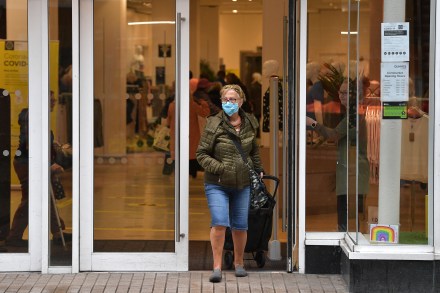
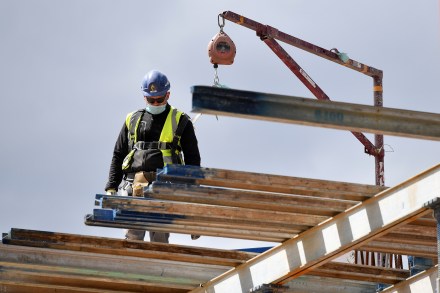
It is an uptick so small that it could almost be comic, but the UK economy started to grow in May: by 1.8 per cent following a 20 per cent slump in April. Office for National Statistics figures out today show that, even in lockdown, surging online retail sales - coupled with signs of a recovery in construction - show a small increase in GDP. The big question is what shape we can now see: a L, a Nike swoosh or a sharp V? Reopening the economy can only go so far: tackling people’s fear of Covid-19 is key for a V-shaped recovery Today’s increase suggests growth is  - every so slightly - on the up, easing doomsday concerns about an L-shape (that is, no recovery at all).

Portrait of the week: Sunak’s statement, shop closures and a hoo-ha over Boohoo

From our UK edition

Home Rishi Sunak, the Chancellor of the Exchequer, announced measures intended to stimulate the economy. Under a £111 million scheme, companies in England would be given £1,000 for each new work experience place they offered. Under a £2 billion scheme, householders would be given two-thirds of the cost of energy-saving work such as insulation, up to £5,000. The government made available £1.57 billion in emergency support for the arts and heritage sites; it was to go to institutions, not freelance performers. Among business failures and job losses, sandwich chain Pret A Manger was to close 30 of its 410 shops and lose 1,000 staff. Up to 5,000 jobs were to be cut at the Upper Crust sandwich chain and other cafés owned by the SSP Group. T.M.

A bailout for the arts is good – but reopening would have been better

From our UK edition

The government’s £1.57 billion lifeline for the cultural sector was bigger than most practitioners were expecting — and drew a chorus of approval from arts panjandrums lined up to offer quotes on the end of the DCMS press release. A nifty media exercise, then, and a smart deployment of the Hank Paulson ‘big number’: when the US treasury secretary unveiled his $700 billion bailout package in 2008, a staffer admitted the number had been pulled out of the air simply because it sounded huge.

The young are the most vulnerable to the Covid crash

From our UK edition

Coronavirus is deadlier for the old than the young. But for the young, it is economically devastating. A third of working 18- to 24-year-olds have lost work because of the pandemic. Between March and May, the number of those under 24 claiming universal credit doubled to almost half a million, and those who leave school or university this year can expect to earn less a decade from now than they otherwise would have done. During lockdown the young have, to a remarkable extent, accepted their lives being put on hold to protect their elders. Fairness dictates that steps must now be taken to prevent them from bearing the brunt of the coming recession. Without help, the young will be hit hard in the next few years.

Media referees PPP loans

No single industry was happier to see the government release Paycheck Protection Program (PPP) data Monday than the media. While there wasn’t any sort of significant media bailout, journalists successfully turned the news of the program into profitable clicks of their own. Newsweek: ‘Religious Organizations Receive $7.3 Billion in PPP Loans, Megachurches Amass Millions’ Forbes: ‘Vocal Opponents Of Federal Spending Took PPP Loans, Including Ayn Rand Institute, Grover Norquist Group’ Associated Press: ‘Kanye West? The Girl Scouts? Hedge funds? All got PPP loans’ Deadline: ‘Who Got PPP Loans?

ppp Treasury Sec. Steve Mnuchin and President Donald Trump

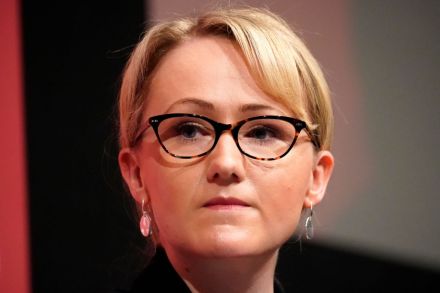
Why Rebecca Long-Bailey had to go

From our UK edition

Do you remember where you were when the BBC showed a rerun of Bowie’s Glastonbury set? When we ask each other that in future, the answer is always going to be: ‘At home, recovering from a day of Zoom calls.’ It’s 100 days since lockdown and as we slowly emerge it’s hard to keep a sense of proportion about the events in between. I remember pricking my finger for a trial antibody test; I remember my delight at discovering that an old-time cockney butcher still exists on a nearby council estate; I remember the absolute stillness of the air as a sparrowhawk circled over south London. Best to fix these memories in writing now, because the cryogenic social frost is well and truly melting. I’m on a public webinar with Katja Kipping and Jagmeet Singh.

Does Boris’s ‘new deal’ offer anything new?

From our UK edition

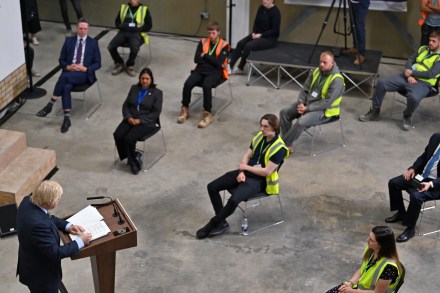
Today Boris Johnson launched his ‘new deal’ for Britain – billed as an economic recovery plan to follow the Covid recession.  It sounds positively Rooseveltian. It sounds like a new deal. All I can say is that if so, then that is how it is meant to sound and to be, because that is what the times demand – a government that is powerful and determined and that puts its arms around people at a time of crisis. What has changed is the PM’s political positioning, away from the market economy and towards state intervention But were the announcements really a 'new deal’ – or a new anything? The vast majority of the announcements were not new but manifesto promises from the 2019 election.

The rioters and the rentiers

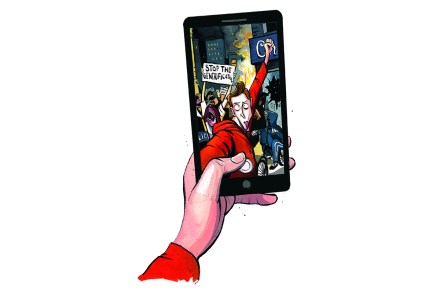
It was inevitable that the wave of destructive rioting and looting that has swept through cities that are almost all governed by progressive Democrats, triggered initially by outrage over the sickening death in police custody of George Floyd, would be compared to the American urban riots of earlier generations. But the parallels miss profound differences in the underlying economic and social dynamics. The Detroit and Newark riots of 1967 and the Los Angeles riot of 1992, for example, took place in cities suffering from the effects of deindustrialization. Los Angeles is not often thought of as a major manufacturing center, but Southern California had a flourishing aerospace industry that went into decline following the Cold War.

rentiers

Is there anywhere visitors will be welcome this summer?

From our UK edition

Do stock markets foretell the future while politicians fudge and economists mumble? No: share prices collectively have a life of their own — driven by herd mentality, weight of money and the available range of investment choices — which indicates little more than the simple fact that what goes up must one day come down and vice versa. Both the FTSE100 and America’s S&P500 indices lost a third of their value between late February when the pandemic began to look serious and a month later when the rate of virus transmission was at its height. So far, so logical. But since then, both have sustained rallies that defy all public and corporate pessimism. Now, just as shops and factories are reopening, both markets look ‘overbought’ and wobbly again.

How fast can Britain recover from its economic free-fall?

From our UK edition

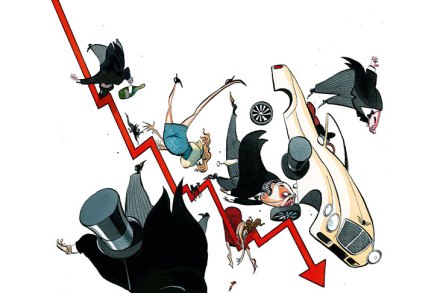
Putting the UK into lockdown was only going to send growth in one direction: down. While today’s figures from the Office for National Statistics were expected, they nevertheless confirm that the UK has experienced its largest monthly economic contraction on record. The UK economy shrank 20.4 per cent in April. Combined with March’s GDP drop (now the second largest fall since records began), the British economy is a quarter smaller than it was in February. Putting these figures alongside other monthly slumps makes for stark comparison. Hits taken for additional bank holidays and for the pain experienced during the financial crash barely compare to what’s happened in light of the shutdown of Britain’s economy.

Why UK GDP may have fallen by more than a fifth

From our UK edition

Is anyone really surprised that GDP fell by 20.4 percent in April? Perhaps we should be. It doesn’t sound high enough to me. We have just been through a great economic experiment in which most shops have been forced to close, all pubs and restaurants been forced to shut their doors and the public ordered to remain indoors except for essential visits. Road traffic at one point was back to 1950s levels. And yet the economy officially shrank only by a fifth – taking it back roughly to the size it was in 2003. I am not sure that these statistics quite pass the smell test. According to the breakdown provided by the ONS, accommodation and catering fell by 88.1 per cent. It makes you wonder how that 11.

Is Britain set to be the sick man of Europe?

From our UK edition

The global lockdown has seen economies shrink and unemployment soar across the world, pushing governments to borrow at rates never seen in peacetime. On Wednesday, the OECD published country-by-country estimates for the economic hit – and its projections for the UK are some of the worst. Under the scenario of no second wave (that is, assuming countries won’t need to lockdown again this year), Britain’s economic downturn is forecast to be the worst in the G7, and fourth-worst in the OECD, with an 11 per cent fall in annual GDP. In the case of a second wave, prospects still aren’t great: in the G7, Britain’s 14 per cent downturn is on par with Italy and France, and the country retains a dismal place in the OECD line-up.

Can the government deliver apprenticeship guarantees?

From our UK edition

What exactly is an apprenticeship guarantee? That’s the major question to come out of Wednesday night's Covid press conference after Boris Johnson committed to offering an apprenticeship to all young people:   I think it is going to be vital that we guarantee apprenticeships for young people. We will have to look after people across the board, but young people in particular, I think, should be guaranteed an apprenticeship. While the commitment was there, the detail was not. Is this really a guarantee for all young people? In the first quarter of this year, over 350,000 people aged 16 to 24 were unemployed (excluding those in full-time education); another 1.5 million aged 18 to 24-year-olds were registered as economically inactive.

Why are US shares performing so well when the economy isn’t?

A staggering 20 million Americans lost their jobs in April and yet the US stock market had its best month for decades, with the S&P 500 up 13 percent. Since then job losses have continued to mount, and yet the market is still higher. How can US shares be doing so well when the evidence of economic devastation is overwhelming? Even odder, the US stock market (S&P 500, down 13 percent year to date) is doing far better than the UK (FTSE 100, down 23 percent YTD) and European indices (Eurostoxx, down 26 percent YTD), and yet UK and European governments have protected millions of jobs through various furloughing schemes.

market shares

X days to save the economy!

From our UK edition

I wonder what the Labour party will use as its scare slogan at the next election? After all, the usual one of ‘[Insert number] weeks/days/minutes to save the NHS’ may not work next time. Not that it worked every time before. But it has long been the favourite attack line of a British left that likes to portray the Conservative party as so ravenously right-wing that whenever it comes to power it wastes not a moment in dismantling Attlee’s post-war creation. And yet, although the Conservative party has been in power fairly often since 1945, not once has it managed to dismantle, privatise, or otherwise sell off the NHS. Its tendency, rather, has been to increase spending, ring-fence spending and more.

It isn’t necessarily the economy, stupid!

'It’s the economy, stupid!' With those now famous words, the Democratic strategist James Carville summarized the 1992 election between President George H.W. Bush and Arkansas governor Bill Clinton. Carville captured a fundamental reality. From 1932 to today, only three incumbent presidents have lost their reelection campaigns: Herbert Hoover in 1932, Jimmy Carter in 1980 and H W Bush in 1992. Each man fell thanks to economic woes. As of March 1, 2020, Donald Trump’s reelection campaign was also all about the economy, stupid. Trump’s 'Keep America Great!' economic record had been very strong. The stock market had hit record highs, with the S&P 500 reaching nearly 3,400 and the DJIA almost topping 30,000 in mid-February.

economy

Stimulus squabble marks a return to politics as usual

Who is the proposed new $3 trillion stimulus package designed to help? If enacted, the bill — which narrowly passed through the House yesterday, with a break in both party lines — would follow from the $2 trillion package passed in March. But it’s not getting past the Senate, at least not in its current form. Despite broad consensus that the first stimulus wave for businesses and families was a necessary emergency measure to help get America’s economy through the COVID crisis, this next round has become increasingly political, looking more like election postering than a thorough plan for the next phase of the pandemic.

stimulus

Letters: It’s not so easy to boycott Chinese goods

From our UK edition

Jobs for all Sir: Charles Bazlington championed Universal Basic Income in last week’s magazine (Letters, 9 May). It is welcome to see innovative ideas being discussed at a time of unprecedented economic crisis. Might I suggest that if we wish to empower citizens, not just pay them, we instead look to provide employment via a National Job Guarantee? A guaranteed job at the living wage backed by the state and administered by national and local government as well as the charity and private sectors. This crisis has proved that people need not only money but purpose, camaraderie with colleagues, and the pride of a ‘job done well’; they want to provide for their families and contribute to society. We have plenty of work that needs doing.

This is not a natural disaster, but a manmade one

From our UK edition

Should our future permit an occupation so frivolous, historians years from now will make a big mistake if they blame the nauseating plummet of global GDP in 2020 directly on a novel coronavirus. After all — forgive the repetition, but certain figures bear revisiting — Covid’s roughly 290,000 deaths wouldn’t raise a blip on a graph of worldwide mortality (reminder: 58 million global deaths in 2019). Covid deaths will barely register in the big picture even if their total multiplies by several times. For maintaining a precious sense of proportion, check out some other annual global fatalities: influenza, up to 650,000. Typhoid fever, up to 160,000. Cholera, up to 140,000. Malaria, 620,000 in 2017, almost all in Africa (so who cares, right?).

The coronavirus crash could be even worse than we feared

From our UK edition

Just how bad will the Covid economic hit be? Today’s figures for the first quarter of 2020 show Britain's economy shrunk by two per cent, but that takes into account just a few days of lockdown (and suggests that the recession started some time before). The March figure is more like it: despite only formally being in lockdown for eight days in March, the UK economy contracted 5.8 per cent that month alone. As Capital Economics puts it ‘in just one month the economy has tumbled by as much as it did in the year and a half after the global financial crisis.’ Yet some responses to today's figures reveal a worrying degree of optimism about the future.