Economy

Will the economy recover enough to help Trump win?

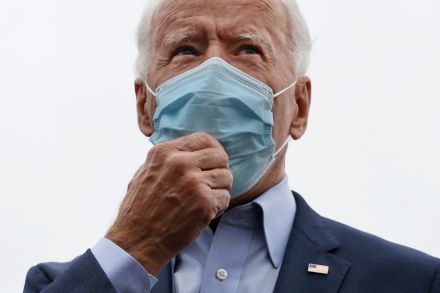
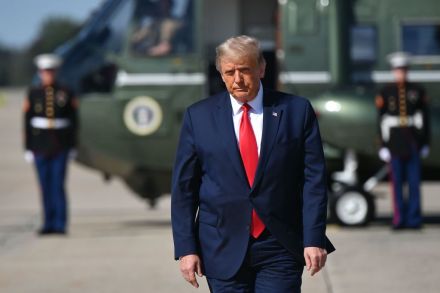
It’s rather difficult to dissect or analyze policy areas from last night’s horrendous debate. But Freddy Gray and I attempt to do so on the latest episode of his Americano podcast — and considering today’s economic updates, I’ll give it another go.Even in a debate that spent most of its time in the gutter, both President Trump and former vice president Joe Biden had moments of cut-through. For Biden, his call for unity in America felt like a rare throwback to a form of traditional campaigning that tends to play well with watchers at home. For Trump, his most persuasive moments came early in the debate, when he was speaking about the economy.

economy

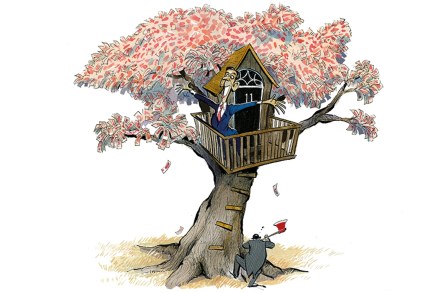
Rishi Sunak prepares UK economy for ‘permanent adjustment’

From our UK edition

The UK economy is no longer hibernating; it is 'adjusting'. Today's measures announced by Chancellor Rishi Sunak are designed to help an economy expected to limp through the coming months, quite painfully in certain areas, hopefully on its way to recovery. But are they enough? The role of the government and the employer has switched: the six month jobs support scheme will see the state contribute to workers' wages if needed, but now the employer will be paying over 50 per cent of the costs, with the government paying 22 per cent.

The true cost of coronavirus on our economy

From our UK edition

When future historians look back on 21st-century mortality statistics, they will struggle to find anything out of the ordinary in Britain in 2020. When they look at the economic data they could be forgiven for thinking we were hit by an asteroid. The Office for Budget Responsibility predicts a fall in GDP of around 12 per cent in 2020, the equivalent of having the 2008-09 recession twice in one year. The second quarter saw GDP fall by 20.4 per cent, breaking the record set during the Great Frost of 1709. The economy rallied by 6.6 per cent in July — which sounds impressive until you consider that it only took the economy back to where it was in the spring of 2013.

Will the economy continue to bounce back?

From our UK edition

The UK economy continues to bounce back – but it’s the coming months that could pour cold water on a V-shaped recovery. The economy grew 6.6 per cent in July, according to data from the Office for National Statistics, with the return of pubs, restaurants, hairdressers and more non-essential shops giving us another boost back towards pre-Covid levels. But there’s still a long way to go: despite a record-breaking growth rate between May and July, Britain is still nearly 12 per cent below its GDP level in February 2020, having experienced a record-breaking contraction – the biggest seen in 300 years, and the worst of any major economy during the crisis so far.

Boris Johnson’s non-existent get back to work campaign

From our UK edition

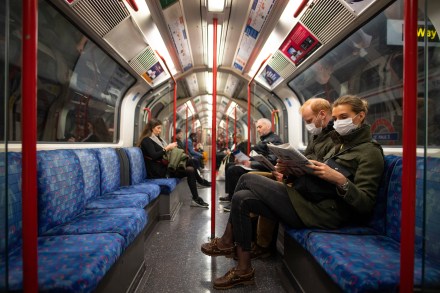
This week was built up by the Prime Minister to be the moment that would mark the return of economic and social life to robust health. But there was no real attempt by his government to urge people to go back to the office. Even Number 10 has admitted there never was a back to work campaign. In London, the number of Tube journeys made at the beginning of the week — as good an indicator of economic vitality as any — was still far below last year’s levels. In spite of repeated assurances that returning to school is safe and necessary for children’s health, a YouGov poll suggested that nearly one in five parents are still considering keeping their offspring at home. Recent figures from Scotland indicate they are doing precisely that.

Can Scotland afford independence?

From our UK edition

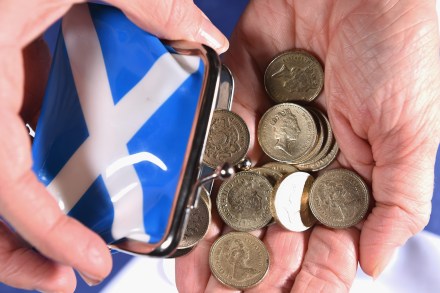
How would an independent Scotland have fared during the pandemic? We found out this week on the annual release of Gers, which adds up all Scottish spending and taxes and states the size of the gap. This year it's estimated at about 27 per cent of GDP, according to the Institute for Fiscal Studies, which would make it the worst-hit country in the developed world. It's unlikely that a small country could sustain a deficit of this size even in a pandemic: the UK has been hit bad, but we have the pound and the Bank of England's QE to lower the cost of issuing debt. For a country of five million to run a deficit of 27pc would be far, far harder.

The stock market isn’t the success story Trump thinks it is

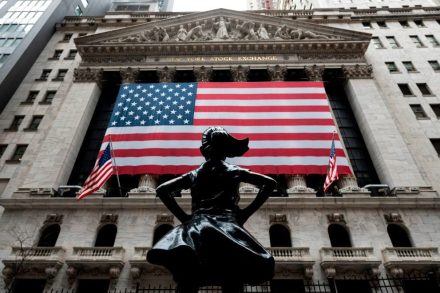
COVID-19 is still raging, with little sign of coming under control. The economy is already a tenth smaller than it was at the start of the year. Joblessness is soaring. And the budget deficit? Don’t even ask. But, hey, perhaps we shouldn’t worry about any of that. As the President of the United States keeps pointing out, the stock market is doing great, and, in his opinion, anyway, that means America, to borrow the kind of slogan that fits neatly onto a baseball cap, is great again as well. There is a problem, however, with Trump’s breezy 21-character analysis. It is not really true. The main equity indices reflect many different things, and the health of the economy is not always one of them. https://twitter.

stock market

Portrait of the week: Employment falls, exam failures and a roundabout rigmarole

From our UK edition

Home In fine weather with calm seas, 565 migrants in four days crossed the Channel in small craft. French officials said that 33 migrants in two boats that got into difficulty had been returned to Calais. In July more than 1,000 migrants crossed the Channel. Priti Patel, the Home Secretary, appointed Dan O’Mahoney as Britain’s Clandestine Channel Threat Commander, tasked with somehow making such voyages ‘unviable’. Employment fell by 220,000 in the three months to June, the biggest quarterly fall since 2009, but unemployment remained at about 3.9 per cent, as millions stayed on the furlough scheme. At the beginning of the week, Sunday 9 August, total deaths from Covid-19 stood at 46,566, with a seven-day average of 53 deaths a day.

The battle to tackle excess boardroom pay may already be won

From our UK edition

At a low moment in late March, I suggested that all large companies should consider temporary cuts in executive salaries ‘both as a gesture of immediate solidarity and as a move to avert a longer-term backlash against wealth, privilege and the pillars of capitalism’. Latest research from the Chartered Institute of Personnel and Development and the High Pay Centre reveals that 36 of the FTSE 100 list of top companies followed my advice, most commonly with a 20 per cent salary cut for the chief executive but no reduction to the long-term incentive schemes that make up half of total boardroom pay. The High Pay Centre, which hates high pay, clearly doesn’t think that’s enough of a sacrifice.

In the race to recovery, Britain is losing

From our UK edition

At the start of lockdown, the government was obsessed with how other countries were dealing with the Covid crisis. In No. 10 press conferences, Britain’s daily death toll was shown next to numbers from the rest of the world, putting our handling of the virus into perspective. But when our death toll jumped, the government claimed the calculations were too different to compare and dropped the graph. A few weeks ago, the Office for National Statistics picked up where the government had left off, revealing that England had the highest number of excess deaths in Europe, while Scotland, Wales and Northern Ireland were in the top eight. The UK had lost the first leg of the Covid race. Now it looks set to lose the second: the race to recovery.

Is Britain heading for the worst economic hit in Europe?

From our UK edition

It’s odd to read headlines today saying that the UK has officially entered recession. We’ve known this for months: shops were closed, restaurants shuttered. You couldn’t get a cup of coffee or a haircut, offices were closed and millions furloughed. These were not normal times – but we knew that then, as we know it now. What we didn’t know was how far the economy had contracted, and how much this could be remedied by ending lockdown. The big news today, revealed by official figures released by the Office for National Statistics this morning, starts to answer this. It turns out that our economic hit was one of the hardest in Europe. UK GDP fell 20.

Why unemployment figures haven’t budged

From our UK edition

Look past the headline statistics and you’ll see economic reality starting to infiltrate the labour market. Today’s employment figures from the Office for National Statistics mark very little movement from the previous quarter, with employment at 76.4 per cent (down 0.2 per cent on the previous quarter) and unemployment at 3.9 per cent (unchanged from the previous quarter, still hovering at a record-low level). Yet today also marks the biggest decrease in UK employment for a decade, since May 2009 in the wake of the financial crash. For many workers, being temporarily away from paid work is likely to become permanent How can this be?

Are the Bank of England’s forecasts too optimistic?

From our UK edition

The Bank of England offers a mixed bag of forecasts today. It now expects Britain’s economic downturn to be less extreme than feared, while also predicting a recovery will take longer than originally thought. The Bank now expects the economy to contract 9.5 per cent in 2020, substantially less than the 14 per cent drop it predicted at the height of the national lockdown. But it joined the Office for National Statistics in revising its optimism for a sharp V-shaped recovery downward, expecting nine per cent growth in 2021, with GDP not returning to pre-Covid-19 levels for another eighteen months. The Bank’s forecast remains one of the most optimistic, still showing the resemblance of a V-shaped recovery. But are these scenarios accurate reflection of what’s to come?

Economies run on confidence – the government mustn’t undermine it

From our UK edition

Throughout the past few months the government has appeared to face an unenviable choice between saving lives and saving livelihoods. Nevertheless, a fortnight ago the path seemed clear. The numbers of Covid infections were falling, but the economic news was dire — hence Boris Johnson was engaged in a drive to reopen the economy as quickly as he could without prompting objections from his scientific advisers. Now things feel rather different. Economic figures from recent days have surprised on the upside: the CBI’s figures for retail sales in July show a sharp V-shaped recovery. Sales of cars and houses were running ahead of last year — during July at least. At the same time, though, the outlook on Covid-19 has darkened.

London in limbo: can the capital survive this crisis?

From our UK edition

We should worry about what is happening to London. Our capital is, after all, the country’s economic powerhouse. It accounts for just under a quarter of Britain’s GDP. In fact, three of its now most deserted locations — the City, the West End and Canary Wharf — account collectively for an eighth of the nation’s output. There is a danger that short-term damage to London’s economy could become permanent unless the right steps are taken. This was supposed to be the week when things would start returning to some sort of normality, as the government encouraged more people to go back to the office. Yet uncertainty prevails.

Trump’s election delay tweet smacks of desperation

Donald Trump’s tweet mooting an election delay isn’t a sign of strength but weakness. Maybe he’ll say it was just a joke. Maybe it was intended to distract from the bad economic news. Maybe he’s trying to inure the public to the idea of a postponement. Maybe he’s preparing for his post-presidency with a farrago of excuses and complaints and lies. Or maybe Trump is simply flailing, a prospective loser who is already losing it.His erstwhile champion Herman Cain, who denounced the idea of wearing a mask, has just died at 74 from coronavirus complications. His national security adviser has the virus. So does Rep. Louie Gohmert, who refused to wear a mask. Trump’s incessant attempts to depict the pandemic as a hoax have turned out be the palpable fraud.

delay

Boris warns of a second wave

From our UK edition

On a visit to Nottingham this morning, Boris Johnson warned that a second wave of Covid-19 could be on the verge of 'starting to bubble up' in Europe. Meanwhile, he defended his government’s lightning-speed reintroduction of a 14-day quarantine for travellers entering the UK from Spain. But concerns of a second wave are not solely related to Spain or select European countries. Yesterday the Financial Times revealed the Prime Minister’s warning to over a dozen businesses that the threat of another Covid wave in autumn is very real. It's not just what’s happening abroad, but the possibility of infection rates spiking within the UK that has captured the government’s attention.

Will masks mean the end of smiling at strangers?

From our UK edition

I’ve been a regular runner for 40 years, pounding my way across Hampstead Heath to Kenwood House and back. This year, thanks to a combination of heart surgery and coronavirus, I’ve become a walker, and my perspective has changed. Walking is a genial activity, requiring you to open yourself up to the world around you. Running is the opposite, a private battle with personal pain. You can see it etched on runners’ faces. They don’t smile until it’s over. I don’t think I shall take it up again. The pain of running once conditioned my life. Now I’m a walker it’s a great relief to experience, and convey, pleasure. One of the strangely endearing things about Zoom is its visual quality.

Italy owes Wales reparations for the wrongs of the Roman Empire

From our UK edition

There’s talk of reparations in the air. Lobbyists from around the world are demanding sin-payments from former colonial powers. Let me add my voice to the clamour on behalf of this island’s indigenous Celtic people. My family are from Llanelli in Carmarthenshire and I believe that my compatriots have an excellent case to make against the Roman empire. This is not an extinct claim – the money is still in play. Britain was invaded by Julius Caesar in 55 BC and his visit was followed up a century later by the Emperor Claudius and his mob. The Roman occupation, which involved the military subjection of the Celtic peoples, lasted for about four centuries.

Why isn’t the government learning the lessons of ‘red wall’ towns?

From our UK edition

A rare illness has broken out in Westminster. Last week a case of what was known before Brexit as ‘consensus’ was spreading. After two years of dithering, ministers published the ‘Magnitsky’ legislation, named for a lawyer tortured and killed after uncovering corruption by Russian officials. Finally, the UK can impose sanctions and close the door to human-rights abusers and their dirty money. Top of the list are those who targeted Sergei Magnitsky, who prop up a regime that oppresses LGBT people, Muslims and other minorities and that used chemical weapons on the streets of the UK. This is long overdue. It is equally welcome to hear that Saudi officials complicit in murdering journalist Jamal Khashoggi will face sanctions.