Drugs

An unlikely comeback: Rare Singles, by Benjamin Myers, reviewed

From our UK edition

Last year, the Proms had a ‘Northern Soul’ special concert; and Benjamin Myers won the Goldsmith’s Prize for Cuddy, his polyphonic novel about St Cuthbert’s afterlife. I do not think he will win the prize again this year for Rare Singles, his novel about Northern Soul. I am glad about the Prom though, since I knew very little about the music; and listening to it did not appreciably deepen my enjoyment of this novel. Sentimentality is not a bad thing per se, but it is a difficult genre to do well, and Myers doesn’t do it half badly. The central figure is Earlon ‘Bucky’ Bronco, an elderly American widower wracked by pain, whose musical career comprised two singles, one barely released and both largely forgotten.

Dedicated to debauchery: the life of Thom Gunn

From our UK edition

In 1876, writing to his friend Gertrude Tennant, Gustave Flaubert set down a principle that artists and writers should live by: Soyez réglé dans votre vie et ordinaire comme un bourgeois, afin d’être violent et original dans vos œuvres. (Be regular in your life and ordinary as a bourgeois, in order to be violent and original in your work.) The life of the English poet Thom Gunn had its disciplined aspect (he managed to hold down a job at least), but, overall, it was so dedicated to debauchery and excess that it’sa wonder it lasted as long as it did. The story, told in detail by Michael Nott, makes even the least censorious reader sometimes wonder why this seemed like a good idea. Gunn was born in Kent in 1929 to an upper-middle-class intellectual family.

How we became addicted to vaping

From our UK edition

For those of us with a poor grasp of time, who can still recall when a night at the pub could be sharply revisited by a Proustian wave of stale smoke arising from yesterday’s clothes, it can almost feel as if vaping crept up on us out of nowhere. One moment, it seemed, all the authorities had firmly agreed that Nick O’Teen was a creepy pusher hooking innocent kids on gaspers, and were pledging to legislate and tax cigarettes into oblivion; the next, great hordes of schoolchildren were apparently free to suck constantly on little vials of liquid nicotine with sugar-rush names such as Cherry Fizzle and Blue Razz Lemonade. What happened?

What drugs could help you debate better? Doctors weigh in

Tonight America’s oldest president takes on his loose cannon predecessor in the first presidential debate in Atlanta. Presidents Biden and Trump have faced waves of speculation regarding their respective mental conditions — and whether or not each is fit to hold office. Given their ages and stages, Biden and Trump have been accused of suffering from cognitive decline, dementia or Alzheimer’s. And this evening, both candidates’ mental states will be on full display for millions of Americans to closely watch and scrutinize. Will the two even make it through the ninety-minute debate without shouting at each other and endless rambling? The odds are low.

drugs biden trump doctors

Place your bets: what drugs is Biden on?

Who has a better chance of passing a drug test, Joe Biden or Hunter? At this point, Cockburn thinks it's probably a coin toss. What he’d rather know is what the president is doped up on in his more energetic moments. Thanks to an online betting platform, voters can now gamble on which drug they think Biden is using.   “BetOnline.ag, which infamously set odds on who the White House cocaine belonged to, has created a wagering market for which drug Biden will test positive for,” Josh Barton, a BetOnline rep, told Cockburn. So far, the odds favor amphetamine followed by methamphetamine. Bettors think Biden is poppin' more Adderall than a college student during finals week.

drugs joe biden

Will Cherelle Parker become the next ‘America’s mayor’ in Philadelphia?

So far this year, Philadelphia has seen more than two shootings a day. Among the statistics was a local rapper known as Phat Geez. Here’s the message in his song “No Gunzone”: “Killings all up in my city / Can’t get enough of it / Facing all of these problems / I cannot run from it.” Derrick Gant was his real name. Dead at twenty-eight. So now comes Cherelle Parker, only a few months into her first term as Philly’s Democratic mayor, trying to plug the dike against a flood of lawlessness. Looking across her native city, she says that too much of what she sees is never OK, no matter concerns, including hers, about “root causes.

cherelle parker

Wales is facing a US-style opioid crisis

From our UK edition

In Europe at the end of the Noughties, the problem drug was krokodil. The semi-synthetic, necrosis-causing alternative to heroin was cheap. My father favoured it so much before his death that he started importing it from eastern Europe into Wales. Across the pond right now, the problem drug is fentanyl, which has made its way into much of the US drug supply. Indeed, it’s become so synonymous with death that many casual users have given up the bag all together (‘I love a line, but I’m not going to die for it,’ one Manhattanite told me recently). More than 75,000 Americans died from synthetic opioids in 2022. And now the opioids crisis has arrived in Wales.

London’s dark underbelly: Caledonian Road, by Andrew O’Hagan, reviewed

From our UK edition

‘The Cally’s named after an orphanage for kids from Scotland or some shit. Didn’t we learn that in school?’ So says Big Pharma (real name Devan Swaby), drill rapper from the Cally Active gang – one of the many characters populating Andrew O’Hagan’s vast and riveting Caledonian Road. The novel opens with a 59-strong cast list, representative of contemporary London society. At the heart of this web, spanning aristocracy, gangs and trafficked migrants via an oligarch and the middle-classes, are the celebrity art historian Campbell Flynn and his student and hacker protégé Milo Mangasha. As with the Cally and its links far beyond the capital, so O’Hagan demonstrates that his characters’ connections reach across the globe.

The secret to taking ayahuasca

From our UK edition

Antioquia, Colombia If you’ve ever wondered what happened to drug lord Pablo Escobar’s enormous cocaine and occasional execution palace, as featured in the Netflix series Narcos, I can tell you. These days – following the violent death of Escobar in 1993 and the consequent escape of his pet hippos from his private zoo – the estate is now a garish, plasticky, hippo-themed children’s waterpark called Hacienda Nápoles. I have just driven past it. I am deep in the Colombian province of Antioquia.

How Liverpool soon outgrew the Beatles

From our UK edition

‘If any journalist asks you about the Beatles because you’re from Liverpool, say you hate them and you don’t listen to that old crap.’ Such was the advice that the DJ Roger Eagle, promoter and founder of the legendary (and there really is no other word for it) Merseyside punk club Eric’s, dispensed to a young Ian Broudie in the late 1970s. Little could either have imagined that almost simultaneously John Lennon, over in New York in the Dakota Building, was busy demo-ing ‘Now and Then’. It was a song which would resurface as the final Beatles single and top the charts some 40-odd years later, aided by a form of AI technology that possibly only members of Dalek I, the Wirral’s wackier answer to Kraftwerk, could have dreamt of back then.

Keef at eighty (Yes, really)

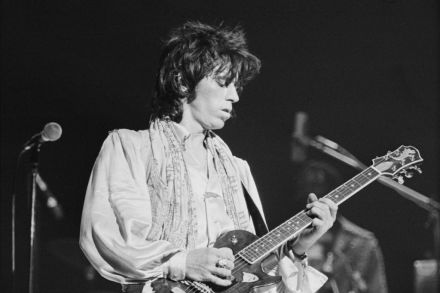
Most of us have at one time played the you-couldn’t-make-it-up game. What were the odds back in, say, 1973, that millions of us would casually engage in Jetsons-style video chats, conduct business at the swipe of a thumb, or consider the prospect of a space-tourism flight courtesy of Virgin Galactic? Or for that matter, rue the fact that the all-conquering Oakland Athletics might fall so low as to become the worst team in baseball last season, with a dismal 50-112 record? Perhaps the biggest shock to someone contemplating the future in 1973 might have been the knowledge that Keith Richards, the guitarist and primary creative force of the Rolling Stones, would still be alive and well at the time of his eightieth birthday on December 18, 2023. Wrecked. Sick. Zombielike. Undead.

keith richards

The mistakes of Prohibition still haunt us

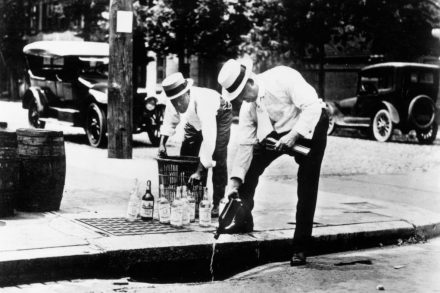
On December 5, 1933, exactly ninety years ago, the Eighteenth Amendment was repealed, formally lifting the ban on alcoholic beverages that defined the Roaring Twenties. Of course, that wasn’t the first time someone tried to outlaw the world’s most popular drug, but it’s probably the best-known case study where the contrast between intended results and reality reached absurd extremes. And yet, the best part of a century later, the same mistakes haunt us.  Saloons had a reputation as pretty rowdy places, filled with whores, card playing and drunken cowboys. The Anti-Saloon League formed to shutter these dens of sin. The League’s leader, Wayne Wheeler, who spearheaded the movement towards Prohibition, told different parties what they wanted to hear.

prohibition

Americans are watching legal weed’s promise go up in smoke

When Colorado became the first state to legalize marijuana for recreational use in 2014, expectations were as high as its users. For decades activists, investors and lobbyists assured Americans that the legalization of marijuana would displace the black market, generate an influx of tax revenue to finance schools and hospitals, halt senseless arrests and improve racial equity, all without attracting the attention of kids. In the run-up to legalization in Colorado, officials projected a $70 million jump in tax revenue from the hundreds of marijuana and THC products in newly minted dispensaries and licensed shops and budgeted accordingly. They learned quickly that the expectations didn’t live up to the reality, bringing in around $44 million in its first full year in operation.

marijuana

Are we any closer to finding a cure for depression?

From our UK edition

Some years ago, the Harvard psychiatrist Leon Eisenberg commented that, in the course of his lifetime, his discipline had swung from the brainless psychiatry propounded by psychoanalysts to the mindless psychiatry of those enamoured of biological reductionism and neuroscience.  Camilla Nord, who runs a neuroscience laboratory at Cambridge, is firmly a member of the latter camp. Though in a few places in The Balanced Brain she is driven to concede that social factors seem to play a role in mental health or mental distress, she immediately insists that ‘the process by which social factors are able to cause mental illness is entirely biological’.

How many Britons smoke?

From our UK edition

Puffed up Just 12.9% of Britons smoke cigarettes, figures out this week showed – the lowest on record. How does the UK compare? – The highest smoking rate is in Nauru (48.5%), the lowest is in Ghana (3.5%). – 24.5% of people in France are daily smokers compared with 11.5% in the US. – In Germany, the overall smoking rate is 34%, an increase from 26.5% in March 2020. For young Germans aged between 14 and 17, this has almost doubled between 2021 and last year, from 8.7% to 15.9%. – Maybe it’s the price of a pack. The average cost of 20 cigarettes in the UK hit £14.47 after the Budget in March. In France it’s £8.70, in Germany it’s even lower, at £5.68. Winning touch The Rugby World Cup is starting. Who do the bookies think will win?

Homelessness in black and white

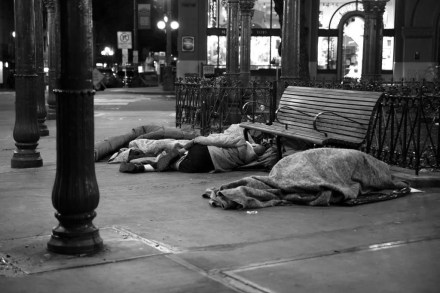
I stood across the street from Seattle’s City Hall, next to a long line of tents. There were more than fifteen of them, no more than a few feet apart. In between the tents, furniture and trash was piled high. The encampment took up the entire sidewalk, forcing pedestrians to walk in the street and triggering nonstop honking from passing cars. In a parking lot on the corner, people from a local mutual aid group stood at a booth, handing out food and water. They had signs making clear their views: “Stop the Sweeps,” “You sweep we strike,” “Fuck Capitalism,” “Equity now!” and “Smash Fascism.” This particular aid group were self-identified anarchists.

homeless

Why bombing Mexican cartels is a bad idea

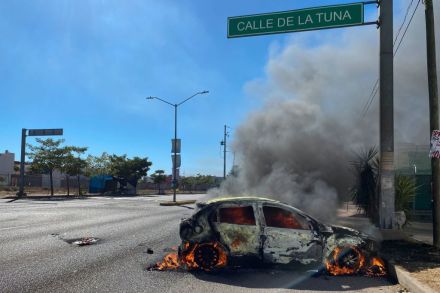
Responding to a voter during a campaign stop this week, Florida governor and 2024 presidential candidate Ron DeSantis endorsed a once fringe idea that is becoming increasingly mainstream in Republican policy circles: that the United States has the right, indeed obligation, to use military force in Mexico to protect the American people from drug cartels. And yes, that includes the use of US drones, a revolutionary military technology the US military and CIA have deployed repeatedly to target terrorists in countries such as Afghanistan, Iraq, Libya and Somalia (among others).  "We will absolutely reserve the right if they’re invading our country and killing our people,” DeSantis told the voter.

mexican cartels mexico

A trip down Ronnie Lane: from child busker to international star

From our UK edition

Thirty years ago, I worked for a while in a shop in Soho selling vintage newspapers and magazines. The holy grail for some customers might be the 1955 Playboy featuring Bettie Page or the 1976 Daily Mirror with the Sex Pistols’ ‘Filth & the Fury’ headline. But those of a born-again Mod persuasion were usually looking for 1960s publications with the Small Faces on the cover – preferably the August 1966 copy of the teenage music and fashion bible Rave, showing Ronnie Lane and Steve Marriott from that most style-conscious of bands, complete with a double-page poster of the group inside.

joe biden white house cocaine

Does Joe Biden know who the White House cocaine belongs to?

You may have forgotten about the White House’s resident coke fiend after weeks of headlines about Hunter Biden’s various court battles, but now the story of drugs in the Executive Mansion is back in the news. A publication is claiming that Joe Biden knows whose dime-bag it was — and it’s not Hunty.  “The Secret Service told President Joe Biden the name of the person who brought a packet of cocaine into the White House last month, according to three security sources with direct knowledge of the incident," Susan Katz Keating of the relatively forgotten Soldier of Fortune magazine wrote Monday. "All three sources independently told Soldier of Fortune the same name, which arose from an investigation into the incident.

The Teutonic goddess who ‘created’ the Rolling Stones

From our UK edition

Feminism? Pfft! Marianne Faithfull practically spat the word at me when I interviewed her in 2017. Then she rowed back, conceding that she’d spent most of her life ‘standing up for women’s rights... I’ve had to.’ Pallenberg humilated, seduced, empowered, educated, bonded and divided the band as the whim took her In chronic pain with arthritis, she’d struggled into a comfy chair while directing me to squat on the mucky floor at her feet. Who could blame her? From the moment the record producer and impresario Andrew Loog Oldham first packaged her as a teenage ‘angel with big tits’, the media had refused to treat her with respect.