Doping

Will the Olympics ever be politics-free?

From our UK edition

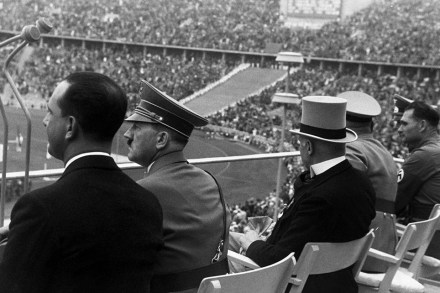
The modern Olympics, first held in Athens in 1896 in a genuflection to their Grecian predecessors, was the creation of Pierre de Coubertin, a French aristocrat. As this septet of books shows from allusive angles, Coubertin’s best known quotation – ‘the most important thing in the Olympic Games is not winning but taking part’ – must rank as a paradigm example of a precept more honoured in the breach than the observance. It is rivalled only by his anticipation that the Games would be ‘a vehicle for increasing friendly understanding among nations’. In an elegant series of vignettes entitled Aux Armes! Sport and the French: An English Perspective (Fairfield Books, £9.
China’s Olympic propaganda show ends in global shame

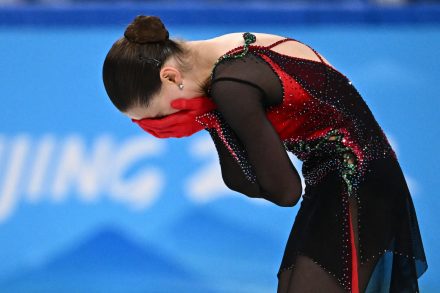
It was only fitting that China's hopes of putting on the perfect Olympics should ultimately be dashed by its new partner in crime, Russia. The two countries started the Beijing Winter Olympics by announcing a "no-limits" partnership against the West, and ended them with one of the biggest sporting scandals in recent Olympic history. If the 2008 Beijing Summer Olympics were China's coming out party, then the 2022 Winter games would tell the world that the rising authoritarian regime was stronger — and cockier — than ever. The opening ceremony jabbed at those critical of China's human rights abuses by highlighting China's diversity and allowing a Uighur to carry the Olympic torch.

skating

Why Russia’s Olympic punishment backfired

From our UK edition

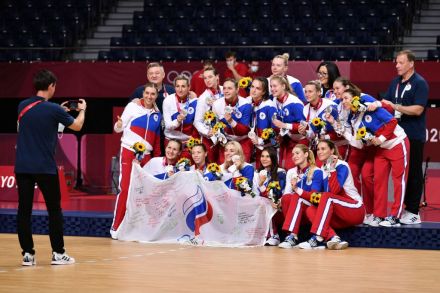
The Tokyo Olympics are over and fifth place in the medals table went to the ‘ROC’, the Russian Olympic Committee. Rather than being punished for its state-run doping programme, Russia has turned it into a perverse triumph, illustrating the weakness of sanctions as a way of trying to shape international behaviour. Of course, Moscow denied systematic cheating, but after the World Anti-Doping agency imposed a four-year ban in 2019, reduced to two years by the Court of Arbitration for Sport in 2020, they were forced to accept that if Russian athletes were going to compete, they could not do so under their own flag. They hardly went deep undercover, though. At the 2018 PyeongChang winter Olympics, they wore plain grey uniforms and took the podium to the Olympic anthem.