Donald trrump

The lessons of Ron Paul

As Elon Musk feuds with Donald Trump and looks to launch a political party of his own – the America party – he should stop to consider the lessons of Ron Paul. The former Republican congressman, who turns 90 on August 20, is best known as the leader of the GOP’s libertarian wing – which for years was practically a one-man faction. In 2008, however, Paul ran for the Republican presidential nomination and touched off a grassroots insurgency. It wasn’t enough to win him any primaries, but it laid the groundwork for the GOP’s populist turn, leading directly to the Tea Party movement and lighting the way for Trump’s arrival a few years later. Dr.

Paul

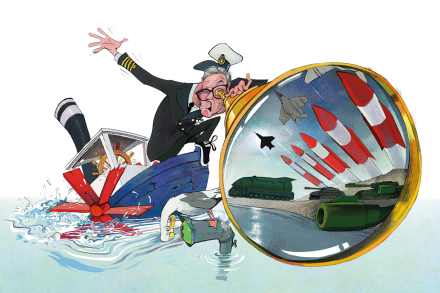
Trump is playing a high-stakes game of international poker

On what he called “Liberation Day,” President Trump announced a new tariff schedule. While the markets had been up in anticipation, they are down sharply, with the Dow dropping 2,200 points, perhaps surprised by the extent of them. Basically, Trump has laid tariffs equal to about half what other countries charge on US exports, inviting them to lower theirs in exchange for reciprocity. What the final result will be is anyone’s guess, for the Trump tariffs are chips in a high-stakes game of international poker. They have already had an effect. Canada has promised retaliatory tariffs while Israel has dropped all tariffs on US goods. A tariff is a tax laid on goods passing through a port.

trump

Trump versus the party

When The Simpsons’s evil billionaire C. Montgomery Burns heads for a checkup, the doctor informs him he has virtually every disease known to man, including some just discovered for the first time. The odd thing is that all these diseases are in “perfect balance,” which the doctor illustrates by trying to shove a bunch of fuzzy novelty germs through a tiny door all at once. When they’re all jammed together, none can actually make it through — an example of “Three Stooges syndrome.” Despite the doctor’s warning that even a slight breeze could upset this balance, Burns happily concludes that he is “indestructible.” The Republican Party had a serious bout of Three Stooges syndrome in 2016.

genghis donald trump boomer republicanism establishment

The known unknowns of 2024

I think it was the once-renowned critic Clement Greenberg who gratefully acknowledged that his job as a cultural commentator allowed him to conduct his education in public. I suppose we all do it, more or less furtively, though what prompts me to mention it now is the realization that I do not know the answer to any of the questions that have motivated this column. I write in the immediate aftermath of Ron DeSantis’s official announcement that, yes, he is running for the presidency of the United States in 2024. The announcement itself was no surprise — everyone has known DeSantis was running for months.

trump second term colorado

Showtime lets the Lincoln Project off the hook

Showtime’s latest docuseries follows the Lincoln Project, the anti-Trump Super PAC, during the end of the 2020 campaign as the organization blew up in notoriety. The series displays the shallowness within modern day American politics. What starts as a hero’s journey, with former Republican consultants disavowing the racism of the GOP, proves to be more of a Greek tragedy as one-by-one they ultimately become everything they claimed to hate. The show centers around Lincoln Project co-founders — Reed Galen, Jennifer Horn, Mike Madrid, Ron Steslow, Steve Schmidt and Rick Wilson — as well as principal members of the organization such as Keith Edwards, Sarah Lenti, Conor Rogers, Stuart Stevens and Ryan Wiggins.

lincoln project steve schmidt

Trump’s German troop withdrawal will hurt America

Tensions between Germany and the United States have increased considerably since Donald Trump became president. Trump has repeatedly criticised Berlin for a variety of things, most vocally accusing the German government of failing to pay its way on defence. Trump has said that Europe’s Nato members, including Germany, should no longer rely so heavily on the US to shoulder the costs of maintaining the alliance. The debate has focused on the target agreed by all alliance members that defence spending should reach 2 per cent of each country’s GDP by 2024. Germany’s military expenditure equalled 1.4 per cent of its GDP in 2019.