Documentary

1967 and all that

From our UK edition

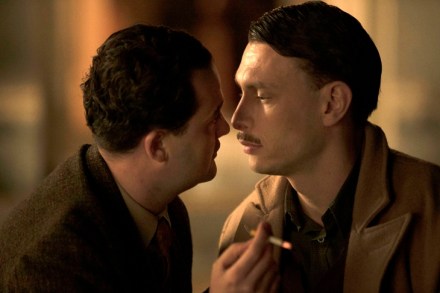
As you may have spotted, the BBC is marking the 50th anniversary of the decriminalisation of male homosexuality with an extended gay season. (And if you haven’t, I can only assume you’ve seen and heard no BBC trailers for months.) The centrepiece this week was Against the Law (BBC2, Wednesday), which dramatised the story of Peter Wildeblood, a Daily Mail journalist imprisoned for 18 months in 1954 for the possibly overlapping crimes of buggery and gross indecency. But — double entendre alert — Wildeblood didn’t take this lying down. After his release, he published a book making the case for legalisation.

Mad about the girls

From our UK edition

It’s not unusual to see a pop concert on TV where teenage girls and a group of middle-aged men are separated by safety barriers, as the glow sticks wave and the band’s name is excitedly chanted. But in Storyville: Tokyo Girls (BBC4, Tuesday), there was one fairly major twist: the teenage girls were the band, and the middle-aged men their swooning fans. As this jaw-dropping documentary explained, the girls in question are known in Japan as ‘idols’. Their songs tend to be about how demure and innocent they are; and to prove it, they often perform in school uniforms — although with skirts a lot shorter, I suspect, than is traditional in most Tokyo schools.

Brief encounter | 22 June 2017

From our UK edition

How do you follow a film like Shoah? The nine-hour Holocaust documentary, released in 1985 after 11 years of work and 350 hours of interviews — with survivors and perpetrators, saviours and collaborators, historians and bystanders — is considered one of the greatest films ever made. For decades, director Claude Lanzmann kept returning to the subject, raking over the same material, finding it impossible, maybe indecent, to move on. Of the five documentaries he has made since Shoah, four were substantial footnotes to the original, extended — and often extraordinary — out-takes from the acres of unused footage. But Lanzmann did have an answer to the question of what to do next — even though it sounded like a joke.

How the west coast was won

From our UK edition

There’s an incredibly addictive old iPhone game called Doodle God where you effectively invent civilisation from scratch by combining basic elements. So, for example, water plus lava creates steam; the steam, in turn, can be combined with another more advanced element, I forget which, later in the game to create steam power; and so on and on until, from the primordial ooze, you have, through continual experiment, created nuclear weaponry and computers and aeroplanes and all the things we take for granted today. I was reminded of it while watching part one (of two) of The Summer Of Love: How Hippies Changed the World (BBC4, Friday).

Arms race | 4 May 2017

From our UK edition

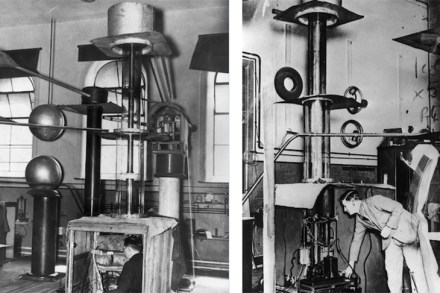
Like most documentaries, Britain’s Nuclear Bomb: The Inside Story (BBC4, Wednesday) began by boasting about all the exclusives it would be serving up. Unlike most, it was as good as its word. What followed did indeed contain much previously unseen footage and interviews with people — including ‘this country’s bomb-maker in chief’ — who’ve never before spoken about the part they played in Britain becoming a nuclear power. It also did a neat job of fitting the story to our favoured national myth: the one about old-fashioned British pluck and know-how triumphing over both the odds and the shamefully professional ways of other countries. In the 1930s, for example, the race was on to split the atom.

To die for

From our UK edition

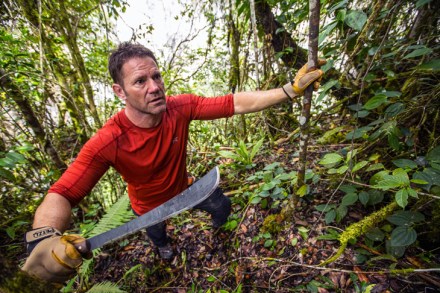
Down the Mighty River with Steve Backshall (BBC2) was perfect Sunday-night TV — one of the most enjoyable adventure travelogues I’ve watched in ages. So I was quite surprised to see it reviewed lukewarmly by another critic. One of the critic’s objections was that the scene where Backshall spots a bird of paradise through his binoculars by the Baliem river in Papua New Guinea was a bit crap. Why couldn’t we have seen it in loving close-up detail, as you would on a David Attenborough? But this is precisely what I loved about the documentary. It had a roughness, an unpredictability, a spontaneity that you rarely find on TV any more.

On the money | 9 March 2017

From our UK edition

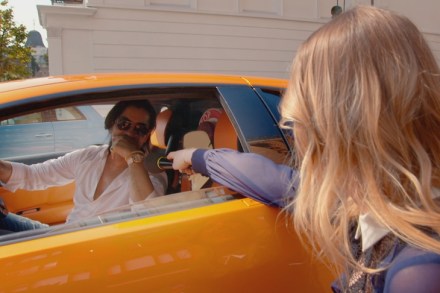
Fans of tough investigative journalism should probably avoid Channel 4’s How’d You Get So Rich? Presenter Katherine Ryan’s main tactic is to ask wealthy people how much they paid for something and, when they tell her, to repeat their answer in a tone of wondering admiration. Yet, despite her best efforts to keep it shallow, the programme does end up shedding some light on our peculiar attitudes to the very rich — and in particular our capacity to feel superior and inferior to them at the same time. Ryan, a Canadian comedian who’ll be familiar to anybody who’s watched virtually any panel show, began Monday’s opening episode at the Shropshire pile owned by Steve Smith, the founder of Poundland.

Body language

From our UK edition

Others goes straight to the head. Things start like this: with an article on a website called ‘Women and Film’, by someone called Meadow Mori. Meadow reveals that when she was fresh from her LA high school, she had an affair with a mountain-sized filmmaker, who ‘sounds like the voice of America’, and whose career was marked by genius and frustration. It is, of course, Orson Welles; but there’s more here than scrupulous cinematic referentiality. Is Meadow’s relationship with the F is for Fake filmmaker a truth or an untruth? And if it’s an untruth, does that make it a lie? A lie of invention, a lie about yourself, should not be called a lie, she says in the essay. Perhaps it is a kind of wish-story.

Old stamping ground

From our UK edition

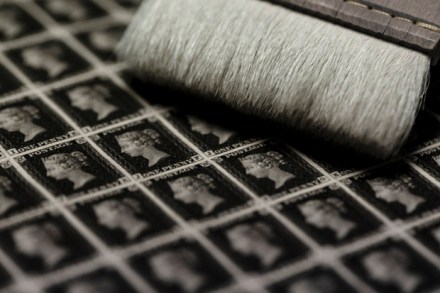
If I tell you that on Monday there was an hour-long documentary about the history of stamp-collecting, then you probably don’t need this column’s usual bit in brackets saying which channel it was on. Indeed, at times Timeshift: Penny Blacks and Twopenny Blues seemed determined to be the most BBC4-like programme in the history of BBC4: cheerfully niche, heroically indifferent to all notions of cool and so old-school in its production style that any mention of France was introduced with a blast of accordion music. Above all — and unlike so many other documentaries elsewhere — it was wholly confident that its viewers would be interested in interesting things without having to be shrilly reminded every few minutes of how interesting they are.

Net effect

From our UK edition

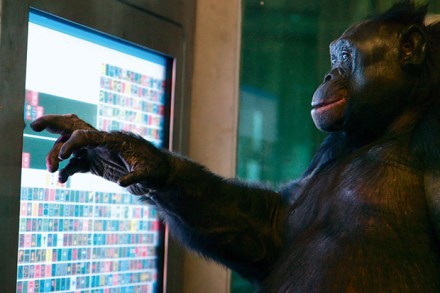
As a documentary-maker, Werner Herzog is a master of tone. His widely parodied voiceovers — breathy, raspy, ominous — are cunningly ambivalent. The interviews he conducts are seldom less than strange, often shocking, and the pacing and tenor of his films are subtly modulated. Never more so than here. Lo and Behold is divided into chapters. The first is a fairly conventional documentary about the beginnings of the internet. Herzog talks to the people in California who made the first computer-to-computer connection in 1969, asking them reasonable questions and generally making them seem like comfortable, all-round good guys. This is then subverted by the appearance of Ted Nelson, a cyber-pioneer who believes it has all gone horribly wrong.

Question time | 6 October 2016

From our UK edition

At my wife’s first 12-week scan, I was expecting — and duly got — that much-documented sense of thrilled wonder at the grey blobby thing on the screen. What came as a genuine shock, though, was realising the scan also had the entirely undisguised aim of calculating the baby’s chances of Down’s syndrome, on the apparent assumption that, if they were high, we’d want to terminate. In the event, this wasn’t a dilemma we faced — which possibly makes it easy to take the moral high ground. Even so, the whole process left me feeling both uneasy and rather naive. How long had this been going on? Did everybody else know about it? And if so, when had they discussed it? A World without Down’s Syndrome?

Blair witch project

From our UK edition

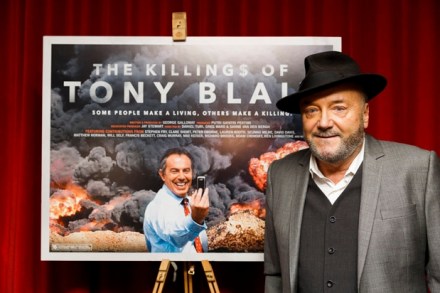
I had been wondering where Gorgeous George Galloway might pop up next. Defenestrated from his seat in Bradford West, humiliated in the London mayoral elections — where he received 1.4 per cent of the vote — and no longer apparently an attractive proposition to the reality TV producers, his public life seemed sadly to be drawing to a close. But nope, here he is with a film about the person all left-wing people hate more than any other, Tony Blair. It’s a good film, too, in the main. The Killing$ of Tony Blair was partly crowdfunded and it may well be that the only people who watch it will be those who forked out to have it made.

Fashion shoot

From our UK edition

With documentary-makers these days, it can be hard to tell the difference between faux-naivety and the real thing. (Personally, I blame Louis Theroux.) Take BBC2’s Absolutely Fashion: Inside British Vogue (Thursday), directed and narrated by Richard Macer, who often seems suspiciously dazzled by whatever he sees: the editor’s office! The editor’s chair! He also has a tendency to proudly offer observations that aren’t necessarily as startling as he thinks: that the magazine appears to be largely run by women, for instance. But where it’s even trickier to decide whether he’s faking or not is when his off-screen voice anxiously wonders whether Alexandra Shulman, the editor in question, wants him there at all — because she so obviously doesn’t.

The lying game | 28 July 2016

From our UK edition

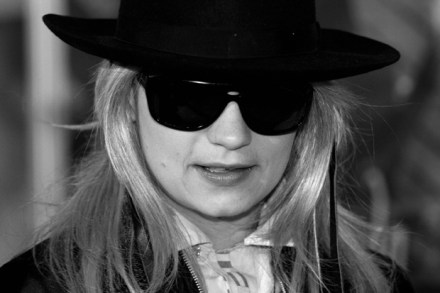
JT LeRoy was a teenage hustler who emerged from a childhood of abuse, drug addiction and homelessness to write about his harrowing experiences and become a literary sensation as taken up by Madonna, Bono, Winona Ryder, Carrie Fisher, Courtney Love, Lou Reed and Gus Van Sant, among many others. His back story was shocking — raped at five; pimped out by his prostitute mother at truck stops; HIV-positive; heroin-addicted ...sit on that, Angela’s Ashes! — but the biggest shock, when it arrived? He did not exist. JT, it turned out, had been confected by Laura Albert, a 35-year-old woman from Brooklyn.

Darkness visible

From our UK edition

Perhaps you have sometimes wondered: how would you even begin to make a film about going blind and being blind and what that means? How, when the subject is so profoundly and inherently uncinematic? Or maybe it’s other thoughts that keep you awake at night — such as when we all finally receive our £350 million a week plus free puppy, where will we be expected to keep them? — but even if that’s so you’ll still find Notes on Blindness to be a singular achievement, as well as a truly wonderful one. This is based on the audio recordings of John Hull, the academic, writer and theologian who was Emeritus Professor of Religious Education at the University of Birmingham.

Animal crackers

From our UK edition

The other evening I was driving back in heavy rain from my pilates class when I noticed something rather upsetting in the gated road that goes through our estate. I stopped and got out of the car for a closer look. Yes, as I feared, it was a dead duck. Some bastard had squished her flat. What made me more upset still was that I could see her mate — a mallard drake — swimming forlornly in the ditch next to the road. I loved those ducks like Tony Soprano used to love his ducks. Especially the stupid way they waddled blithely across your path, forcing you to slow down and always making you smile whatever mood you were in. But clearly the tosser who did this was in too much of a hurry: either a van driver or someone in a 4 x 4, I guessed.

Memories, dreams, reflections

From our UK edition

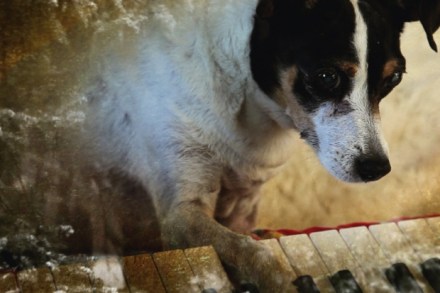
Heart of a Dog is a film by Laurie Anderson and it’s a meditative, free-associating rumination on life, loss, love and dogs, with particular reference to her and her late husband’s (Lou Reed, who died in 2013) beloved rat terrier, Lolabelle (who died the same year). It follows no linear logic. It’s a visual collage, a cine-poem, a dreamy documentary essay that was screened in London earlier this week to owners and their dogs — to rave reviews. ‘It’s great!’ said a golden retriever, but as he said the same of ‘a ball’ and also ‘a pizza crust’, he may not be the most reliable of critics. (This is why you never see golden retrievers on Film 2016 or writing for Sight & Sound.

That’s entertainment | 5 May 2016

From our UK edition

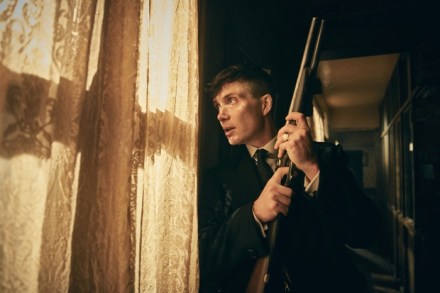
The big returning show of the week began with servants laying out the silverware at a large country house in 1924. But rather than a shock comeback for Downton Abbey, this was — perhaps even more unexpectedly — Tommy Shelby’s new home in Peaky Blinders (BBC2, Thursday). Which explains why so many of the guests were carrying guns, and why the family matriarch was using the word ‘fuck’ a lot more than Lady Grantham ever did. When we last saw gang-leader Tommy (Cillian Murphy), he was still based in the Birmingham backstreets. He was also having a fairly tough time — what with juggling two women, trying not to get murdered and being required by the government to start the Irish Civil War. Two years on, however, things are clearly looking up.

Special delivery

From our UK edition

Five Star Babies: Inside the Portland Hospital won’t, I suspect, have been a hard sell to BBC2’s commissioning editors. Childbirth and rich people are both reliably popular subjects for TV documentaries. So why not combine them into one handy package by showing us life at the UK’s only private maternity hospital? And yet, however artificial the programme’s conception, any sociologists studying contemporary Britain’s peculiar attitudes to the very wealthy could have done a lot worse than to tune in to Wednesday’s episode. ‘Parenthood: the great leveller,’ began the narrator — somehow managing not to add a hollow laugh. This sense of irony, though, was short-lived.

An inconvenient truth | 28 January 2016

From our UK edition

On the face of it, the Netflix documentary serial Making a Murderer should only take up ten hours of your life. Judging from my experience, though, its ten episodes will prove so overwhelmingly riveting that you’re going to need at least two more days to scour the internet in an obsessive quest for every scrap of information about the Steven Avery case — and several evenings to discuss it with any fellow viewers you can find. If the fuss about the series has so far passed you by (and if it has, it probably won’t for much longer), you may have to trust me that the story it tells — through such unspectacular old-school methods as assiduously researched footage, talking heads and the occasional caption — is from real life.