Documentary

The definitive Diana doc? Possibly not: The Princess reviewed

From our UK edition

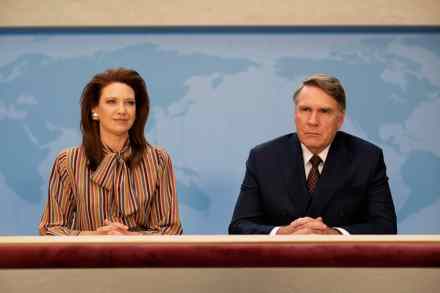
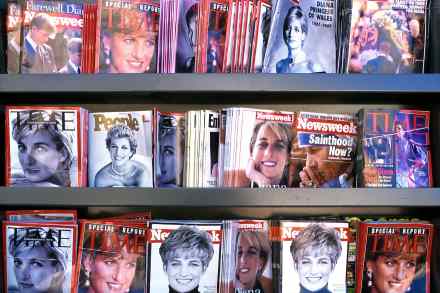
The Princess, a new documentary film, is the first re-framing of the Princess Diana story since it was last re-framed, about ten minutes ago, and before it will be re-framed again, probably by Tuesday. We’ve had The Crown recently, and Spencer, and our favourite, Diana: The Musical (‘It’s the Thrilla in Manila but with Diana and Camilla’), and there are several upcoming books, one of which, R is for Revenge Dress, ‘explores the celebrated life of Princess Diana through the alphabet’. To those who say the poor woman should be left to rest in peace, I would say: F is for Fat Chance. But is this the definitive documentary we’ve all been waiting for? Possibly not. https://www.youtube.com/watch?

A very classy thriller indeed: C4’s The Undeclared War reviewed

From our UK edition

The Undeclared War has many of the traditional signifiers of a classy thriller: the assiduous letter-by-letter captioning of every location; the weirdly precise time-checks (‘Sunday 09.47’); above all, the frankly baffling opening scene. In it, a young woman walked around a deserted fairground, broke into a beach hut that turned into a gym and spotted a door in the ceiling which led into a stately home. https://www.youtube.com/watch?v=jIqRL3xIypY Gradually, the fact that the first episode interspersed this with the same woman typing computer code made it clear what was going on: writer/director Peter Kosminsky was making a plucky attempt to solve his main challenge here.

May put you off Chaplin for ever: The Real Charlie Chaplin reviewed

From our UK edition

Charlie Chaplin is one of the most famous movie stars ever and is certainly the most famous movie star with a little toothbrush moustache. He was around when I was growing up as his films were often on television, particularly, if I recall rightly, on Saturday mornings. My sisters and I resented that as we wanted to watch The Partridge Family (or The Brady Bunch) on the other side but my father loved him, and I do remember being struck by his childlike innocence, as well as all the falling over. (Chaplin’s, not my father’s.) I now regret watching this documentary. Not because it’s bad (it isn’t) but because I know things about him that I wish I didn’t. It may even have put me off Chaplin for ever.

Somebody’s watching me

America has an abundance of daring documentarians: Frederick Wiseman, Errol Morris, Alex Gibney, Laura Poitras, Morgan Neville, Matt Wolf, Morgan Spurlock and Michael Moore, off the top of my head. Not a diverse list demographically, but you can tell their movies apart. Some are better than others, some (Poitras and Neville) have oily ethics, but others still have made some of the most iconic American films of this century (Spurlock’s Super Size Me is in the lexicon even if nothing else he’s done is, and say what you will about Moore and his films, his impact on American pop-political culture cannot be dismissed entirely).

all light, everywhere

Yet more death in Venice

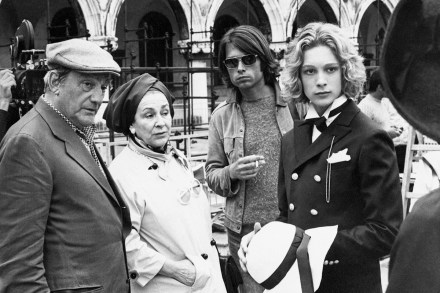
The inspiration for the object of Aschenbach’s infatuation in Thomas Mann’s Death in Venice was acknowledged by the author some years after publication, and the subject of a biography a century later (The Real Tadzio by Gilbert Adair). He was a Polish boy the writer ogled from a distance in 1911 while holidaying with his wife at the Grand Hotel des Bains in Venice. Less is known of the teenager who played the role in Luchino Visconti’s 1971 film of Mann’s novel. For years the director trawled the Continent in pursuit of the right actor for the part. It was a search that had eluded the other major directors who had attempted to bring the book to the screen: John Huston, Joseph Losey, Franco Zeffirelli. Visconti finally found 15-year-old Björn Andrésen in Stockholm.

death venice

A TV doc that is truly brave: BBC1’s Ian Wright – Home Truths reviewed

From our UK edition

Ian Wright: Home Truths began with the ex-footballer saying that the home he grew up in was ‘not a happy one’. As truths go, though, this soon turned out to belong firmly in the category of ‘understated’. Not surprisingly, Wright’s favourite boyhood programme was Match of the Day — which is why his stepfather would make him stand with his face against the wall while it was on. (‘Just because he could,’ Wright explained.) He also beat Wright’s mother: often, Wright recalled, while she repeatedly cried the word ‘Sorry!

A film festival fiasco in Narrowsburg, New York

If you’ve been involved in the production of a film, you know how intoxicating it can be. The prospect of seeing your work projected in a theater is reason enough to put up with a nightmare of unrelenting stress — for some people, anyway. Others might struggle to understand how an entire town (Narrowsburg, an admittedly very small town in Upstate New York) could be so easily swindled by a cartoon mobster and a mysterious woman with a French accent who tells people she’s from South Africa or Normandy, or descended from French royalty. Then again, Richard Castellano did appear with Billy Crystal and Robert De Niro in Analyze This, and Jocelyne Castaldo, well, who in America wouldn’t be charmed by such an accent?

Narrowsburg

A redemption song, conventionally sung: Sky’s Tina reviewed

From our UK edition

It has never been easy for women in the music industry. Once upon a time the evidence was largely anecdotal. Now it’s being recorded for posterity, frame by frame. Recent documentaries about Britney Spears and Demi Lovato exposed the trauma inflicted on post-millennial pop stars. Two new portraits of Anna Mae Bullock and Marianne Elliott-Said, better known as Tina Turner and Poly Styrene from punk group X-Ray Spex, ponder the price paid by their forebears. Turner’s story feels archetypal, a tale extracted from deep within the DNA of showbusiness. An abandoned child — ‘my mother didn’t like me’ — from a poor Tennessee background, the opportunity to fulfil her gifts came with the classic caveat: subjugation by an older, controlling man.

A very watchable doc cashing in on Line of Duty: BBC2’s Bent Coppers reviewed

From our UK edition

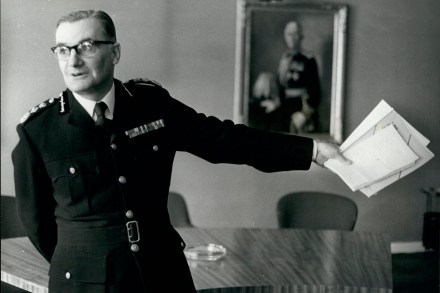
If you’re after an exciting, twisty programme about police corruption that doesn’t also feel a bit like sitting an exam in Line of Duty studies, then Bent Coppers: Crossing the Line of Duty could well hit the spot. As both the timing and subtitle not so much suggest as bellow, this three-part documentary series is an obvious attempt to cash in on its fictional counterpart. Happily, though, it’s a successful one. In Wednesday’s second episode the focus was on 1970s Soho, where the most reliable way to make a fortune was by opening what the narrator Philip Glenister called, in suitably 1970s argot, ‘dirty bookshops’. Of course, there were certain overheads involved, like rent and huge bribes to the police.

Contains nothing you couldn’t get from Wikipedia or YouTube: Netflix’s Pelé reviewed

From our UK edition

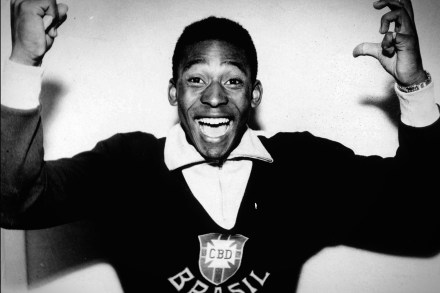
Pelé is a two-hour documentary about the great Brazilian footballer — the greatest footballer ever, some would say — who played in four World Cups (a record) and was one of the first global sporting superstars. But while there is plenty of footage showing his astonishing talent, if you’re interested in what made him tick, or what his life was like off the pitch, or how adulation might ultimately mess with your head, then move on, nothing to see here. Or, to put it another way, if, like me, you’re the sort of person who goes straight to ‘Personal life’ whenever you look someone up on Wikipedia, it’s as if that section has been excised. However, if you are not that sort of person, you may come away more satisfied and less bored.

Makes me nostalgic for an era when music was more than a click away: Teenage Superstars reviewed

From our UK edition

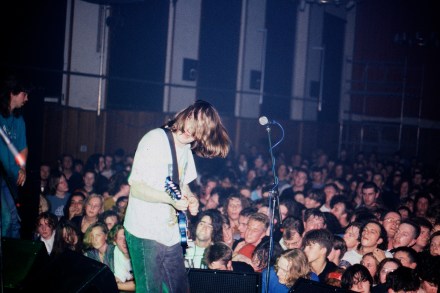
In Teenage Superstars, a long and slightly exhausting documentary about the Scottish indie scene of the 1980s and ’90s, there was a moment when a man revelling in the name of Stephen Pastel — his real name is Stephen McRobbie, and he must be pushing 60 now — was described as ‘the mayor of the Scottish underground’. Such a position — even one, as this, necessarily unelected — would be all but impossible to occupy today. With the internet and democratisation of music — its creation, its distribution, its consumption — has come the fallowing of what were once its most fertile fields: the local scenes created and inhabited by small numbers of interconnected people and encouraged by confident tastemakers — such as Pastel.

Incoherent and conspiracy-fuelled: Adam Curtis’s Can’t Get You Out of My Head reviewed

From our UK edition

‘History,’ wrote Edward Gibbon, ‘is, indeed, little more than the register of the crimes, follies, and misfortunes of mankind.’ In this respect, though, history has nothing on the work of Adam Curtis, whose latest documentary Can’t Get You Out of My Head has now arrived on BBC iPlayer — all six episodes and eight and a half hours of it. Anybody who’s seen Curtis’s previous series (including The Century of the Self, The Power of Nightmares and The Trap) will know what to expect. Once again, he mixes terrific news footage, short clips of more or less anything, mood-inducing songs and a lordly commentary to remind us just how hopeless — in both senses — human beings are.

It’ll blow you away: Collective reviewed

From our UK edition

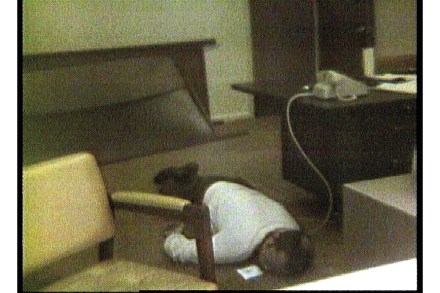
When I recommend this documentary to people, telling them it follows the journalistic investigation into a fire that broke out in a Bucharest nightclub, killing 64, with the majority not dying of their injuries but later in hospital, their look says: ‘Not a chance.’ Their look says: ‘This film is not something I wish to see.’ I felt similarly, but trust me on this. It’s gripping. It’s electrifying. It’s explosive. It plays like a crime thriller yet with real consequences. There are revelations that will make you gasp. And it opens a can of worms. Literally. The fire broke out at Club Colectiv in 2015 when a band’s pyrotechnics ignited the building’s soundproofing foam.

A gripping portrait: Billie reviewed

From our UK edition

This documentary about Billie Holiday is transfixing. Not just because it’s about Billie Holiday — I am not into jazz yet her version of ‘Strange Fruit’ is obviously incredible — but for the previously unheard audio tapes recorded by Linda Lipnack Kuehl in the 1970s with the people who knew her. This includes, for instance, Billie’s cousin, John Fagan, who chucklingly says he pimped her out as a child — ‘girls started young’ — and that women who ‘step out of line’ like to be knocked about and are proud of having a black eye as it shows ‘someone loves them’.

A convincing and hair-raising depiction of showbiz at its most luridly weird: I Hate Suzie reviewed

From our UK edition

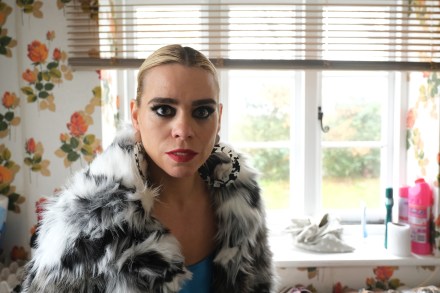
Fifteen minutes into the first episode of I Hate Suzie, main character Suzie Pickles was doing a photoshoot in her country cottage for Esquire magazine. ‘We don’t know what we’re looking for right now,’ the photographer told her. ‘We’re just going to cycle through some feelings and see where we are.’ What he didn’t know, but we did, was quite how many feelings Suzie (Billie Piper) had already had to cycle through by then. The programme began with her thrilled to hear that she’d bagged a Disney film role and cracking open the champagne.

Fascinatingly weird – but not satisfyingly weird: Herzog’s Family Romance LLC reviewed

From our UK edition

In the past Werner Herzog has given us a man pushing a ship up a mountain, a 16th-century conquistador going mad in Peru, Timothy Treadwell being eaten by a bear (who isn’t still recovering from that one?) and the 3-D documentary on cave paintings that ended with albino alligators, so there is never any saying what his next film will be about. Only that it’s likely to be quite weird. And Family Romance is quite weird. It’s real but fake (or vice versa) and filmed on the fly in the Japanese language even though Herzog doesn’t speak Japanese. And there’s more, so much more. It’s fascinatingly weird for sure. Even if, ultimately, it’s not satisfyingly weird. It’s fascinatingly weird for sure.

The art of the incel

From our UK edition

Let’s say you have a diagnosis of autism, depression or anxiety. You sleep too much or too little. You masturbate too often. You play computer games and don’t open the curtains. You have no money and you are often profoundly lonely and frequently bored. From this unedifying starting point, can you, let’s say, weightlift your way out of misery? Can you trick yourself into being sociable? Can you ultimately get beyond your fantasy that a woman will save you (she won’t) and learn to live with everyday misery? Alex Lee Moyer’s documentary TFW NO GF, internet-speak for ‘that feel(ing) when no girlfriend’, is the first attempt to make cinema out of incel subculture (and perhaps thereby also signalling its end).

Jeffrey Epstein really was a streak of slime

From our UK edition

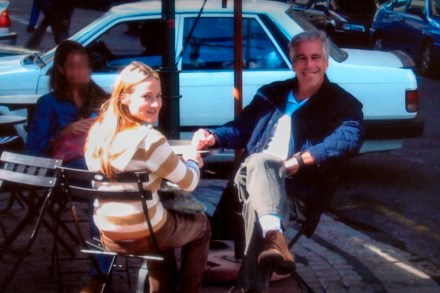
Did Jeffrey Epstein kill himself or was he murdered — and frankly who cares? Actually, having watched the four-part Netflix series — Jeffrey Epstein: Filthy Rich — about his secretive, sordid life, I care very much. Sure, his squalid death in jail, apparently from suicide while awaiting trial for numerous sex crimes, was thoroughly deserved. But justice would have been far better served if this noisome creep had spent the rest of his days rotting in prison, deprived for ever of all sexual activity save the involuntary variety provided in the showers whenever he dropped the soap. I hadn’t expected to respond quite this viscerally to the Epstein tale. Indeed, before I watched the documentary I was inclined to think that perhaps the nefariousness had been overdone.

Not merely funny but somehow also joyous: Sky One’s Brassic reviewed

From our UK edition

Danny Brocklehurst, the scriptwriter for Sky One’s Brassic, used to work for Shameless in its glory days — although if you didn’t know that already you could probably guess. For a start, the central characters are another close-knit group of ducking-and-diving working-class northerners not overburdened with a social conscience. But there’s also the fact that, no matter what they get up to, they’re clearly supposed to be lovable — coupled with the rather more mysterious fact that they are. However dark the storylines theoretically become, the programme presents them with such an infectious swagger, and such a thorough blurring of realism and wild imagination, that the result is not merely funny but somehow joyous.

An extraordinary tale: BBC2’s The Countess and the Russian Billionaire reviewed

From our UK edition

There can’t be many programmes that bring to mind quotations from both Henry Kissinger and Boney M., but BBC2’s The Countess and the Russian Billionaire was one of them. While Kissinger’s idea that ‘power is the ultimate aphrodisiac’ may be a little out of fashion in the #MeToo age, it was hard not to think it played a part in the eye-popping events that Wednesday’s documentary laid out with some relish. As for Boney M., rarely has ‘Oh, those Russians’ from ‘Rasputin’ felt so penetratingly insightful. The programme began filming in 2015, with the apparent aim of providing a ringside seat at a fight between an excitingly wealthy British-based couple and the Russian government.