Documentaries

More mesmerising than it should be – Disney+’s The Beatles: Get Back reviewed

From our UK edition

My late friend Alexander Nekrassov loathed the Beatles, which I used to think was a wantonly contrary position akin to hating kittens or blue skies or Christmas carols. What could there possibly be not to like, love and admire about the band that gave us ‘Eleanor Rigby’, ‘A Day In the Life’ and ‘Strawberry Fields Forever’? Since then I’ve encountered so many Beatles sceptics that it has given me pause for thought.

Blair & Brown: The New Labour Revolution should be called ‘The Tragedy of Gordon Brown’

From our UK edition

Murder Island features eight real-life ‘ordinary people’ seeking to solve a fictional killing on a fictional Scottish island. What follows is so confused and confusing that you can only imagine it was pitched to Channel 4 as ‘Broadchurch meets The Apprentice’ and nodded through as a result, without anybody asking such pesky questions as ‘So how might that work, then?’ Or if they did, that they were silenced by the news that Ian Rankin was signed on as the writer — whatever that might mean, seeing as most of the programme is necessarily unscripted and the investigation itself impossible to plot in advance.

Somewhere between eye-opening and jaw-dropping: Sky’s Hawking – Can You Hear Me? reviewed

From our UK edition

It is, of course, not unknown for a man to become famous with the support of his family — and, once he has, to prefer global adulation to being with them, before leaving his wife for a younger woman. What’s rather less common is when the man in question is almost completely paralysed. This was the story told by Hawking: Can You Hear Me? and, in advance, it might have sounded an over-familiar one. After all, not only was Stephen Hawking one of the few physicists to become a tabloid staple, but he was also played to Oscar-winning effect by Eddie Redmayne in The Theory of Everything. As it transpired, though, the programme proved somewhere between eye-opening and jaw-dropping.

Lame and formulaic: Black Widow reviewed

From our UK edition

Black Widow is the latest Marvel film and although I’d sworn off these films a while ago, due to sheer boredom, I was tempted back by the fact that this one stars a lady (Scarlett Johansson) and another lady (Florence Pugh) and even a third lady (Rachel Weisz) and is directed by a lady (Cate Shortland). Could be wonderful, I thought, except it isn’t. More women is its only decent idea. Otherwise, it’s business as usual. Otherwise, it’s all formulaic bish-bosh, smash-crash action scenes broken up by lame jokes and lame philosophising along the lines of: ‘Your pain only makes you stronger.’ Not if you’re dying in hospital and they’ve run out of morphine, I was minded to shout at the screen.

Thoughtful and impeccable: Ken Burns’s Hemingway reviewed

From our UK edition

Ken Burns made his name in 1990 with The Civil War, the justly celebrated 11-and-a-half-hour documentary series that gave America’s proudly niche PBS channel the biggest ratings in its history. Since then, he’s tackled several other big American subjects like jazz, Prohibition and Vietnam; and all without ever changing his style. In contrast to, say, Adam Curtis (another ambitious film-maker whose methods have remained unchanged for 30 years), Burns’s documentaries take an almost defiantly considered approach, forgoing anything resembling self-regarding flashiness in favour of such old-school techniques as knowledgeable talking heads, careful chronology and straightforwardly appropriate visuals.

The mediums who pioneered abstract art

From our UK edition

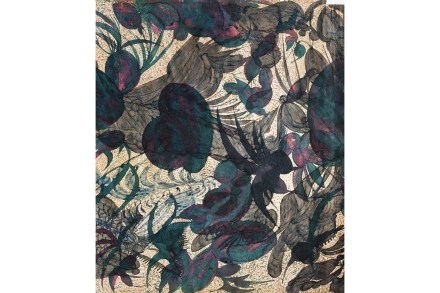
In the 1850s Britain was hit by an epidemic likened by The Illustrated London News to a ‘grippe or the cholera morbus’. It came from America rather than China and afflicted the mind rather than the body. The craze for table-turning was sparked in Hydesville, New York, in 1848 after two young sisters, Maggie and Kate Fox, claimed to hear mysterious rappings in the floor of the family home and attributed them to a spirit called Mr Splitfoot. Epidemics are by nature democratic, respecting neither education nor class. Eminent naturalists, scientists, novelists and social reformers were gripped by the grippe. When unseen forces such as electromagnetic waves were being discovered, who was to say they might not include channels for communication with the dead?

Dysfunctional music for dysfunctional people: The Public Image is Rotten reviewed

From our UK edition

A star is born, but instead of emerging into the world beaming for the cameras, he spits and snarls and announces his intention to destroy the establishment via the medium of rock records. But who is it? Is it Bob Geldof or John Lydon? Citizens of Boomtown: The Story of the Boomtown Rats — another in the ongoing trend of the BBC screening films that are fundamentally ads for a band’s new album — made the case for Geldof, suggesting he and his bandmates singlehandedly dragged Ireland into the modern age (the Daily Telegraph’s chief rock critic popped up to say they were the first roar of the Celtic Tiger).

The Clarence Thomas documentary is a must-see

Back in February when the inspiring documentary about the life of Supreme Court Justice Clarence Thomas, Created Equal: Clarence Thomas in His Own Words, was playing in movie theaters around the country, I wrote a review encouraging you to go see it. Now, it is coming to your own home. On Monday night it premiered on your PBS station, and is repeating throughout the week. This is a great opportunity for you — and now made very easy too.In that earlier review, I wrote about meeting someone who had been completely brainwashed about Justice Thomas. The Thomas he knew was a fictitious personality created and maintained by what Rush Limbaugh refers to as 'the drive-by media.' Thomas has been described by the leading lights of the media as bitter, a loner, a brooding recluse.

clarence thomas

One of the more disturbing films I’ve seen: Arena’s The Changin’ Times of Ike White reviewed

From our UK edition

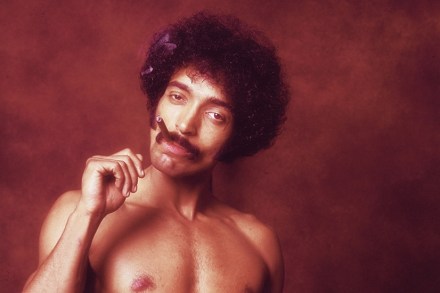
Arena: The Changin’ Times of Ike White (Monday) had an extraordinary story to tell — but one that, halfway through the documentary, already seemed to be complete. So, you might well have thought at that point, how would it fill the rest of the time? The answer, it transpired, was by taking an even more jaw-dropping turn. In the 1970s, Ike White was serving life for murder in a Californian prison when reports of his musical talent reached the record producer Jerry Goldstein. A prodigy on guitar, bass, drums and keyboards, White had until then been making most of his music in the prison’s gas chamber, which he was allowed to use as a rehearsal room.

Joyous and very, very funny: Beastie Boys Story reviewed

From our UK edition

The music of the Beastie Boys was entirely an expression of their personalities, a chance to delightedly splurge out on to record everything that amused them. And early on, in their teens-get-drunk debut album, Licensed To Ill, that resulted in obnoxiousness. But mostly they were kinetic and colourful, which is why the new Apple TV+ film about them works so well. The format suits the story. Beastie Boys Story simply documents a stage show where winningly they talk the audience through their personal history. It’s much like Netflix’s Springsteen on Broadway. But since the third Beastie, Adam Yauch, died in 2012, the band no longer perform, so where Springsteen punctuated his memories with songs, the Beasties do it with film clips.

Joe Exotic might be the best gay role model I’ve seen on television

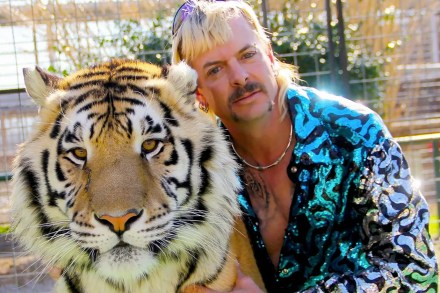
If you haven’t heard of the Netflix docu-series Tiger King, then you probably haven’t spent much time on the internet during the national quarantine. The series centers around Joe Exotic, a now-incarcerated, gay, meth-addled, big cat breeder and former candidate for both president and governor of Oklahoma, whose bleach-blond mullet, handlebar mustache, sequined leopard-print blouses and eccentric underworld of private zoo-keeping has been the unlikely catalyst to bring a nation together that is stuck at home with severe cabin fever. Tiger King is another indication that we should prepare to say goodbye to classic documentary filmmaking and get used to the docu-series, usually timing in at about six hours long spread across several episodes.

joe exotic tiger king

The director that everyone loved to hate: David Thomson interviews Peter Bogdanovich

From our UK edition

Peter Bogdanovich’s new documentary about Buster Keaton, The Great Buster, is a match made in movie heaven. I can’t think of two men more devoted to making motion pictures — huge successes in their day — more acquainted with the merciless climate of Hollywood, or more aware that they were as instrumental in their own downfall as in their glory. ‘Buster said he made the great mistake of his life in 1928,’ says Bogdanovich. ‘He had done these masterpieces in the 1920s — Steamboat Bill Jr, Sherlock Jr, The Navigator, The General — and done them the way he wanted with his own production unit... It couldn’t get any better. But then [he was] told to sign with MGM. And Buster was never the same again.

Michael Jackson, smooth criminal

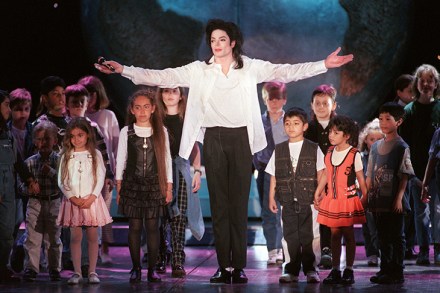
‘The innocence of America is one of its oldest traditions,’ said Oscar Wilde who, like Michael Jackson, was accused of seducing underage boys. Wilde was convicted, and cast into a disgrace that everyone now agrees was a crime against art and morality. Jackson was able to wriggle out of court, more than once. He had money and he had lawyers but, most of all, he had the entertainment business on his side, moralizing to us that he was a great artist. The pagan cult of show business is the real American religion, and the innocence of children is one of its most lucrative assets. The innocence of Michael Jackson, child star turned child abuser, was an article of faith because Jackson could fill a stadium.

michael jackson

Which Fyre Festival documentary is most worth watching?

One of the embarrassing truths our time is that wealthy and predominantly white people pay good money in order to experience conditions that poorer and predominately brown people have no choice but to undergo. When a college-educated millennial buys an overpriced ticket to a music festival, it’s a rite of passage. When a Bangladeshi village is washed into a tent encampment without running water, it’s a humanitarian catastrophe. Of course, choice is a factor. But once you’re hovering over a brimming chemical toilet and it hasn’t stopped raining for two days, the conditions are the same — a temporary reversion to Neolithic conditions, but with the population density of a modern city.

fyre festival documentary