Documentaries

The blackly comic life of Katie Price

From our UK edition

These days, the 1990s seem to be regarded – especially by people too young to remember them – as a prelapsarian idyll. In Britain, London swung again to the sound of Britpop. In America, good-looking twentysomethings lived cheaply in large apartments, wisecracking and hugging their way through solvable problems. And all without the tyranny of social media. A rather less rosy picture, though, emerged in the opening episode of the four-part Katie Price: Nothing to Hide, in which Price added to her nine autobiographies and numerous documentaries and/or reality shows by deciding to ‘reflect on my life’ for the first time. The result was both a revealing social history and not unlike a novel by Martin Amis at his most blackly comic.

An enjoyably honest portrait of Rik Mayall

From our UK edition

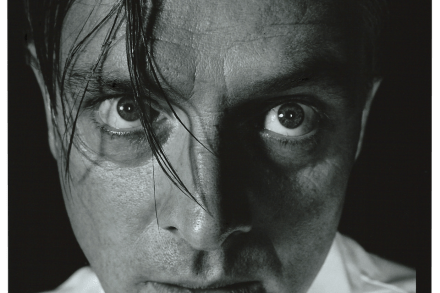
If you’ve tended to think Rik Mayall was both very funny and quite annoying, it turns out you’re not alone – because, with varying degrees of tact, that’s what most of the people who knew him suggested in Rik Mayall: Magnificent B’stard. At a time when far too many documentaries about celebrities are celebratory to the point of cloying, this one was, of course, all the better for it. By his own account, Mayall first discovered the joys of showing off in primary school. Instructed to mime in the choir, since his voice was ‘so horrible’, he did so with the wild exaggeration that would remain his speciality. The laughs he got duly turned his boyhood head.

The Diddy documentary is required viewing

There are relatively few Netflix documentaries – even in this increasingly sensationalized and prurient age – that have made anything like the splash that the new show about the artist formerly known as P. Diddy has caused. Sean Combs: The Reckoning isn’t just hard to watch, but positively mind-blowing in its account of the imprisoned mogul’s actions and predilections. Although he was acquitted of the most serious charges that he was on trial for this year, Combs will not be released from jail until May 2028. Given the number of allegations and civil suits pending against him, any comeback for the disgraced musician looks impossible – even in an era when Kanye West is, apparently, given second chance after second chance.

The death of cinéma vérité

From our UK edition

Oh, how we lived. Or, how we thought we lived. Despite the numerous criticisms levelled at the BBC on a daily basis, the BBC Archive YouTube channel is one aspect of its work that cannot be faulted. It is a fascinating collection of broadcast material going back many decades, a portal into Britain’s past presented in film grain-soaked HD. A sobering reminder of what the BBC once was – and what it no longer dares to be. Much of it is made up of documentaries, many aspects of which will be peculiar to millennials and Gen Z. The form is strange: long, single-camera shots of people talking in living environments. Bathrooms, kitchens, workplaces, streets. Living spaces are as they would be on any day of the week. Workplace neon, living-room lamps. Light and shade.

Is Grey Gardens the greatest documentary ever made?

From our UK edition

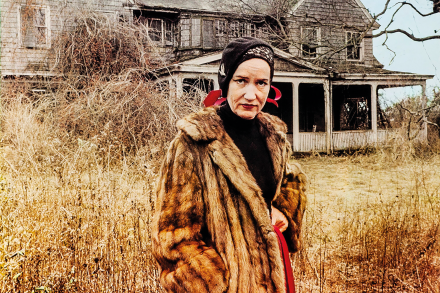
A middle-aged woman wearing what looks like Princess Diana’s infamous ‘revenge dress’ and a balaclava from an IRA funeral approaches the hole in the floor. The raccoon that lives there, clearly used to her presence, looks up expectantly. Sure enough, the woman empties a bag of dry food into the hole. The scene is framed by the intricate fluted wainscotting of the room’s door frame. I am not exaggerating when I say I believe it to be one of the great scenes of modern cinema. The vignette comes from Grey Gardens, the Maysles brothers’ cult documentary, which turns 50 this autumn. Like many great documentaries – from Tiger King to  The Imposter to The Queen of Versailles – the film’s purpose changed over the course of filming.

Why is the BBC making stuff up about Jane Austen?

From our UK edition

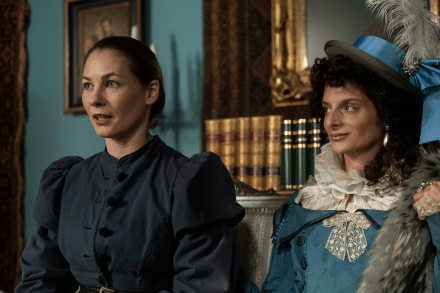
Jane Austen: Rise of a Genius began by saying that ‘getting into her mind isn’t easy’ – something you’d never have guessed from the rest of the episode, where both the narrator and the talking heads were able to tell us exactly what Austen was thinking and feeling at any given time. Like many Austen biographies, this one laments her sister Cassandra’s decision to burn most of her letters, but then takes full advantage of how little we consequently know about her to portray (or possibly make up) a woman whose attitudes are spookily close to its own. In a previous era, this might have meant presenting Austen as a gentle and contentedly domestic aunt. Now of course it means that ‘at a time when women were supposed to know their place, Austen ripped up the rulebook’.

Why we dramatize history — and why we should stop

A few weeks ago, a friend asked if I had watched the Newsnight interview with Prince Andrew. That interview, yes — the one with all the sweating and the pizza in Woking, in which he definitely didn’t meet Virginia Roberts Giuffre but he did single-handedly crash his reputation, and Emily Maitlis, like the Medusa of journalism she has since become, just let him tie his own noose. Of course I’ve watched it. I’m a journalist. And a twenty-first-century citizen. Who hasn’t? My friend, for one, though she pointed out that she can just watch the three-part Amazon dramatization of the whole affair, A Very Royal Scandal, which is even juicier than the interview. (“I’m the son of the sovereign,” bellows the Duke of York, played by a soapy Michael Sheen.

history

Why are these dead-eyed K-pop groups represented as some kind of ideal?

From our UK edition

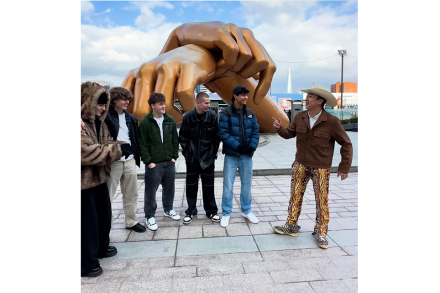
On Saturday, Made in Korea: The K-pop Experience began by hailing K-pop as ‘the multi-billion-pound music that’s taken the world by storm’. Unusually, this wasn’t TV hype. Last year, nine of the world’s ten bestselling albums were by Korean acts (the sole westerner being Taylor Swift). Even odder for people over 40, according to such reliable sources as Richard Osman on The Rest is Entertainment podcast and my children, South Korea has replaced America as the cultural centre of the Earth for many British teenagers. Korean youngsters are trained for pop stardom on an industrial scale But this global domination hasn’t come about by chance. Korean youngsters are trained for pop stardom on an industrial scale.

Clear, thorough and gripping: BBC2’s Horizon – The Battle to Beat Malaria

From our UK edition

If you transcribed the narrator’s script in almost any episode of Horizon, you’d notice something striking: an awful lot of the phrases would end with a colon, and for one obvious reason: to play a neat trick on the viewers: that of making them keen to hear what comes next. (You get the idea.) Monday’s programme therefore began by explaining that the mosquito is ‘the target of one of medical science’s greatest quests: the battle to save millions of lives and end a scourge that has shaped human history: malaria’.

Compelling and somewhat heartbreaking: Girls State, on Apple TV+, reviewed

From our UK edition

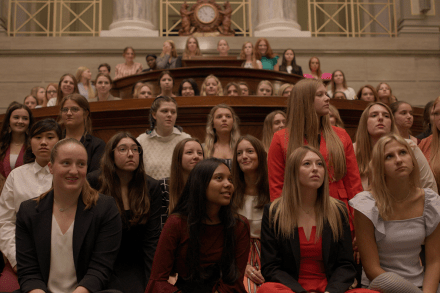
Here’s a fun thought experiment: instead of entrusting the future of American democracy to one of two old men, what if you put it in the hands of 500 teenage girls? Girls State, the sister documentary to Amanda McBaine and Jesse Moss’s award-winning 2020 film Boys State, follows the events of a week-long civic engagement camp where high-schoolers create an all-female democracy from scratch. A feminist manifesto is much easier to compose than a real solution to culturally ingrained inequality Girls State and Boys State programmes have given argumentative American teens an education in the necessary evil of politics since the 1930s.

Was Carrie Fisher really ‘a genius’?

From our UK edition

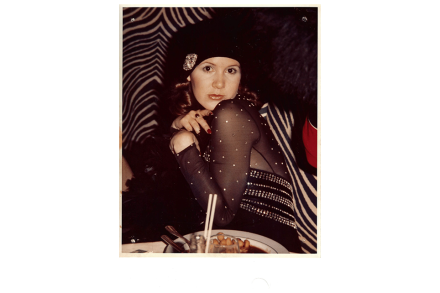
‘People throw the word “genius” around a lot,’ said a talking head on BBC2 this week, ‘but she was a genius, truly.’ If it wasn’t for the heading on this column, I suspect it might have taken you a while to guess the unquestionable genius being referred to here. But then again, for Carrie Fisher: A Life in Ten Pictures, considered analysis and fear of hyperbole would only have got in the way. Not that this prevented the programme from being inadvertently revealing. Granted, if you wanted to know the full story of Fisher’s life – including the fact that she married Paul Simon – you’d have been better off with Wikipedia.

Surprisingly addictive and heartwarming: Netflix’s Beckham reviewed

From our UK edition

If you’re not remotely interested in football or celebrity, I recommend Netflix’s four-part documentary series Beckham. Yes, I know it’s about a famous footballer who happens also to be a celebrity and who, furthermore, is married to the famous model/celebrity/whatever who used to be in the world’s most famous girl band, the Spice Girls. But trust me, you’re going to be hooked. One of the things that hooked me was the way it enables you to play catch-up on all the David and Victoria Beckham stories you pointedly ignored during the past three decades because, damn it, that pair were quite overexposed enough already without needing any of your attention wasted on whatever nonsense they’d got up to lately – Beckham’s goal, for example.

Historically dishonest: Netflix’s Eldorado – Everything the Nazis Hate reviewed

From our UK edition

If you don’t subscribe to every last detail of the LGBTQ+ agenda, then basically you are a Nazi. This was the subtle message of Eldorado, a documentary that pretended to inform us about the real-life background sexual milieu to Cabaret and Babylon Berlin, but was really much more interested in promoting its political view that Weimar Germany with its sexual promiscuity, rampant drug use and anything-goes view on ‘gender’ represented some kind of paradise on Earth which we should seek to emulate. A voice-over told us what to think: ‘They feel intimidated by this rapid change. The pace of change is a source of frustration to just about everybody. If you’re a radical, then change is happening much too slowly for you.

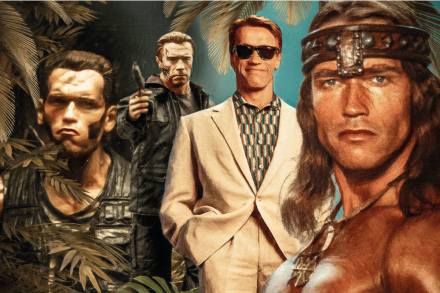
Arnold Schwarzenegger is back

It would be presumptuous to call 2023 the comeback of Arnold Schwarzenegger: he never went away. From his first starring role in 1982’s Conan the Barbarian to an illustriously memorable life and career that have included everything from the Terminator films to his term as governor of California, he has judiciously created an existence for himself as an all-American success story; a sort of Scott Fitzgerald character for the Reaganite age. Not bad, really, for a man born seventy-six years ago in a small town in Austria, the son of an unrepentant Nazi. Should you turn on Netflix, you will now be greeted by two incarnations of Der Arnold.

Arnold

Bama Rush fails as anti-Greek life propaganda

Nobody liked Bama Rush: not the viewers, not the sorority sisters at the University of Alabama at Tuscaloosa (where the film is set), not TikTokkers. It is a remarkably unlikable film that ostensibly attempts to position itself as a “shocking” inside look at sorority recruitment at the University of Alabama. Meandering, self-absorbed and lazy, it somehow even manages to fail as anti-Greek life propaganda. Props to director Rachel Fleit for that though: it might be the film’s only achievement in a climate where people are frothing at the mouth to vilify anything resembling a uniquely American and time-honored tradition. (HBO Max/YouTube screenshot) Bama Rush is first and foremost a transparent attempt to cash in on the 2021 viral success of #RushTok.

bama rush

Meghan and Harry are exhausting the public patience

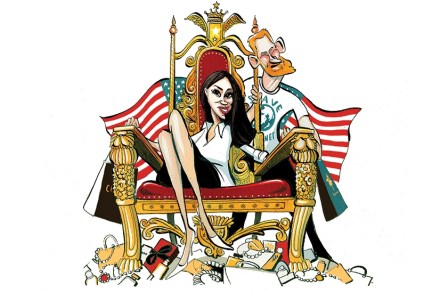
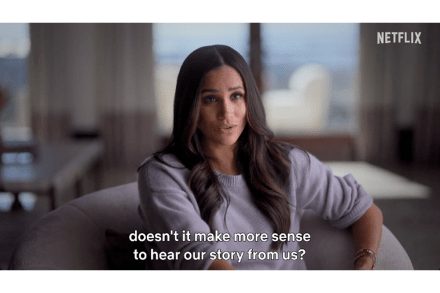
Tolerance for Meghan and Harry is wearing thin across the Pond. That’s saying something, because there was little tolerance to begin with. But after the latest trailer of their Netflix documentary was released online, even the staunchest Sussex fans are feeling fed up. However you feel about the pair, their latest theatrics have opened them up for criticism. The trailer, which has been drip-fed over the last week is, in true Sussex style, chock full of inaccuracies that they must deem the British public too stupid to notice. https://twitter.

prince harry patience meghan markle california

Thank God: Netflix releases Harry and Meghan doc trailer

Sorry for the delay: Cockburn has been busy bleaching his eyes after watching the trailer for Meghan Markle and Prince Harry’s newest venture, a Netflix documentary on "their story." https://twitter.com/netflix/status/1598287753774477312 People magazine claimed, “It's Meghan Markle and Prince Harry like you've never seen them before,” which makes Cockburn question if the publication has had its eyes and ears shut for the last two years. The documentary series, which is composed of six episodes and will premiere in December, includes personal footage of the pair at their wedding reception, on a trip to Africa and while Meghan is pregnant. But what’s a Meghan and Harry venture without the doom? The trailer also includes footage of Meghan wiping away tears. Perfect timing!

meghan trailer

Watch white women being shamed while they dine: CBC’s Deconstructing Karen reviewed

From our UK edition

Nothing heightens the sense of the unpalatable better than a dinner scene. Think of the violence meted out at the dining table in Pasolini’s Salò (1975). Think of André Gregory lecturing Wallace Shawn on his solipsism – much to our discomfort – in Louis Malle’s My Dinner with Andre (1981). CBC's documentary Deconstructing Karen accidentally borrows from the form. Eight white women are chided ceaselessly at dinner by two activists – failed Congressional candidate Saira Rao (who is Indian-American) and hitherto unknown Regina Jackson (who is African-American) – until the white women admit that they are racist.

The nightmare of making films about poets

From our UK edition

Television and film are popular mediums. Poetry has never been popular. This is Sam Weller’s father in Pickwick Papers, when he discovers his son writing a valentine, alarmed it might be poetry: Poetry’s unnat’tral; no man ever talked poetry ’cept a beadle on boxin’ day, or Warren’s blackin’, or Rowland’s oil, or some o’ them low fellows; never let yourself down to talk poetry, my boy. In 1994, I made a short film about Kipling. The director, Tony Cash, a man with a first-class Oxford degree in Russian, objected to a two-second reference to Aristotle’s ‘pity and terror’ in my script. ‘If you mention Aristotle, they [the TV audience] will think you’re an arsehole or an idiot.