Democracy

Voting with a vengeance

Weeks have passed since I voted in the November election, and I'm still ticked off. You would be too if it happened to you. Once upon a time — that is, before 2022 — New York was one of the friendlier states toward third parties. Whether Green, Constitution, Socialist Workers, Libertarian or Communist, all were welcome on the ballot so long as they passed an easily surmountable petition threshold. This pro-participation access was called “democracy.

voting

Why the lame-duck Congress is a threat to democracy

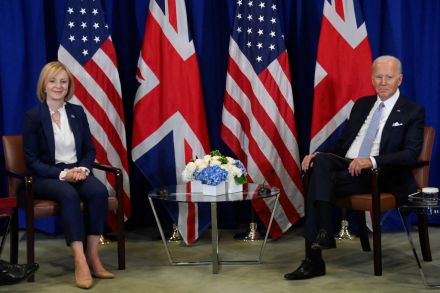
President Joe Biden warned Americans before the midterms that democratic self-government was “under assault” by candidates who refused to accept that Donald Trump lost the 2020 presidential election. Biden echoed others when he argued that such Republicans were “determined to succeed in thwarting the will of the people.” Polls show that most Democrats and Republicans alike worry about the future of our democracy — though they disagree over what threatens it. But this debate misses a more immediate danger: lame-duck lawmakers still making decisions while in office. The current Democrat-controlled lame-duck session alone is expected to address legislation involving such major issues as gay marriage and defense spending.

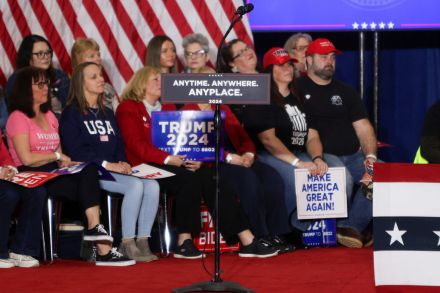
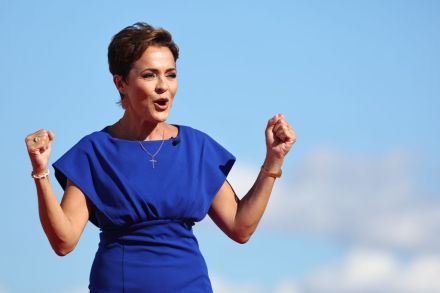
Democrats made Kari Lake a star

In the lead-up to the 2016 presidential election, the national media and the Hillary Clinton campaign devised a plan to elevate Donald Trump and so-called “lunacy” over a field of up-and-coming Republican politicians. According to New York Times journalist Amy Chozick, who was embedded with Hillary Clinton’s campaign from inception to death, campaign manager Robby Mook called a meeting with an agenda of specifically asking “How do we maximize Donald Trump?” Chozick also noted how Mook “salivated when a debate came on, and Trump would start to speak. ‘Shhhhh,’ Robby said, practically pressing his nose up to the TV. ‘I’ve gahtz to get me some Trump.’” We all know how that worked out.

kari lake

Homage to Kyiv

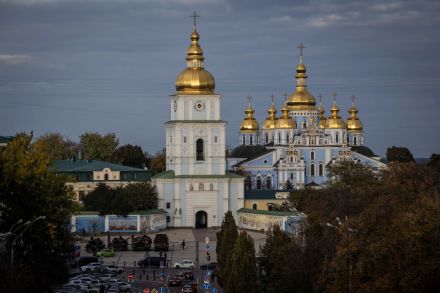
It was 11:15 p.m. in Kyiv, just after the curfew, and the military had set up its checkpoints on the city streets. Finding your way home after hours can be a hazardous business. The city is paranoid about assassins and saboteurs, and in wartime few are above suspicion. Things were looking ominous until my friend Sasha declared: “we are late for breakfast.” The guards waved us through. This was the daily password, shared with those important enough to move around after curfew. Checkpoints and curfews were a few reminders of the war in Kyiv, where I was just before last week’s deadly air strikes. In the capital city, life was approaching some form of normalcy.

kyiv

The slumber of the Anglosphere

The countries we call Anglo-Saxon (Great Britain, the Commonwealth and the United States) have been known for centuries for their ability to govern themselves democratically, peacefully and efficiently. In the twenty-first century they have been doing less well. Britain and America are both in dreadful straits politically, economically and socially. The implosion of Boris Johnson and the search for a satisfactory successor have revealed the leadership of the Tory Party as a hapless and embarrassing collection of mediocrities devoid of coherent ideas. Across the Atlantic, one of the two major parties is a gerontocracy at the top and a gang of urban guerrillas with Molotov cocktails at its base.

anglosphere

Giorgia Meloni is no springtime for Italian fascism

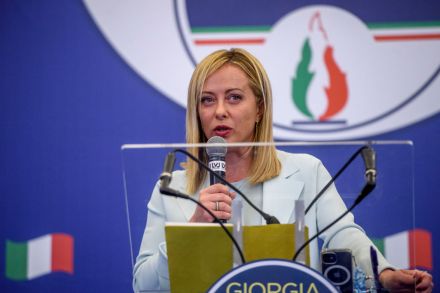
Is it springtime for fascism in Europe? First, it was Sweden. Now, it’s Italy. To judge by the reaction to Giorgia Meloni’s victory in the Italian elections on Sunday, the moment to say arrivederci to democracy has arrived. “Giorgia Meloni will be a minister-president whose political examples will be Viktor Orbàn and Donald Trump,” Katharina Barley, the vice-president of the European Parliament, declared. Maybe so, but will she actually be able to transform her country? Fratelli d’Italia, the Brothers of Italy, is a nationalist party that traces its roots back to Mussolini and is led by the charismatic Meloni. It's about to play a starring role in the Italian political firmament.

Exhausted by America’s culture of fear

When I try to sleep at night, I can't relax. I blearily turn on the TV, but I can't change the channel. My TV is telling me I am going to die, maybe from Covid (they say there's a new variant, you know, called Monkeypox); maybe from climate change because it is likely already too late. Before I drown because of climate change, I'll be hungry because supply chains don't work anymore, and inflation is stripping away my purchasing power, and some sort of fascist coup will happen, and I'll probably have to wear all gray clothes all the time like in the dystopian movies. Then there are the TV diseases, bowel disorders and skin problems that medicines I can't afford might fix except side effects can include blindness, paralysis, saying thingstoofasttounderstandanditallisjustablur of fear.

What Americans can learn from the monarchy

September 8, 2022 will go down in history as the date we lost Her Majesty Elizabeth II, Queen of the United Kingdom of Great Britain and Northern Ireland, Canada, Australia, New Zealand, and of her other realms and territories, Head of the Commonwealth, Defender of the Faith. Her son Charles, Prince of Wales, has now succeeded her as King Charles III. For the first time in this writer’s life, the anthem is to be sung as "God Save the King." To write about the accomplishments of the sole public figure remaining from one’s earliest memories is a daunting task. The Queen in her turn inherited an institution that is difficult for Americans — especially of a conservative stripe — to understand.

The EPA’s loss is a win for democracy

Thursday’s decision by the Supreme Court that the Clean Air Act does not give the Environmental Protection Agency (EPA) authority to proceed with President Obama’s Clean Power Plan is much more significant than the narrow grounds on which it was decided. The Clean Power Plan was already dead. It had been repealed and replaced by the Trump administration, decisions that were later struck down by a court of appeals. Moreover, there is history between the EPA and the Supreme Court. In 2014, the Court ruled against the EPA’s rewriting of the Clean Air Act to facilitate its use as a tool of climate policy, which was already seen as “poor and probably unworkable” by officials in the Obama administration.

America the busybody neighbor

Imagine a neighbor who is constantly in everyone’s business. Perhaps you have such a person, or persons, in your own community. The neighbor complains about the paint colors of shutters, the height of lawn grass, and the number of cars parked on the street. You better hope he doesn’t find out about your backyard chicken coop if it's prohibited in your county. It’s bad enough to have neighbors like this, constantly on the alert, monitoring everyone’s behavior, and complaining to everyone in earshot. But imagine if an entire country was like this. Actually, you don’t have to imagine. For that is America — at least the foreign policy establishment and the powerful elite institutions like corporate media and the academy that influence it.

neighbor

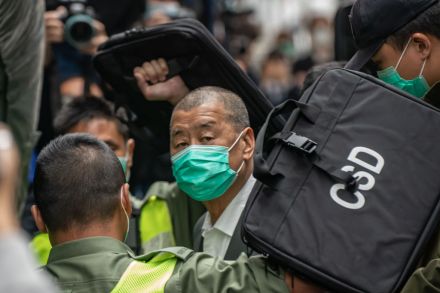
Hong Kong is now a police state

No one now denies that Hong Kong is a fiefdom of Beijing. Its democratic leaders have been packed off to prison on spurious grounds or have left the territory, and its street protests have long been beaten to pieces with batons. The 2020 national security law has made mockery of Hong Kong's last shreds of freedom of expression, rendering all criticism of the Chinese Communist Party akin to terrorism; and its uncensored homegrown newspapers are now closed by the state — their proprietors inexorably marched off to jail. Any pretense of adherence to the treaties signed by Britain and China around the time of the handover in 1997 — treaties that guaranteed Hong Kong autonomy — has long fallen away. Hong Kong is a subject province of the People's Republic now, and nothing more.

Elon Musk let me back on Twitter

After an almost four-year lifetime suspension, Elon Musk let me back on Twitter, with a new account, @PeterMVanBuren. I could again read the "takes" of people smart enough to have a Blue Check (I do not) including those whose points of view I usually don't share. Here is what I've learned. Progressives are insane. They have lost their minds. They are certain every event which they do not personally support is the End of Times. I started back on Twitter the week after Justice Alito's draft opinion overthrowing Roe was leaked, and right away was blasted by Blue Anon stuff like "The Supreme Court is a Tool of Tyrants" and "Time for Canada to Offer Gender Asylum to American Women.

Diversifying democracy

In 1790, George Washington wrote that “the establishment of our new Government seemed to be the last great experiment, for promoting human happiness, by reasonable compact, in civil Society.” Today, Yascha Mounk has reassessed Washington’s words. He proposes in his new book The Great Experiment that many Western nations are now conducting their own experiments. Never have so many nations tried to establish such diverse democracies, regimes that grant citizens of so many colors and creeds the same freedoms, opportunities and responsibilities. Mounk, a professor at Johns Hopkins University and the founder of the Substack publication Persuasion, is both hopeful and pragmatic about the experiment’s outcomes.

mounk

Democracy and economic freedom are in decline

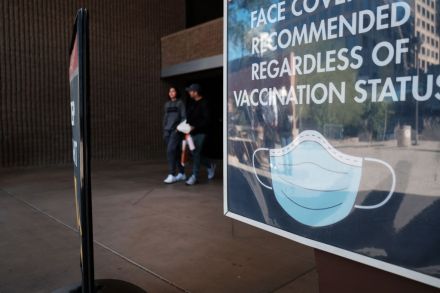
The first report cards on democracy and economic freedom for 2021 are out and the results are not good. Economic Intelligence Unit, the sister company of The Economist magazine, found that last year’s Democracy Index had fallen by almost a tenth of a percent. That’s the biggest drop in the index’s 15-year history. The Heritage Foundation’s Index of Economic Freedom, meanwhile, saw a similar albeit larger decline of 1.6 points out of 100. Heritage looked at economic policies and conditions in 177 countries while the Democracy Index looked at 167 countries. Both reports blame government-enforced COVID restrictions for the declines.

mask

Welcome to body-camera democracy

The introduction of body cameras as a staple of the police uniform has been a transformative piece of tech. After just eight years of their use, it’s hard to argue against the impact of body cams in stemming police misconduct. According to a recent study by the University of Chicago’s Crime Lab and the Council on Criminal Justice’s Task Force on Policing, civilian complaints about police misconduct are down 17 percent since the introduction of body cams. Physical encounters, whether fatal or non-fatal, are down 10 percent. It was a struggle to get here. Many cops said that complaint statistics did not justify the indignity of policing the police taping every interaction they have with the public. A vocal minority countered: “If everything is so cool, we will see it.

body cam

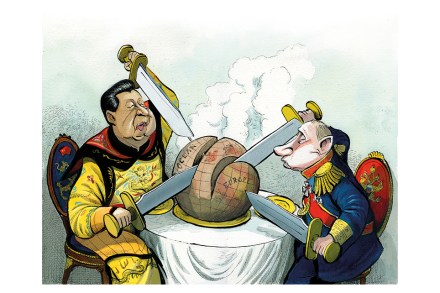
Who won the Cold War, anyway?

Thirty years ago this December 26, the impossible happened. One of the bloodiest states of the twentieth century (a horrific and highly competitive category) dissolved without violence. The Union of Soviet Socialist Republics had all but ended months earlier, when Russians took to the streets to defy the communist hardliners who had seized the government from an impotent Mikhail Gorbachev. That popular countercoup was itself largely bloodless: the soldiers called upon to enforce the hardliners’ rule refused to shoot their own countrymen. The Cold War is often said to have ended with the toppling of the Berlin Wall in 1989. Had things turned out differently in Moscow two years later, the struggle might well have resumed.

Cold War
class

The foremost challenge facing Western democracies

A few philosophers since ancient Greece have been wise, scarcely any humble. None at all, to my knowledge, has had the hubris — or maybe courage — to tackle the foremost challenge in political philosophy facing Western democracies today: how to achieve a demotic political system with an elite culture resting on top of the popular one, and the subordinate problem of how to prevent bad culture from driving out good, or making it impossible. Not even Tocqueville addressed the problem, which shows what a wise man the aristocratic Frenchman truly was.

Welcome to the age of entropy

Americans and other westerners have long been accustomed to thinking that history has a clear direction. Sometimes the direction is contested, as it was during the Cold War. The future could have been capitalist or communist, or perhaps a blend of both systems — ‘convergence’ was a trendy notion for a time — but one way or another the alternatives were clear. After the Cold War, there were no alternatives. Capitalism, democracy and liberalism were here to stay, and soon they would be everywhere else too. All the Islamic world needed if it was to join us at the end of history was a nudge: regime change would speedily bring about social and economic change.

liberalism

A DC evening with Svetlana Tikhanovskaya

A few years ago, in my capacity as editor of the National Interest, I sent out a sonorous query to a variety of contributors asking them to comment for a forum on the direction of American foreign policy now that the Cold War was over. I promptly received a tart reply from Ferdinand Mount: 'Almost every word of the National Interest’s question could itself be questioned: has the Cold War ever definitively ended? Vladimir Putin doesn’t seem to think so.’ How right he was! His words came back to me last night with particular force when I attended an event on behalf of Belarusian democratic opposition leader Svetlana Tikhanovskaya last night, co-sponsored by the Lithuanian embassy and the Atlantic Council.

svetlana

The tragedy of the Texas COVID-crats

Last week, Texas Democrats fled the state on a chartered plane to Washington DC, maskless with a case of Miller Lite in tow, to a chorus of whoops and cheers of our national media. As Texas attempts to pass new election integrity legislation, or to Democrats and our media writ large, ‘voting restrictions’, Texas Democrats decided to object to the Senate filibuster, by participating in a filibuster. They were doing the rounds on CNN and MSNBC, appearing on morning shows or being celebrated on them (The View). The irony of celebrating a minority party as ‘brave’ few for mucking up the legislative process was apparently completely lost on our journalistic elite.

texas democrats