Defense spending

Art of the DoGE

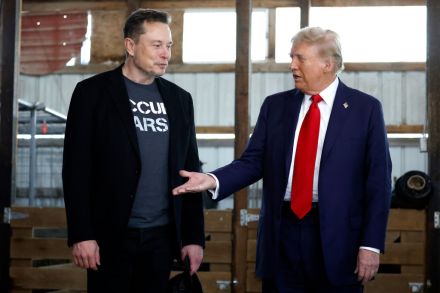
No one can accuse Donald Trump of inaction. For once, the US has a government with the urgency of a private corporation. The speed at which the new administration has acted in all kinds of areas has pleasantly surprised Trump’s supporters and flummoxed his opponents. It is hard to grab on to anything and oppose it when the announcements are coming out of the White House at such a speed. As a leader, the Donald Trump of 2025 has already shown himself to be a very different figure to the political ingénu who entered office in 2017. Eight years ago, he came into government knowing little of how it operated, how its machinery can often thwart those who are notionally in power.
DoGe

Contra the hawks, Biden’s defense budget keeps ballooning

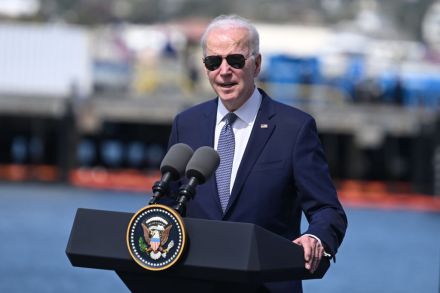
This week we heard a lot about AUKUS, a trilateral initiative between the United States, the United Kingdom and Australia that will revamp the Australian naval fleet with nuclear-powered submarines over the next two decades. President Biden, UK Prime Minister Rishi Sunak and Australian Prime Minister Anthony Albanese made a show of it in sunny San Diego on March 13, where they officially inaugurated the defense agreement and gave speeches about defending sea lanes and the rules-based international order in the Indo-Pacific. But there was another story here: the Pentagon released a torrent of charts and bureaucratic documents on what it would like to see in the coming year’s defense budget.

Japan’s defense revolution

You don’t need to be an Asia specialist to recognize that China is undergoing a significant military modernization campaign. China’s leader, Xi Jinping, and the Chinese Communist Party are seeking to transform the People’s Liberation Army (PLA) into a world-class military by 2049, and complete the development of the military platforms, capabilities, enablers, and amphibious weapons systems necessary for a potential Taiwan contingency by 2027. Beijing’s defense budget rose by 139 percent between 2010 and 2020.

America’s military isn’t ready for a war with China

China’s 20th Party Congress concluded on October 23, and President Xi Jinping secured a norm-breaking third term as leader of the Chinese Communist Party (CCP). With the Politburo Standing Committee stacked with close confidants and dissent virtually wiped out, Xi is the strongest he has ever been. Xi has also redoubled the Party’s commitment to taking the island of Taiwan, by force if necessary. Secretary of State Antony Blinken recently said that China “was determined to pursue reunification on a much faster timeline.” The alarm has been repeatedly sounded by American military officials, with speculation that a Chinese invasion of Taiwan could occur as soon as 2023.

Another wasteful defense budget for the Pentagon

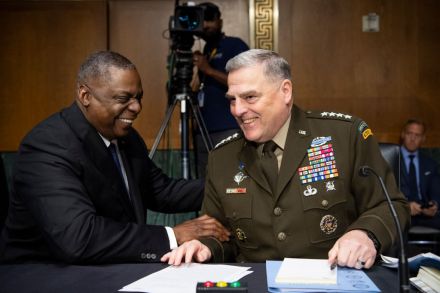
In a perfect world, lawmakers responsible for crafting defense policy would actually debate defense policy. Yet rarely does this occur when the annual National Defense Authorization Act (NDAA) works its way through Congress. If there is debate, it typically revolves around numbers: how much money does the Pentagon need to keep the United States safe and ahead of its strategic competitors? How many F-35 airframes should be purchased for the Air Force? How much cash should be appropriated for the various “assurance initiatives” the Defense Department runs on a daily basis? This year was no different. The Senate this week sent a compromise $768 billion NDAA to President Biden’s desk in a resounding vote after a multi-day hiccup over amendments killed the original version.

congress defense budget