Defense budget

Contra the hawks, Biden’s defense budget keeps ballooning

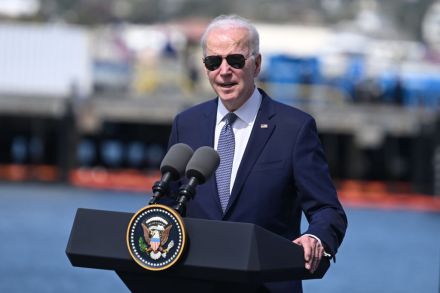
This week we heard a lot about AUKUS, a trilateral initiative between the United States, the United Kingdom and Australia that will revamp the Australian naval fleet with nuclear-powered submarines over the next two decades. President Biden, UK Prime Minister Rishi Sunak and Australian Prime Minister Anthony Albanese made a show of it in sunny San Diego on March 13, where they officially inaugurated the defense agreement and gave speeches about defending sea lanes and the rules-based international order in the Indo-Pacific. But there was another story here: the Pentagon released a torrent of charts and bureaucratic documents on what it would like to see in the coming year’s defense budget.
Japan’s defense revolution

You don’t need to be an Asia specialist to recognize that China is undergoing a significant military modernization campaign. China’s leader, Xi Jinping, and the Chinese Communist Party are seeking to transform the People’s Liberation Army (PLA) into a world-class military by 2049, and complete the development of the military platforms, capabilities, enablers, and amphibious weapons systems necessary for a potential Taiwan contingency by 2027. Beijing’s defense budget rose by 139 percent between 2010 and 2020.

Don’t expect the midterms to change our foreign policy

President Joe Biden and his Democratic allies were expecting a romp on Tuesday. So were many of the career prognosticators surveying the election landscape. Instead, many of the close Senate races, including in all-important Georgia and Nevada, haven’t been called. Those of us who have been staring at the returns for hours on end still don’t know the full extent of the results. But what can be said with reasonable certainty is that however the balance of power stacks up, foreign policy is likely to be the same as it ever was. The status quo is an all-powerful force inside the Beltway, where conventional wisdom rules the roost and any tilt away from the mainstream is usually corrected before an honest discussion can be had on the merits. Part of this is institutional.