Defence

Is Rachel Reeves blocking defence spending because of ‘gender parity’?

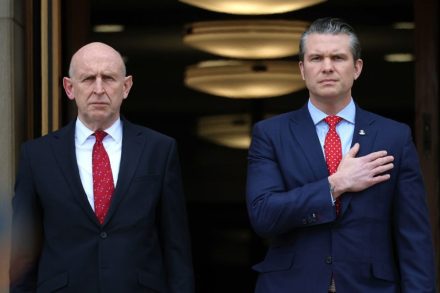
When John Healey was asked, on stage at the London Defence Conference, whether the armed forces were ‘ready’ for war, the Defence Secretary replied: ‘Yes.’ One of those present says: ‘That was greeted with near incredulity in the room.’ Another attendee compared Healey’s plight to someone ‘playing French cricket’, with critics from all sides hurling balls at his ankles while he tried to bat them away. ‘You can’t score any runs in French cricket.’ George Robertson, Healey’s most respected Labour predecessor and a former secretary general of Nato, was not present; he was in Scotland celebrating his 80th birthday. But he returned to give a withering interview to the FT

What’s Britain’s place in the post-Iran world order?

Midway through James Joyce’s Ulysses, the character J.J. O’Molloytips his hat to ‘Our watchful friend, the Skibbereen Eagle’, a playful reference to an obscure provincial newspaper in the west of Ireland. Under an ambitious new editor, the Skibbereen Eagle had risen fleetingly to prominence in 1898 for its robust response to Tsar Nicholas II’s attempts to gain a warm-water port for the Russian navy by encroaching on China’s Yellow Sea. As its editorial warned in a chiding tone, the Eagle would ‘keep its eye on the Emperor of Russia and all such despotic enemies – whether at home or abroad – of human progression and man’s natural rights’. The Tsar,

What happened to Britain’s fighting spirit?

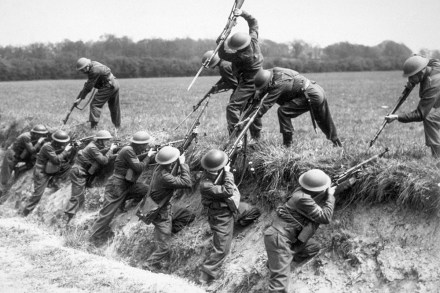
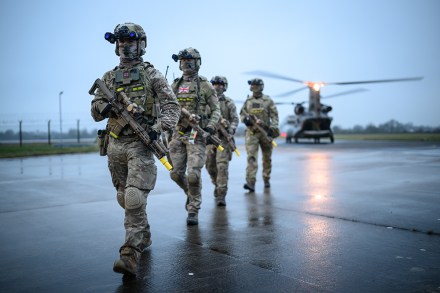
When war is in the air, young men traditionally sign up – and they traditionally sign up, disproportionately, from the north-east of England, where I grew up. The country must be prepared for war, says Air Chief Marshal Sir Richard Knighton, head of our armed forces. But what use is all this puffed-up talk of a battle-ready Britain if we have no soldiers? In the north-east, the supply of soldiers has slowed not just to a trickle but to a drip. Sunderland, for instance, home to nearly11,000 veterans, sent just ten men into the army last year. A reporter called Fred Scul-thorp went to Sunderland for Dispatch magazine last month,

The only ‘civilisation’ Trump will destroy is his own

If, as Donald Trump had threatened, ‘a whole civilisation’ had died on Tuesday night, the whole civilisation concerned would have been that of the United States, not of Iran. If an American president had deliberately ordered the death of a civilisation – whether or not such a thing is achievable – America’s claim to world leadership would have collapsed. Like, I suspect, many, however, I did not go to bed that night thinking that Trump would carry out his threat. I remember my parents telling me that, during the Cuban missile crisis, people truly believed there might be nuclear conflagration at any moment. It did not feel like that this

A Ukrainian win is more important than ever

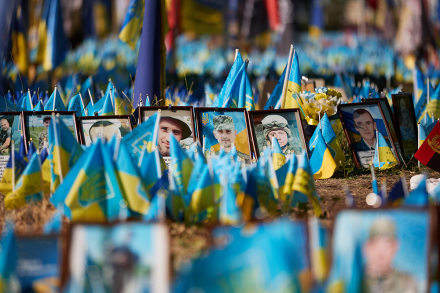
On 3 April we mark 1,500 days since Russia invaded Ukraine; on 11 June, the conflict will have lasted longer than the first world war. At that point in 1918, the German army was in complete collapse amid the success of the final Allied offensive, as the Kaiser’s disillusioned troops were forced back through the battlefields of the Somme. By contrast, the Ukrainian conflict remains locked in a bitter and bloody war of attrition. The Ukrainians have displayed an inspiring level of resilience; indeed, in recent months they have made small territorial gains. But the outbreak of war in the Middle East has, for the moment, strengthened Vladimir Putin’s hand.

How the army can rediscover its fighting spirit

The seemingly endless debate about the hollowness of our armed forces has concentrated on size, technical capability and sustainability – never more so than in recent days when the UK’s unreadiness for war, or even to defend its own bases overseas, has been exposed. But there has been no mention of the moral component of fighting power (morale, spirit, will), which is the most important element of combat effectiveness. Napoleon is often quoted as saying that in war, ‘the moral is to the physical as three to one’, and history is littered with examples showing this to be true. The most recent was the evaporation, within days, of the Afghan

Revealed: Keir Starmer’s new plan to get closer to the EU

A Labour MP, reflecting on the problems the Prime Minister faces over the war in Iran, observed this week: ‘Keir got it right, but things keep going wrong.’ His point was that Starmer kept Britain out of the Israeli-American air strikes, a position popular both with the parliamentary Labour party and the electorate, yet the impact of that conflict has laid bare three serious problems at the heart of the British state. First, there has been a fracturing of relations between Starmer and Britain’s defence chief, Air Chief Marshal Sir Richard Knighton. Second is the vulnerability of the economy to energy price shocks. Third is Ed Miliband’s net-zero crusade, which

Britain is not ready for war – and Labour isn’t doing enough

38 min listen

Britain is defenceless, declares the Spectator’s cover piece this week. From the size of the armed forces to protection against cyber warfare, the government is not spending fast enough to meet the UK’s security challenges. But is the public ready to choose warfare over welfare? And can we blame the young people who don’t want to fight for their country? For this week’s Edition, host William Moore is joined by opinion editor Rupert Hawksley, columnist Matthew Parris, and Whitehall editor of the Financial Times Lucy Fisher. As well as meeting Britain’s defence challenge, they discuss: whether the Mandelson scandal is bigger than the Profumo affair; the organised gangs terrorising rural

Britain is not ready for war – and Labour isn’t doing enough

Can Keir Starmer keep us safe?

‘Shape without form, shade without colour. Paralysed force, gesture without motion.’ T.S Eliot’s lines from ‘The Hollow Men’ sum up in 11 words the emptiness of Sir Keir Starmer’s administration. Nowhere is the shade darker and the force more paralysed than in our government’s defence policy. At the Munich Security Conference last weekend, the Prime Minister boasted that he has demonstrated ‘Britain’s leadership on the world stage’ and pledged to augment our ‘huge defence capabilities’. A promise to increase defence spending further, faster, followed. But this is all gesture and no motion. The Prime Minister’s promises that Britain will be ready for global conflict are all shape and no form

Our armed forces are hollow – and our enemies know it

When you’re the chief of the defence staff, the head of the British armed forces, it’s never a good sign if your phone rings on a Sunday evening and it’s the permanent secretary. On this particular Sunday, in March 2021, the reason for the call was the Integrated Review of Security, Defence, Development and Foreign Policy, which was due to be published the following week. Although we had been closely involved in the work, the permanent secretary had been told that the chancellor had approved a settlement that would lead to punishing cuts. Something had to be done. I fully expected to get sacked or resign in protest when I

Labour’s dereliction of duty over defence

Last week, our political editor, Tim Shipman, revealed a recent meeting between Air Chief Marshal Sir Richard Knighton, the Chief of the Defence Staff, and the three heads of the services to discuss the defence investment plan. This plan governs the day-to-day armed forces’ budgets and follows the recent Strategic Defence and Security Review (SDSR), which sets our military aims as a nation. The chiefs agreed to write an unprecedented letter to John Healey, the Defence Secretary, explaining that the SDSR couldn’t be delivered without the requisite funding. That money was not forthcoming in the Budget, so they are forced to contemplate a bleak alternative: immediate cuts to both our

Britain needs a Stolen Valour Act

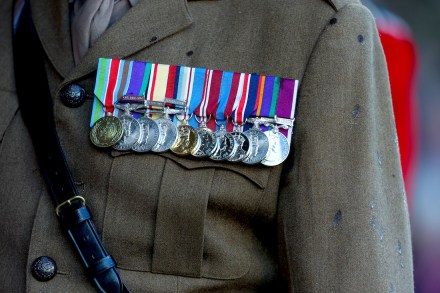
Next month Jonathan Carley will appear in court in Carmarthen, charged with wearing military uniform without permission. This charge comes after a man purporting to be a Rear Admiral was pictured at a Remembrance Sunday service in Llandudno while wearing an impressive row of medals. One was Britain’s highest awards for gallantry – a Distinguished Service Order. This case of alleged ‘stolen valour’ highlights an odd loophole in the law. While it is illegal to wear military uniform if not serving in the armed forces, there is no current criminal sanction for wearing unearned medals. A previous legislative attempt to deal with this issue failed. Parliament should act again. Stolen

The Afghan asylum leak cover-up saved lives

The United Kingdom’s immigration system is broken. Tens of thousands have entered the country who should not, and the bureaucracy which processes asylum cases is a creaking wreck. Those who do deserve a safe welcome are left in legal limbo for months, if not years. And yet the Home Office, which is responsible for this chaos, is not even the department in government with the most inefficient and unaccountable bureaucracy. That hard-fought distinction belongs to the Ministry of Defence, which combines profligacy in procurement with an inability to give armed forces families homes that meet even the most basic standards of decency. So when we learned this week that ministers

How often do volcanoes erupt?

Under control UK air space is to be reorganised – the first wholesale change since the 1950s – to improve flight times and reduce delays. It was Britain that pioneered air traffic control with the world’s first control tower – a timber shed on a platform 15ft above the ground – at Croydon Aerodrome in 1920. The tower was given responsibility for all aircraft airborne, with which it had basic radio connections. From 1928, control centres in Norfolk and Kent allowed radio signals to be ‘triangulated’ for the first time, allowing the position of an aircraft to be determined even if the pilot was lost. Battle ready The government seemed

Letters: Where to find Britain’s best dripping

Open arms Sir: The latest magazine (29 March) has two references to American military capabilities, from Rod Liddle and Francis Pike. Mr Liddle suggests that the prevalent attitude over there is that we ‘Yerpeans’ should have contributed more to the recent strike on Yemen (‘America first, Europe last’). He may not have known it was RAF tankers which enabled the US fast jets to attack. (This also escaped the Signal group chat.) Mr Pike suggests that the US navy’s carriers are suddenly vulnerable to modern weapons (‘Carriers of bad news’). As an excellent historian, he will concede that commentators have been writing off naval carriers’ effectiveness for decades. He is

The underlying message of Rachel Reeves’s Spring Statement

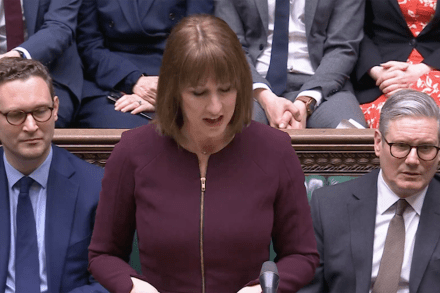
Rachel Reeves may not be the most mellifluous writer ever to inhabit 11 Downing Street. At the weekend, she informed readers of the Mail on Sunday that she would ‘make no apology for keeping an iron grip on the country’s finances’ but was happy to spend money on training more ‘brickies, sparkies and chippies’. The lurch from cliché to fake colloquialism does not suggest Reeves will be bracketed with Disraeli, Gladstone, Churchill or Lawson. But there is one addition to the political lexicon for which Reeves is responsible and which deserves a revival – ‘securonomics’. Before Labour’s election, the term was never far from Reeves’s lips. Launched with great fanfare

Britain isn’t ready for space and AI warfare

How safe will this country be under Labour? The Strategic Defence Review (SDR) is supposed to provide the answers. It hasn’t been published yet, but may already be out of date. It’s expected to make the case for defence spending to rise from 2.3 per cent of GDP to 2.5 per cent – but that won’t be enough for Donald Trump, who has asked allies to devote 5 per cent of their national wealth to the military. And it’s not only what we spend but how we spend it that the government are struggling to get right. The upcoming SDR will be the fourth review in a decade. On past

SAS betrayal, the battle for Odesa & in defence of film flops

48 min listen

This week: SAS SOS The enemy that most concerns Britain’s elite military unit isn’t the IRA, the Taliban or Isis, but a phalanx of lawyers armed with the European Convention on Human Rights (ECHR), writes Paul Wood in The Spectator. Many SAS soldiers now believe that if they kill a terrorist during an operation, they’ll spend decades being hounded through the courts. Paul speaks to former SAS soldiers who say that stories of men being ‘dragged back to be screamed at in interview rooms’ are ‘flying around the canteens now’. Soldiers feel like ‘the good guys have become the bad guys – and the bad guys are now the good guys’.

Labour’s cuts are going to hurt our armed forces

Defence Secretary John Healey has announced more changes to the armed forces, detailing several capabilities to be cut to achieve savings of £500 million over the next five years. The Royal Navy’s two amphibious assault ships, HMS Bulwark and HMS Albion, will be retired at the end of the year, while HMS Northumberland, a Type 23 frigate, will be decommissioned because her structural damage is ‘uneconomical to repair’. The retirement of the amphibious assault ships has profound implications for the future role of the Royal Marines The Royal Fleet Auxiliary’s two Wave-class fast fleet tankers, RFA Wave Knight and RFA Wave Ruler, will also be retired. They have been in ‘extended readiness’ – that is, maintained but uncrewed and not

The medieval English matriarch was a force to be reckoned with

In 1448, Margaret Paston, a wife and mother in her twenties, wrote to her husband John urgently requesting more weapons: she needed crossbows, poleaxes, windlasses and jacks. In John’s absence, a local lord was trying to take over Gresham, their property in Norfolk, and was mounting a violent siege of the manor house. Margaret was leading the defence. She was multi-tasking, however. In the same letter she also asks John to send some almonds and sugar, as well as woollen cloth for gowns for their young sons and broadcloth for a hood for herself. The missive survives as part of the Paston letters, the largest extant set of medieval correspondence