Defence spending

Ministers must get the Defence Investment Plan right

From our UK edition

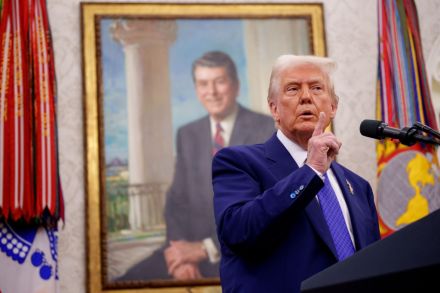
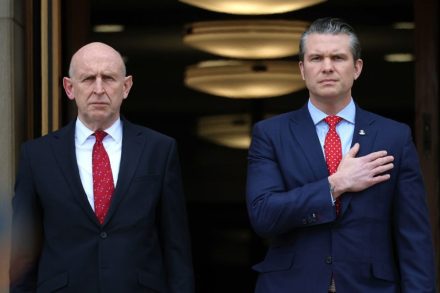
The speech by Pete Hegseth, the US Defense Secretary, to Singapore's Shangri-La Dialogue was addressed to a Pacific audience. His sharpest messages, however, were for Europe, and especially for a British Government that still hasn't explained in practice how it plans to deliver the political commitments made a year ago in the Strategic Defence Review (SDR). Healey claimed that talking too much and delivering too little has now changed. The Defence Investment Plan is where that claim gets tested ‘Push-up Pete’ - who ostentatiously styles himself the Secretary of War - is a controversial figure. European governments have found it convenient to dismiss him. That is a mistake. Hegseth came to Singapore to unveil the US National Defense Strategy.
Is Britain ‘battle-ready’?

From our UK edition

15 min listen

Today the government has published the long-awaited strategic defence review. The brief was to take a new look at some of the challenges to the UK in 2025, and what is needed to ensure our security and reset our defence priorities. We are still waiting for some of the detail, but so far we know: £15 billion for new warheads to be carried by the new Dreadnought-class submarines; a dozen new SSN-Aukus attack submarines; £1.5 billion to build at least six munitions' factories; £6 billion to procure munitions over the remainder of this parliament; and £1 billion for digital capability and a new CyberEM Command. Where is all that money coming from? Most of the squabbling today has been over the commitment to 3 per cent of GDP on defence spending.

Labour’s ‘Sabrina Carpenter’ Budget

From our UK edition

18 min listen

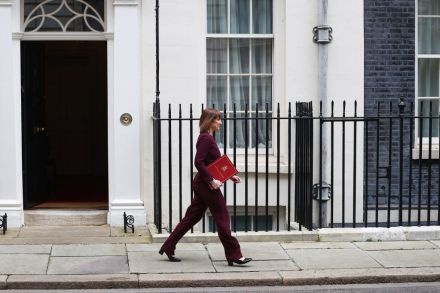
This afternoon, Rachel Reeves made good on her promise to deliver only one fiscal set piece per calendar year by announcing what is widely being considered a Budget... this precedes a spending review in the summer and an actual Budget in the autumn. The headline is that the Chancellor had to find £15 billion in spending cuts to restore her headroom and keep within her own ‘ironclad’ fiscal rules. This comes after the Office for Budget Responsibility (OBR) confirmed that the £9.9 billion margin she left herself in the autumn has disappeared. The OBR has also halved its growth projections – bleak news for the government.

Can Keir trust Macron?

From our UK edition

13 min listen

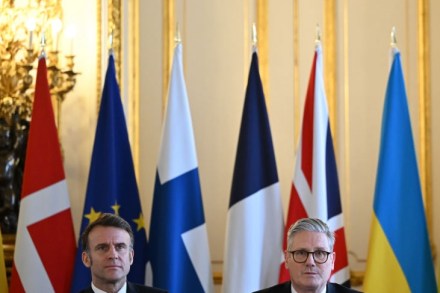
It’s a big day in defence. Keir Starmer began the day in Barrow talking about nuclear subs and will end the day in a meeting of the ‘coalition of the willing’ on the outskirts of London. But that coalition seems like it could be undermined by the European Commission’s decision to exclude non-EU arms makers from the bloc’s new €150 billion defence fund. Officials are keen to stress that this is not a done deal yet, but this would be a massive blow for the UK (and the US) and a big win for France. With Europe rearming, who stands to benefit? And what should we expect from the meeting of military officials later today? Oscar Edmondson speaks to James Heale and Eliot Wilson, former clerk to the House of Commons, including on the Defence Committee. Produced by Oscar Edmondson.

Coffee House Shots Live with Robert Jenrick and Jonathan Ashworth

From our UK edition

70 min listen

The Spectator’s Katy Balls, Michael Gove and Kate Andrews were joined by special guests Robert Jenrick and Jonathan Ashworth for a live podcast, recorded at the Emmanuel Centre in Westminster. The main topic of discussion was, of course, Donald Trump, whose inauguration has ushered in a new world disorder. His ‘shock and awe’ foreign policy has sent Europe scrambling as it tries to work out who will be responsible for ensuring its security in the future. We have seen a move away from the idealism that has defined foreign policy in the last decade and towards ‘realism’, with countries committing to boots on the ground and greater defence spending. Are Labour right to increase their defence pledge?

Is Kemi Badenoch a ‘realist’?

From our UK edition

15 min listen

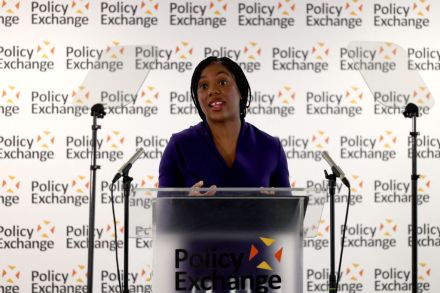
Kemi Badenoch has today given a major speech outlining the Conservatives’ commitment to ‘realism’ in their foreign policy. She said, ‘You cannot help others if you cannot help yourself’, and that the sovereignty and strength of Britain matters 'above all'. She also pressed Keir Starmer to push defence spending north of the 2.5 per cent target and – as if it was all choreographed – the prime minister dutifully has, announcing in the Commons that defence spending will reach 3 per cent of GDP by the end of the next parliament. This will come at the expense of the foreign aid budget, another suggestion that the leader of the opposition made in her speech today. What is realism? Is it right to forgo our commitment to overseas aid?

Europe should listen to America’s uncomfortable truths

From our UK edition

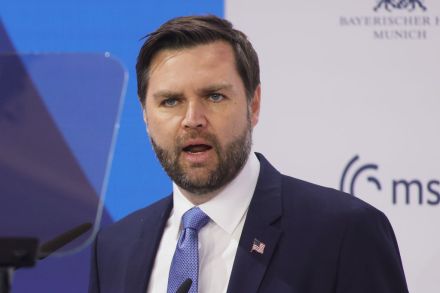
The response in Europe to J.D Vance’s speech at the Munich Security Conference last Friday was one of predictable outrage. Media outlets described it as a ‘rant’ or a ‘sermon’, and politicians and diplomats queued up to criticise the vice-president of America. Kaja Kallas, the EU's High Representative for Foreign Affairs and Security Policy, accused the Trump administration of ‘try[ing] to pick a fight with us, and we don't want to a pick a fight with our friends’. Apparently, there were ‘dry laughs’ from some of the audience when Vance talked about ‘shared’ values.

The UK’s balancing act over Trump’s ‘Ukraine peace plan’

From our UK edition

13 min listen

Leaders from around the world are gathering at the Munich Security Conference, with the UK represented by Foreign Secretary David Lammy. All attention has turned to Ukraine, given statements this week by President Trump that he had spoken to Putin (and later Zelensky) about ending the Russia-Ukraine war. Trump's statements, for example that NATO membership should be off the table, put him at odds with European allies. The UK signed a joint statement with leaders from France, Germany and others, that Ukraine's independence and territorial integrity are unconditional. Is the UK walking a tight-rope between the US and Europe? Where does this leave the NATO alliance? And, with a strategic defence review underway, what should the UK's approach to defence spending be?