Debt ceiling

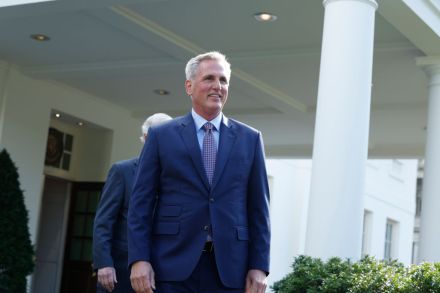
Kevin McCarthy can taste victory

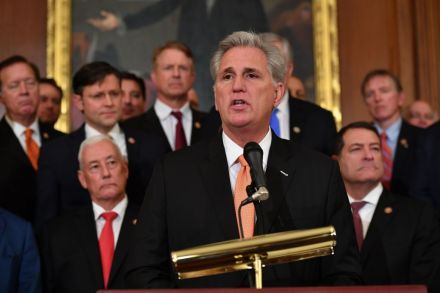
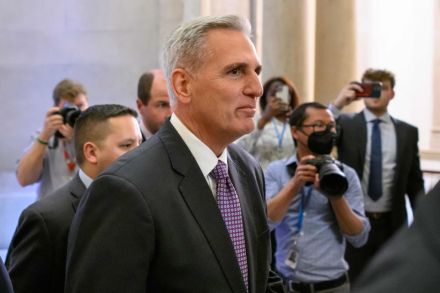
The House will vote on Kevin McCarthy and Joe Biden’s debt-ceiling deal this evening and, by all accounts, the speaker has stuck the landing. Having reached an agreement with the White House, McCarthy got his way in a crucial Rules Committee meeting yesterday, fought off a Freedom Caucus rebellion and looks set to win support for his deal from a majority of his conference.  To the great disappointment of those banking on a bruising Republican civil war, McCarthy evidently feels secure in his position. Asked about the possibility of disgruntled hardliners filing a motion to vacate today, McCarthy replied: “Look, everybody has the ability to do what they want. But if you think I’m going to wake up in the morning and ever be worried about that, no. Doesn’t bother me.
Why Kevin McCarthy is winning the debt ceiling battle

Tick. Tick. Tick. That’s the sound of the clock as the United States approaches the limit of its borrowing power. Tick. Tick. Tick. It’s also the sound of the US debt clock. Actually it's more of a whoosh as it tries to keep pace with the sheer clip of the national debt, which totals some $31.7 trillion or over $240,000 per taxpayer. For fiscal hawks, these two measurements have set the tempo for a seemingly endless set of battles over the nation's debt ceiling and financial footing. To be clear, the government already hit its debt limit. That was back on January 19, a mere twelve days after Kevin McCarthy survived his bid to claim the speaker’s gavel.

debt ceiling

Why everyone lacks credibility on the debt ceiling

Why everyone lacks credibility on the debt ceiling Time to cough up, America. Tomorrow is Tax Day and, fittingly, Congress returns this week with negotiations over the debt limit at the top of the agenda in Washington. House Speaker Kevin McCarthy set out his stall this morning with a speech in Manhattan. With the summer deadline on the fiscal cliff fast approaching, McCarthy today vowed that “in the coming weeks, the House will vote on a bill to lift the debt ceiling into next year,” adding that the legislation would also “save taxpayers trillions of dollars, make us less dependent on China, and curb high inflation, all without touching Social Security or Medicare.

The GOP’s new debt ceiling fusionism

Congressional Republicans are gearing up for their four millionth attempt to rein in government spending, and surely this time will be different. After years of posturing in favor of budget cuts that never seem to materialize, the national debt growing to 130 percent of GDP is finally a threshold they won't cross. A Fox News hit? By gum, there's no time! Republicans exclaim as they raise a quivering red pen to the latest defense authorization bill. This job is about policy, not going on TV, dammit! You'll forgive me if I sound a bit cynical. After all, Republicans controlled the elected government for two years under Donald Trump and the deficit only got bigger. Yet as another debt ceiling fight looms, this time the GOP sounds like they might be serious about shrinking the state.

Biden and Congress toss the debt ceiling hot potato

Earlier in the week, Speaker of the House Kevin McCarthy gave an evening address about the urgency of raising the debt ceiling and cutting federal spending. Technically, the government has already taken on the amount of debt it’s allowed to carry. The Treasury Department is employing “extraordinary measures” to shuffle money around to service the national debt and make government payrolls. But these measures can’t keep the government afloat forever. Hence the need to raise the debt ceiling or risk catastrophic default some time in the summer. The timing of the speech — one day before President Biden's third State of the Union address — was conspicuous.

Why it’s time to end the debt ceiling and fund the IRS

Amid the much-anticipated debt ceiling imbroglio, it’s become clear that our national debt can't keep growing like this. To tackle this issue, we need to start by admitting the problem: about 70 percent of federal spending is mandatory, meaning it grows automatically without congressional input. Unfortunately, most of this is Social Security, Medicare, Medicaid, and other politically popular entitlement programs. Cutting the benefits these programs dole out is a political third rail most self-interested political actors won’t dare to touch. Luckily, we don't need to eliminate these programs. What entitlement reform supporters want is to secure these programs’ solvency and make sure they’re there for future generations.

The debt ceiling battle lurking after the elections

Though many pundits may not be able to see past Tuesday’s midterm elections, as soon as the voters decide which party will hold the reins of Congress, the country will witness its first reminder that elections have consequences. The 2022 contests will have a near-instant effect on US fiscal policy. At some point between mid-December and January, the United States will hit its credit limit and need to either increase it or risk defaulting on its financial obligations. Since the Barack Obama years, Republicans in Congress have turned what used to be a pro-forma vote on the debt ceiling into a political cudgel.

Conservatives should support ending the debt ceiling

Just in time for the holidays, lawmakers will soon approve another increase to the country’s debt limit, perhaps by as much as $2.5 trillion. And like so many of us this time of year, Uncle Sam will continue running up his credit card, spending money on things he can’t afford and often doesn’t really need. That said, there’s little doubt that the coming debt ceiling hike is a necessary (if self-serving) gift from our nation’s capital. After all, legislators from both parties have already authorized trillions in spending, knowing full well the country’s dismal fiscal situation.