Death

It’s hard not to pity Ghislaine Maxwell

From our UK edition

This week, I’m having puppies! First litter! The Johnsons were not doggy as we always moved around too much (my late mother claims it was 32 times in 17 years), but once you have a dog, life seems boring without. I have a theory that children give couples something to talk about and, when they go, only a dog can fill the conversational void. The mother (or ‘dam’) is Ziggy, who entered our lives one week before lockdown after I had a sudden strong urge to get a dog. On 13 March last year I drove to a farm in Somerset and fell for a puff of white fur with three black dots for a face for which I shelled out a four-figure sum. I’m afraid she is a cockapoo, like every other dog in London, but that’s not her fault.

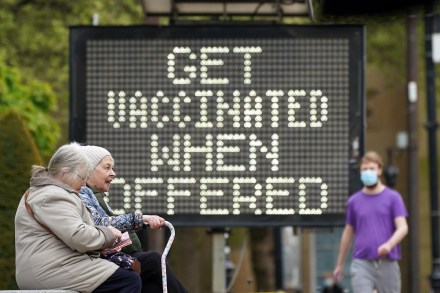
Covid has warped our collective attitude to death

From our UK edition

So, having been promised that normal life would recommence on 21 June, we are once again frustrated by the Covid scientists. The trouble is, of course, that as far as we know the virus is never going away, so according to the logic of the scientists, there is no reason ever to allow us to return to our old way of life. And although it looks as if we are thereby being sensible and ‘following the science’, what it actually reveals is that we are fools to follow a few boffins in white coats, rather than following the received wisdom of the human race over the past 4,000 years: namely that death is an inevitability and even if we do not die of Covid-19, we are going todie of something else.

Why did no one diagnose my sister’s TB?

From our UK edition

In 2016, Arifa Akbar’s elder sister, Fauzia, died suddenly in the Royal Free Hospital, London at the age of 45. Until the last hours of her life, the cause of her coughing, chest pain, night sweats and breathlessness had eluded a series of baffled experts. But you do not need a medical degree to hazard a guess at what might have been behind these symptoms. From Keats’s famous death to the consumptive heroines of 19th-century opera, spots of blood on a handkerchief were all that was missing to complete the picture. Only after Fauzia had a catastrophic cerebral haemorrhage, however, did someone think to test a sample of her spinal fluid for tuberculosis. It was positive. Sense came too late. The mycobacteria had disseminated through her organs and were nesting in her brain.

Covid deaths in context

From our UK edition

What would have been your overall chances of dying in the first 19 weeks of 2021 compared with recent years? According to a measure called 'standardised mortality' your overall chances of dying so far in 2021 have been just 1 per cent over the average of the past ten years — that is in spite of January’s peak in Covid deaths. We have been fed a daily diet of Covid deaths for over a year now. As Professor Gordon Wishart argues elsewhere on Coffee House, this daily bulletin has become pretty pointless now that deaths and hospitalisations are so low; a monthly total would be better.  Yet even at the height of the pandemic, the daily death figures were giving us a false impression of the death toll because they were never set in any context.

Mourning sickness: our conspiracy of silence over grief

From our UK edition

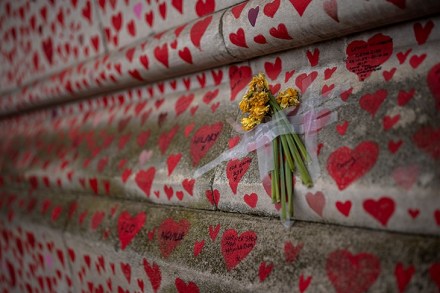
No one can say that, over the course of the past year, we have not had the opportunity as a country to practise the grim arts of grief and mourning. We all know the figures — 127,000 Covid deaths and counting — but I wonder if, in the face of this onslaught, we have lost sight of the vital fact that behind each loss there will be a group of family members and close friends of the deceased setting out on the long, slow trudge down the boggy path of grief. How are we dealing with this suffering? When my father died extremely suddenly six years ago, there was one thing for which I was even more unprepared than the abrupt absence of the most cheerful person I had ever had the pleasure to know.

Tales from my private jet

From our UK edition

Gstaad I was very sad to read of Rupert Hambro’s death. I didn’t know him well, but first met him long ago, along with his younger brother Rick, also gone. They were both quintessential English gentlemen: handsome, kind and with a great sense of humour. Rupert invited me to lunch quite a few times, but because of circumstance I was never able to reciprocate. The last one was at Wiltons, which he owned, I believe, but he never gave any indication that all was not well. In an age of crybabies and professional victims, Rupert stood out like a saint in hell. He leaves his lovely wife Robin, a Philadelphia-born beauty, and two children. Thinking of Rupert and Wiltons, I remembered a dinner I gave there long ago for my friend Nick Scott to meet some of The Spectator people.

What does the trans debate mean for widowers like me?

From our UK edition

I once asked a hospice nurse to describe her job and was surprised when she likened it to midwifery. 'There are two days,' she said, 'which aren’t the full 24 hours. The day you are born, and the day you die.' Uncertainty, fear and waiting. Having been at my late-wife’s deathbed – and at her side as she gave birth to our children – I can see the analogy. But why, when it comes to the language of inclusivity, is death excluded? Or, as the Brighton and Sussex University Hospitals NHS Trust, asserted recently 'there is currently biological essentialism and transphobia present within elements of mainstream birth narratives and discourse'.  Why stop at births? This is a hospital we’re talking about. Lives don’t just start there.

The art of mourning well

From our UK edition

Malindi, Kenya I’ve learned that mourning must be tackled ever so gently. As a younger man, when friends were killed in Africa’s wars I’d become angry and drink. When Dad died I cut adrift in Yemen for a time. Following Mum’s death a month ago, I decided to stay quietly at her home on the beach. The Kaskazi monsoon whirls through the house and white horses roar on the reef. Soon after dusk the memories appear more vivid than in daylight and these parade through my fitful sleeps until dawn, when I can at last get up and trek along the foreshore among ghost crabs and sandpipers. Each morning I box with my coach Amani, before starting work. I run the Laikipia farm by telephone and spend my days on Zoom calls to England.

Trauma has become as American as apple pie

From our UK edition

Gstaad Lord Belhaven and Stenton, a wonderful man and the quintessential English gentleman, died at 93 just before the end of the crappiest of years. But Robin was lucky in a way: no tubes, no hospital beds, not another virus statistic. His widow, Lady Belhaven, gave me the bad news over the telephone, and although she was devastated after a very long and happy marriage, she is very smart and realises that it was a perfect death. He asked for a gin and tonic, went to bed, and never woke up. Acknowledging the death of others is one thing, accepting one’s own demise quite another. That’s why old men send young men to die in war, a confidence trick perfected after the Napoleonic Wars. Greek and Roman generals led from the front, as did many subsequent kings.

Eccentric, artist and storyteller: in memory of my mother Doreen Sanders

From our UK edition

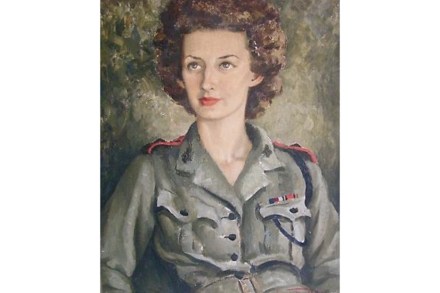
Indian Ocean coast ‘I love you’ became just ‘love’, and that was the last word Mum was able to say to me. Her children had been in and out for days, she had met her great-grandson from America for the first time and messages flooded in on the phone, from all around Kenya and from her grandchildren in Europe. Then one evening the two of us were alone together in her bedroom, surrounded by family photos and all her memories of India, Arabia and great-grandson. She was in my arms and it became so quiet I decided to play Vera Lynn’s ‘We’ll Meet Again’ on my phone, since it might remind her of her years of war service in Burma, when she was still a teenager.

Spectacular and mind-expanding: Tantra at the British Museum reviewed

From our UK edition

A great temple of the goddess Tara can be found at Tarapith in West Bengal. But her true abode, in the view of many devotees, is not this sacred structure itself but the adjacent, eerily smoking cremation ground. There she can be glimpsed in the shadows at midnight, it is believed, drinking the blood of the goats sacrificed to her during the day. Many holy men and women live in that grisly spot too, adorned with dreadlocks, smeared with ash, and dwelling in huts decorated with lines of skulls painted crimson. As a domestic setting this wouldn’t suit everybody. But the varieties of religious experience (to borrow the title of a celebrated work by William James) are many and extremely diverse.

My Aunt Beryl’s zinc-lined trunk revealed extraordinary family secrets

From our UK edition

Bexhill-on-Sea My Aunt Beryl taught me to love books and paintings. When I’m at a loose end in London, lonely, or even rather boozed up, I still nip into one of the galleries she raised me on to say hello to pictures that have been my lifelong friends. Out of an envelope fell an original poem scribbled and signed by Rudyard Kipling Beryl never missed birthdays and Christmas, she wrote postcards and adored her nephews and nieces. She never married, but globe-trotted with easel and pencils, lived in a cave in Petra, went skydiving and skating, made a living from portraits and illustrated 52 children’s books — many of which she read to me when I was small. She cared for my grandparents and inherited their home in Sussex.

The pagan rites of Ruth Bader Ginsburg

When Ruth Bader Ginsburg succumbed to cancer, #RestInPower immediately trended. The ACLU, New York senator Kirsten Gillibrand, actress Reese Witherspoon and the ostensibly Jewish uber-left activists of Bend the Arc all used the woke neologism in their tributes.The play on words likely originated in the 1990s rap. It entered mainstream usage after the 2016 election when the left lost its mind. Even in a culture that’s increasingly — pathetically — obsessed with politics, politicizing death feels like a new low. Ginsburg’s final rite of passage signals a rejection of Jewish and Christian customs along with democratic norms, and a return to paganism and violence.

pagan

Dear Mary: how can I avoid my friend’s awful favourite restaurant?

From our UK edition

Q. Almost a year ago I attended the funeral of my godfather — a bachelor and distant relation whom I had seen increasingly infrequently. When I offered my condolences to his brother, he mentioned that godchildren had been very well catered for in the will and that as an executor he would be in touch with me in the coming months. I have heard nothing since. I really didn’t expect anything from the will and don’t need the money, but am simply curious about what has happened. Do I somehow raise this with the brother or just let it lie? Mary, I would greatly appreciate your advice on this awkward matter. — Name and address withheld A. This particular executor sounds like a decent sort — after all, he mentioned the bequests in the first place.

Europe’s ‘second wave’ has fizzled out

From our UK edition

Has the Covid ‘second wave’ already run out of steam? On 9 July, just when Britain was reopening the hospitality sector and other businesses, the World Health Organisation announced that the pandemic was ‘accelerating’. Much of the coverage in Britain also implies that we are possibly in the early stages of a second wave. But that talk is lagging behind the data. Globally, the number of new recorded cases peaked on 31 July at 291,691 and has shown a slight downward trend ever since. In terms of deaths, they peaked at 8,502 on 17 April and have also been on a slight declining trend ever since. On the worst day in the past week – 2 September – 6,312 deaths were recorded.

Why people have sex in graveyards

From our UK edition

The oldest churchyard in Torquay is being used by people openly having sex and sunbathing nude in broad daylight. This was how it was reported in the local newspaper, of course — ‘broad daylight’ is a phrase that is only ever used by subeditors trying to make things sound more depraved. (Who sunbathes except in broad daylight?) It was not the first such report since the pandemic began: in June, a couple were witnessed coupling in Brandwood Cemetery in Kings Heath, Birmingham; police were called amid concerns over public indecency, and fears that they may not even have been from the same household. A few weeks earlier, another pairing was witnessed in the churchyard of St Mary Magdalene, Sutton-in-Ashfield.

Why are more people dying at home?

From our UK edition

The death drought continues. For the eighth week in a row the Office of National Statistics (ONS) has recorded fewer deaths in England and Wales than would be expected at this time of year. In the week ending 7 August, 8,945 people died, one fewer than the previous week and 157 (1.7 per cent) lower than the five-year average for this week of the year. There is, however, a geographical divide: deaths in the East Midlands are running five per cent higher than the five-year average. While deaths in the North East and North West are slightly higher than usual. What should be worrying the government is the sharp rise of people dying in private homes With the number of deaths across England and Wales below average, the figure for ‘excess deaths’ for 2020 is also down.

Is Sturgeon right to brag about Scotland’s coronavirus response?

From our UK edition

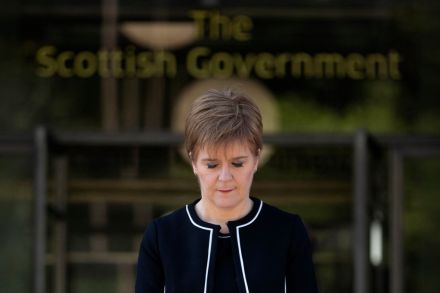
What political opportunities Covid-19 has presented for Nicola Sturgeon. Day after day in recent weeks she has appeared at her press conference, presenting a picture of a Scotland where the disease has been all but eliminated – placed in contrast with England where, she says, the government is merely trying to contain the disease, and not very well at that. It is an image which, naturally, aides the cause of Scottish independence. To remind us of the game she is playing, she has several times pointedly raised, or failed to rule out, the threat of imposing quarantine on visitors from England. But is the image of a Covid death-free Scotland fair? Interesting analysis by Sam Taylor lays bare the accuracy of Sturgeon’s – and other nationalists’ – claims.

Without John Hume there might have been no peace process

From our UK edition

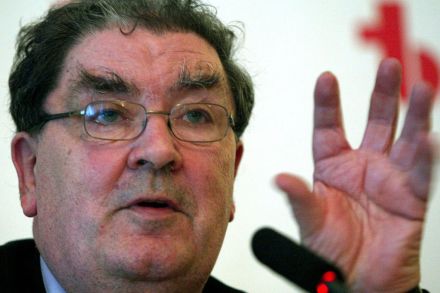
John Hume, the first and the greatest of the Irish peacemakers, has died aged 83. Few political leaders are truly indispensable, but it remains difficult to imagine a Northern Irish peace process without John Hume. Without Hume’s questing belief that peace was not only desirable but possible, there might have been no peace process at all. For two decades Hume served as leader of the SDLP and, more significantly, the moral centre of Northern Irish politics. Like so many others, he knew injustice and discrimination; unlike too many others, he did not allow that experience to strangle his own humanity.

In memory of the man who never slept

From our UK edition

The enforced boredom of lockdown has been replaced by a feeling of loss. My nephew by marriage, Hansie Schoenburg, died aged 33 from a brain tumour, and then there was the death of my close friend Shahriar Bakhtiar, aged 72. Hansie was tall, blond, a Yale grad, and extremely handsome. Recently married, he died surrounded by his family. He was very close to both my children. Shahriar was the Persian Boy who, as a slender, bright-eyed six-year-old with not a word of English, was dispatched from Persia to an English school known for its cold rooms and strict rules. The Persian Boy learned early to do without parents. The bitter irony of their respective deaths was that while Hansie had been willing himself to live these past 15 years, Shahriar had had enough.