David cameron

Cameron’s great secret: he’s not a very good politician

From our UK edition

This was a vital election. A Tory failure would have been an act of political treason. Five years ago, the UK was grovelling with the PIGS in the fiscal sty. Our public finances were in a deplorable state, the financial system was in crisis and growth had disappeared over the economic horizon. No one has paid enough tribute to Messrs Cameron and Osborne for the sang-froid they displayed in the face of such adversity, and for their success. Not only that: we have two long-term structural problems in this country, both of which Lady Thatcher sidestepped, both of which David Cameron tackled. The first is welfare. In its corrosion of morale, its sabotage of élan vital, our welfare system creates an underclass.

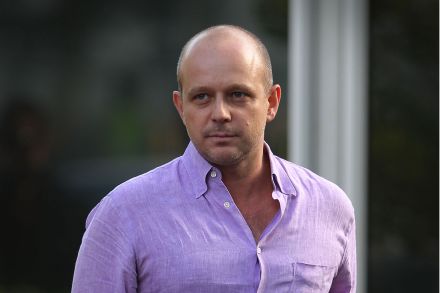
Steve Hilton returns to the British political scene

From our UK edition

In 2012, Steve Hilton quit his role as David Cameron’s senior adviser in frustration at the compromises of coalition and the slow pace of reform. Since then, he has maintained an almost total vow of silence on British politics. He had no desire to say anything that could be turned into a tricky headline for the Tories. But with the Tories having won the election—and with a majority—Hilton is dipping his toe back in the British political water. As well as doing various events to promote his new book More Human, he is also joining the Cameroon think tank Policy Exchange as a visiting scholar.

Tom Baldwin says BBC showed more bias against Labour than the Tories

From our UK edition

Ed Miliband's spin doctor Tom Baldwin has been rather quiet since Labour's disastrous election night results. Now the former Times journalist has explained his radio silence in an article for the Guardian. He says he has been avoiding the news after the Tories had 'a win they did not fully expect or really deserve'. However, the appointment of John Whittingdale as culture secretary has caused him to resurface: 'But one story has finally made me stumble out of bed. The Tory newspapers have welcomed the appointment of John Whittingdale, an old Thatcherite, as culture secretary with gleeful headlines about the government “going to war” with the BBC.

Cameron, May and Javid are trying to prove the Tories are the natural party of government

From our UK edition

The Tories are already putting some clear blue water between the coalition and the present majority government. Firstly, the new Business Secretary Sajid Javid has promised new tougher strike laws — ensuring that a minimum turn out of 50 per cent turnout is required for all strikes, while 40 per cent of all members will need to back a strike affecting essential public services. The TUC's Frances O'Grady has already hit back, arguing the new rules will make 'legal strikes close to impossible'. Secondly, Theresa May and David Cameron are promising to tackle our ‘passively tolerant society’.

Jim Messina interview: how the pollsters got it wrong and why Labour lost

From our UK edition

Jim Messina is the American elections guru who got the general election right. Hired by the Conservatives as a strategy adviser in 2013, the Tories hoped he would emulate Barack Obama's 2012 re-election strategy. And so he did. Whereas British pollsters consistently missed that the Tories were moving into pole position, Messina’s internal numbers showed for weeks they were on course to be the largest party. Speaking to The Spectator from Washington, D.C, he reveals that he was not at all surprised when the BBC exit poll showed the Tories were going to trounce Labour. ‘We predicted 312 seats that morning to Lynton [Crosby] and 316 was right in line with that, so it just kind of validated what we’d been seeing,’ he says.

Sensible Tories still believe in One Nation Conservatism

From our UK edition

David Cameron has said the Conservatives will govern as a party of one nation. The phrase was apt at a time when part of the country seems to be pulling away with all its might, and after a bad-tempered election campaign, where class warfare was actively encouraged in some quarters. For a time, the phrase ‘One Nation’ was Conservative code for wanting to spend more, but that’s not what Cameron meant on Friday. This is how he put it: 'We must ensure that we bring our country together…We will govern as a party of one nation, one United Kingdom. That means ensuring this recovery reaches all parts of our country, from north to south, from east to west. And indeed it means rebalancing our economy, building that northern powerhouse.

No Cabinet job for Grant Shapps

From our UK edition

The party chairman in a general election winning campaign can normally expect a plum job as a reward, especially when that victory was against the odds. Tonight, though, Grant Shapps finds himself not in the Cabinet but a Minister of State at the Department of International Development. Shapps’ treatment is, at first, puzzling. After all, the Team 2015 network that he created appears to have done a decent job in neutralising the supposed advantage that Labour’s ground operation was meant to give it But those around the Tory leader, say that David Cameron simply became fed up with the odd allegations that kept popping up about Shapps. So, the fairness—or otherwise—of his treatment depends on whether these stories are true or not.

How David Cameron can unite the Tories behind his One Nation conservatism

From our UK edition

The Cabinet reshuffle is now underway, with IDS back in welfare and Michael Gove as Justice Secretary, with a brief to sort out the Human Rights Agenda mess. So David Cameron is opening a new stage in his leadership – and one that moves beyond the weird world of Tory factionalism. I’m hoping that the One Nation conservatism he spoke about after his triumph last week will now become the theme of his leadership. And that, with this reshuffle, he will start with One Party conservatism. Uniting the party is easier than it sounds – he just has to persuade diehards on both sides that the war is over. They're still at it. The Tory wars of 1990-2005 were traumatic, and its veterans emerged with kind of post-traumatic stress disorder.

Podcast special: Cameron’s new cabinet and runners and riders for Labour leader

From our UK edition

In this View from 22 podcast special, Fraser Nelson, James Forsyth and I discuss the beginnings of David Cameron's new Cabinet and how the ministers announced so far demonstrate the Prime Minister's reticence to shake the boat. Does Michael Gove's new role at Justice show he's repaired his relationship Cameron? Will Mark Harper manage to keep the Tory backbenchers in step with Downing Street? Plus, we look at the runners and riders in the Labour leadership contest and why Chuka Umunna and Andy Burnham are the early favourites.

Iain Duncan Smith to stay at Welfare

From our UK edition

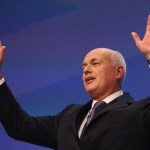
News has just broken that Iain Duncan Smith is to remain as Secretary for State for Work and Pensions. Now, normally a Cabinet Minister remaining in post would not be news but there had been repeated rumours that IDS would be shuffled out of this job. The fact that IDS is staying tells us, I think, two things. First, that even with £12 billion more of welfare cuts needed, Cameron wants the policy to be as much about saving lives as money. Second, the decision not to shuffle IDS shows a sensibly cautious approach to party management. Moving IDS, a former leader, from the job he loves doing would have caused upset. By keeping him in place, Cameron ensures the continued loyal presence round the Cabinet table of someone trusted on the Eurosceptic right of the party.

How David Cameron will manage his Tory coalition

From our UK edition

Up until Thursday night, everything that David Cameron and George Osborne had done in government had had to be agreed by the Liberal Democrats. Every policy had to go through the ‘Quad’, the coalition government’s decision making body made up of Cameron, Osborne, Clegg and Alexander. That doesn’t have to happen anymore. As one Downing Street figure says: ‘It is all completely different now, we can power forward with what we want to do. There’s no need for everything to be watered down. It’s invigorating’. Not having to manage a coalition, also frees up huge amounts of time for both Cameron and the Number 10 operation. It would be well advised to spend a good chunk of this time, say half, on managing the party.

Laurie Penny defends war memorial vandalism at anti-Tory march

From our UK edition

After David Cameron won a surprise Conservative majority in the general election, angry anti-austerity protesters gathered near Parliament Square today to let their outrage be known. During the demonstration, a war memorial, honouring the women of the Second World War, was vandalised with 'F--- tory scum' graffiti. While the crime was greeted with outrage by both the left and right, Laurie Penny, the Guardian feminist, appears to have defended the vandalism on Twitter, saying she doesn't 'have a problem with this': https://twitter.com/PennyRed/status/597115014059810817 https://twitter.

Justice for Michael Gove

From our UK edition

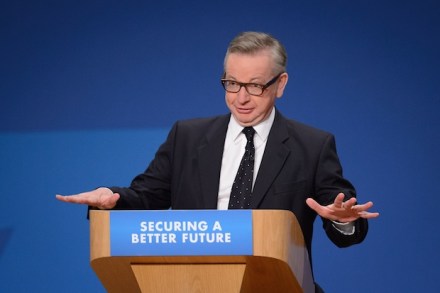
Michael Gove is the new Justice Secretary and Lord Chancellor, Downing Street has just announced. Chris Grayling will move to become Leader of the House. Number 10 is also confirming that, as David Cameron promised during the election campaign, Nicky Morgan will continue as Education Secretary. Becoming Justice Secretary marks a return to Gove running a big department after his service as chief whip in the run up to the general election. I suspect that there will be two things that Gove concentrates on. First, sorting out Britain’s relationship with the ECHR. Grayling had already committed the Tories to withdrawing from the Convention if parliament and courts here could not veto a judgement from the European Court of Human Rights applying in this country.

The reshuffle has begun – but the real excitement will happen on Monday

From our UK edition

David Cameron has reappointed several of the most senior members of the government. George Osborne stays as Chancellor, Theresa May remains Home Secretary, Philip Hammond Foreign Secretary and Michael Fallon Defence Secretary. Indeed, the only change is Osborne taking over William Hague’s old First Secretary of State title. This is formal recognition that Osborne will, in effect, be the deputy Prime Minister of this Tory majority government. We are told to expect the rest of the reshuffle on Monday. There’ll be particular interest in who Cameron chooses to be his chief whip, a role that takes on particular importance with this small majority.

Cabinet reshuffle: George Osborne, Theresa May, Michael Fallon and Philip Hammond remain in their posts

From our UK edition

David Cameron has 'reshuffled' his Cabinet. George Osborne has been re-appointed as Chancellor, and will also be First Secretary of State, as were William Hague and Peter Mandelson. The title implies that he is the most senior minister.  https://twitter.com/David_Cameron/status/596701353289846786 Theresa May will remain as Home Secretary. https://twitter.com/David_Cameron/status/596704917374525440 Philip Hammond will also remain in his role as Foreign Secretary, and Michael Fallon will keep his job as Defence Secretary. https://twitter.com/David_Cameron/status/596707531520610304 https://twitter.

The final 2015 general election results

From our UK edition

All of the results of the 2015 general election are in and we have a result: the Conservatives have a major of 12 seats. Here is a breakdown of the results for each of the parties: [datawrapper chart="http://static.spectator.co.uk/PifSa/index.html"] And a few other figures you might find interesting: Turnout was 66.1 per cent, up from 65.1 per cent in 2010 19.4 per cent of MPs in the new parliament will be female, up from 15.