David cameron

Cameron’s friend in Brussels

From our UK edition

The Spanish, in their local elections, just elected a bunch of radicals who oppose the austerity needed to keep Spain in the euro. Poland on Monday elected a Eurosceptic challenger from the conservative Law and Justice party. And leaks from the Euro-summit suggested that David Cameron will respond to this rare combination of crisis and opportunity by demanding… well, not much in the way of reforms and concessions. Admittedly these leaks may be feints to mislead all sides about London’s negotiating strategy. It’s early days. Nor is Poland yet a reliable ally for Britain in such negotiations: its government will be divided between a Eurosceptic president and a pro-Brussels administration until at least October.

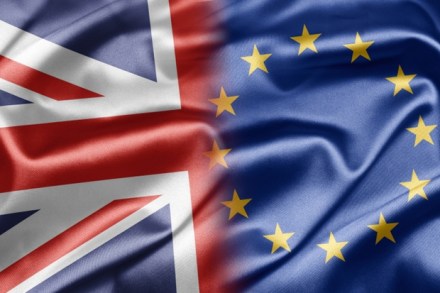
Does anyone really expect the EU referendum to resolve anything?

From our UK edition

I suppose, if you could look deep into the mind of somebody who was passionately keen that Britain should leave the European Union then, in among things like old episodes of Dad’s Army and unassailable convictions that Cornwall produces some perfectly good vintages, and so on, you might also spot a vision of the future. In this vision, our referendum will have been and gone and Britain will have seen the light and left the EU. Everybody will have been convinced. Even Nick Clegg. The question will have been settled for a generation at least, and there will be no need to talk about it anymore and we’ll be able to get on with doing all the things that those blasted Europeans have been preventing us from doing for the past four decades. Whatever they were.

The first day of the Parliamentary session posed several challenges for Labour

From our UK edition

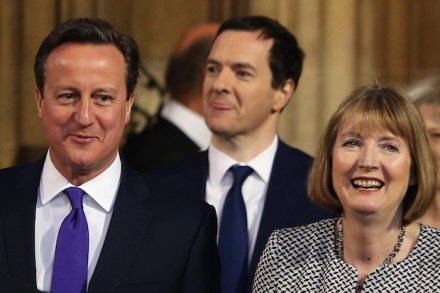
The first day of the Parliamentary session always has a slightly back to school feel to it. There are two, traditionally, witty speeches that are full of in jokes. The leader of the opposition then makes a speech that mixes the serious with humour and the Prime Minister replies in kind. But today won’t be remembered for the jokes but the shifts in Labour’s position that Harriet Harman attempted to execute. First, she confirmed that Labour would now support the EU referendum. But then, more surprisingly, she announced that Labour was ‘sympathetic’ to Tory plans to reduce the benefits cap, the amount that an able-bodied family without anyone in full time work, can receive in benefits to £23,000.

Queen’s Speech Tory slogan bingo

From our UK edition

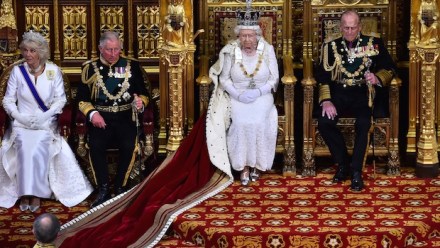
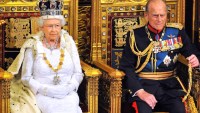
Anyone would think that those drafting the Queen's Speech might have had a bet on to see how many Tory soundbites they could shoehorn in. Apparently the Queen's government will 'adopt a one nation approach', with a nod to 'supporting aspiration'. Of course, her 'government will continue with its long-term plan'. It could have been a Cameron election stump speech. The biggest grin of the day came from George Osborne when Her Majesty uttered his favourite slogan: the 'northern powerhouse'. But it wasn't the silly sound bites that are getting the most attention.

2015 Queen’s Speech: the new bills announced

From our UK edition

Her Majesty has just delivered the first Conservative Queen’s Speech in 19 years — or as David Cameron described it, a ‘One Nation Queen’s Speech from a One Nation Government’. Here are the key pieces of legislation the government will be looking to pass over the next 12 months. Full Employment and Welfare Benefits Bill (and related legislation): To freeze the main rates of the majority of working-age benefits, tax credits and child benefit. Pensioners and extra costs relating to disability will be protected. The benefit cap will be reduced to £23,000 per year. A new Youth Allowance for 18-21 year olds will be introduced, with stronger work conditions. Automatic entitlement to housing support for 18-21 year olds will be scrapped.

What to expect in today’s Queen’s Speech

From our UK edition

The new parliament officially begins with the grand State Opening of Parliament ceremony today. The Queen will deliver the first Conservative Queen’s Speech in 19 years this morning, outlining the topics her government intends to legislate on over the next year. Plenty of details have appeared in the press already, with numerous reports suggesting that it will be 'one-nation' speech, with a blue-collar tinge. But what will actually be in the speech, and what's expected to be missing? EU referendum: as per the Conservative manifesto, the government is likely to introduce a bill for a referendum on Britain's EU membership (again) — to take place before the end of 2017.

Cameron tries to bring the campaign into government

From our UK edition

Tomorrow’s Queen’s Speech will be almost cut and pasted from the Tory manifesto. Partly, this is because Number 10 believes that the Salisbury convention dictates that the House of Lords will not block policies that have a manifesto mandate. But it is also because the Tories wish to carry on in office where they left off in the campaign. They believe that continuing with both the message and the discipline they exhibited in the election is crucial to their future success. This desire to bring the campaign into government can be seen in Cameron’s latest staff appointments too. Giles Kenningham, who has been in charge of the highly effective CCHQ press operation for the last two and a bit years, is moving to Downing Street to become one of Cameron’s special advisers.

Michael Gove: Tories will not be forgiven for ‘fudging’ the EU referendum

From our UK edition

Michael Gove’s gusto has returned after his elevation back to top level of the Cabinet. On Friday evening, the Justice Secretary spoke to Hampshire Conservative activists and members of the AECR group in the European Parliament. In his first speech since joining the Ministry of Justice, he acknowledged the role Daniel Hannan MEP has played in fighting for the upcoming EU referendum and said the government has to deliver ‘fundamental reform of our relationship with the European Union’ — and not just for Britain’s sake: ‘The exertions that the Prime Minister will devote to that task are driven not just by a desire to get a better deal for Britain, and to fulfill our manifesto promises, but also a desire to transform Europe for the better.

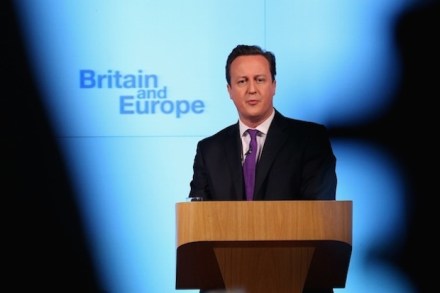
Why David Cameron should take his time with the EU referendum

From our UK edition

Exhilarating, isn't it? A referendum on Britain's continued membership of the European Union is at hand. For the first time in a generation, there's a real possibility that Britain might leave. With that prospect so tantalisingly close, it's tempting to want to rush ahead. 'Bring it on!' many regular readers will say. Hold on. Let's make sure we maximise our chances of winning. Like it, or not, a great many voters - despite all that Brussels red tape and all those ghastly EU commissioners - have yet to be convinced that we should leave. If you think that winning over fifty percent of the votes is easy, just cast your mind back to election night in your constituency... For almost forty years, we Brits have complained about Europe.

Cameron’s EU charm offensive must seem genuine

From our UK edition

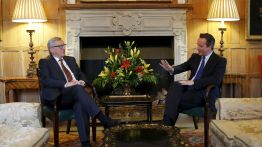
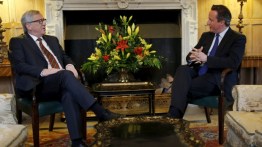
There is so little detail on David Cameron’s talks with Jean-Claude Juncker that it is almost outweighed by the briefing on what the pair ate while at Chequers (a spring salad, followed by pork belly and vegetables and a dessert of lime bavarois). What we were told was that ‘Mr Juncker reiterated that he wanted to find a fair deal for the UK and would seek to help’ and that ‘they talked through the issue at some length in the spirit of finding solutions to these problems. They agreed that more discussion would be needed, including with other leaders, on the best way forward’.

David Cameron is trying to manage the referendum – and his party – properly

From our UK edition

The government’s announcement that EU migrants will not be able to vote in the EU referendum tells us a number of things about the way David Cameron is approaching this vote. Firstly, he’s keen to show everyone that he’s getting on with it - indeed, the Prime Minister seems reinvigorated on all fronts at the moment - and making announcements about the franchise is just one example of that. The second is that Cameron does not want the debate about the referendum to be one of an Establishment stitch-up. Allowing EU citizens to vote would be one way of encouraging such a narrative from certain parts of the ‘Out’ camp. And thirdly, Cameron is keen to preserve party unity as much as he can on an issue that naturally splits his party.

Cameron confident about renegotiation result: but will it please voters?

From our UK edition

David Cameron was in an extremely confident mood when he addressed the press at the end of today’s EU summit in Riga. He continually joked about journalists needing to write stories about the trials and tribulations of his EU renegotiations over the next couple of years, but those stories not meaning very much at all. ‘My advice would be - a bit like the election, really - wait for the result!’ he said gleefully when asked whether he would get what he wanted from the renegotiation. But he later admitted that ‘I’m not going to say I was met with a sort of wall of love when I arrived.

Alistair Carmichael responsible for Nicola Sturgeon leak

From our UK edition

During the election campaign the Telegraph reported that Nicola Sturgeon wanted David Cameron to remain Prime Minister, after a memo was leaked to them which included an account of a private conversation between Sturgeon and the French Ambassador. Naturally, the SNP leader was furious and demanded an inquiry. The Cabinet Office has now finished their investigation and concluded that the former Scotland Secretary Alistair Carmichael and his spad Euan Roddin were responsible for the leak. When asked about the leak at the time, Carmichael said that 'The first I heard of this was when I received a phone call from a journalist': https://twitter.

Mr Cameron goes to Latvia

From our UK edition

Five days before the Queen’s Speech, David Cameron is taking on the first big challenge of this new Parliament: renegotiating our relationship with the EU. He’s undertaking a whistle-stop tour of European capitals today, focusing on the smaller countries at first. As the Prime Minister sets off for a summit in Riga in Latvia, he was keen to point out that it's far from a hop, skip and jump to a referendum next year: ‘These talks will not be easy. They will not be quick. There will be different views and disagreements along the way. But by working together in the right spirit and sticking at it, I believe we can find solutions that will address the concerns of the British people and improve the EU as a whole.

Cameron’s seven-day GP service is a mad promise straight out of ‘Yes, Prime Minister’

From our UK edition

I love the series Yes, Minister and Yes, Prime Minister for many reasons, among them the timeless, elegant dialogue that can be applied to today's politics. Hearing the pledge emanating from Number 10 that very soon the UK will enjoy a 'seven-day a week GP service', conveniently devoid of any details as to how that service will be funded, staffed or brought to fruition, I am reminded of the following exchange: “Humphrey, I’ve been thinking.” “Good.” “I’m sure you will agree that so far my Premiership has been a great success” “Oh indeed!” “Yes, and I’ve been asking myself what I can do to continue this run of success.” “Have you considered masterly inactivity?” “A PM must be firm.

The Tories try to deal with latest net migration target failure

From our UK edition

One of the odd decisions that the Tories made before the election was to pursue their net migration target, in spite of the fact that they cannot meet it. Today’s figures underline that, with net migration at 318,000 last year, which is the highest total for a decade. The Office for National Statistics said this represented a ‘statistically significant’ rise of more than 109,000 from 2013. Knowing that these figures were coming and wouldn’t be a particularly comfortable experience — more comfortable, though, than had they been published during the election campaign — the Conservatives are setting out their own plans to crack down on the things that annoy people about immigration more than numbers.

Gove vs the Euro-judges

From our UK edition

[audioplayer src="http://rss.acast.com/viewfrom22/michaelgovesfightforjustice/media.mp3" title="Daniel Hannan and Greg Callus discuss the battles ahead for Michael Gove" startat=42] Listen [/audioplayer]They have taken to calling themselves the ‘Runnymede Tories’: those Conservative MPs who, knowing that David Cameron has a majority of just 12, want to sabotage his manifesto commitment to end the direct jurisdiction of the European Court of Human Rights in Britain. Well, sorry chaps, but that name is taken. The actual Runnymede Tories — that is, the Conservatives elected to Runnymede Borough Council — will be gathering next month on the bank of the Thames to celebrate the anniversary of Magna Carta.

A small majority means big challenges

From our UK edition

In ancient Rome, when a general rode in triumph through the city, a slave would stand behind him whispering into his ear, ‘Remember you are mortal.’ Today, there is no shortage of people volunteering to make the same point to David Cameron. First, there are Tory backbenchers with long-standing grudges who are already making clear their desire to cause trouble. David Davis, the man Cameron defeated in the leadership contest a decade ago, didn’t even wait to be sworn in again as an MP before he started warning of rows to come over plans set out in the Tory manifesto to limit the powers of the European Court of Human Rights.