David cameron

Portrait of the week | 19 November 2015

From our UK edition

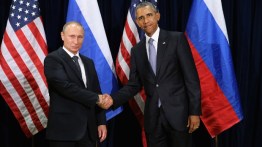
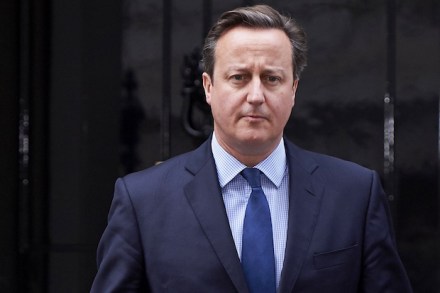
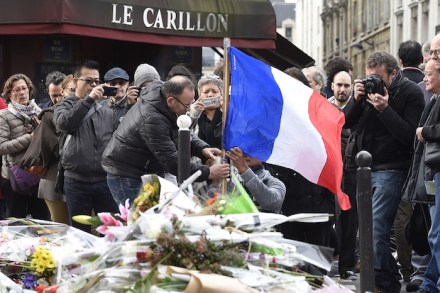
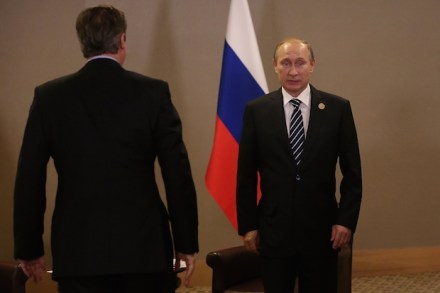
Home After the killings in Paris, David Cameron, the Prime Minister, said that seven terrorist attacks on Britain had been prevented in the past six months. He met President Vladimir Putin of Russia at a G20 meeting at Antalya in Turkey. Mr Putin said: ‘We should join efforts in preventing terror. Unfortunately our bilateral relations are not of the best.’ Mr Cameron said in the Commons: ‘Raqqa, if you like, is the head of the snake… we need to deal with it not just in Iraq but in Syria too.’ He said funds from maintaining defence spending at 2 per cent of GDP would go to special forces, drones and fighter aircraft. MI5, MI6 and GCHQ would be able to recruit an extra 1,900 officers to their 12,700 staff.
A better way

From our UK edition

To say that the Paris attacks could have happened in Britain is not enough. Such attacks are being attempted here with terrifying regularity —seven have been thwarted so far this year alone. MI5’s official assessment is that a terrorist attack on British soil is ‘highly likely’. Our security services have so far been very good at keeping us safe. But as the IRA famously put it, spies have to be lucky all of the time, terrorists have to be lucky only once. So it is impossible for Britain to view events on the continent with any sense of complacency. Still, the Prime Minister was justified in pointing out last week that the more we learn about what happened in Paris, the more it justifies the policies that Britain has pursued.

Western liberalism is no match for the Islamic Game of Thrones

From our UK edition

As a graduate student in the Harvard Government Department in the late 1980s, I became slightly jaded about the number of visiting professors who warned about the imminent demise of the West. The thrust of their arguments was nearly always the same. The secular liberal values we cherish, such as freedom of speech and the separation of church and state, won’t survive in the face of growing, religious disenchantment with modernity unless they’re rooted in something more meaningful than rational individualism. They were talking about Islamic Fundamentalism, obviously, although sometimes they threw in Christian Fundamentalism as well in order not to seem 'Orientalist' or 'ethnocentric'.

Obama’s failure is Putin’s opportunity

From our UK edition

[audioplayer src="http://rss.acast.com/viewfrom22/parisattacksaftermath/media.mp3" title="James Forsyth and Ben Judah discuss whether the West should work with Putin" startat=824] Listen [/audioplayer]The principal strategic objective in the war on terror has been a failure. Ever since 9/11, the aim has been to deny terrorists sanctuary. That, after all, is why the United States and Britain went into Afghanistan — troops were sent in only after the Taliban refused to hand over the al-Qaeda leadership and shut down the terrorist training camps. But now, a large terrorist enclave exists in the very heart of the Middle East. President Obama’s reaction to this massive strategic failure has been lack-lustre.

David Cameron is starting to look like Jeremy Corbyn’s best friend at PMQs

From our UK edition

Jezza started PMQs with a bit of a wobble. As he got to his feet the applause from his Labour ‘friends’ sounded like the hoarse whooshings of a punctured beach ball. Corbyn nervously offered his sympathy to the Paris terror victims and expressed concern that the slaughter of 129 innocents might increase Islamophobia in Britain. The attacks, he said, ‘have nothing in common with the 2 million Muslims who live here.’ David Cameron agreed, partially. He drew a distinction between ‘the religion of peace’ (which is Islam, in case you were getting confused) and the ‘bile spouted’ by terrorist killers. But, he said, ‘it’s not good enough to say there’s no connection. They [terrorists] make the connection.

Politicians are finally starting to admit a link between Islam and the extremists

From our UK edition

One step forward, one step back. Theresa May says in Parliament that the Paris attacks have ‘nothing to do with Islam’. And on the same day, later in the evening, her boss quite rightly says: ‘It is not good enough to say simply that Islam is a religion of peace and then to deny any connection between the religion of Islam and the extremists. Why? Because these extremists are self-identifying as Muslims.’ In saying this the Prime Minister was echoing the sensible and intelligent comments of one of his ministers – Sajid Javid – who rightly said in January after the last massacre in Paris: ‘The lazy answer would be to say that this has got nothing whatsoever to do with Islam or Muslims and that should be the end of that.

Labour MPs attack Stop The War and Corbyn’s views on terrorism

From our UK edition

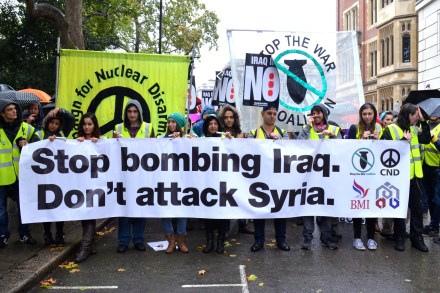
Labour MPs appear to be just as annoyed by Jeremy Corbyn’s links to the Stop The War coalition as they are about his comments on shoot to kill. In the questions following David Cameron’s Commons statement on the Paris attacks, several MPs used the opportunity to make coded attacks on Stop The War for a blog it published, titled 'Paris reaps whirlwind of western support for extremist violence in Middle East'. It has been since been removed (cached version here) and Corbyn said he was glad it was deleted — but he has yet to condemn the fact it was published in the first place.

David Cameron: Britain needs to take action against Islamic State in Syria

From our UK edition

Senior politicians have so far been rather cautious in their response to the Paris attacks. But today David Cameron gave a much more robust and intentional statement on the British reaction to what happened on Friday night. He used his slot in the Commons to re-state the case for British involvement in military action against Islamic State in Syria, and said that he would be setting out in detail his strategy and reasons for getting involved in the coming days. It is clear that the Prime Minister wants to push for a vote on this soon, and given he will not bring a vote to the Commons unless he believes he can win, he’s going to pour considerable effort into convincing MPs to back him.

Podcast special: the Paris attacks and what happens next

From our UK edition

How will Britain and Europe react to the terrorist attacks in Paris? In this View from 22 special podcast, The Spectator's Douglas Murray, James Forsyth and Isabel Hardman analyse what politicians have said and done in response to Friday's attacks and the plans being formulated in Westminster and Brussels. Are Jeremy Corbyn's views on military action going to cause a split with Labour MPs? What will David Cameron propose in response to the attacks? Does this spell the end of Schengen?

Cameron sees ‘hopeful signs’ of political agreement on Isis

From our UK edition

After the attacks in Paris, what has changed? Islamic State is still a threat that world leaders don't seem to know how to deal with, and for Britain, the House of Commons still hasn't approved British involvement in air strikes against the terror group in Syria. But today David Cameron hopes that things have changed enough in the last few weeks that a political solution on Syria may be closer. The Prime Minister is trying to broker a deal with President Putin in which Russia agrees to work with those fighting Isis in Syria in return for a promise that Russian interests in the country will be protected. The Prime Minister told the Today programme: 'There have been some hopeful signs - and I hope to have a positive discussion with Vladimir Putin this morning.' https://soundcloud.

Can the Tories win back the Indian vote from Labour?

From our UK edition

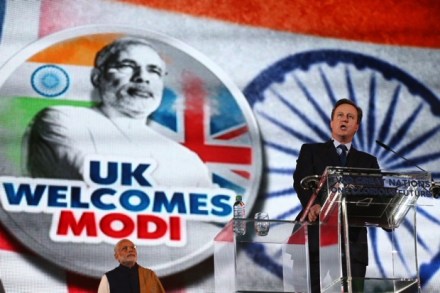
Nearly 50 years ago, soon after I first came to this country, my landlady, upset I was reading the Guardian and not her favourite newspaper the Daily Telegraph, said, 'You must not believe Labour propaganda that they gave India freedom. Churchill would have done the same had he won the 1945 election.' Had my landlady been alive and witnessed how Narendra Modi has been received by David Cameron, culminating in yesterday’s love fest at Wembley, she would have required little convincing that her beloved party is no longer a pariah for Indians in this country.

David Cameron: bombing Jihadi John ’was an act of self defence’

From our UK edition

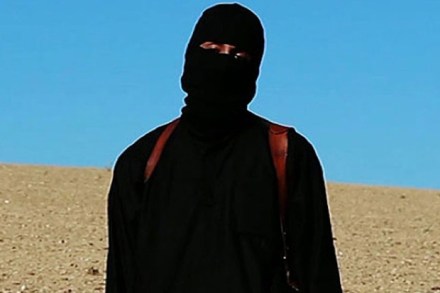
The Prime Minister has confirmed the United States has attempted to take out Jihadi John in Syria but it's unknown whether he has been killed. In a statement outside Downing Street this morning, David Cameron said: ‘We cannot yet be certain if the strike was successful. But let me be clear. I have always said that we would do whatever was necessary, whatever it took, to track down Emwazi and stop him taking the lives of others. We have been working, with the United States, literally around the clock to track him down. This was a combined effort. And the contribution of both our countries was essential.’ Justifying the mission, Cameron said the U.S.

Drones get the job done, as Jihadi John may have just discovered

From our UK edition

Excellent news, if it is confirmed, that Mohammed Emwazi - aka 'Jihadi John' - has discovered the hard way that seventy-two virgins have not been waiting around for him on a cloud. It is more than a year since David Cameron announced that this country would chase the murderer of British, American and Japanese aid-workers and journalists to the ends of the earth. Unsurprisingly Emwazi just had to be found in Syria. But it is good news that he has been found, not just because justice is served but because it might make other people reflect on the merits of the post-Westminster university career-path that he chose.

Pry another day

From our UK edition

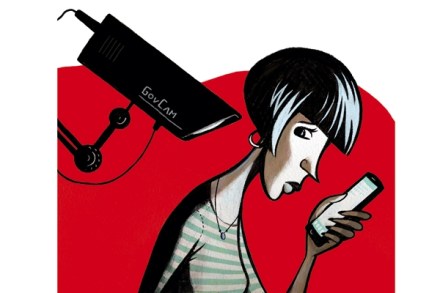
Were David Cameron in any way adept at spin, it would be tempting to think that the publication of the Investigatory Powers Bill had been deliberately timed so as to coincide with the opening of Spectre, the new James Bond film. The debate over the bill has turned into a question of whether we trust our spies, which by and large we do. But the real question to be asked is whether we trust the taxman, the police and our town halls with the powers of espionage — and that is another matter entirely. The Investigatory Powers Bill does not actually contain new powers for the security services, who can already tap phones and access emails and have done for decades.

Portrait of the week | 12 November 2015

From our UK edition

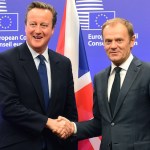
Home David Cameron, the Prime Minister, outlined four changes he sought in Britain’s membership of the EU. He wanted to protect the single market for Britain and others outside the eurozone; to increase commercial competitiveness; to exempt Britain from an ‘ever closer union’; and to restrict EU migrants’ access to in-work benefits. Mr Cameron put the demands in a letter to Donald Tusk, the President of the European Council. David Lidington, the Europe minister, said that others in the EU could put forward ‘alternative proposals that deliver the same result’. In a speech to the Confederation of British Industry, Mr Cameron had said: ‘The argument isn’t whether Britain could survive outside the EU; of course it could.

Open letter to Narendra Modi: ask David Cameron to safeguard freedom of expression in Britain

From our UK edition

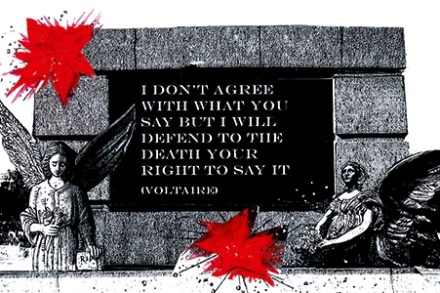
Dear Prime Minister Narendra Modi, Re: Urging Action by Indian government to Safeguard Freedom of Expression in Great Britain As a writer committed to protecting and defending freedom of expression around the world, I am extremely concerned about the growing intolerance towards critical voices who challenge orthodoxy in Britain. As your three-day state visit to the United Kingdom kicks off, I am urging you to engage with Prime Minister David Cameron both publicly and privately on this crucial issue. Please speak out on the current state of freedom of expression in Britain, urging Mr Cameron to stay true to the spirit of the democratic freedoms enshrined in British history, from the Magna Carta to the Levellers to John Stuart Mill.

Vote Leave campaign goes to war with No.10 and Leave.EU

From our UK edition

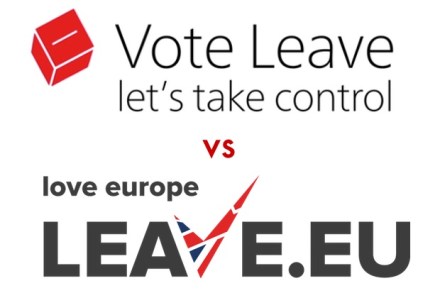
The government is getting its revenge on the Vote Leave campaign. After a stunt at Monday's CBI conference — where two protesters interrupted David Cameron’s speech — Sir Eric Pickles has written to the Electoral Commission to suggest that the Vote Leave campaign should not be designated as the official Out campaign. The Guardian reports the former Communities Secretary as saying: 'I believe the actions of Vote Leave in disrupting the CBI conference and declaring a strategy of intimidation and protest disqualify Vote Leave from being a designated lead campaigner in the forthcoming EU referendum campaign.

Eurosceptics lambast David Cameron’s rhetoric on EU reform

From our UK edition

David Cameron’s speech and letter on EU reform have gone down as you might expect with Eurosceptics: they hated them. MPs and campaigners think the Prime Minister should be pushing for bigger reforms and the renegotiation is looking like a sham. Some have concluded the Prime Minister has spent the past six months traveling around Europe, asking what others find acceptable and his rhetoric today is based on what he can achieve — on red tape and competitiveness for example — instead of what is best for Britain. One Eurosceptic Conservative MP says there is disappointment across the party: ‘The Prime Minister’s letter and speech were very disappointing and weak. A strong negotiating position is not being used.

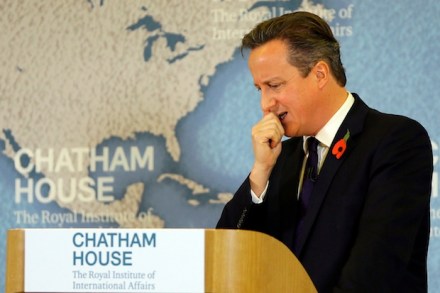
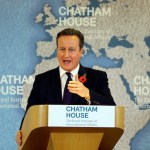
Full text: David Cameron’s Chatham House speech on Europe

From our UK edition

Almost three years ago, I made a speech about Europe. I argued that the European Union needed to reform if it was to meet the challenges of the twenty-first century. I argued that Britain’s best future lay within a reformed European Union, if the necessary changes could be agreed. And I promised the British people that, if I was re-elected as Prime Minister, we would have an in-out referendum…and the final say on whether our national and economic security is better protected by remaining in the European Union, or by leaving. That promise is now being honoured. The law of the land will require that there must be a referendum on our EU membership by the end of 2017.

Read: David Cameron’s letter to Donald Tusk outlining EU reform proposals

From our UK edition

Downing Street has released the long-awaited letter from the Prime Minister to Donald Tusk, president of the European Council — outlining the four areas in which he would like to negotiate a new settlement for Britain. Here are the key parts of the letter, outlining the areas David Cameron is keen to reform: 1. Economic governance 'What we seek are legally binding principles that safeguard the operation of the Union for all 28 Member States — and a safeguard mechanism to ensure these principles are respected and enforced. These principles should include recognition that: The EU has more than one currency. There should be no discrimination and no disadvantage for any business on the basis of the currency of their country.