David cameron

Cameron’s “deal” has backfired – badly. So what will he do now?

From our UK edition

Throughout his negotiations with the European Union, David Cameron was fatally undermined by his own lack of resolve. He was never going to recommend an ‘out’ vote in his referendum, as the other leaders knew. He promised a referendum three years ago, not from any great sense of conviction, but as a ploy to stop his party talking about Europe until after a general election which he half-expected to lose. Then, in May last year, he found himself with a majority — and in a position to renegotiate. But not in a position to win, and for a simple -reason: the other side always knew that he’d say yes, no matter what.

Fighting over the crumbs

From our UK edition

[audioplayer src="http://rss.acast.com/viewfrom22/fightingovercrumbs-euroscepticsandtheeudeal/media.mp3" title="James Forsyth and Vote Leave's Stephen Parkinson discuss Euroscepticsm"] Listen [/audioplayer]Eurosceptics could hardly have asked for more favourable conditions for a referendum. After barely surviving a financial crisis, the European Union has been overwhelmed by an immigration crisis — one made much worse by its failure to control its own borders. The European Commission seems determined to make itself even more unpopular in Britain, and is considering whether VAT should be levied on food and children’s clothes.

Why I now believe in positive discrimination

From our UK edition

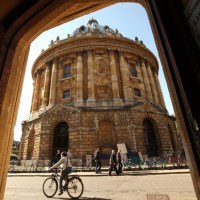
The Prime Minister no doubt knew he would be fanning the flames when he waded into the argument about the admission of black undergraduates to universities like Oxford and Cambridge. We should do him the courtesy of trusting he means it when he says he feels strongly about discrimination in the awarding of university places – and I think he does. In this week’s issue Toby Young marks David Cameron’s essay with tutorial authority, and finds his case wanting. Particularly valuable among Toby’s marginal notes is his point that you can’t accept applicants if they haven’t applied – and black and working-class students disproportionately don’t. But we enter a vicious circle here.

PMQs sketch: Kamikaze Creasy

From our UK edition

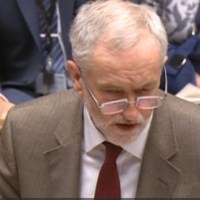
The referendum is slowly (very slowly) breaking up Cameron’s cabinet. It’s put him in a weird mood. Yesterday he was striding about in shirt-sleeves like a bogus realtor selling flats on the moon. At PMQs today he was calmer and prepared for some rough weather. It failed to materialise. Jez We Can (Do a U-turn on Europe) didn’t want to discuss the In-Out decision in case viewers spotted that his love of Brussels is a mere summer crush dating from his election as Labour boss. Previously he was a committed Europe-nobbler. With his mentor, Tony Benn, he used to trudge along to every anti-EU meeting available. Alas, no one noticed. And no one cared.

EU statement: Eurosceptic Tories strikingly civil to Cameron

From our UK edition

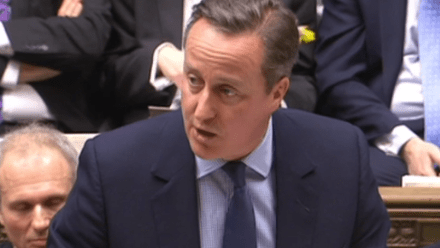
[audioplayer src="http://rss.acast.com/viewfrom22/fightingovercrumbs-euroscepticsandtheeudeal/media.mp3" title="James Forsyth and Vote Leave's Stephen Parkinson discuss Euroscepticsm"] The great confrontation between David Cameron and Eurosceptic Tory backbenchers did not materialise today. Instead, the tone of the questions following the Prime Minister’s statement was strikingly civil. Edward Leigh thanked Cameron for the fact that there was going to be a referendum, Steve Baker paid tribute to his negotiating effort and Peter Bone tried to recruit him to the Out side. Jacob Rees-Mogg, though, was more critical. He complained that the ‘thin gruel had been watered down’ still further and warned Cameron he had a fortnight to save his reputation as a negotiator.

Would the migrant crisis have happened without the EU?

From our UK edition

For those people already bored with the interminable European question, Radio 4 might get unbearable over the next few months. Yesterday morning the subject was being discussed, in the context of David Cameron’s ‘deal’, and someone from Brussels was explaining that 'more Europe' was needed to solve the migrant/refugee crisis. She never got to explain further what was meant by this, but isn’t it actually the case that the migrant crisis is related to the EU? For example, would Greece face a wave of 62,000 illegal migrants a month were it just an independent country that had its own borders and a government with responsibility towards its citizens?

PMQs: Corbyn offers Cameron some respite from the EU deal

From our UK edition

David Cameron's focus today is on his statement to the Commons about his EU deal, and so was much of PMQs. John Mann opened the session by asking dramatically 'Is that it?' and criticising the Prime Minister's deal, forcing him to defend it immediately. Angus Robertson used his questions to complain about the expected date of the referendum and its proximity to the Scottish, Welsh, local government and London Mayoral elections, though Cameron told him he was trying to find things to complain about. The only blessing for Cameron was that Jeremy Corbyn decided to attack him on cancer treatment and benefits, and only Christopher Chope asked a hostile question about Europe.

It’s depressing to see David Cameron engage in a culture war

From our UK edition

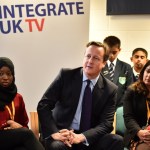
In 2000, the then Chancellor of the Exchequer, Gordon Brown, accused Magdalen College, Oxford, of class bias in failing to admit a student called Laura Spence, a pupil at a Tyneside comprehensive. This was grossly unfair — how could the Chancellor know the details of a particular case? It was also outrageous in principle: why should a politician tell a university whom to admit? This Sunday, David Cameron did much the same thing. In the middle of his EU negotiations, the migrant crisis and the other genuinely important things the Prime Minister must deal with, he found time to offer an article to the Sunday Times, headlined ‘Watch out, universities; I’m bringing the fight for equality to you’.

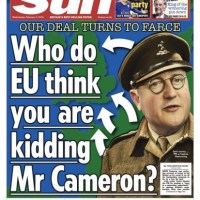
EU draft deal: How the papers have reacted to David Cameron’s reform package

From our UK edition

David Cameron has done his best to talk up his draft package of reforms with the EU. He said yesterday: 'If I could get these terms for Britain, I sure would opt in'. But how have the papers reacted to the proposed agreement? The bad news for the Prime Minister is that many front pages don't share his enthusiasm for the draft deal. In fact, the newspapers could arguably be the worst set of morning reading for the PM since he became Tory leader in 2005.

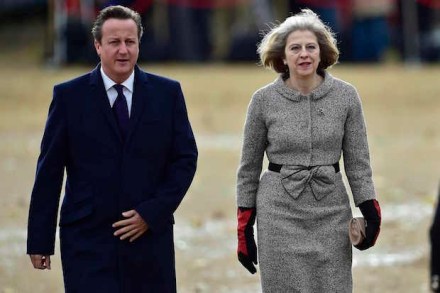
Theresa May helps David Cameron with strong hint she’ll support ‘Remain’ campaign

From our UK edition

Theresa May’s decision to say that the draft settlement for Britain’s relationship with the EU forms ‘a basis for a deal’ has made David Cameron’s rather difficult day - which has involved the Prime Minister trying to insist that he has got the deal he was after, even though his demands on benefits in particular have been watered down - a little easier. It is the strongest indication yet that the Home Secretary will campaign to stay in the EU after all. This is the statement she released this evening: ‘EU free movement rules have been abused for too long and EU law has stopped us deporting dangerous foreign criminals.

Briefing: What is the EU ‘red card’ and will it make any difference at all?

From our UK edition

The ‘red card’ on proposed EU legislation has been hailed by David Cameron as a breakthrough; the ‘Stronger In’ campaign have put it at the top of their list of renegotiation successes. But it already pretty much exists. The very similar ‘orange card’ was introduced by the 2009 Lisbon Treaty. (The European Commission’s website explains how it works.) Here’s a comparison of the two: Numbers ORANGE CARD: 51% of the 28 EU parliaments can force a review by the European Commission. RED CARD: 56% of the 28 EU parliaments can force a review by the EU Council.

Today in audio: Tuesday 2nd February

From our UK edition

Haven’t had a chance to follow the day’s political events and interviews? Then don’t worry: here, The Spectator, brings you the best of today’s audio clips in one place for you to listen to. David Cameron gave his reaction following the publication of Donald Tusk's proposals for Britain's renegotiation with the EU. Speaking to a Siemens factory in Chippenham after skipping going to Parliament, the PM told workers: ‘If I could get these terms for British membership, I sure would opt in’ Given the PM's absence in the Commons, it did not take long for Eurosceptics to pile in and attack the draft document. Steve Baker offered the most colourful analogy - saying David Cameron was reduced to 'polishing poo' on his EU deal.

David Cameron’s two problems: benefits and Poland

From our UK edition

From his speech and question session on today’s draft EU deal, it’s clear that David Cameron plans to spend the next two weeks promoting his negotiation success, rather than focusing on improving it. He naturally needs to persuade voters - and his colleagues - that this is a good deal that will make a big difference to Britain’s relationship with Europe. But as the press questions following the speech showed, this is going to be extremely difficult. The Prime Minister was insistent that he had secured a good deal on in-work benefits for EU migrants, saying ‘what I’ve got is basically something I’ve asked for’.

Why won’t David Cameron come clean about his EU migrant benefits deal?

From our UK edition

For the last three years, David Cameron has held out the prospect of voting 'no' in the referendum if he could not get the deal he wanted. Today he has - unsurprisingly - claimed victory. Yes, he says, there's more to do on the draft deal - but it not too much because what he's got is enough. He's already in full referendum campaign mode, so made his statement to workers in Chippenham, saying: 'If I could get these terms for British membership, I sure would opt in' But how much of a compromise has it been? Cameron looked a little shifty as he was spoke ‘emergency brake’ on in-work benefits for migrants. His manifesto pledge is clear: he wanted to deny in-work benefits to immigrants for four years.

Draft EU deal: five things you need to know

From our UK edition

David Cameron is insisting that there is more work that needs to be done on the draft deal for Britain's relationship with Europe published by Donald Tusk today. But here are the key points about that draft deal so far: 1. Cameron has got a weaker benefits deal. As explained here, the Prime Minister has not got his four year ban on in-work benefits for migrants that he originally set out to get, nor has he got the ‘emergency brake’ that he was pushing for over the weekend. Instead, Britain will be able to limit in-work benefits for new EU migrants over a four year period, starting with no benefits at all, and gradually increasing the payments so that by the end of the four years, the worker is fully eligible. 2.

David Cameron’s draft EU Deal: full text

From our UK edition

The following document has been released by the European Commission: The Heads of State or Government of the 28 EU Member States meeting within the European Council, whose Governments are signatories of the Treaties on which the EU is founded, DESIRING to settle, in conformity with the Treaties, certain issues raised by the United Kingdom in its letter of 10 November 2015, INTENDING to clarify in this Decision certain questions of particular importance to the Member States so that such clarification will have to be taken into consideration as being an instrument for the interpretation of the Treaties; intending as well to agree arrangements for matters including the role of national Parliaments in the EU and managing the consequences of the establishment of.

Oxford’s diversity strategy: portraits of privileged white women replace portraits of privileged white men

From our UK edition

It's been a testing few weeks for Oxford University officials. First they faced a student uprising with the 'Rhodes Must Fall' campaign, then the Prime Minister took a pop at the academic establishment for a lack of diversity, claiming they are 'not doing enough to attract talent from across our country'. Happily, one college is doing its best to tackle diversity issues head-on. Wadham College have commissioned a series of photographic portraits of graduates who have been nominated by members of the Wadham community. The aim is to 'address the predominance in Hall and around College of portraits of white men': 'These are grand figures from Wadham’s past and they deserve their place in our history.

Boris Johnson: EU ‘red card’ is not enough

From our UK edition

Downing Street is doing its best to spin national parliament's right to use a 'red card' against EU laws - apparently won as part of the PM's renegotiation with Donald Tusk - as a victory. But others are less impressed. David Cameron's old friend Boris Johnson has been on LBC this morning talking about the EU renegotiation package. The London mayor, no stranger to being a thorn in the PM's side, tried hard to appear convincing in backing Cameron. He said: 'David Cameron has done a very good job at huge speed of getting a difficult package of measures.' But Boris went on to say that what was on the table so far was not enough - and that more needed to be done. Speaking to LBC's Nick Ferrari, he added: 'Everybody would want to see more progress, let's see where we get.