David cameron

Has Nigel Farage got David Cameron running scared?

From our UK edition

With Parliament in recess, David Cameron is able to use this week to focus on the upcoming EU referendum. To do this, the Prime Minister was scheduled to visit Brussels tomorrow morning where he would appear at the EU Conference of Presidents. Alas it appears that Cameron has now had a change of heart about the event which would have seen him come face to face with his old foe Nigel Farage. The Ukip leader says that although he received official documentation confirming he would meet Cameron at tomorrow's event, he has now heard that Cameron may not attend: https://twitter.com/Nigel_Farage/status/699212961068535808 https://twitter.

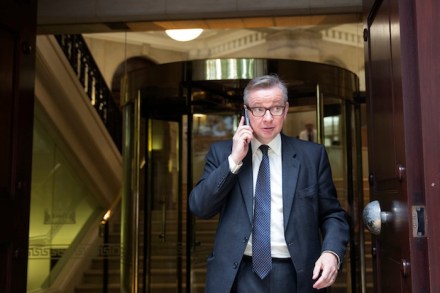
Which way will Gove go?

From our UK edition

If all goes according to David Cameron’s plan, he’ll have his EU deal by this time next week. But Downing Street still can’t be sure of which Tory heavyweights will be with Cameron come the referendum campaign, and which won’t. Even more than Boris Johnson, Michael Gove is causing Downing Street angst. As I report in The Sun today, Gove is ‘definitely wobbling’ according to one Downing Street source. Downing Street think the chances of him backing Out have increased significantly in the last 10 days or so. Gove himself has been telling people that he won’t make a decision until the deal is done. But those around him are now preparing for Gove coming Out.

Tories warn Cameron against taking revenge on eurosceptic ministers

From our UK edition

Eurosceptics may have only a few days before their ministerial colleagues can join them in campaigning for Britain to leave the European Union. But they’re currently very unhappy at the sort of briefing they’ve been hearing about what might happen to those ministers after the referendum. The official line is that the Prime Minister will not sack anyone because of the position they take on Europe. But noises off suggest that this isn’t quite true: James reported in his Sun column last week that the Prime Minister has taken to telling colleagues ‘I’ve said I would have Outers in my Cabinet after the referendum. But I haven’t said they’ll be the same ones.

Letters | 11 February 2016

From our UK edition

What’s best for Europe? Sir: It seems that the British negotiations in Europe have produced little, and even at this late stage they would surely be more effective if the tone were based more on what is best for Europe as a whole (‘Fighting over the crumbs’, 6 February). If we leave, we will desert our friends among the nations of Europe and make them more beholden to the largest members. Surely the difficulties of immigration, the euro and muscle-bound regulation will sooner or later force Europe to make changes of the kind we wish to see, and we should be there to help make them happen. History teaches us that Europe is too large, and too near, for us to consider abandoning any influence over what they do there.

Portrait of the week | 11 February 2016

From our UK edition

Home David Cameron, the Prime Minister, said that if Britain left the European Union, France could stop allowing British officials to make immigration checks on the French side of the border, and, his spokesman predicted: ‘You have potentially thousands of asylum seekers camped out in northern France who could be here almost overnight.’ Mr Cameron denounced the way prisons are being run by his administration: ‘Current levels of prison violence, drug-taking and self-harm should shame us all.’ Junior doctors went on strike again for 24 hours. Twelve men of Pakistani heritage were jailed for up to 20 years for the rape and sexual abuse of a girl when she was aged 13 and 14, over a period of two years, in Keighley, West Yorkshire.

Lies, damned lies and the EU

From our UK edition

[audioplayer src="http://rss.acast.com/viewfrom22/thenextrefugeecrisis/media.mp3" title="James Forsyth and Fraser Nelson discuss the PM's argument for staying in" startat=763] Listen [/audioplayer]It is normally in the final, frantic days of a campaign that a multitude of dubious claims are made. But when it comes to the EU referendum, this has begun before the date of the vote has even been set. We’re told that anti-terrorism measures would be damaged by a British exit from the European Union, that migrant camps would sprout up in the garden of England and Six Nations rugby would never be the same again.

A court of injustice

From our UK edition

Last week Donald Tusk, President of the European Council, tabled proposals which the government hopes will form the basis of the UK’s renegotiated relationship with the European Union. Politically, the proposals may be just the job: a new commitment to enhance competitiveness, proposals to limit benefits to migrants, recognition that member states’ different aspirations for further integration must be respected, and creation of a ‘red card’ mechanism to block EU legislation. Legally, however, they raise more questions than they answer. This ought to have been an opportunity to look at the Court of Justice of the European Union, whose reach has extended to a point where the status quo is untenable.

PMQs sketch: Cameron’s new tactic to steal Corbyn’s mascot

From our UK edition

Housing is Jeremy Corbyn’s second favourite subject (after drainage lids). Back in the 1970s the grateful proletariat hailed his long years of service as Commissar For Council Accommodation in the People’s Republic of Haringey. At his retirement, chanting school-girls tied garlands of lilies around his brows and presented him with a commemorative Rent Book in a frame. Marching bands played. Fireworks fizzed and thundered. Private landlords were burned in effigy. What Corbyn learned from his housing career was to grind his enemies into submission with tedious blasts of numbers. But Cameron likes a good statistic himself and when Corbyn accused the government of building one new council house for every eight sold the PM quoted Labour’s record.

Is Cameron considering holding the Trident vote in the Autumn?

From our UK edition

One of the more intriguing exchanges at today’s Prime Minister’s Questions was between Julian Lewis and David Cameron on Trident. The chairman of the Defence Select Committee asked the following: ‘The debate and vote on the Trident successor submarine should have been held in the last Parliament, but was blocked by the Liberal Democrats. Given the fun that the Prime Minister had a few moments ago at the Labour party’s expense over Trident’s successor, it must be tempting for him to put off the vote until Labour’s conference in October. However, may I urge him to do the statesmanlike thing and hold that vote as soon as possible because everyone is ready for it and everyone is expecting it?

Marina Wheeler: why David Cameron’s EU deal isn’t enough

From our UK edition

This is an extract from the new issue of The Spectator, out tomorrow: Last week Donald Tusk, President of the European Council, tabled proposals which the government hopes will form the basis of the UK’s renegotiated relationship with the European Union. Politically, the proposals may be just the job: a new commitment to enhance competitiveness, proposals to limit benefits to migrants, recognition that member states’ different aspirations for further integration must be respected, and creation of a ‘red card’ mechanism to block EU legislation. Legally, however, they raise more questions than they answer.

The Tories’ ‘black-and-white’ ball, in pictures

From our UK edition

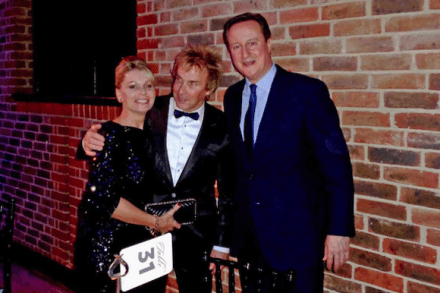
Last night politicians and celebrities dined with the super-rich at the annual Tory Black and White ball. While press are banned from the event, Mr S managed to infiltrate the lavish do and bring readers a live-blog of the event. Alas the evening saw a downturn in David Cameron's fortunes as his donors failed to dig as deep at the auction as in previous years. Despite this the guests appeared to have a good time.

David Cameron’s mum isn’t the only Cameron to criticise Tory cuts

From our UK edition

David Cameron's mum has joined the battle against Conservative cuts, it has emerged this morning. Mary Cameron's intervention after signing a petition to save childrens' centres has been splashed over the front page of the Daily Mirror. The headline: 'Cameron's mum fights Tory cuts' looks deeply embarrassing for her son. Is this a family rift? Is Mary Cameron trying to make life difficult for her son? The truth is less dramatic despite the excitement on Twitter, where the hashtag 'David Cameron's MUM', has been trending all morning. After all, Mary Cameron is not the only member of the Cameron family to criticise her local council over axed services.

Today in audio: Liam Fox on Cameron’s ‘ridiculous, scaremongering tactics’

From our UK edition

Liam Fox, speaking on the World at One, denounced No 10's suggestions that leaving the EU would mean Britain could see a Sangatte-style 'Jungle' emerge in the UK. He said it was a 'complete red herring': https://soundcloud.com/spectator1828/liam-fox-on-migrant-camps David Cameron said his prison reform plans were a 'bold and radical second term agenda': But there was scepticism about whether it was too little, too late. Juliet Lyon from the Prison Reform Trust said it was 'certainly true' that the situation in prison had deteriorated rapidly under the PM's watch: Grant Shapps spoke about being the fall guy over the Tory bullying scandal.

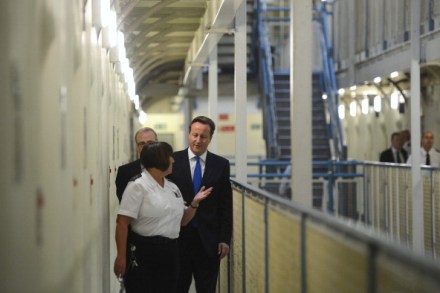
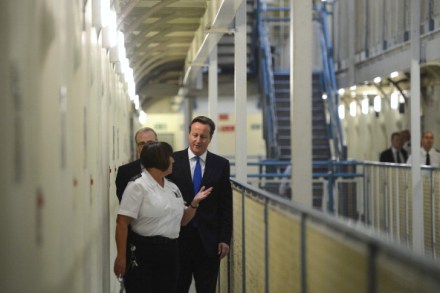
Are we really supposed to believe David Cameron cares about reforming prisons?

From our UK edition

David Cameron has outlined his plans for prison reform today. But does he genuinely care about prisons or is he only concerned with shaping his own legacy? The Prime Minister labelled the number of prisoners reoffending as 'scandalous’. He also pledged to protect the £130m prison education budget. His motives may seem worthy but it’s arguable he is merely paying lip service to an issue which has been bubbling along under his watch for years. That much appeared to be the view of the Prison Reform Trust’s Juliet Lyon. Speaking on Today, Lyon criticised the PM for turning late to the issue. She said: ‘It is certainly true (that things have become a scandal). Certainly things have got particularly worse over the last two or three years.

Who will be out for Out?

From our UK edition

[audioplayer src="http://rss.acast.com/viewfrom22/fightingovercrumbs-euroscepticsandtheeudeal/media.mp3" title="James Forsyth and Vote Leave's Stephen Parkinson discuss Euroscepticsm"] The Leave campaigns continue to bicker with each other in increasingly absurd fashion, but it would be wrong to think that everything is going the In campaign’s way. Number 10, as I write in The Sun today, have been taken aback by the sheer scale of the hostility to the deal. There have been some very tense meetings in Downing Street this week. Cameron himself is, I understand, acutely aware of how volatile the situation is and how quickly the referendum could turn. But those around him are more confident.

Today in audio: Julian Assange vs Philip Hammond

From our UK edition

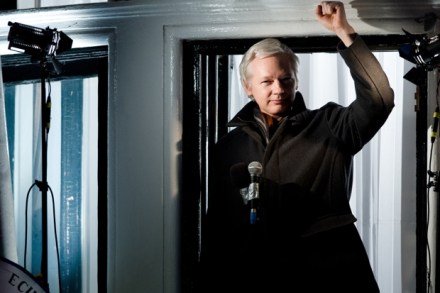
Haven’t had a chance to follow the day’s political events and interviews? Then don’t worry: here, The Spectator, brings you the best of today’s audio clips in one place for you to listen to. Philip Hammond hit out at the UN after a panel ruled that Wikileaks founder Julian Assange was being 'arbitrarily detained' and should get compensation. The Foreign Secretary said Assange is a 'fugitive' and he called the UN verdict 'flawed': Julian Assange hit back at a press conference saying that Hammond's comments were 'ridiculous'. He also warned the UK there would be 'consequences' to ignoring the UN panel verdict: David Cameron has been on a charm offensive in Europe as he attempts to persuade fellow leaders to deliver on his draft deal.

Why Cameron needn’t worry about Leave’s nine-point lead – yet

From our UK edition

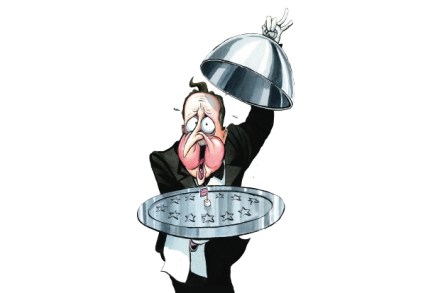
[audioplayer src="http://rss.acast.com/viewfrom22/fightingovercrumbs-euroscepticsandtheeudeal/media.mp3" title="James Forsyth and Vote Leave's Stephen Parkinson discuss Euroscepticsm"] Funnily enough, David Cameron’s EU deal hasn’t gone down all that well with voters. The Times this morning gives the ‘Out’ campaign a nine-point lead, up from four points last week. The YouGov poll puts Leave on 45 per cent, Remain on 36 per cent and 19 per cent on don’t know or won’t vote. This is an entirely predictable reaction to a deal that has genuinely astonished some MPs with its lack of anything that could come close to looking like a fundamental recasting of Britain’s relationship with Europe.

In defence of discrimination

From our UK edition

David Cameron has accused universities of being xenophobic, racist and prejudiced against the poor. He is too much of a coward actually to say that, of course: instead, he said they ‘discriminated’. That is a weasel word these days, and it is worth tiptoeing gingerly on to Mrs Wordsworth’s territory to see what Cameron is missing. ‘Discriminate’ derives from the Latin discerno, ‘I separate or divide off spatially; I distinguish mentally or practically’. The noun discrimen could mean anything from ‘a parting in the hair’ and ‘a point in which things differ’ to ‘the act or power of distinguishing; a process for deciding a disputed question’. The educationist Quintilian saw the point with his usual perspicuity.

The Spectator’s notes | 4 February 2016

From our UK edition

In 2000, the then Chancellor of the Exchequer, Gordon Brown, accused Magdalen College, Oxford, of class bias in failing to admit a student called Laura Spence, a pupil at a Tyneside comprehensive. This was grossly unfair — how could the Chancellor know the details of a particular case? It was also outrageous in principle: why should a politician tell a university whom to admit? This Sunday, David Cameron did much the same thing. In the middle of his EU negotiations, the migrant crisis and the other genuinely important things the Prime Minister must deal with, he found time to offer an article to the Sunday Times, headlined ‘Watch out, universities; I’m bringing the fight for equality to you’.

Portrait of the week | 4 February 2016

From our UK edition

Home David Cameron, the Prime Minister, made a speech in Wiltshire about a letter from Donald Tusk, the president of the European Council, on Britain’s demands for renegotiating terms of its membership of the European Union. Mr Cameron said: ‘What we’ve got is basically something I asked for.’ In the House of Commons, Jeremy Corbyn, leader of the opposition, said: ‘It’s rather strange that the Prime Minister is not here…’ instead of ‘…in Chippenham, paying homage to the town where I was born.’ Mr Tusk proposed that in-work benefits for migrants might be subject to an ‘emergency brake’.