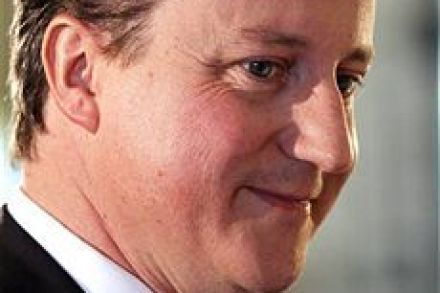
David cameron

Massive Failure by the Tories and Lib Dems to Manage Expectations

From our UK edition

The old political hands in the Labour Party at least knew that they had to talk down their prospects (beyond the usual nonsense about fighting to win). Lord Mandelson was right to fight this election as the underdog because this now looks in some ways like a victory.  In fact this is a massive achievement for the Conservative Party. When David Cameron took over in 2005 many Tories would have settled for this result. They should always have been fighting a two-election strategy. But the Conservative Party allowed itself to get overexcited about the possibility of outright victory. The Liberal Democrats allowed themselves to dream and find themselves bitterly disappointed this morning.
Let the recriminations begin

From our UK edition

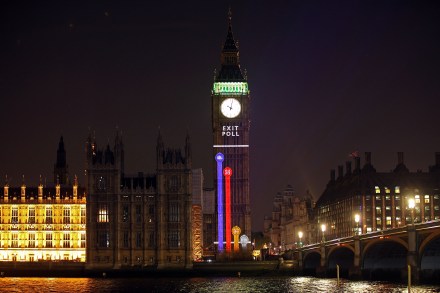
Let's rewind to 10pm yesterday evening, when the exit poll was released.  Most politicos - myself included - were incredulous.  We could just about believe that there might be a hung Parliament with the Tories as the largest party, but a reduced number of Lib Dem seats?  After Cleggmania and all those recent opinion polls?  Gedouttahere. But, this morning, that exit poll is looking a good deal more prescient.  After an evening of erratic results, Sky's projection matches it almost exactly: 309 seats for the Tories, 259 for Labour, and 54 for the Lib Dems.  So we're on for a hung parliament, and all the backroom discussion and subterfuge that that entails. Already, the dividing lines have been traced across Westminster.

The best and worst of the campaign: David Cameron

From our UK edition

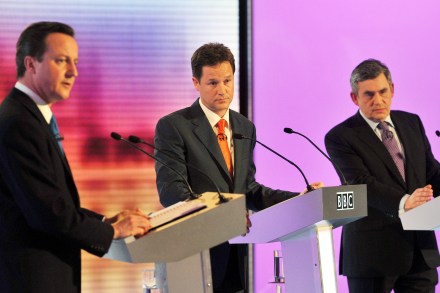
Cameron's best moment: the sunshine of the final TV debate David Cameron has had a peculiar campaign.  For the most part, the big set-piece occasions haven't quite caught fire, while many of the Tory leader's successes have been the relatively low-key and impromptu successes of the campaign trail.  Having said that, it was the biggest set-piece event of them all - the final TV debate - which gave Cameron his best moment of the election.  Here, he was energetic, direct and, most importantly, optimistic.  And he even managed to sell the Tories' school reform policy in a straightforward and engaging way.  In his closing statement, Cameron did what he always promised he would - and let sunshine win the day.

The party leaders vote

From our UK edition

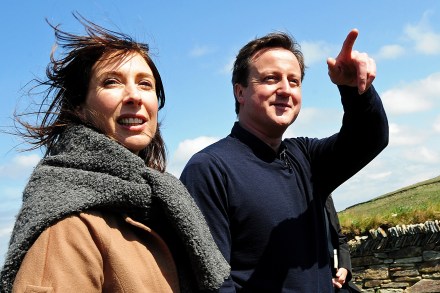
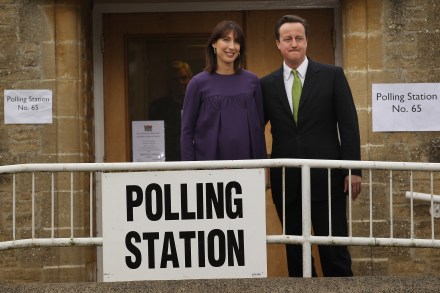
David and Samantha Cameron leaving the polling station in Spelsbury Gordon and Sarah Brown arrive to vote in North Queensferry Nick and Miriam Clegg vote in Sheffield.

Government in waiting?

From our UK edition

I’m sceptical of the value of newspaper endorsements. Readers are often irritated by being told which way to jump - if you’ve read the letters page of the Times recently you’ll know what I mean. However, the weight of Fleet Street support for the Tories is significant. In addition to the usual suspects, the Sun, the Times, the Financial Times and the Economist have all defected from New Labour since 2005. Today, the Evening Standard joins them, endorsing the Conservatives in a general election for the first time since 1997.

Niall Ferguson: Britain should call the IMF now

From our UK edition

Should David Cameron just call the IMF immediately? Like, on Monday? This argument has been doing the rounds in Tory circles and tomorrow's Spectator has an important contribution from Niall Ferguson. He advises that Cameron takes a two-pronged approach. Prong one is to 'axe ruthlessly' and prong two is to call the IMF. He says: 'There is a very real danger that [things] could now spiral, Greek style, out of all control if foreign confidence in sterling slumps and long-term interest rates rise. Mr Cameron needs to do two things right away. He must instruct George Osborne to wield the axe ruthlessly with the aim of returning to a balanced budget over a credible eight- to ten-year timeframe.

The shape of public sentiment

From our UK edition

Silver medal in the Graph of the Day contest (we'll have the gold medallist up on Coffee House later) goes to this effort from YouGov.  It's just been published, with details, over at PoliticsHome, and tracks public "buzz" about the three party leaders during the course of the campaign.  I'm not sure how much to read into it, but the peaks and troughs do follow the contours of the election - so Clegg's support rises after the first TV debate, Brown's plummets after the Gillian Duffy incident, and Cameron pretty much flatlines it.  One striking feature is how much ground Brown has caught up since last week: the last few days really have been his best for some time.  Not that any of this will really matter after tomorrow.

The Tories will trust in the Irish

From our UK edition

The Telegraph reports that a Conservative minority government would rely on an ‘informal understanding’ with Unionist MPs and that David Cameron is preparing the ground for co-operation.  It’s a courageous plan, in the Sir Humphrey sense.  Many journalists argue that Cameron has a duty to preserve the Union. Certainly he does, but his overtures to the Ulster Unionists have been self-defeating. There is an assumption that the Unionist parties are conservative. Besides conserving the Union, they are not. Back in February, I reported that the Tory alliance with Reg Empey was serving only to eviscerate the UUP, as its socialist and social democratic factions revolted against Tory alignment.

Why aren’t the Tories doing better?

From our UK edition

My apologies for responding so tardily to Alex Massie's post of Friday, but it was quite well hidden, maybe prudently so. He begins by objecting to my assertion on National Review Online that given the failure and unpopularity of Labour, "the Tories [as the main opposition party] ought to be winning easily and by a landslide." This is an unfair critique, he argues, because "it's the failures of the past and that he inherited that make Dave's task so difficult. If 2005 hadn't been such a ghastly failure perhaps the Tories wouldn't need to win an extra 130 seats to win a majority. *In other words, they essentially need a landslide just to win a small victory*." Well, let me try to unravel the confusions here.

Cameron will walk the line

From our UK edition

"Don't fall for it, Dave!" implores the front cover of this week's The Spectator - together with a leader (precis here) urging him to form a minority government rather than enter any pact with the LibDems. It looks like he will not disappoint us. The Telegraph today discloses that: 'Even if he fails to secure an outright majority, it is understood Mr Cameron is preparing to “go it alone” and form a minority government. The Tories are confident an informal understanding with unionist MPs from Ulster could secure Mr Cameron a safe passage with his key early Commons battles, including getting a first Queen’s Speech and Budget passed. Last night, the Conservative leader said that, with three days before polling day, the momentum was now with him.

The Tories plan to cut early – but how would their opponents respond?

From our UK edition

Oh yes, the Tories are broadcasting more Ready For Government noises this morning.  There's an article in the Telegraph suggesting that David Cameron would choose a minority government ahead of coalition with the Lib Dems.  And the Guardian reports that a Tory government would set out a bulkload of spendings cuts in the first six months of office, when, as a senior Tory puts it, the "excitement of the general election aftermath" will still be hanging in the air. You can understand the Tory thinking here.  Not only will they find it easier to achieve things during the heat and righteous fury of early government, but they will also need to seize something like a mandate for the cuts which have remained off-stage during the election campaign.

Cameron gets ready for government – but will he manage to avoid “frontline” cuts?

From our UK edition

For the past few years, the Tory task has been to look like a government-in-waiting. Now, with the election only a matter of days away, David Cameron has dialled that process up to eleven. In interviews with the Sunday Times and Andrew Marr today, the Tory leader concentrates firmly on the nuts and bolts of government. The content of the Queen's speech, the depth of Tory cuts, the possibility of coalition – all get name-checked and cross-referenced. There's much in there to encourage Tory supporters. Indeed, CoffeeHousers have been clamouring for one of Cameron's proposals: a "Great Repeal Act," which would "scrap ID cards, home information packs and dozens of rarely enforced criminal offences introduced by Labour over 13 years.

Cameron must avoid making deals with the Lib Dems

From our UK edition

Even after the Gillian Duffy incident, tonight's polls either point to a hung parliament or a gossamer Tory majority. So the prospect of a Con-LibDem alliance, being forged next weekend, remains all too real. In the leading article of this week's Spectator, we urge Cameron to go it alone with a minority government - rather than enter into a pact, of any sort, with the LibDems. If Cameron fails to win a majority, he must form a minority government, do the best he can and then, when the time comes, ask the Queen for a dissolution of Parliament so he can ask the country for a majority. There are five reasons why this is the only sensible course of action. 1. Euro-style coalitions don’t work in Britain.

Tories would look to withdraw from Afghanistan in the next parliament

From our UK edition

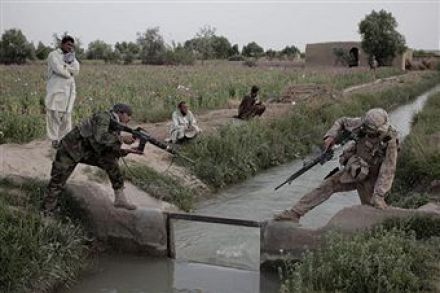
Today’s Express is reporting that David Cameron has said it would be wrong to set an 'artificial deadline' for withdrawal of British troops from Afghanistan, but that he hoped troops would come home during the course of the next Parliament.   In many ways this is smart politics. Given that President Obama has said that US troops would be looking to come home from 2011 onwards, it is hardly surprising that the Tory leader hopes British troops would return within the next five years. Other countries in Helmand, like Denmark, have begun signaling the same. The statement may – I say may – help those who care passionately about the war and who don’t feel at home with Labour and the Lib Dems.

The Tories’ final push

From our UK edition

Fresh from David Cameron's victory in the final TV debate, the Tory campaign has taken another assured step this morning.  As Tim Montgomerie reports over at ConservativeHome, they're going to flood the doorsteps with the leaflet, 'A contract between the Conservative Party and you' (pdf here).  Inside, a list of clear policy commitments from "publishing every item of government spending over £25,000," to "reducing immigration" to the levels of the 1990s – meaning tens of thousands a year, instead of the hundreds of thousands a year under Labour."  And, on the back page, a refutation of some of Labour's most misleading claims about the Tories.  Clear, simple and direct.

Tonight David Cameron turned in the performance he needed to. In the post-debate polls, Cameron has won three comfortably, one narrowly and tied the other

From our UK edition

For the first forty-five minutes it was rather like the first debate. Brown attacked Cameron, Cameron hit back and all the while Clegg soared above it. But then immigration, Clegg’s Achilles heel, was thrown into the mix. Cameron went hard for Clegg over his amnesty policy, and Clegg had no clear answer—initially backing away from the policy, before coming back to it. Throughout this exchange, Cameron had covering fire from Brown. Clegg appeared knocked back as he came under the most sustained attack of the campaign and didn’t get back into his groove until his closing statement. In the meantime, Cameron capitalised; delivering some of his strongest answers of the whole debate series.

Cameron shines, Clegg wobbles and Brown sinks

From our UK edition

Well, Cameron saved the best till last. His aides are even joking that they could do with a fourth debate because their man is really getting in the swing of it. He looked more confident, assured – and spoke convincingly about immigration at last, a subject he fluffed last time. I’d place Clegg second. Brown was worse than awful: third in this debate, and will probably be third next week’s election too. Clegg was his usual telegenic self – in thespian terms, an accomplished performance. But he ran away from his own asylum policy, and was comically inept with the facts. He screamed at Cameron: “Will you admit that 80 percent of immigrants come from the EU?” Cameron did not: because the real figure is a third.

Sunshine wins the day for Cameron

From our UK edition

So that's the second time that immigration has had a major impact upon proceedings this week.  Until we came to the question on that topic, I thought Clegg was bossing the TV debate.  He was clear, personable and managed to hover elegantly above Brown and Cameron's dusty brawl over spending cuts.  But as soon as it came to clarifying Lib Dem policy on an amnesty for illegal immigrants, the wings rapidly fell off the yellow bird of liberty.  All of a sudden, Clegg sounded rattled and unpersuasive.  From then on in, it was Cameron's game. It helped that Cameron had the clearest – and, I suspect, the most popular – line on immigration: "We would cut immigration from the hundreds of thousands to the tens of thousands.

The final TV debate – live blog

From our UK edition

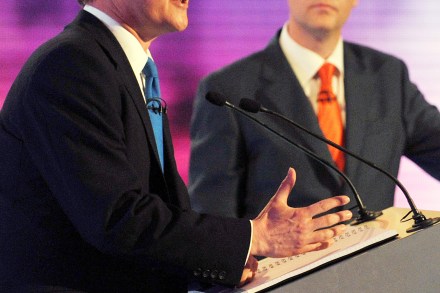
2227, JGF: Rumour going around the press room that a certain A Campbell has been overheard saying 'I think we've had it' 2201, PH: And that's it. I'll be putting up my verdict in a separate post shortly. Thanks for tuning in. 2200, PH: Woah. Brown starts positive - thanking everyone involved in the debates.  But he's soon into hardcore negativity: attaking the Tories for their inheritance tax plans and pointing out what areas of spending they will cut.  It's all scaremongering about child tax credits, cancer guarantees and the like.  This, lest you need reminding, is his pitch for the country. 2128, PH: Clegg hones in on the "old parties," claiming that they will stand in the way of "real change".  He says that he will "fight for fairness".

Cameron’s tactical dilemma

From our UK edition

One thing to watch tonight is David Cameron’s strategy for dealing with Nick Clegg’s plan to take peoples’ first ten thousand pounds of income out of tax. This policy is clear and appealing and one that many Conservatives like. Indeed, Cameron himself called it a ‘beautiful policy’ in the first debate. So it is imperative, that the Tories have a way to try and defuse it. During the campaign, the Tories have used two different attacks on it. One is to criticise it from the left, to argue that the policy is not progressive as it does not help the lowest paid: you have to earn more than ten thousands pounds a year to get the full benefit of it.