David cameron

Government by signature

From our UK edition

Remember this petition to have Gordon Brown resign as Prime Minister? It secured 72,222 signatures in the end: not quite enough to have it debated in Parliament under the coalition’s new plans, but enough to make you think. I mean, will we see parliamentary debates about whether Dave and Nick should step down at the public’s request? Not going to happen, I’d say. But these latest ideas for involving voters in the legislative process could certainly provoke one or two embarrassments for our political class. Take the obvious example of withdrawing from the EU: that petition could probably attract any number of votes, but is unlikely to be met positively by Parliament. Ditto an entire spectrum of political matters, from MPs’ pay to immigration.
The political year in ten videos

From our UK edition

With Westminster winding down for Christmas, and Coffee House with it, it's probably time to start looking back on the year in politics. In which case, here's an opener: a chronological selection of ten videos that capture the some of the glories, iniquities and embarrassments of 2010. If CoffeeHousers have any alternative suggestions, then just shout out in the comments section, and we can add them to the bottom of this post. Here goes: 1.Terror on Downing St: The Movie A Taiwanese news report about the bullying allegations made against Brown in Andrew Rawnsley's book. The computer animations are astonishing, to say the least: 2. Gordon Brown calls the election (and the sound fails him) 3.

Cameron and Clegg play the expectations game

From our UK edition

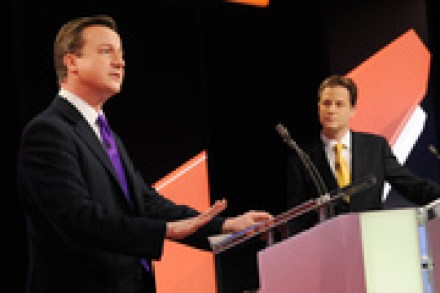
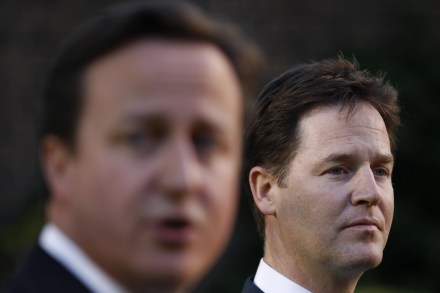
You know the drill by know: a Cameron and Clegg joint press-conference, so plenty of easy bonhomie and political japery. And today was no different. The Lib Dem leader set the tone with his opening gag, aimed at Vince Cable: "I haven't seen as many journalists in one room since my constituency surgery." After that, it was pretty much a gag a minute. Underneath all that, though, was some serious business. Cable came up ("very apologetic," apparently), along with his claims about Winter Fuel Allowance ("not true"). But, as Iain Martin has noted, the most intriguing moment was when Cameron claimed only that he "expects" the Tories and Lib Dems to fight as separate parties at the next election. Obviously, that falls some way short of a guarantee that they will.

A tale of two quads

From our UK edition

There could barely be a starker contrast between Danny Alexander's interview with the FT today and the, ahem, Cableleaks. Unlike his fellow Lib Demmer, the Treasury Secretary knew that he was speaking to a journalist – and he keeps well within the lines when discussing the coalition. "My impression," he says, "is that the Liberal Democrats support the coalition. People knew the first couple of years would be extremely tough." Alexander saves his most enthusiastic rhetoric for the quad: the group of four ministers – David Cameron, George Osborne, Nick Clegg and himself – who met regularly during the spending review period to decide where the cuts would fall. As he puts it, "it was a very effective way of making sure the government is joined up".

Leaked Cable

From our UK edition

Loose lips sink ships – but can they sink sages too? Probably not, but Vince Cable has certainly entered tumultuous seas with the publication of candid remarks he made to a couple of Telegraph journalists posing as Lib Dem voters. In the tapes – which you can listen to above – the Business Secretary rattles on unrestrainedly about the inner workings of the coalition. The stand-out line is his claim that "If they push me too far then I can walk out of the government and bring the government down" – but there's more, including: 1) The arguments that are being waged, and won.

Len McCluskey leaves Miliband floating

From our UK edition

You can stuff your beer and sandwiches, Prime Minister – the unions want war. That's the broad sentiment of Unite's new leader, Len McCluskey, writing in the Guardian today. The union capo urges his brothers to rally behind the protesting students, and prepare to militate against the coalition. Or as he puts it, with nary a hint of self-awareness: "While it is easy to dismiss 'general strike now' rhetoric from the usual quarters, we have to be preparing for battle." Which, reading on, seems pretty similar to, erm ... general strike now. Putting aside the prospect of industrial unrest, this will be as nectar for the Tories.

The coming war between the coalition and the councils

From our UK edition

Cameron vs the councils may well be the most vicious political battle of 2011 – and one I preview in my News of the World column (£) today. It comes in four stages. First was last week, when the increasingly impressive Eric Pickles said he wanted a 27 percent cut in funding over four years. Grant Shapps weighed in behind him – saying that even 8.9 percent in a year (the maximum cut facing councils) was do-able without any cuts in frontline services. The councils, predictably, said it is not possible. And the threats have started. The strategy amounts to nothing less than a human shield strategy. "If you make us cut," they say, "then we'll turn off street lights, or sack lollipop men" (both real examples).

High Court rejects temporary immigration cap

From our UK edition

The High Court has just declared the government's temporary cap on non-EU immigration is unlawful. Its ground was that the cap was not introduced with proper parliamentary scrutiny. However, the annual cap, which will not be in place until April next year, is not affected by this decision. But without a temporary cap there'll be a spike in applications as people try and beat the cap. It'll be fascinating to see how the PM and the Home Secretary respond to this ruling. At the moment, the government is playing it softly, softly. But there are Tories who think that the government cannot just allow a key part of its flagship immigration policy to be struck down by the courts. The combination of judges and immigration is a red rag to large sections of the Tory party.

Cameron’s good will to all Lib Dems

From our UK edition

Cameron wishes the Lib Dems well in the Oldham by-election. We know this because he said so, in Brussels this afternoon, no less than three times in thirty seconds. The Telegraph's James Kirkup has the full transcript, here. The PM does caveat his well-wishing - adding that "we'll be fighting for the same votes" - but his general effusiveness isn't going to reassure those Tories who suspect he'd quite like a Lib Dem victory, really. Already the murmuring has started, with ConHome's Jonathan Isaby casting an understandably sceptical eye across proceedings, this morning. What's clear is that this Oldham by-election will be used as a political barometer by all sides.

What Cameron should push for in Brussels

From our UK edition

As David Cameron stays in Brussels for his third European summit as PM, it’s becoming increasingly clear that the EU's approach to the eurozone crisis – put up short-term cash and pray – isn’t convincing anyone.   On Wednesday, Moody’s threatened to downgrade Spanish government bonds another notch, citing the fact that, between them, the country’s government and banks have to raise €290bn next year to keep the party going. And, across the eurozone, banks and governments face daunting refinancing targets in 2011, which begs the questions: at what cost? And what happens if they fail to meet them?

MPs’ February fear

From our UK edition

When you talk to MPs about the new expenses’ regime there are a whole variety of grumbles you’ll hear, many of them reasonable. For example, it does seem silly that all MPs buy their own printer ink cartridges rather than the Commons buying a job lot and using bulk ordering to obtain a discount. But one of the things that really bothers them is that IPSA will publish all the refused expenses’ requests in February. Now, I expect that most of you think this is reasonable. But MPs do have a point that the way IPSA logs these things means that any enquiry about what you are or are not allowed to claim comes across as an attempt to claim.  David Cameron is being pulled two ways on expenses. His MPs wanted the system changed—and fast.

Gray heralds the latest shake-up

From our UK edition

The coalition is taking it to the MoD, Whitehall’s most intransigent department.  The FT’s Alex Barker reports that Bernard Gray has been appointed Chief of Defence Materiel.  Gray is a revered and original defence specialist with a history of criticising the MoD in plain terms. Resentment persists over his savage report into procurement, which exposed the full extent of the wasteful ‘conspiracy of optimism’ that pervades the department’s operations and its relations with contractors. He argued: ‘Industry and the Armed Forces have a joint vested interest in sponsoring the largest programme at the lowest apparent cost in a ‘conspiracy of optimism’.

Cameron tries to reassure colleagues on expenses

From our UK edition

David Cameron has this evening told the 1922 Committee that IPSA will have to change by April 1st next year or be changed. He told the ’22 that he understood the ‘pain and difficulty’ caused to colleagues by the new system and denounced the new system as ‘anti-family.’ He said that IPSA would be given until April next year and if it failed to do so it would be reformed. Tonight’s address was an attempt to defuse an issue that has really rankled with Tory MPs, and has for some become a proxy for the leadership’s perceived lack of regard for them. It is, perhaps, a sign of how strained relations are that Tory MPs are tonight complaining about a Conservative party spokesmen briefing out details of the meeting.

Miliband out of the danger zone

From our UK edition

Up, up, up! It was the only way he could go. For the last couple of months Ed Miliband has arrived at PMQs like a hapless fag with his bottom ready-stripped for a ritual flogging from Flashman. Today he made a proper fight of it. This was his best PMQs performance since his debut. He’s been studying the old masters. Long-term followers of PMQs will have recognised William Hague’s favourite battle-plan today. In football it would be called ‘pass-and-go’. You ask a question. Then dismiss the answer as inadequate. Ask a second question. Dismiss the second answer as inadequate. Move to a third question while pointing out, in parenthesis, that your interviewee is making a habit of not giving proper answers.

The Spectator’s Christmas interview with George Osborne

From our UK edition

The Christmas Special of The Spectator is out today, and George Osborne kindly agreed to an interview. We have printed 1,500 words in the magazine, but James and I thought CoffeeHousers may like a fuller version, where he has more space to speak for himself.  We have gone into way more detail on tax policy here than in the magazine, for example, as Osborne is seldom pressed on this point and his thoughts are very interesting. We have divided it up by subject headings, so CoffeeHousers can skip the chunks they’re not interested in.   Liberty, paternity and Treasury It is an exciting day for Liberty Osborne, the Chancellor’s daughter, to join him at work.

Reid: essentially, Miliband’s not fit for purpose

From our UK edition

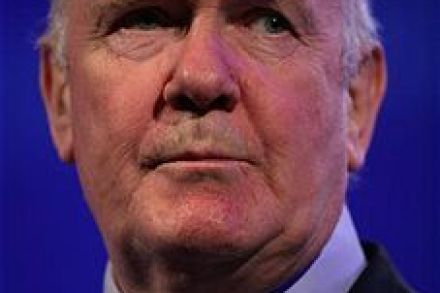
John Reid made a bruising and quite extraordinary appearance on the Daily Politics earlier today. He demolished the Labour leader. Reid’s analysis was concise: there has been a vacuum at the heart of Labour since Tony Blair’s departure. Gordon Brown was divisive, at best, and clearly not up to the demands of leadership. And, Reid intimated, Brown's child shares his father’s foibles. Ed Miliband has not impressed so far, having failed to understand the cause of New Labour's success. Case in point, his support for the coalition’s very liberal policies on crime, and his inability to perceive that New Labour’s sustained dominance was due to constant policy renewal, not ideological trauma.

Expect the unexpected

From our UK edition

Peter Kellner has an interesting comment piece up on the YouGov site about how we are in the unusual position of having three relatively unpopular party leaders. Nick Clegg’s approval rating is down at minus 29 but that hasn’t helped Ed Miliband who is at minus 15. David Cameron does have a positive rating, but only just. His approval rating is plus one. As Kellner points out, normally when one political leader is unpopular another benefits. But that hasn’t happened this time: a sign of how strong a hold anti-politics has on the public consciousness. This discontent is mirrored by how all three parties are having quite serious debates about what they should be.

Simmering below the surface…

From our UK edition

By way of an addendum to Fraser's post, it's worth reading Melissa Kite's account of internal Tory strife for the Sunday Telegraph (it doesn't seem to be in the paper, but is available online here). The piece records what sounds like a tumultuous week for the Tory whips, as they struggled to keep a group of disgruntled MPs on side. There are plenty of little insights, of which this is just a selection: 1) The 1922 Committee gets angry. "The ceding of a series of major powers to Europe, the increasing of international aid, the decision to have a referendum on voting reform, the redrawing of constituency boundaries – all had been eating away at Tory backbenchers for months. Worse than that, their concerns had been repeatedly brushed aside by Mr Cameron.

Cameron must head for the common ground

From our UK edition

All the attention last week was on the Lib Dem split – but what about the division within the Conservatives? This is the greater threat to the coalition, and while there is not likely to be an earthquake soon, one can discern the outlines of the tectonic plates. Ladbrokes has odds of 5-2 of an election next year, and these don't seem so short when one considers the short life of coalitions in British peacetime history. So where might the tension lie? A while ago, I referred to the bulk of the party as "mainstream Conservatism," as a more useful phrase than the tautological "Tory right". Tim Montgomerie last week drew a distinction between this and what Ken Clarke calls "liberal Conservatism".

A strength and a weakness

From our UK edition

As with so many things, the coalition’s great strength is also its great weakness. On the one hand, it is two parties working together, politicians putting aside their differences to cooperate in the national interest. This is something that, broadly speaking, the electorate likes. On the other, it is a government that nobody voted for. There’s a danger that the public come to see coalition as an arrangement that just allows both parties to worm out of their manifesto commitments on the grounds that they didn’t win the election.  The coalition’s national interest case is a strong one. But it needs to be made with greater frequency. It cannot be allowed to go the way as the summer of scrutiny of Labour’s record.