David cameron

The pollsters have Labour running away with it in Oldham East

From our UK edition

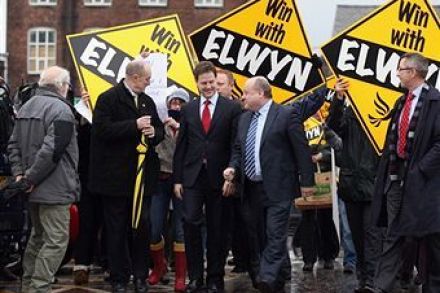
The same, but completely different. That's the electoral paradox that emerges from a couple of opinion polls on the Oldham East & Saddleworth by-election this morning. The same, because both the Lord Ashcroft survey for the Sunday Telegraph and the ICM survey for the Mail on Sunday produce the same result as in the general election: Labour first, the Lib Dems second and the Tories in third. Completely different, because this is no longer the achingly close contest that it was back in May. Both polls have Labour soaring 17 percentage points above the yellow bird of liberty. Of course, the polls aren't always right. Yet these latest will surely furrow some brows in Coalitionville.

Affable Cameron invites you into his home

From our UK edition

Perhaps I’m alone in this, but David Cameron interviews better in print than he does on screen. He’s almost too polished on television. His supreme confidence and tendency to guffaw at his scripted jokes can grate. But in print his assurance has an affable, human quality. The Daily Mail has interviewed him today. Most of the piece is a lifestyle feature – Dave at home attending to Florence’s evening feed as he watches Newsnight. It is vacuous fare, but it strikes a brilliant contrast with Ed Miliband’s rout at the hands of the nation’s housewives on the Jeremy Vine Show, where there were echoes of Gordon Brown’s excruciating unease with the world beyond Westminster.

Hughes’ social engineering crusade

From our UK edition

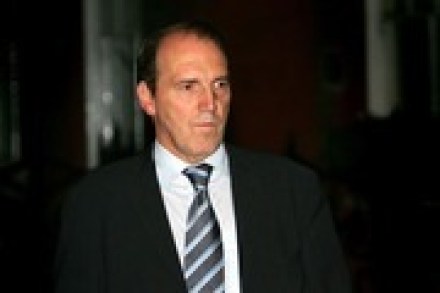
No wonder some backbench Tory MPs are apoplectic: courtesy of David Cameron, Simon Hughes has been elevated from soapbox to pulpit. Hughes' first statement as the government's university access adviser is to suggest that universities should limit their intake of students from private schools. He told the Guardian: 'I think my message to the universities is: You have gained quite a lot in the settlement. Yes, you've lost lots of state money, but you've got another revenue stream that's going to protect you. You now have to deliver in turn. You cannot expect to go on as you are. It has failed miserably.'   Hughes' appointment was controversial, another instance of well qualified, determined and loyal Tories being denied preferment to placate Lib Dem egos.

David Aaronovitch and the social conservative consensus

From our UK edition

David Aaronovitch is one of the preeminent voices of the liberal-left in this country. He is no social conservative and has been dismissive of those who want a lower time-limit for abortion. But today he wrote something that reminded me of that famous Peggy Noonan column about the Columbine massacre and ‘the ocean in which our children swim.’ Aaronovitch writing about the Times’ investigation into sex gangs says: 'Sometimes I look at what the surrounding culture says to our kids and wonder whether we are mad.

Winding down Control Orders

From our UK edition

David Cameron has reiterated that Control Orders are to be scrapped. He told an audience in Leicester yesterday: ‘The control order system is imperfect. Everybody knows that. There have been people who've absconded from control orders. It hasn't been a success. We need a proper replacement and I'm confident we'll agree one.’ Whether the new arrangement will replace both the name and the letter of the law remains to be seen, but the government is expected to lessen some of the more severe elements of Control Orders. When this story broke at the weekend, Cameron was happy to spin the reforms as a Lib Dem initiative, despite considerable Tory input. Not anymore.

All to play for in Oldham East

From our UK edition

The Oldham East and Saddleworth by-election is fast shaping up to be the event that will set the tone for the first quarter of the political year. The unique circumstances in which the vote was called makes it particularly hard to predict, no one is quite sure whether there’ll be a backlash against Woolas or one against the Lib Dems for going to court to overturn the result. As I say in the magazine tomorrow, if the Lib Dems were to win, it would give Clegg the breathing space he so needs at the moment. Lib Dem worries about what the coalition is doing to them politically would subside, temporarily at least, and Ed Miliband would find himself under pressure.

Clegg: Read my lips…

From our UK edition

This comment from Nick Clegg – speaking to the Evening Standard today – deserves pasting into the political scrapbook: “Let me be absolutely clear once and for all. The Liberal Democrats will fight the next election as we did the last – as an independent political party in every constituency in the country.” Which is considerably less equivocal than David Cameron and George Osborne have managed recently. When the Tory pair were pressed on the matter towards the end of last month, they said only that they "expect" the coalition parties to fight independently of each other come election time. Not that the Clegg quotation rules out electoral chicanery altogether.

IPSA’s olive branch to angry MPs

From our UK edition

The foreword to IPSA's latest consultation document is certainly more conciliatory than combative. "The last eight months have been demanding, both for MPs and their staff, and for IPSA," it starts – in subtle reference to the mutual frustrations that have overtaken the expenses operation to date – before asking whether the current system can be made more "fair and workable". And that tone carries across into the main body of the text. Although IPSA insist that nothing has been decided yet, they do at least moot the possibility of raising certain allowances back up again. As James Kirkup writes on his Telegraph blog, this document is, in some respects, IPSA's last chance.

Clegg and Cameron decouple

From our UK edition

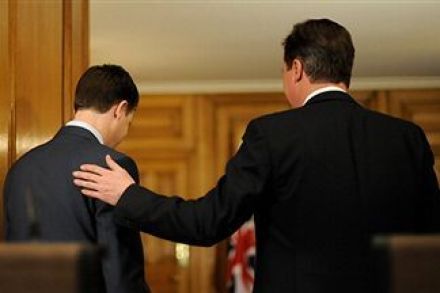
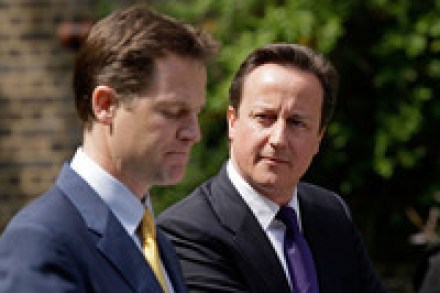
Cameron and Clegg are putting on a show for the in-laws. After mounting disquiet from the fringes of their respective parties, the two leaders are journeying to Oldham East to quash rumours of a merger and reaffirm that theirs is a marriage of necessity. David Cameron will travel north in due course. God knows what he will say? Presumably that he no longer wishes his partners well – get out there and biff ‘em, or words to that effect. On the other hand, Nick Clegg will declaim his lines today. His script is hyperbolic, replete with wishful fantasy about a ‘two-horse race between Labour and the Liberal Democrats’.

The Tories turn their fire on ‘lamentable’ Johnson

From our UK edition

Come back, you insufferable relatives, all is forgiven: the political class has devoted an afternoon to trading insults about who said what about VAT and when. However, there have been some intriguing exchanges amid the New Politics’ latest outing. First, Labour seems to be fighting the two coalition partners as a single entity in Oldham East. Cameron, Clegg and Simon Hughes have received equal measures of opprobrium this afternoon and all have been lumped together. This was always a danger, but, as Fraser noted, Clegg and Cameron invited the manoeuvre by uniting their parties’ central operations in the cause of government. If Cameron and Clegg don’t differentiate in the general, Labour won't in the particular.

Boles beats his old drum

From our UK edition

To accompany Fraser’s suggestion that Cameron and Clegg are planning a merger, it is notable that the ubiquitous Nick Boles has renewed his calls for a formal pact. Previously, Boles averred that Liberal Democrat ministers should be protected in three-way or Conservative-Liberal marginals. This time round, his argument is more philosophical. He told Radio 4’s PM: ‘The Coalition has enabled the Conservative party to be more radical than it would have been able to had it formed a government on its own with a small majority... Jacob Rees Mogg who’s a fellow MP who’s certainly not a sort of liberal Tory like I am in the sort of modernizing sense.

Wrong to be too Right

From our UK edition

From a right-wing perspective, there are several things wrong with David Cameron's leadership - not least the fact that he did not win the 2010 election outright. As an unassailable report by Lord Ashcroft showed, the Tory campaign squandered a historic lead over Labour. The policy disagreements - over the EU, civil liberties, and the AV referendum - are compounded by personal grievances. The Prime Minister, despite investing quite a lot of time placating quarrelsome  MPs - calling them, writing them letters, inviting them to No 10 - cannot shake the impression of a man who is buoyed by confidence verging on arrogance, and someone who is reliant on - indeed most comfortable with - a small, largely unelected group of friends.

Is it a merger?

From our UK edition

When a Conservative leader wishes the LibDems well in a three-way marginal by-election, then what is going on? Andrew Gilligan’s piece today shows that the Conservative campaign there is muted, and my colleague Melissa Kite reported earlier that Cameron personally called off  the hunt supporters, Vote OK, who were planning to boost the Tory campaign. Little wonder that Conservative MPs are beginning to smell a rat. They are being told this is the cohabitation of rival parties; in the Daily Telegraph tomorrow, I ask if this is actually a merger.   From the start of this coalition, I’ve been struck by the differences between the coalition in Westminster, and that I witnessed during my tour of duty in the Scottish Parliament.

Control Orders: a pyrrhic victory for the Lib Dems?

From our UK edition

Coalition is a tricky business, full of compromise and connivance. Emblazoned across the front page of the Sunday Times (£) is the news that Control Orders are to be scrapped. A victory for Nick Clegg, we are told, won to nurture wounded Liberal Democrats and preserve the coalition. The Liberal Democrat 2010 manifesto maintained that Control Orders would be abolished and many senior Liberal Democrats have been volubly opposed to Lord Carlisle’s report into Control Orders, which was understood to propose their retention. Certainly, Nick Clegg needs an outright victory on policy.

A preview of the rebellions to come

From our UK edition

Today’s papers are full of the Tory right asserting itself. In the Mail On Sunday, Mark Pritchard—secretary of the 1922 committee—demands that the Prime Minister and his allies come clean about any plans to create a long-term political alliance between the Tories and the Lib Dems. In The Sunday Telegraph, there’s a report that Tory rebels will vote with Labour to try and defeat the coalition’s European Union Bill. I suspect that these stories presage one of the major themes of the year, an increasingly assertive right of the Tory parliamentary party. For too long, Cameron has neglected his own MPs both politically and personally. The result is a willingness to cause trouble for the government.

Miliband’s first hundred days in five points

From our UK edition

Ok, so Ed Miliband's one hundred day anniversary actually falls on Tuesday – but what's a couple of days between bloggers? Besides, even with two days to go, it's safe to say that his will be a peculiar century. By some scientific measures, Labour are doing alright; sucking up Lib Dem voters to push ahead of the Tories in opinion polls. But that belies what has been an unconvincing start from their new leader. Here's my quick five-point guide to his bitter honeymoon: 1) What's the economy, stupid? One of Miliband's boldest moves to date was his appointment of Alan Johnson as shadow chancellor.

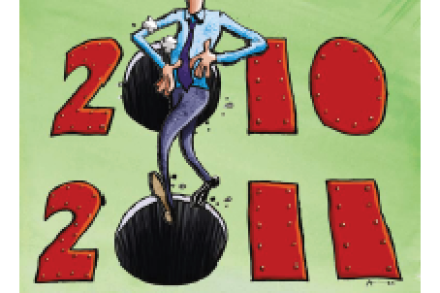
Cameron and Miliband’s New Year message: 2011 will be like 2010 

From our UK edition

If you want to know what British politics will sound like in 2011, then just read David Cameron’s and Ed Miliband’s New Year messages one after the other. They share a lot of the same words, but bounce along to different, if familiar, drumbeats. According to Cameron, next year will be “very difficult,” due to the effort of “putting our economy ... on the right path”. According to Miliband, next year will be more difficult than it needs to be, due to “the decision taken to reduce the deficit at what I believe to be an irresponsible pace and scale.” In other words, cuts versus fewer cuts. Just like 2010 all over again.

An 80 percent elected Lords would not be a Lib Dem triumph

From our UK edition

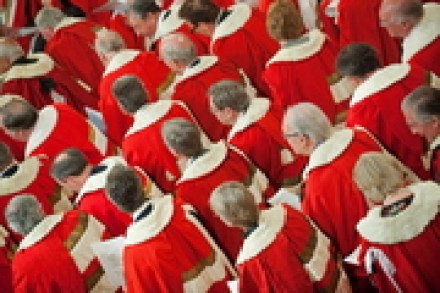
The Lib Dem manifesto committed the party to a fully elected House of Lords. The Tory manifesto talked about a ‘mainly-elected’ second chamber and in 2007 David Cameron voted for ‘the other place’ to be 80 percent elected (interestingly, George Osborne voted for a fully elected Lords). The coalition agreement committed the government to a ‘wholly or mainly elected upper chamber’. So it is hard to see how a Lords that retained a twenty percent appointed element could be portrayed as a major Lib Dem triumph as, according to today’s Guardian, the coalition wants. There has been talk in Westminster that Clegg’s consolation prize if the AV referendum is defeated will be a fully elected Lords, a long-standing Liberal aim.

A debt-filled New Year

From our UK edition

The Spectator is out today, with a cover story that I would commend to CoffeeHousers. Failure to learn from history usually condemns a nation to repeating its mistakes. That's why we should be nervous that no one seems to have worked out what caused the crash. Little wonder: the guys doing the analysis are the same guys who failed to spot the crisis building up, so it suits everyone to blame the banks. "How was I to know," says everyone from Gordon Brown to Joe the Pundit, "that they were doing all these complex debt swap thingies? They deceived everyone, the bounders." There is another analysis – and it's our cover story, written by Johan Norberg.

This year’s biggest story

From our UK edition

This year was so rich in stories - Expensesgate, the election and historic coalition, the Icelandic volcano, General McChrystal's dismissal, the Pakistani floods, Haiti's earthquake, Greece's near-collapse, the Will n' Kate engagement, Wikileaks, the Chilean miners and so on - that it is hard to pick just one story. Looking back over the year, however, I think two stories stand out - because they may herald a seismic change.  The first is, of course, the establishment of coalition. By now, the novelty of government by cross-party compromise has worn off. But, despite the gossipy complaints of a few Lib Dem ministers, a new kind of politics is being forged.