David cameron

Today in audio: ‘Remain’ fights back as PM warns of Brexit ‘bomb’

From our UK edition

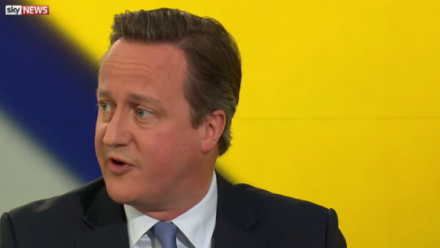
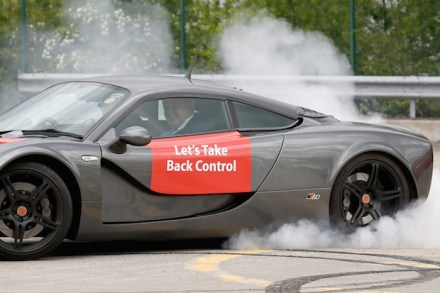
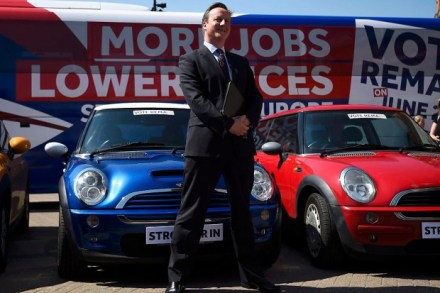
Momentum in the 'Leave' campaign seems to be growing after Brexit took the lead in two polls out today. There are, however, still several weeks until the actual day of the EU referendum and the gap between the two sides remains marginal (four per cent). But 'Remain' still seem shaken by these polls. Here's how they spent the day fighting back: David Cameron said Brexit would put a bomb under Britain's economy, going on to say that 'the worst thing is, we would have lit the fuse ourselves': The PM was backed up Lib Dem leader Tim Farron. In a joint event, Farron said the argument for 'Leave' was built on 'utter, invented rubbish': But in the tit-for-tat battle which is the EU referendum, the 'Leave' campaign also went on the offensive today.
Another week of EU dishonesty, reviewed

From our UK edition

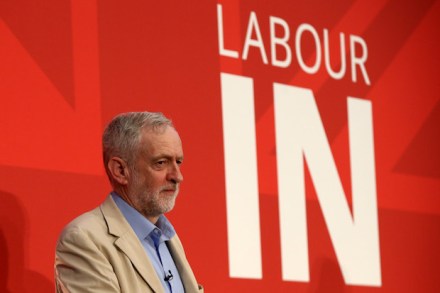
After last week’s featherweight entrants, we were onto some seriously heavyweight fibs this week. In truth there were only two contenders in this week’s EU dishonesty stakes. The first was Jeremy Corbyn’s lacklustre attempt to explain why after a lifetime’s Euroscepticism he is backing ‘Remain’. Here is how the BBC captured the excitement of Corbyn’s speech: ‘The Labour leader said the EU could "deliver positive change" on issues ranging from mobile phone charges to clean beaches and protecting bees.’ Gosh. Well sign me up. Of course all the brightest and most honourable members of the Labour party – Frank Field, Gisela Stuart, Kate Hoey – are campaigning for ‘Leave’.

Could the Vote Leave strategy work?

From our UK edition

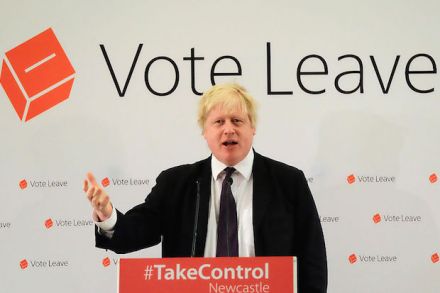
The Leave campaign have had their best week of the campaign this week. After months of being battered by the Whitehall machine, they’ve taken advantage of purdah silencing government departments to get themselves onto the front foot. As I write in The Sun this morning, even IN supporting Cabinet Ministers admit that Leave have had a good week. But they argue that they won’t be able to ride the immigration issue to victory on June 23rd. One argues that you can’t focus on immigration week after week, or ‘By week four, you end up sounding like Nigel Farage’. But Vote Leave think their trump card is the link between immigration and people’s pay packets. That is the economic argument they are confident they will win.

Portrait of the week | 2 June 2016

From our UK edition

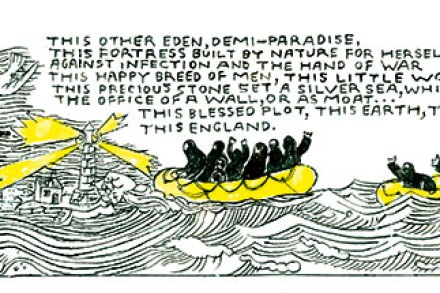
Home Two British men were charged with immigration offences after the rescue by night of 18 Albanian migrants, two of them children, from an inflatable boat off Dymchurch, Kent. ‘We don’t want the English Channel turning into the Mediterranean with fleets of small boats coming over,’ said Chris Grayling, the Leader of the House of Commons and a campaigner for Britain to leave the EU.

Long life | 2 June 2016

From our UK edition

It was a famous American editor and columnist Michael Kinsley who once defined the political ‘gaffe’ as something that occurs when a politician tells the truth; and he was right, for it is usually the case that a person gets into most trouble when he publicly says what he actually believes. There were a couple of examples just the other day — one when the Queen said that Chinese officials had been ‘very rude’ to a British ambassador during a visit to London, and the other, even more embarrassing, when David Cameron described Nigeria and Afghanistan as ‘fantastically corrupt countries’.

Letters | 2 June 2016

From our UK edition

Cameron’s bluster Sir: Peter Oborne is surely right that lying and cheating are now commonplace in the heart of government (‘The new dodgy dossiers’, 28 May). If David Cameron truly believed that exit from the EU would mean economic meltdown, a third world war and always winter but never Christmas, his decision to hold a referendum would be the most irresponsible act of statesmanship since Chamberlain signed the Munich agreement. But he doesn’t believe it. Something else entirely is bringing out his inner Pinocchio. Having promised a referendum at a time when a Tory majority in the Commons seemed unlikely, the personal political risk to Cameron must have seemed remote.

Continental drift | 2 June 2016

From our UK edition

It is a long time since the term ‘sick man of Europe’ could be applied to Britain. France is now a worthier candidate for the accolade — it -increasingly resembles a tribute act to 1970s Britain. A package of modest labour-market reforms presented by a socialist president has provoked national strikes on the railways and Air France. This week, the streets of Paris resembled one big Grunwick or Saltley Gate — the trials of strength between employer and union in which so many of Britain’s most bolshy trade unionists cut their teeth. This week is not a one-off: in recent years France has had a strike rate more than twice that of Denmark, its nearest European competitor. Britain now looks a paradigm of -industrial virtue by comparison.

No, we don’t need to be in the EU to tackle environmental issues

From our UK edition

David Cameron has been banging the anti-Brexit drum again, this time making the environmental case for staying in Europe. He has joined forces with the RSPB and the World Wildlife Fund, who have both stated that they would urge voters to stay in the EU, arguing that being in the Union has had a positive impact on the British environment; safeguarding rivers and woodlands, and forcing us to clean up our beaches. Today the Prime Minister visited Rainham Marshes, an RSPB nature reserve in Essex, and in a video from his visit he argues that since environmental issues cross national boundaries, we should work together – by staying in the EU – to tackle environmental problems. https://twitter.

Angela Merkel wades into the Brexit debate. But what made her decide to speak out?

From our UK edition

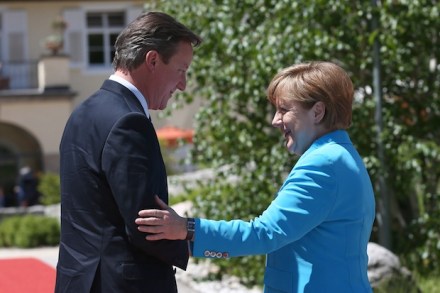
Angela Merkel has waded into the Brexit debate. Her stance won’t surprise anyone – she hopes that Britain stays put. But what’s interesting about her intervention is that it comes after it seemed she was reluctant to speak out, for fear of helping the leave cause. The Sunday Times reported earlier this month that Downing Street believed such an expression of her views on Brexit would be counterproductive. Admittedly, when she made her comments today, she clarified that they were her personal view. They also appeared to be, to say it mildly, lukewarm. Here's what she said: ‘Obviously, it is up to the citizens of the UK themselves how they wish to vote on the upcoming referendum.

The West has totally misjudged the situation in Libya

From our UK edition

Libya’s former Prime Minister Dr. Mahmoud Jibril has become the first senior leader of its Arab Spring revolution to call time on the country’s new western-backed government, saying 'the chances of success are very slim'. This apparent failure hasn't been caused by a lack of support, which has poured in from London and Washington in a bid to get the Government of National Accord (GNA) to stand up and walk on its own two feet. It was also hoped that by doing this, a fix could be found for the twin problems of Islamic State and mass migration. But Dr Jibril, who helped steer the country through its brutal uprising against Muammar Gaddafi, says foreign powers made a mistake by installing an unelected regime without popular support.

Purge of the posh

From our UK edition

Any parents considering Dollar Academy are invited to take their car along its long driveway and park outside what looks like a palace. When I first did so with my parents, I told them that it all looked ridiculously posh. My mum flew into a rage. ‘Posh’ was a word of bigotry, she said, and one I’d best not use if I was going to survive a day in boarding school. My dad left school aged 15 and eventually joined the RAF, which was kindly paying for me to board while he was posted to Cyprus. He’d have loved such an opportunity, and wanted me to see it for what it was — and to forget any class-war language that I might have picked up in my old comprehensive in the Highlands. I needn’t have worried.

Why the opinion polls still matter

From our UK edition

This EU referendum is a particularly difficult contest to poll and after the general election we all should be wary of treating them as gospel. But there’s no getting away from the fact that the mood in Westminster—and on the two campaigns—is heavily influenced by the polls. The recent good numbers for Leave have put a string in its step. They have also ensured that Vote Leave’s focus on immigration in the last few days isn’t seen as the last roll of the dice but as an attempt to focus on one of its strongest areas. Interestingly, influential figures on the Remain side privately accept that the referendum appears to have tightened up in the past few days.

Every pro-EU argument boils down to not being able to trust the ‘plebs’

From our UK edition

We all know that the Remain camp has peddled the politics of fear. But what is the object of their fear? What’s the thing that makes them so scared, so convinced that a litany of social and political horrors will befall Blighty if we pull out of Brussels? It’s you, and me; all ordinary people. It’s the public. It’s our unpredictable passions. When the pro-EU lobby frets about a post-EU Britain having Boris as a PM, becoming a right-wing cesspool, getting rid of workers’ rights, becoming less eco-friendly, and / or becoming vulnerable to neo-fascistic forces, what they’re saying is: ‘You can’t trust the public. You can’t leave politics to ordinary people alone. Some politics must be done in the cooler forum of the EU.

The Government must do more to ensure the ‘Northern Powerhouse’ becomes a lasting legacy

From our UK edition

The recent Queen’s speech, along with the growing divisions in the Conservative Party over the EU referendum, have focused attention on how this Government will be remembered after David Cameron steps down in 2019. Many mentioned prison reform, improving university standards and tackling extremism, as signs of the Prime Minister’s determination to establish his legacy as a social reformer, guided by the compassionate conservatism which characterised his earliest pronouncements as Tory leader. Less remarked upon, however, was the renewed commitment in the speech to building the Northern Powerhouse, and empowering cities in the North to fulfil their economic potential – another key way in which the Government hopes to leave its stamp long after Cameron has left office.

Post-Brexit Britain could cut net migration by 100,000 a year. Here’s how

From our UK edition

The absence of an outline of a post-exit immigration regime is a serious gap in the Referendum debate. That need not be so. There is a fairly clear way ahead: to minimise disruption, while achieving control of numbers. The key element that needs to be controlled is migration for work (which accounts for the bulk of net EU migration). This could be sharply reduced if EU immigrants were subject to the same requirement for work permits as now currently apply to non-EU workers: the aim would be to reduce the overall scale of immigration without losing the economic benefit of highly skilled immigration. By doing this, net migration – 330,000 last year – could be cut by about 100,000 per year.

Angela Merkel and David Cameron fail to work out who’s in the driving seat

From our UK edition

At times in David Cameron's EU renegotiations, it's seemed as though the Prime Minister struggled to be in the driver's seat. Now evidence has come to light that confirms Cameron's power struggle with one of Europe's main leaders. Speaking at the Hay Festival, Neil MacGregor -- the former director of the British Museum -- let slip the difficulties he encountered when Angela Merkel and Cameron arranged a visit to see an exhibition he on German history from the past 600 years. Of all the objects in the exhibition, MacGregor thought the VW Beetle would make a great prop for a photo opp for the two leaders. Alas, it wasn't to be. While Merkel and Cameron's teams were both keen on the idea, they couldn't agree who would sit in the driving seat. As a result, the photo was never taken.

Mervyn King hits out at ‘wildly exaggerated claims’ in referendum ‘debate’ – ‘the government has to take some responsibility’

From our UK edition

Although Mark Carney has warned that a Brexit is the 'biggest domestic risk to financial stability', his predecessor Mervyn King takes a somewhat different approach when it comes to the impending EU referendum. The former Bank of England governor used an appearance today at the Hay Festival to hit out at the 'wildly exagerated claims' made in the run-up to the vote. 'I wondered who would be the first to lower the tone,' King joshed when asked whether he thought Britain should stay or go.

How Vote Leave plan to persuade the electorate that there are real risks to staying in the EU

From our UK edition

The IN campaign’s plan for victory in this EU referendum is relatively simple.  ‘Do you want the status quo or the riskt alternative?’, is how one Cameron ally sums it up. To date, Remain—aided by the various government dossiers—have been pretty effective at pushing this message. That is why they are ahead in the polls. So, Vote Leave know that they need to push the risks of staying in, up the agenda. I write in The Sun this morning that their message in the coming weeks will be that ‘wages will be lower and taxes will be higher if stay in the EU’. Their argument will be that the continuing troubles in the Eurozone will hit the UK in two ways.

The Spectator podcast: Brexit, and the return of political lying | 28 May 2016

From our UK edition

To subscribe to The Spectator’s weekly podcast, for free, visit the iTunes store or click here for our RSS feed. Alternatively, you can follow us on SoundCloud. Are David Cameron and George Osborne using the same techniques of deceit deployed by New Labour in the run-up to the Iraq war? In his cover piece this week, Peter Oborne argues that's just what is happening. He says that in their EU campaign, the Chancellor and Prime Minister have put dirty tricks back at the heart of government. But Matthew Parris in his column says that in politics there’s no point complaining about being lied to. That’s the cry of the bad loser. Both Peter and Matthew join Fraser Nelson on the podcast.