PMQs live blog | 9 November 2011
From our UK edition
PMQs, 9 November 2011.
From our UK edition
PMQs, 9 November 2011.
From our UK edition
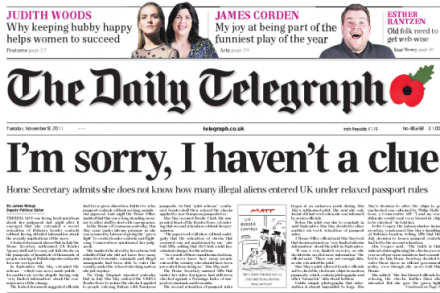
So soon after taking on the right over the European Union, David Cameron didn't want to be seeing negative headlines on another of their hot-button issues. But that's just what he's woken up to this morning, thanks to the revelations that the Home Secretary authorised the relaxation of border checks. As James said, May's performance in the House of Commons yesterday left her looking safe for the time being – not least because of Cameron's support for her, as evidenced by his sitting alongside the Home Secretary during her statement. But immigration is as potent an issue as ever. Unlike the EU, it's one that the general public does think is important: immigration ranks third on Ipsos MORI's latest Issues Index, behind only the economy and unemployment.
From our UK edition
David Cameron provided a reassuring presence for the Home Secretary today, sitting supportively next to her throughout her statement and Yvette Cooper's response. May, who didn't sound or look like someone who thinks their career is in danger, stressed that she "did not give my consent or authorisation to any of these actions". But she had to concede that we'll never know how many people came in who shouldn't have because of the relaxation of checks on those arriving in this country. In an aggressive reply, Yvette Cooper demanded that the various inquiries May has set up report much earlier than the New Year. She also said that she had been warned by UKBA staff that the shredders were running there and that there was a ban on internal email.

From our UK edition
David Cameron's statement to the House of Commons on the Cannes summit was dominated by the question of increasing Britain's dues to the IMF. Cameron stressed that his message to the Eurozone countries was "sort yourselves out and then we will help". He also tried to offer reassurance that the IMF would not contribute to any eurozone-specific bailout fund. But after Ed Miliband's response, the Prime Minister tried to counter-attack. He began by saying of the Labour leader's speech, "I don't know who writes this rubbish" which drew one of Ed Balls' infamous calm down gestures. Cameron then offered an aggressive defence of the IMF, calling it an "organisation that rescued us from Labour in the 1970s".
From our UK edition
Theresa May has up to now proved remarkably adept at avoiding the political bear-traps that have ensnared so many Home Secretaries in recent years. But she now finds herself caught in a classic Home Office row over who allowed the UK Border Agency to ease passport checks to cut queues during the summer months. James Kirkup has the scoop that ministers approved this decision. Given May’s reputation for keeping her ministerial team on the tightest of leashes, this creates a problem for the Home Secretary. Labour will go at this issue hard. They know it provides them with a populist way to claim that the cuts are endangering the country's security. But May's position is bolstered by the fact that the Prime Minister is her biggest fan.
From our UK edition
One of the great challenges facing Britain is how to re-moralise society. A country where individuals, or businesses, can't tell the difference between right and wrong has fundamental problems. The Times reports today that David Cameron is planning to start talking about the need for "moral markets". There'll be those on the right who don't like this, who feel it is pandering to Ed Miliband's distinctions between predator and producer capitalism. Others will feel that it is impractical. Then there are those who'll counter that the only responsibility of business is to maximise profits. But this is important territory for Conservatives to be on.

From our UK edition
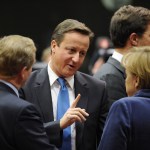
David Rennie (aka The Economist's Bagehot) has an excellent column in this week's issue about the difficulties that Britain will face if she tries to repatriate powers from the EU. His main argument, having spoken to a number of senior German politicians and officials, is that if Britain holds up any treaty revisions in the hope of extracting concessions in return, then the other EU states will organise themselves without the UK. The Economist's former Brussels correspondent also makes the key point that the 10 countries that are outside of the euro are not natural allies for the UK – some, like Denmark, do not want to join the euro, but others such as Poland are keen.
From our UK edition
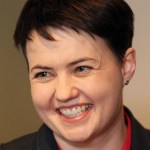
The Irn Lady pulled through – and the Scottish Conservatives survived. Had Murdo Fraser won, he would have renamed the party and left David Cameron running an England-only Conservative party. Yes, I can also imagine how much that would have upset them. But the day has been saved. The kickboxing Ruth Davidson, committed to reviving rather than abandoning the brand, has triumphed. She already been hailed as the first openly Glaswegian leader of the party, and her supporters argued that Murdo lacked her charisma which is why his proposition was more radical. I haven't met either, and can't comment. Except to say that Scotland remains a very large buffer zone between Cameron and proper control of No10.
From our UK edition
https://www.youtube.com/watch?v=Qm6yP-5RGK8 The Cannes summit leaves the world no further forward on its quest for some kind of solution to the Eurozone crisis. Strikingly, the Germans still won't agree — despite huge diplomatic pressure — to the ECB fulfilling the traditional emergency function of a central bank and acting as lender of last resort. This is a blow when you consider that Cameron thought there was a real possibility Merkel would budge on this after last week's European Council meeting. It also provides Cameron with a domestic political headache. For if the ECB won't act, the IMF will have to take more of the strain — and increasing Britain's contributions to the IMF in the current political climate is not going to be easy.

From our UK edition
A few days ago Douglas Carswell laid out a way for the Prime Minister to regain the eurosceptics' trust. One of his ideas was to replace the UK's new chief diplomat in Brussels with someone directly accountable to Parliament. This idea has a snowball's chance in hell of succeeding. First, the PM has resisted all sorts of political appointments – he's even limited the number of Special Advisers – and I don't think he's about to start. Second, doing so would upend a constitutional principle: that officials report to the government, not the legislature. For this reason even generals are not approved by Parliament, as they are in the United States.
From our UK edition
This week's issue of The Spectator hits the newsstands today. Here, for CoffeeHousers, is James Forsyth's Politics column from it: Last week’s rebellion by David Cameron’s backbenchers in support of an EU referendum ended eight years of peace in the Tory party on the European question. Now, the offer by the Greek Prime Minister of a referendum on the bailout package — designed to appease nervous Greek Socialist party backbenchers — means that the uncertainty surrounding the eurozone will drag on into the New Year. George Osborne regards the confusion surrounding the future of the single currency as the single biggest obstacle to a British economic recovery.

From our UK edition
Peter Kellner recently explained that the BBC licence fee becomes less popular if you describe it as an annual cost rather than as a daily cost. When people are told it costs £145.50 a year 27 per cent more people disapprove than approve. When they are told that’s only the equivalent of 40p a day there's a striking turnaround: 8 per cent more people approve than disapprove. You see a similar thing with Britain’s development budget. When the aid budget is expressed in terms of billions of pounds, people object and they object strongly. When it’s presented in more human-sized ways it is much more popular.

From our UK edition
The Hair Shirt walked abroad at PMQs today. Those attending the Square Mile sleepover finally forced their agenda into the political mainstream. The question is, what is their agenda? A protest that doesn’t define its programme allows others to define it for them. And today both party leaders tried to harness the anti-capitalist spirit for their own political ends. Ed Miliband claimed to be scandalised by a recent, and arguable, surge of 49 per cent in directors’ pay. He demanded that the PM take action. Cameron seemed equally appalled at the news that fat cats have been getting fatter during the recession. But he wasn’t taking any sermons from Labour.
From our UK edition
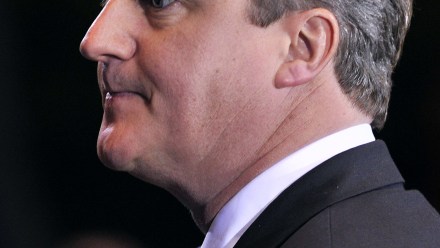
The real clash at PMQs today was between Ed Balls’ heckling and David Cameron’s temper. Balls was in a particularly chirpy mood. He started off his impression of an Australian slip fielder as soon as the Prime Minister arrived at the despatch box. The flat lining gesture made an early appearance, along with his signals telling Cameron to calm down. But the moment when Balls seemed to really get under Cameron’s skin was when he pointed at the overwhelmingly male Treasury bench as Cameron talked about the importance of getting more women on boards. Two questions later, Cameron responded to a Balls’ heckle by saying that ‘the shadow Chancellor is wrong, even when he’s sitting down.
From our UK edition
PMQs, 2 November 2011.
From our UK edition
When the topic of Greece comes up at PMQs, David Cameron will need to avoid stepping on three land mines. The first task is not to say anything about what is going on in Athens, or Rome for that matter, that will exacerbate market anxieties. The second is a diplomatic challenge, to avoid anything that would sour Britain’s pitch ahead of the G20. The third, and perhaps most difficult one, is to keep his own backbenchers on side. An ever growing number of Tories doubt that a 17 member Euro and fiscal union is in Britain’s, or Europe’s, interests. Already, some Tory backbenchers are talking about going to Greece, if invited, to campaign for a No vote. Cameron will need to avoid antagonising this group.
From our UK edition
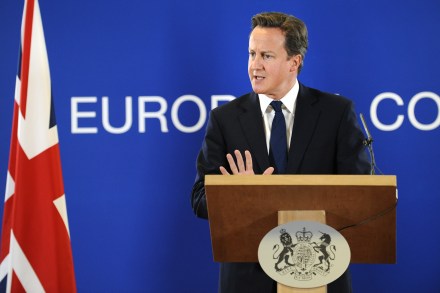
And the word of the weekend is ‘repatriate’. Not only do we have yet another poll showing that the British public, when asked, would prefer to tug powers back from Brussels, but there's also this eyecatching story in the Daily Telegraph. No.10, we're told, is pushing Whitehall departments to determine just exactly where Europe's influence could be counteracted. There is also a backbench group of Tory MPs providing covering ideas. So why hasn't this been happening before now, particularly given how frustrated those around David Cameron have become with the constant torrent of EU directives? Part of the answer is that the events of the past week have made all this more urgent. But part of it is that, actually, this work has already been going on in Whitehall.
From our UK edition
Aha, the Spectator's cover story is gathering pace. If you were tuned into The BBC's Daily Politics just now, then you will have enjoyed a preview of the terrific scrap this time-shifting proposal could provoke. They had on both Rebecca Harris MP, who is pushing for us to move to Central European Time (CET), and Peter Hitchens, who revealed in his article for us that the government is minded to back the idea (as well as describing Harris as "one of those homogenised, UHT female Tory MPs"). The pair were, of course, mediated by Andrew Neil. We shall try to secure video of the discussion, if possible.
From our UK edition
The long flight from Australia should give David Cameron plenty time to think about Europe, and how it just won't go away. He didn't want this battle — not now, not ever. But in the Daily Telegraph today, the first in what will be a weekly column, I lay out the battlefield that awaits him on his return. First, this bailout is not the end. A trillion Euros needs to come from somewhere, and today the Chinese are being tapped up — God knows what we'll agree to in return. But that doesn't address what is, as Mervyn King has said, a solvency issue rather than a liquidity issue. And the tighter these Eurozone countries squeeze together, the more tension we can expect.
From our UK edition
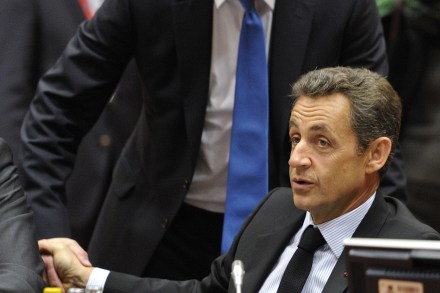
The picture of Nicolas Sarkozy not even turning around to shake David Cameron’s hand rather neatly sums up the Prime Minister’s problems right now. The danger for him is that the 17 Eurozone countries start writing a new set of rules and riding roughshod over the interests of those countries that are outside. This would be bad enough at anytime but with the Conservative party on the warpath over Europe it is a clear and present danger to the Prime Minister. As one ally of the Prime Minister said to me today the PM’s predicament is made even harder by the fact that many of the 10 countries outside the Eurozone want to eventually join the Euro and so have no desire to stand up to the 17.