David cameron

PMQs sketch: Miliband packs a punch, and Cameron punches back

From our UK edition

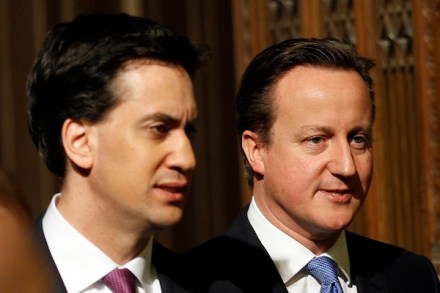
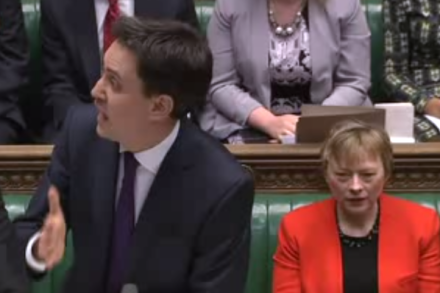
Whooo that was nasty. Today’s was the most vicious PMQs of the last twelve months. Easily. Ed Miliband started by quoting the case of a Londoner called ‘John’ who was concerned about living standards. ‘John’, however, wasn’t a disabled pensioner but a City fat cat concerned that next year’s bonus might be capped at two million pounds. ‘What’s the prime minister going to do to help him?’ Nifty tactics from Miliband’s team. Cameron might have floundered here but his reply matched the full force of Miliband’s attack. His government, he declared, had cut bonuses to a quarter of what they’d been under Labour. ‘And we aren’t going to listen to the croupiers who were in the casino when it all went bust.
PMQs: David Cameron’s high pay/low benefits problem

From our UK edition

Today's Prime Minister's Questions highlighted the problem Cameron has on high earners and bankers. Ed Miliband chose to attack on George Osborne's opposition to the EU's bonus cap, and he had some pretty good jokes to back it up, too. He started his attack with a case study, which tricked Tory MPs into thinking he was talking about the 'bedroom tax', so they groaned a little. But this wasn't about a benefit cut, it was about a bonus: 'Mr Speaker, I’d like to ask the Prime Minister about an individual case: John works in East London and is worried about what’s happening to his living standards. His salary is £1m and he’s worried that his bonus may be capped at just £2m – can the Prime Minister tell us what he’s going to do for John?

Revolting, Panic-Stricken Tories are doing Ed Miliband’s job for him

From our UK edition

Panic, once let loose, is hard to corral. And there seems to be plenty of panic on the Tory benches at Westminster. The Eastleigh by-election result, the stagnant economy and the rising sense that the Prime Minister has somehow lost his way all contribute to this. Each fresh setback - or perceived setback - now has an impact disproportionate to the actual size or importance of the problem. These things are no longer measured on a linear scale. Read, for instance, Ben Brogan's analysis in today's Telegraph and you will perceive an under-current of deep panic presently afflicting the Tory tribe in London. Similarly, when Paul Goodman is writing - correctly, I think - that a post-2015 leadership campaign has already, if quietly, begun you can sense the fear in Tory ranks.

Tory MPs lobby David Cameron on the ‘bedroom tax’

From our UK edition

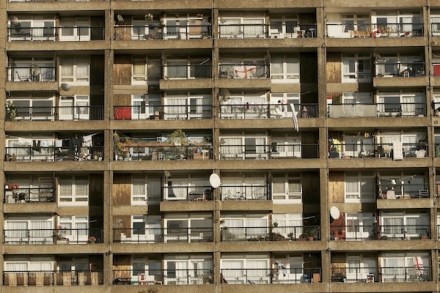
Liam Byrne launched Labour's campaign on the 'bedroom tax' today, while Helen Goodman, who was the Labour minister responsible for the party's own attempt at cutting the housing benefit bill when in government, raised the cut at Education Questions today. Tory MPs groaned a little. Michael Gove pounded the despatch box, and shouted 'this is not a tax!' and Labour MPs groaned back. But behind the scenes, I understand that far from groaning, Conservative MPs have been lobbying the Prime Minister on this particular cut, which comes into effect on 1 April.

David Cameron’s lurch to the backbenches

From our UK edition

So the Conservative party's refusal to lurch to the right has, in the past few days, resulted in stories about the European Court of Human Rights, EU referendum legislation, limiting access to benefits for migrants, and NHS tourism. All of these issues preoccupy the right wing of the Conservative party. David Cameron yesterday said the Tories would remain in the Common ground (and Fraser wondered whether the PM had realised that he wasn't taking his own advice on this), but these briefings suggest Cameron is trying to find common ground with his own MPs as much as with the public. If these policies aren't about a lurch to the right, they are certainly about a lurch to the backbenches.

What is the point of the modern Conservative party?

From our UK edition

Who are the Conservatives? No, really, who are they and what do they stand for? Once upon a time - as James Kirkup points out in a typically astute post - we had a pretty decent idea about David Cameron. He was young. Polished. Presentable.  Dutiful. Unthreatening. Fiscally-conservative-but-socially-liberal. Modern (whatever, as Prince Charles might say, that means). Above all, he was neither Michael Howard nor Gordon Brown. Ah well. That was all a long time ago. Let sunshine win the day is the soundtrack to another era. Such are the trials of government. Time - and power - tarnish everything. What does David Cameron believe in now? He remains more popular than his party but sometimes you have to think that's a pretty feeble standard for success.

David Cameron vs the Middle Ground of politics

From our UK edition

The Prime Minister's article in today's Sunday Telegraph is, like all of his major speeches, an uplifting read. It references Sir Keith Joseph, a giant of Conservative thought. Three years ago, I had the honour of delivering the Centre for Policy Studies annual Keith Joseph lecture, as did Cameron three years before that. Here is what Cameron has to say about Sir Keith in his piece today: 'But the battle for Britain’s future will not be won in lurching to the Right, nor by some cynical attempt to calculate the middle distance between your political opponents and then planting yourself somewhere between them. That is lowest common denominator politics – and it gets you nowhere.

The mighty Metis machine that could save Cameron’s bacon in 2015

From our UK edition

What does David Cameron need to do to win the next general election? Following on from Eastleigh, several of the suggestions in today's papers involve a significant personnel or policy shift, something Cameron is likely to ignore. Buried in the Sunday Times, an alternative is revealed (£) with the Metis project. Headed up by four of Westminster's sharpest minds, Metis is destined to become the largest and most sophisticated voter database ever built in the UK. The power of a 20 million strong list of voters has the potential to revolutionise campaigning: 'It will enable political parties to run highly targeted campaigns, focusing on individual voters whose support is vital to win key seats.

How to be an anti-politics party in government: make the public sector accountable

From our UK edition

One of the lessons from last week's Eastleigh by-election - and indeed the Italian elections - is that voters don't like politicians at the moment. It's easy for those like Nigel Farage to mop up this anti-politics sentiment in the same way as Nick Clegg could say before the 2010 election 'the more they attack each other, the more they sound the same'. But how does the Conservative party try to appeal to those voters fed up with the Establishment of which it is so clearly a part? David Cameron can hardly start attacking himself, after all. There is one thing that the Tories could do - and which their backbenchers are pushing for - which would at least undermine a sense that the party is tied up in the cosy Establishment.

The Tory branch of the National Union of Ministers says cut welfare, not our budgets

From our UK edition

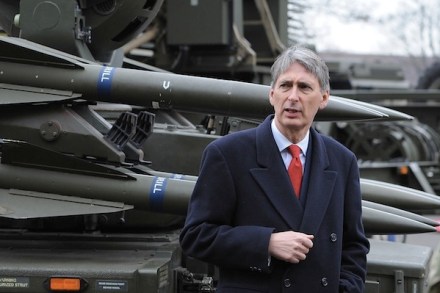
Philip Hammond is a cautious and loyal politician. He is not a boat rocker. This is what makes his interviews in the Telegraph and The Sun today so noteworthy. He would not have started conducting spending negotiations in public unless he felt he had to and that he had a chance of success. Hammond tells The Sun his case is this, ‘You take half a percent out of the welfare budget, you’ve solved the problem in defence — HALF a percent. There is a body of opinion within Cabinet that believes we have to look at the welfare budget again.’ In truth, the argument about the 2015-16 spending round is not a conventional spending row: it isn’t the Ministry of Defence versus the Treasury.

Is David Cameron about to drop minimum alcohol pricing?

From our UK edition

James Chapman reports today that plans for a minimum unit price for alcohol are set to be dropped. This is welcome news. The policy always promised to simply drive up the price of drink, penalising all drinkers, while doing little about public drunkenness or binge drinking. The Mail says that the plan has fallen out of favour because of the government’s new emphasis on the cost of living. It is dawning on everyone that that hugely increasing the price of people’s pleasures at a time of falling real incomes is not a sensible political move. Although, the question remains of whether David Cameron will be prepared to fully abandon a policy that has been a personal priority of his. Tory MPs will be cheered by this move.

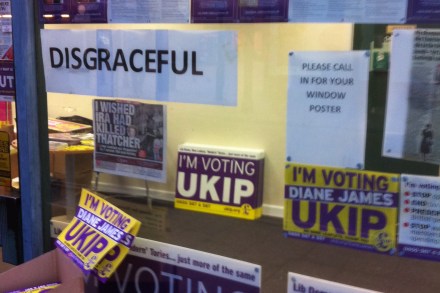
If David Cameron is serious about losing the next election he’ll cuddle-up to UKIP

From our UK edition

OK. Remember this: by-elections are always liable to be interpreted too keenly. Elections often fought on local issues then have their results scrutinised as though the election was a miniature general election. It isn't. People who should know better this morning are forgetting that. You know what else matters? The candidate. They matter much more at a by-election than they do in a general election. The Tory candidate Maria Hutchings might have won Eastleigh in a general election. But a by-election brings greater scrutiny. A good number of voters are minded to pick the best candidate. I suspect few of those voters endorsed Ms Hutchings.

Lib Dems hold Eastleigh as UKIP force Tories into third

From our UK edition

It was a successful night for the Liberal Democrats in Eastleigh and a disastrous one for the Tories. The Liberal Democrats held on with a majority a touch over 1,700. While the Tories came third, polling more than a thousand votes behind UKIP who surged in to second place. Labour had nothing to cheer either, coming a poor fourth—a result that makes it hard for Ed Miliband to claim they are a ‘one nation’ party. There’ll be three immediate political consequences of this result. First, Nick Clegg’s position is strengthened. Holding the seat with a majority of more than a thousand, demonstrates that the Liberal Democrats are not in the dire position that the national polls suggest.

Eastleigh by-election live blog

From our UK edition

12am: The word from the count is the Liberal Democrats have held Eastleigh. Intriguingly, the Liberal Democrats think UKIP have taken second. Labour appear set for a poor fourth. If the Tories have come third with the Lib Dems holding the seat, David Cameron's Tory critics will have a field-day tomorrow. 12.20am A source at the count tells Coffee House that UKIP appear to have won more votes today than any other party. But the Liberal Democrats will win thanks to their huge lead on postal votes 12.50am Tim Farron is trying to play down expectations. But revealingly he says that a Lib Dem win would be a game changer and boost their Budget bargaining power. 1am Sense from Eastleigh is that the Lib Dem majority tonight will be in the thousands not hundreds 1.

The ‘bedroom tax’ shows Downing Street does need a Damian McBride character

From our UK edition

MPs are debating that Cut With the Awkward Name, the Under-occupation of Social Housing: Housing Benefit Entitlement, also known by its opponents as the 'bedroom tax', this afternoon. I've already posted about some of the problems that this policy might throw up, however well-intentioned, but there's also an important political point here. When I talk to Tory MPs about this cut, some of them accept that there are problems with specific cases, and with the number of smaller homes that are actually available for people to move into (interestingly, one housing association has reclassified its properties so tenants can avoid being eligible for the cut), but what exercises them more is that the Coalition's spinning machine hasn't really moved at all on this cut.

What Lord Ashcroft’s breakup with the Tories means for David Cameron

From our UK edition

Now Lord Ashcroft has withdrawn his funding (£) from the Tory party, what implications does the move have for David Cameron? Much like losing Britain's AAA rating this week, it's less about the actual impact for his government but the message it sends out about where they are going. As the Sunday Times reports today, the Tory peer has lost all faith in Conservatives' ability to win the next election: ‘It comes amid mounting pessimism among Tory supporters about the prospects of victory. Although Ashcroft has not publicly expressed doubts over the party’s ability to win, privately he is said to fear Labour is likely to secure more seats. A source close to Ashcroft said: “He feels he has done his bit.

Welcome to India, Mr Camerooon: how the PM fared with the local media

From our UK edition

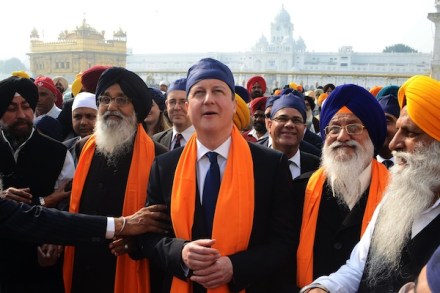
How did David Cameron fare with the local media on this week's trip to India? The third day of his trip attracted the most headlines, when he visited Amritsar. If Mr Cameron, described as 'Mr Camerooon' by one enthusiastic TV journalist, and reportedly introduced as James Cameron by another, didn’t have a high profile amongst Indians at the start of his trip, this one act ensured otherwise. After he’d talked trade with business leaders, met a Bollywood star and performed the obligatory cricket photo opp,  he headed to Amritsar, to Jallianwala Bagh, the scene of a massacre which is etched in India’s history. It was here, in 1919, that hundreds of Indians were shot dead by British troops, under orders from General Dyer.

UKIP surge in Eastleigh

From our UK edition

By-elections are notoriously hard to call. But everyone who comes back from Eastleigh says the same thing, UKIP are the party with forward momentum. This morning’s Populus poll bears that out. They are in third place with 21 per cent, with the Tories second on 28 and the Lib Dems ahead with 33. But, as the indispensable UK Polling Report points out, if you don’t reallocate some of the undecides to the party they voted for last time, UKIP are doing even better. The numbers then are UKIP 25%, Tories 26% and Lib Dems 31%. As I said in the magazine this week, UKIP are picking up support from all three parties. Things could get very interesting there if more Labour voters shift to UKIP as the best anti-coalition vote.

Bigmouth Strikes Again

From our UK edition

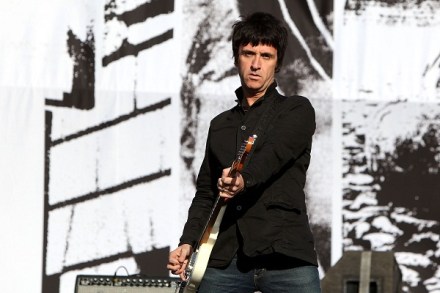
Johnny Marr's at it again. ‘David Cameron is not allowed to like my music,’ he fumes. He revives his disgust for Cameron's love of The Smiths at least once every three months. God knows why he bothers. A bid to get his once famous name back in the papers? Or perhaps he likes to madden Tories? Ever since Cameron appeared on  Desert Island Discs, Tories have winced at the furious and occasionally bemused response from musicians name-checked by Dave. Marr was, as we know, most put out to find 'The Charming Man' on the list; and Paul Weller of The Jam was lost as to why Cameron liked 'Eton Rifles'. Weller memorably said: ‘Which part of it doesn't he get? It wasn't intended as a fucking jolly drinking song for the cadet corps.

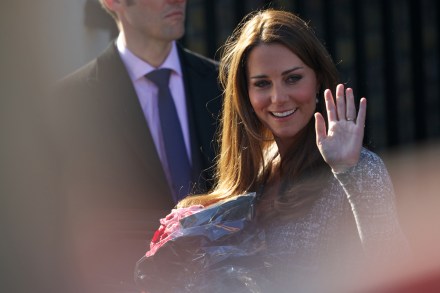
Hilary Mantel did not attack Kate, she defended her.

From our UK edition

Like grief, stupidity has a hierarchy. So, on balance, Ed Miliband's response - if it can be so dignified - to Hilary Mantel's essay about the mystery and magic attraction of royalty was even dumber than David Cameron's. Neither, plainly, had read what Mantel had written. The Leader of the Opposition at least had the advantage of playing second. Having seen the Prime Minister make a chump of himself, Miliband would have been wise to resist the temptation to demonstrate his own chump credentials. This was beyond him. In modern British politics you cannot allow the existence - or even mere appearance - of a Chump Gap. Then again, it is one thing to make a fool of yourself in response to an essay you have not read but quite another to do so having actually read the damn thing.