David cameron

Cameron has reached the tipping point

From our UK edition

The combination of complacency and incompetence that seems to have afflicted the Conservative Party is a wonder to behold. Janet Daley wrote at the weekend of her frustration at David Cameron saying he is 'relaxed' about the situation. She is right that welfare, education and the criminal justice system are in need of reform, although I am not convinced this government is going about it in the right way or with the right personnel. The competence factor is becoming a huge issue for this government, across individual departments, in the management of the parliamentary party and the wider membership (swivel-eyed or staring straight into the headlights).

The Tory grassroots were feeling neglected long before ‘swivel-eyed loons’ claims

From our UK edition

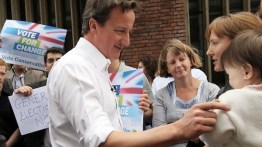
Whether or not Lord Feldman made his 'mad, swivel-eyed loons' comments, the story has given the Conservative grassroots the perfect opportunity to tell David Cameron, via the media, how unhappy they are with the way they're treated. On the World at One, Conservative Grassroots chair Robert Woollard complained about 'some very derogatory comments from some of [Cameron's] Praetorian Guard'. He said: 'I’m not going to repeat them here. You’ve heard about the ‘mad, swivel-eyed loonies’ – it doesn’t surprise me at all because some of us, not just us in Conservative Grassroots but some in constituencies that we talk to are quite used to this treatment and, frankly, there is a complete disconnect between No 10, CCHQ and the grassroots of the party.

Swivel-eyed loons are a feature of British democracy

From our UK edition

I’d just like to point out, having been a journalist for many years and having met these people, and also having been a member of the Labour Party for more than thirty years, that the constituency activists of every party are, in the main, swivel-eyed loons. They are endlessly busy, busy, busy, little monkeys, obsessive and shrill. This is the problem with democracy; the people who involve themselves in it most actively are the very people you would never wish to see near the levers of power. I’m an irregular attender at meetings these days, but back in the 1980s I went every week or so to my local ward in Streatham in order to try to stop a horde of genuinely deranged wimmin committing us to certifiable policies. Remember Linda Bellos?

Cameron’s tax tightrope

From our UK edition

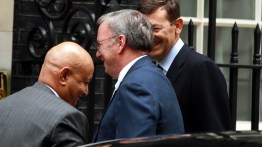
David Cameron didn't spend yesterday wringing his hands in Downing Street about the progress of his gay marriage bill: he was meeting his business advisory group. He allowed Google CEO Eric Schmidt to sneak out via the No 10 back door, a rather awkward metaphor for the company's tax arrangements. The Prime Minister is well aware of rising public anger about tax avoidance, and the rise of Margaret Hodge, who has a Calvinist preacher tendency in her role as chair of the Public Accounts Committee.

MPs defeat ‘wrecking amendment’ as Cameron tries to patch things up with grassroots

From our UK edition

MPs have just defeated Tim Loughton's 'wrecking amendment' to the Same Sex Marriage Bill by 375 votes to 70, after approving the Government and Labour amendment (more on how that works here) which will introduce a consultation on heterosexual civil partnerships. Those in favour of gay marriage will, if this Bill does make it out of Parliament and into law (and we still have all the stages in the Lords to go through) give David Cameron credit for continuing to push when many faces were set against him. But Labour has played a very impressive game today, appearing to save the legislation by making a tweak to an existing government amendment. Meanwhile David Cameron is starting his damage limitation exercise with the Tory grassroots following this week's allegations about Lord Feldman.

David Cameron should be out there making the case for gay marriage

From our UK edition

David Cameron’s approach to the gay marriage debate inside his own party has been to take a low profile. The passion and eloquence he displayed on the subject in his first conference speech as leader, has been replaced by a strategy of keeping his contributions on the matter to a minimum. This is, I think, a pity. There is no better Conservative advocate of the case for it than the Prime Minister. The crucial point about Cameron’s position, and why he might have been able to carry some more socially conservative minded people with him, is that he starts from the position that marriage is one of the most important, and best, institutions in our society.

UKIP, Pierre Poujade and a political class that’s seen to be “out-of-touch”.

From our UK edition

Parliament is a "brothel". The state is an enterprise of "thieves" engaged in a conspiracy against "the good little people" and the "humble housewife". Time, then, for a party that will stand up for "the little man, the downtrodden, the trashed, the ripped off, the humiliated". Not, as you might suspect, the most recent UKIP manifesto but, rather, the sentiments expressed by Pierre Poujade during the run-in to the 1954 elections to the French National Assembly. Poujade's party, the Union to Defend Shopkeepers and Artisans,  shocked France's political elite by winning 2.5 million votes and sending 55 deputies to Paris.

The Liberal Democrats, the natural party of government?

From our UK edition

If four years ago, a Liberal Democrat politician had attempted to portray the Lib Dems as the natural party of government we all would have laughed. But that is just what Danny Alexander tried to do on The Sunday Politics. Being interviewed by Andrew Neil, he implicitly contrasted Lib Dem steadiness with Tory in-fighting. He said: “You know some people at the time in 2010 said that it would be difficult to keep a coalition going because one party might not be able to remain united and disciplined. Let me reassure you and your viewers that Liberal Democrats will make sure that this government continues to be strong and stable enough to be able to take the difficult decisions in the years to come, no matter what’s happening in other parties.

The swivel-eyed loons in the Conservative party are revolting. And they are right to revolt.

From our UK edition

Clearly it is not a good idea for the Prime Minister's chums to call members of the Conservative party "swivel-eyed loons". No, not even at a "private dinner party". I suspect that the identity of the "senior Conservative" who is "socially close" to David Cameron will be out by close of play Sunday and that he - it seems most unlikely it is a she - will, as James says, be removed from whatever position of responsibility he currently enjoys. I also suspect most voters will have no idea who this man is even once his name is revealed. That doesn't matter. Adrian Hilton wrote a good piece at ConservativeHome last year detailing his experiences with falling Tory membership in Beaconsfield.

Top Tory calls party activists ‘mad swivel-eyed loons’

From our UK edition

Insulting your own side is a dangerous thing to do in politics and in the current circumstances for any prominent Tory to do it is positively incendiary. But one ‘senior figure, who has strong social connections to the Prime Minister and close links to the party machine’ is quoted on the front of The Telegraph and The Times describing Tory activists as ‘mad swivel-eyed loons.’ Given the row the Tories have had over Europe and are about to have over gay marriage, the timing could hardly be worse. James Kirkup, Sam Coates and James Lyons — the three journalists who broke the story — have started a major row which, if Number 10 is not careful, could come to define the relationship between Cameron and his party.

What does Cameron actually want back from Brussels?

From our UK edition

If you ask what’s the problem with David Cameron’s European strategy, a cacophony of voices strike up. But it seems to me that most of their complaints are tactical when the fundamental problem is strategic: what does Cameron actually want back from Brussels? Some of those involved in preparation for the renegotiation tell me that this is the wrong question to ask, that what Cameron is seeking is a systemic change in the way the European Union works. But I’m still unclear on what their strategy for achieving this is. One insider tells me that inside Number 10 they’re ‘terrified of detail’. One can see why. Nearly all Tory MPs can get behind renegotiation but they have very different views on how extensive it should be.

The Tory Blame Game

From our UK edition

Who is to blame for last night's Tory uprising on Europe? It's more entertaining to pin the blame on everyone, rather than one person, and in this case, it's wrong to insist that the leadership is entirely to blame for the confusing fiasco of the past week. So here are the many, many different options for pinning blame on someone for 114 Tory MPs telling the Prime Minister that they regretted his failure to introduce an EU referendum bill in the Queen's Speech. Coffee Housers can choose their favourites. 1. Blame the leadership (Part I) David Cameron should have had a proper strategy to deal with the ongoing demands of his backbenchers for a bill guaranteeing the 2017 referendum.

The secret of David Cameron’s Europe strategy: he doesn’t have one

From our UK edition

Shortly before the Conservative party conference last year, the head of the Fresh Start Group of Eurosceptic Conservative MPs went in to see the Prime Minister in Downing Street. The group had heard that David Cameron might make his big Europe speech at the gathering and its head, Andrea Leadsom, wanted to set out what to ask for in any renegotiation. When Leadsom returned from the meeting, her colleagues were desperate to know what the PM had said: which powers did he most want returned from the EU? What would be the centrepiece of his great diplomatic effort? All Leadsom could do was repeat what Cameron had told her: ‘I don’t like shopping lists.’ This sums up Cameron’s attitude towards this renegotiation: announcing it is enough for the time being.

Would joint candidates with Ukip really work?

From our UK edition

Westminster is on fire with speculation about Tory/Ukip joint candidates after The Spectator's exclusive this afternoon. But would it really work? CCHQ has already rejected the idea, with a spokesman telling Coffee House: 'It's not party policy and it's not going to happen.' Currently, joint candidates can't officially stand without the sign-off from Labour or Conservative head office. The national nominating officers from both parties would have to co-sign an application to register a joint description. Although in practice the Conservative party gives someone in each local association permission to nominate Conservative candidates, they don't give other people permission to change the party's registered descriptions, which this arrangement with Ukip would do.

David Cameron is right to be relaxed about tonight’s EU vote

From our UK edition

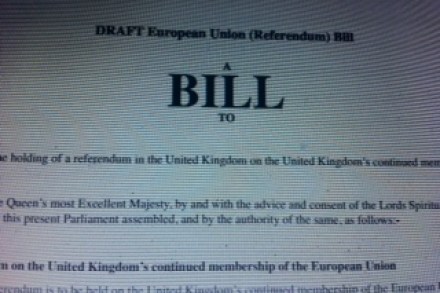
It simply isn’t correct to claim that the Conservative Party is at odds over a possible vote on legislation paving the way for a referendum on Britain’s membership of the European Union. The Prime Minister has adopted a relaxed attitude to both the upcoming amendment to the Queen’s Speech and the Draft EU Referendum Bill – encouraging a free vote for backbenchers and ministerial parliamentary aides. He is entirely right to be relaxed. The Conservative Party in Parliament is united in their belief that the British electorate deserves an In/Out referendum on the EU.

Will the draft EU referendum bill calm Tory tensions?

From our UK edition

The last few days have seen the Tory party losing its collective head. Number 10 hopes that the publication of a draft referendum bill will begin to restore order. If this bill had been published by the leadership a week ago, it would have looked like a bold move. Today, it appeared panicky. But it is now out there, and any Tory backbencher who comes high up in the private members bill ballot on Thursday has a chance of guiding it through. I suspect if a vote could be won on second reading, the parliamentary dynamics of this debate would change yet again. What’ll be intriguing is to see how much the Tories campaign on this. David Cameron has already sent out an email to party supporters.

Barack Obama appears happy to help a leader in a spot of bother

From our UK edition

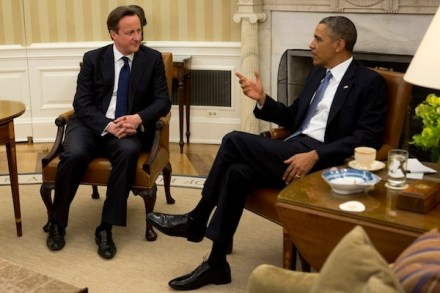
Barack Obama just threw a protective arm around David Cameron at their joint press conference, stressing that ‘you have to see if you can fix what's broken in an important relationship before you break it off '. The instant retweeting of this line by the Tory leadership’s communications channels  shows just how grateful they are for Obama’s verbal support for Cameron’s EU strategy. It is also worth noting, as they have gleefully tweeted, that Obama’s words also appear to be an endorsement of renegotiation as an approach. But does this actually matter? I suspect not. On this issue, Tory MPs are more worried about what their associations are saying and the concerns of their former voters than those of the President of the United States.

Obama warns Britain that leaving the EU would be an isolationist step

From our UK edition

President Obama took care this afternoon when asked about an EU referendum to give as nuanced an answer as possible. He emphasised repeatedly that this was a matter for the British people. He also affirmed Cameron's 'basic point that you probably want to see if you can fix what's broken in a very important relationship'. Tory eurosceptics might be a little less impressed by this endorsement of Cameron's strategy, but what they will be really unhappy with is the impression Obama gave that he believes an exit from Europe would be a sign that Britain is becoming more isolationist.

David Cameron needs to become a man with a plan

From our UK edition

'I'm a man with a plan,' David Cameron told the Conservative party conference in 2008. Now the Prime Minister is struggling to give the impression he does have a plan for dealing with the Europe problem in his party: and he needs one, because things are going to get a lot stickier. The furore around tomorrow's Queen's Speech amendment is in many ways rather amusing because however backbenchers, PPSs and ministers vote, it doesn't change a thing outside the Commons chamber. It simply says the Tory party wishes there had been an EU referendum bill in the Queen's Speech. For all the criticisms that he's running behind his party on this, it is fair to say that the Prime Minister has learned from his mistakes in past Europe votes.

Gove: I’d vote to leave the EU if referendum held today

From our UK edition

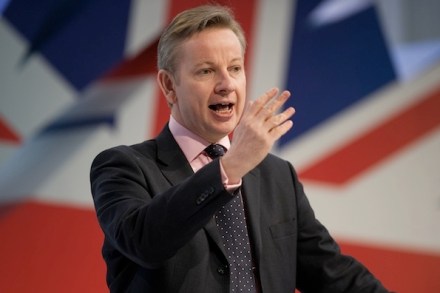
In a firecracker of an interview on the Andrew Marr Show, Michael Gove confirmed that if an EU referendum was held today he would vote out. But he followed this by saying to James Landale that he backed the Prime Minister’s plans to renegotiate and hoped that a satisfactory form of membership could be agreed. Significantly, Gove indicated that David Cameron would set out the Conservative ‘negotiating platform’ before the next election. This has been a key demand of Euro-sceptic Conservatives but one that Cameron has resisted. He is reluctant to provide anything akin to a renegotiation scorecard. Gove’s intervention changes the terms of debate.