David cameron

Will Tory party calm survive MP pay row?

From our UK edition

Coffee House readers will be unsurprised by the interest taken by the newspapers and the Today programme in MPs' pay: this blog predicted that it could be the next big row in the Conservative party at the start of June. It is politically sensible for the Prime Minister to say that he disagrees with a pay rise recommended by Ipsa if it raises overall costs, even if he has no formal veto over a raise. All he can do is send a formal response to the pay consultation. But he will need to work hard to keep his party behind him, and so will the other party leaders.
Miliband’s EU referendum dilemma

From our UK edition

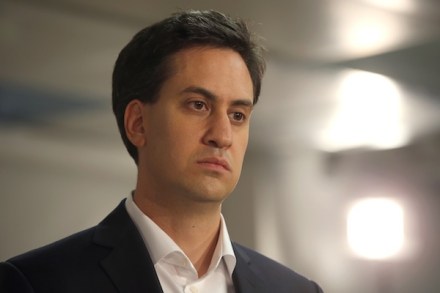
Friday’s vote on James Wharton’s EU referendum bill is going to push the whole Europe question right back up the political agenda. The Tories will try and use it to highlight their support for a vote and the opposition of the other major parliamentary parties. It will be very hard for Ed Miliband to go into the next election opposed to a referendum. It would look like he was opposed to giving the public a say. I also suspect that it will become almost politically impossible to oppose a referendum after the European Elections in 2014. Patrick Wintour reports today that Labour is toying with the idea of either amending the Wharton Bill to back an instant In / Out vote or committing to one within the six months of the next election.

The ‘conservative wing of the coalition’ toast Maggie and roast Dave

From our UK edition

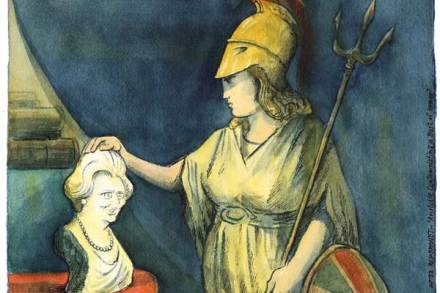
Margaret Thatcher’s death has reinvigorated her devout following in the Conservative Party. The current Prime Minister was wise to give the House of Lord’s terrace a wide berth last night. It was packed out for the summer party of Conservative Way Forward. This is the pressure group that was established to preserve ‘the lady’s legacy’. Young Dave was not the most popular person in the room. This became clear after the minute’s silence for the group’s deceased honorary president, when former defence minister Gerald Howarth took to the podium to greet ‘the conservative wing of the coalition’. He went on to slam the PM for ‘slashing defence spending while protecting international aid’.

Lock, load and prepare for ambush – David Cameron’s very British approach to Brussels summits

From our UK edition

Many Prime Ministers go native when they head to Brussels. But David Cameron's hostility to the whole racket is hardening with every trip. At his post-summit press conference today, he was remarkably frank about what had just happened. "I have defeated this latest attempt to cut the rebate," he said. “I am frustrated I have to go through that battle all over again. But in this town you have to be ready for an ambush at any time, and that means lock and load and have one up the spout, and be ready for it. And that is exactly what I did... It is, and I won’t lie, it is immensely frustrating sometimes, the way this organisation works . . . I think this is no way for an organisation to conduct itself.

Boris Johnson: an eminently likeable politician who poses little threat to David Cameron

From our UK edition

Even Boris can't help the toxic Tories. That's the upshot of Lord Ashcroft's latest polling, which asked 8,000 people (including several focus groups outside of London) about what they think of the mayor. Although Boris Johnson is the country’s most loved politician, he is not the voters’, or even Conservatives’, top choice as prime minister. David Cameron remains the favourite at 33 per cent to Boris’ 29: Half of those polled said that if Johnson was leader of the Conservative party, it would 'make no difference' as to whether they were more or less likely to vote Conservative. This is a blow to the Cameron dissenters, who have always believed that Boris would encourage more people to vote Tory.

Ancient and modern: Cicero on tax havens

From our UK edition

David Cameron wants the international community to do something about big business avoiding paying tax. If only it were as simple as that. Ancient philosophers, beginning with Aristotle (4th C BC), made a distinction between man-made law, which was peculiar to a state that made it and derived its validity simply from its adoption by that state, and natural law, which was universally valid. One could say that the former was right because it was law, the latter was law because it was right. Cicero (1st C BC) called this universal ‘world’ law ius naturale, identified it with divine reason and associated it with another concept, that of the ‘law of nations’, ius gentium. Fine for philosophers.

EU 2014 Budget: good and bad news for David Cameron

From our UK edition

In February, David Cameron managed to rally of group of likeminded countries to agree a historic cut to the EU’s long-term budget. However, due to the maddening complexities involved in the EU politics, a cut isn’t always a cut (just as an opt-out isn’t always an opt-out).  Which is why, while all eyes in Westminster were on the scrap between George Osborne and Ed Balls over the Comprehensive Spending Review, the European Commission’s presentation today of its draft budget for 2014 – the first under the new deal – is politically significant. For Cameron, there is both good and bad news. The good is that the 2014 budget does indeed represent a cut in spending – from €144.5bn in 2013 down to €135.9bn, a reduction of 5.8 per cent.

Tory Wreckers Will Shipwreck David Cameron on the Coast of Belgium

From our UK edition

Do you understand what David Cameron's Europe policy is supposed to achieve? If so, you're way ahead of me. I've said before that I think Europe will cripple Cameron unless Ed Miliband gets there first and nothing has happened since to change my mind. Isabel's scoop published today, revealing the results of the Tory party's internal consultation help make the folly of Cameron's policy even clearer. With some understatement Isabel concludes that the results "underline how big the expectations are on Cameron to bring about big change in Europe". Indeed they do. Tory members are telling the Prime Minister that the European parliament should be abolished. This may not be the worst idea in the world but it is one of the most fanciful.

Most opinion polls are junk: blame the ignorant general public for that.

From our UK edition

One of the very good things about Lord Ashcroft is that he is happy to commission large-scale opinion polls. Sometimes these are mischievous. Take today's example, for instance. It is always useful to be reminded that most members of the public can only recognise a handful of politicians. One would expect David Cameron and Boris Johnson to be at the top of the public recognition table. They are the only politicians in Britain recognised - and correctly identified - by more than 90% of those surveyed. 89% of respondents claim to recognise Ed Miliband but only 77% can actually identify him (some think he's actually his brother which, given David has been out of the public eye for the best part of three years does not say much for Ed).

If you think arming the rebels is the answer, then you don’t understand Syria

From our UK edition

The Spectator debate on Monday will no doubt pick up from Cameron’s statement to the House of Commons after the G8 meeting on Wednesday. It was wafer thin; so were his achievements. The spin generated by Number 10 in recent days has verged on the absurd. On Tuesday, according to The Times headline, Cameron was 'leading the West to ambush Putin on Syria'. Does anyone believe that this is the way to handle the Russians, let alone Putin? Nor, of course, did it happen. By Wednesday we were being told that 'The West tries to engineer a coup in Damascus'. No sign of that either. By the time the Prime Minister appeared in the House of Commons he had come down to earth.

Why can’t we be honest about Syria?

From our UK edition

Wouldn’t it be nice just once in a while to have a war in the -Middle East that wasn’t predicated on outright duplicitous nonsense? Just occasionally? There are, after all, any number of sincere reasons one could advance for intervention now in Syria. (If one thought that was a good idea, which as it happens one doesn’t.) One could say, for example, that Bashar Assad is a nasty murderous bastard, and that now he’s gained the upper hand he’s almost certain to indulge in some even nastier, more murderous murdering than he’s been enjoying hitherto. Pretty good, that. Pretty hard to argue against.

PMQs sketch: In which Labour join the coalition

From our UK edition

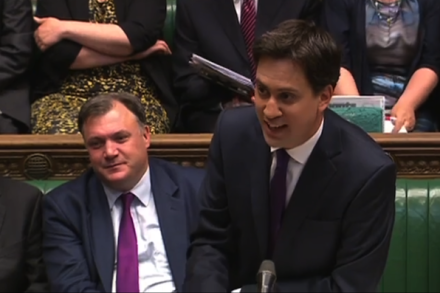
This was a card-shredder of a performance by Ed Miliband. He’s had some difficult outings lately but he barely even showed up at PMQs today. His team of phrase-makers and sloganeers have abandoned him too. Either they’re in the Priory, taking emergency anti-depressants, or they’ve quit the party altogether. And those in Labour’s heartlands watching their leader floundering today are probably composting their membership cards right now. Ed’s central attack looked like an attempt to give Cameron a relaxing massage. He accused the government of offering tax-breaks to the rich. Yet Labour’s top tax-rate was lower for most of their 13 years than it is today. Cameron took the opportunity to gloat over Labour’s woeful economic record.

Ed Miliband’s negative approach at PMQs looks set to become the norm

From our UK edition

Ed Miliband’s approach at PMQs today was rather odd. He led, aggressively, on whether the government would implement the Parliamentary Commission on Banking Standards’ recommendation of a new criminal offence for negligent bankers. He asked the question in a manner that expected the answer no, but Cameron—predictably—said he would. At which point, the wind rather went out of Miliband’s sails. Cameron’s answer was eminently predictable because the idea of a new criminal offence for negligent bankers was first floated by George Osborne’s former chief of staff Matt Hancock at the start of last year.

It looks like we must hope for the best in Syria

From our UK edition

Is there not something odd about a Prime Minister talking of getting involved in the Syrian civil war on the very day that another 4,500 British service personnel had their redundancy notices handed to them? It has always been my belief that you should never even tinker in a conflict unless you are prepared to go all the way should circumstances change (as they tend to). Britain no longer has the capability to get fully involved in Syria. So I suppose that we will all have to hope that Mr Cameron and Mr Hague possess an uncanny ability for identifying moderates, arm them nicely and just hope that everything goes well. We must certainly hope that Cameron and Hague's moderation-sensors are better tuned than Senator McCain's.

Syria crisis: debate turns to shoulda, woulda, coulda on tactics

From our UK edition

The debate about the Syrian crisis is now as much about shoulda, woulda, coulda, as it is about what can happen now. Douglas Alexander's response to the G8 communique this afternoon said: 'This statement begs the question whether a different diplomatic approach by the Prime Minister, not focusing so much effort on lifting the arms embargo, but instead engaging the Russians at an earlier stage, could have resulted in a different and more positive outcome.' So Labour would not have started from here. Beyond that Alexander isn't clear about when that golden opportunity for engaging the Russians was, and whether he really believes that there was a point at which Putin could have turned anyway.

Ken Clarke the pragmatist suspends his pugilism over EU

From our UK edition

It’s said that Ken Clarke would cross a motorway to pick a fight with a political opponent. His aggression is one reason why he thrived (eventually) under Mrs Thatcher: ambulance drivers, teaching unions and local government were all given a bunch of fives when Clarke reached Cabinet in the late ‘80s. Chris Patten (in the course of saying that he would go into the jungle with Clarke) told the late Hugo Young that ‘the key to Clarke is that he is anti-establishment – any establishment’. Yet pugilism is but one side of Clarke. He is not, by temperament or conviction, an ideologue. What matters is what works. And it worked for him.

The Worst Argument Yet for Intervening in Syria: If We Don’t, Other Countries Will Snigger At Britain

From our UK edition

We should, I suppose, be grateful to Benedict Brogan for his column today examining some of the reasons for why Britain should become more heavily involved in the Syrian civil war. Grateful, that is, because Mr Brogan's article reveals how pitifully inadequate these reasons are. Here's Mr Brogan's conclusion: The coalition against intervention in Syria appears to have all the arguments on its side. It is, by any measure, a terrible idea, and on current standings the Prime Minister would struggle to secure necessary support in the Commons. But Mr Cameron says he wants to save Britain from international relegation. In which case, membership of the league of front rank nations comes with a price that is sometimes quite awful.

Just Give War A Chance: Obama’s Realpolitik Approach to the Syrian Civil War.

From our UK edition

Boris Johnson makes a strong case in today's Telegraph that even if the west wanted to intervene in the Syrian civil war the point at which is was plausible to do so has long since passed. The benefits of intervention no longer outweigh the risks. Meanwhile, Paul Goodman reiterates that there's no obvious British national interest in intervening. It is difficult to disagree with either analysis. Across the Atlantic, meanwhile, Andrew Sullivan is appalled by the Obama administration's decision to offer a modest quantity of modest weaponry to the Syrian opposition. This isn’t just unwise; it’s close to insane, he suggests. Don't be fooled into thinking this will shorten the conflict or save lives, he argues.

Cameron wants to change the military balance in Syria, but how do you do that without arming the Islamists?

From our UK edition

David Cameron and Vladimir Putin have just concluded their pre G8 talks, the main topic of which was Syria. Cameron wants to use the next few days to try and persuade the Russians to stop backing Assad; the weapons they’ve been sending him have enabled him to gain the upper hand on the rebels militarily. Cameron instinctively wants to do something about the slaughter in the Levant for both strategic and moral reasons. As one figure intimately involved in British policy making on Syria told me earlier, ‘The one certainty is that, if nothing is done, not only will lives be lost, not only will Assad not negotiate, but we will also not stop radicalisation.

Will Parliament get a vote on Syria? PM says ‘basically yes’

From our UK edition

David Cameron is far more optimistic than Nick Clegg about arming the Syrian rebels: that much has been clear for a while. He explained why he's optimistic on Sky's Murnaghan programme this morning, arguing that if the West doesn't work with the 'good' rebels, then the 'bad' rebels will have more of an opportunity to flourish. He said: 'I want to help the Syrian opposition to succeed and my argument is this: yes there are elements of the Syrian opposition that are deeply unsavoury, that are very dangerous, very extremist and I want nothing to do with them. I'd like them driven out of Syria. They're linked to al Qaeda.