David cameron

David Cameron’s Mr Darcy moment

From our UK edition

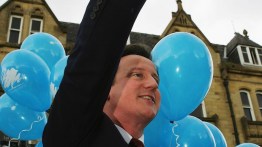
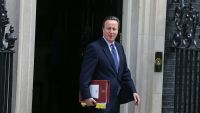
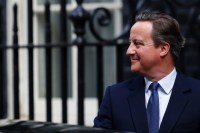
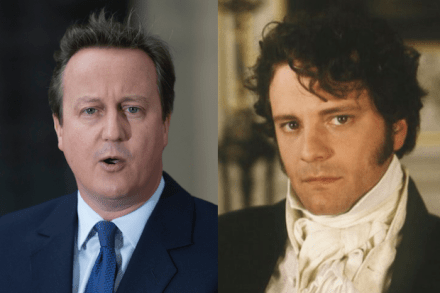
It's been a difficult month for David Cameron, who has gone from holding the most powerful office in the country to being a backbench MP. Happily Mr S understands that he is now able to look back fondly on his greatest achievements so far from his time in politics. One of which involves being a Conservative heart-throb. Speaking at the 30th anniversary celebration of Patrick McLoughlin’s time as an MP last week in Chatsworth, Cameron recalled 'the nicest thing' that any woman has ever said him.
In defence of Cameron’s posh boys

From our UK edition

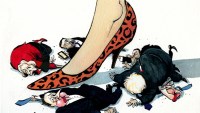
A few weeks ago, I wrote a Spectator cover story about David Cameron’s purge of the posh. My peg was a new wheeze from the Cameroons whereby prospective employees should be asked not just where they went to university, but about their childhood and parents’ assets etc. The idea was to make sure that too many posh people didn't make it to the top. Sinister, I argued, and not meritocratic. Judging people on their merits means not marking them down for being poor or posh. Inverted snobbery is still bigotry, and ought to be deplored as such. And yet the government was proposing rolling it out, first with the civil service and then.... ...

Theresa May takes control

From our UK edition

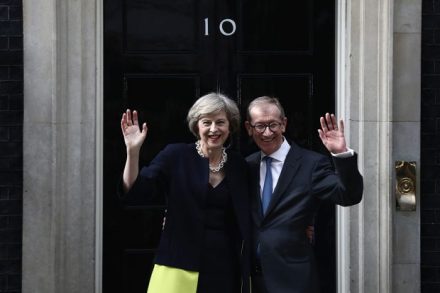
Theresa May has demonstrated this week that she isn’t interested in being continuity Cameron. Her reshuffle was, as I say in The Sun, a brutal change up from the previous Cabinet and she has shown that she is determined to take on the party of the rich tag in a way that David Cameron never could. In this reshuffle, May hasn’t bothered to disguise who her friends are and, just as importantly, who are her enemies. She was ‘wintery but courteous’ when she sacked people. Any Prime Minister who sacks more ministers than the size of her majority is taking a risk. Some of those who she sacked are already thinking about their next move. But others accept it had to be done. .

The Spectator’s Notes | 14 July 2016

From our UK edition

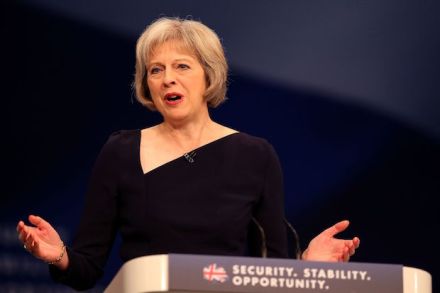
On Tuesday night in London, I spoke to Women2Win, a Conservative organisation dedicated to recruiting more women candidates. My title, suggested long ago, was ‘The Woman Who Won’. It referred to Margaret Thatcher. The day before my speech was delivered, another woman (and former chairman of Women2Win) won, so now there are two. Everyone seized the moment to compare and contrast them. There is a clear difference between Theresa May’s situation today and Mrs Thatcher’s in 1975. Mrs May, like Ted Heath in 1975, represents the side that just lost, Mrs Thatcher the side with a new idea about how to win. Mrs May is the establishment candidate: Mrs Thatcher was the insurgent.

Cameron’s Legacy

From our UK edition

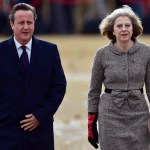
Midway through his final cabinet meeting, David Cameron realised — with some horror — that it had turned into a political wake. Theresa May had just lavished praise upon him, and his eyes had moistened. Then it was George Osborne’s turn: the Chancellor was a bit more humorous, but no less affectionate: ‘Being English, David, you’ll hate all this praise,’ he said. ‘You’re quite right,’ Cameron replied. ‘I am English, and I don’t much like it.’ Fearing that every member of his government was about to deliver an elegy, he brought the meeting to an abrupt end. Defining Cameron’s legacy is an important task for the Conservatives if they are to build on it.

‘She doesn’t do likes’

From our UK edition

As Tory MPs gathered at St Stephen’s entrance in Parliament to await their new leader on Monday afternoon, a choir in Westminster Hall began to sing. The hosannas spoke to the sense of relief among Tory MPs: they had been spared a long and divisive nine-week leadership contest. A period of political blood-letting brutal even by Tory standards was coming to an end. The United Kingdom would have a new Prime Minister. More than relief, there was hope for the bulk of MPs who had previously not been marked out for advancement. Theresa May’s accession shows that the narrow rules which were thought to govern modern British politics are not hard and fast. May is not one of the shiny people. She isn’t a member of a gilded political set.

Theresa May’s first speech as Prime Minister: full text

From our UK edition

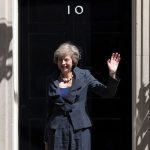
I have just been to Buckingham Palace, where Her Majesty the Queen has asked me to form a new government, and I accepted. In David Cameron, I follow in the footsteps of a great, modern Prime Minister. Under David’s leadership, the Government stabilised the economy, reduced the budget deficit, and helped more people into work than ever before. But David’s true legacy is not about the economy, but about social justice. From the introduction of same sex marriage, to taking people on low wages out of income tax altogether, David Cameron has led a one nation government, and it is in that spirit that I also plan to lead. Because not everybody knows this, but the full title of my party is the Conservative and Unionist Party. And that word unionist is very important to me.

David Cameron’s legacy is out of his control

From our UK edition

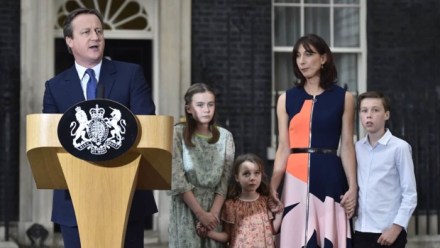
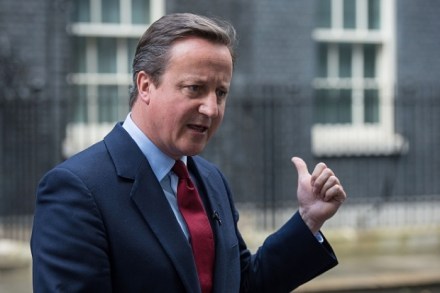
It was a rather cruel pathetic fallacy that the Prime Minister who had to resign early after creating a political storm by accidentally taking Britain out of the European Union gave his final speech from Downing Street under rumbling, rolling storm clouds. At one point, the wind whooshed back David Cameron’s hair and rain began to splatter on the hundreds of cameras watching his statement. Cameron clearly wanted to use the statement to tell the British people what he thought his legacy was, and to highlight the ways in which he thought he had performed particularly well.

David Cameron’s farewell speech: full text

From our UK edition

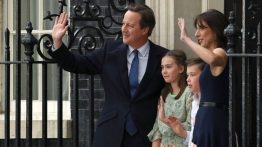
When I first stood here in Downing Street on that evening in May 2010, I said we would confront our problems as a country and lead people through difficult decisions, so that together we could reach better times. It has not been an easy journey, and of course we have not got every decision right, but I do believe that today our country is much stronger. Above all it was about turning around the economy. And with the deficit cut by two-thirds, two and a half million more people in work and one million more businesses, there can be no doubt that our economy is immeasurably stronger. Politicians like to talk about policies, but in the end it is about people’s lives. I think of the people doing jobs who were previously unemployed.

PMQs sketch: A final farewell to Dodgy Dave

From our UK edition

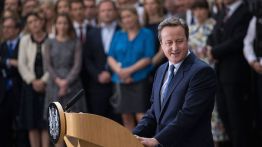
Nice send off for Cameron at PMQs. Both leaders acquitted themselves well. Cameron was wry, witty and self-deprecating. He claimed to have ‘addressed’ a total of 5500 questions during his premiership. ‘How many I’ve answered I’ll leave to others.’ Corbs got it spot on too and showed us a relaxed, funny, generous side. He asked Cameron to thank his mum for her tip that he should smarten up and wear a suit. ‘He’s taken the advice. He’s looking absolutely splendid,’ beamed Cameron. It was only a throwaway remark but it produced a Richter-scale eruption of mirth.

What to expect from Theresa May, and why she might surprise you

From our UK edition

As Tory MPs gathered at St Stephen’s entrance in Parliament to await their new leader on Monday afternoon, a choir in Westminster Hall began to sing. The hosannas spoke to the sense of relief among Tory MPs: they had been spared a long and divisive nine-week leadership contest. A period of political blood-letting brutal even by Tory standards was coming to an end. The United Kingdom would have a new Prime Minister. More than relief, there was hope for the bulk of MPs who had previously not been marked out for advancement. Theresa May’s accession shows that the narrow rules which were thought to govern modern British politics are not hard and fast. May is not one of the shiny people. She isn’t a member of a gilded political set.

David Cameron’s legacy: a stronger, fairer Britain

From our UK edition

Midway through his final cabinet meeting, David Cameron realised — with some horror — that it had turned into a political wake. Theresa May had just lavished praise upon him, and his eyes had moistened. Then it was George Osborne’s turn: the Chancellor was a bit more humorous, but no less affectionate: ‘Being English, David, you’ll hate all this praise,’ he said. ‘You’re quite right,’ Cameron replied. ‘I am English, and I don’t much like it.’ Fearing that every member of his government was about to deliver an elegy, he brought the meeting to an abrupt end. Defining Cameron’s legacy is an important task for the Conservatives if they are to build on it.

Watch: Highlights from David Cameron’s final PMQs, ‘I was the future once’

From our UK edition

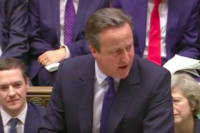
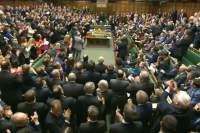
David Cameron's final PMQs brought out the best of the House of Commons. There was a good balance of wit, wisdom, jokes and also accountability as the PM and Corbyn traded off for the final time over the despatch box. The SNP did their best to spoil the party by bringing Cameron crashing back to earth, as Angus Robertson brutally said Cameron's legacy would only be bringing Britain to the brink of Brexit. But mostly, it was a fitting send-off for a Prime Minister who managed to compare Jeremy Corbyn to Monty Python's 'Black Knight', confirmed his love of Larry the cat and said he was pleased Corbyn had taken Mary Cameron's satorial advice on board. In an emotional sign off, Cameron had this to say: I will watch these exchanges from the back benches.

Labour and SNP join in standing ovation for David Cameron’s last PMQs

From our UK edition

David Cameron’s last PMQs was as entertaining as you’d expect. ‘The diary for the rest of my day is remarkably light,’ he said in answer to the traditional first question about his day. The Blair-worshiper in him will remember Tony Blair’s last PMQs, when he spoke about his P45 and started finished with: ‘that is that: the end’ – to enjoy a then-unprecedented  standing ovation. Cameron, then opposition leader, stood up to join in then gestured for Tory MPs to do the same. Most did. This time, Cameron had prepped his own last words: ‘Nothing is impossible. I was the future, once.’ And with that the Tory benches stood up in applause, as joined by spectator in the public gallery.

Is Theresa May Britain’s Angela Merkel? The German press thinks she might be

From our UK edition

As Britain's second female Prime Minister, Theresa May has inevitably been compared to Margaret Thatcher. But she's also been linked to a contemporaneous politician: Angela Merkel. Whilst some have dismissed the comparisons, it's not only British journalists drawing on the similarities between Theresa May and the ‘Iron Frau’ - German newspapers are now doing the same. The initial parallels are clear; two middle-aged women who have fought their ways to the top of the male-dominated world of politics. However, both Bild and Die Welt - two of Germany's biggest newspapers - believes there is much more which unites May and Merkel and has uncovered a surprising number of similarities to back up their argument.

The Conservative party has a remarkable instinct for survival

From our UK edition

So farewell, then, David Cameron. I suspect we'll miss him when's gone, but then he probably entered Downing Street 20 years too early, a product of a culture that fawns over youth and undervalues wisdom. At least Theresa May is a good decade older than him, although Kenneth Clarke, at 76, should have been considered for the role, entering as he is the prime of his political life. After coming up with the great slogan of 2016, 'Brits don't quit', Cameron then quit a few days later; his Tory arch-rival Boris Johnson then quit; Nigel Farage has quit, this time for good, followed by his deputy Paul Nuttall; Andrea Leadsom has quit; even Roy Hodgson and Chris Evans have quit.

What might David Cameron do next?

From our UK edition

David Cameron has chaired his last ever, emotional, Cabinet meeting this morning, with just a final Prime Minister’s Questions lying between him and freedom. He may want to follow the example of Tony Blair and have a memorable sign off such as ‘and that is that, the end’, though it’s not clear whether he’ll find quite so many MPs keen to give him a standing ovation as he walks out, the Prime Minister who accidentally took Britain out of the European Union. But what Cameron chooses to do next is interesting. He has already said that he wants to stand again as MP for Witney in 2020.

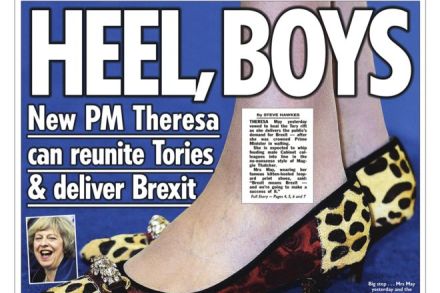
‘May Day’: How the papers reacted to our new PM-in-waiting

From our UK edition

David Cameron is now in in his last full day in Downing Street and already all eyes are on the woman who will replace him. Theresa May is on the front of every newspaper this morning as she prepares to take over at No.10. Here's how the papers have greeted Britain's new PM-in-waiting: The Daily Mail, which backed Theresa May in the Tory leadership race, relishes the prospect of her taking over from David Cameron. On its front page, the paper describes the handover as the 'Coronation of Theresa' - making a big show of her promise to heal rifts and make Brexit a success. Don't expect such uncompromising praise to last though: the hard work of negotiation starts now and the Mail won't be alone in holding May to her pledge to make Brexit work.