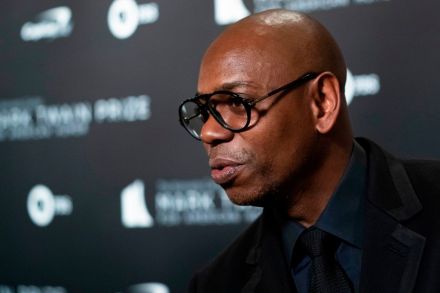
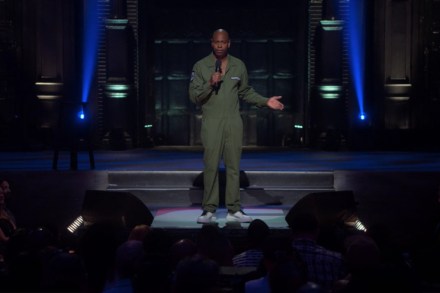
Dave chappelle

‘From the folks that brought you 9/11’

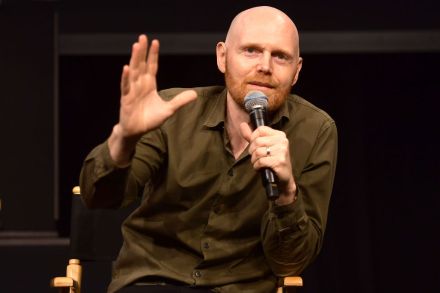
The American comedy world finds itself embroiled in a not-so-civil war of words over the Riyadh Comedy Festival, sponsored by the Saudi royal family. The Saudis have given enormous paychecks to big names like Kevin Hart, Dave Chappelle, Louis C.K., Aziz Ansari, and Bill Burr.  On one side, you have the people invited to perform at the festival, who mostly lean toward the anti-woke, sometimes-semi-canceled, will-do-anything-for-a-dollar camp. On the other, you have hyper-woke, mostly male Gen X comics whose routines these days involve delivering panicked podcast screeds about the end of democracy.
Riyadh

Why SNL 50 bombed in the ratings

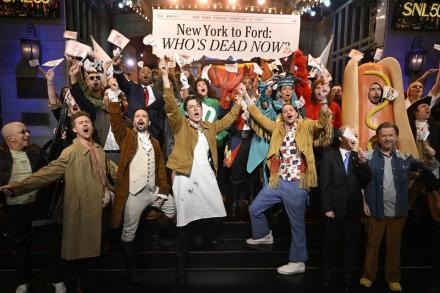
On my favorite Hollywood-focused podcast The Town, host Matt Belloni and his producer and guests offer predictions all the time on television ratings, relying on the Nielsen numbers for reference for what's anticipated versus what it turns out to be. Predictions for Saturday Night Live's fiftieth anniversary had it tracking above 20 million viewers — a reasonable expectation given the year-long promotional campaign and the fact that it would be on NBC, streaming on Peacock and on E! Network at the same time. The conversation on The Town was mostly a debate about whether it would hit 25 million, putting it well above expectations for the Oscars. Instead, it came in far lower, not even getting to 15 million — below the Grammy Awards, for sake of comparison.

snl 50

Speaking truth to antisemitism

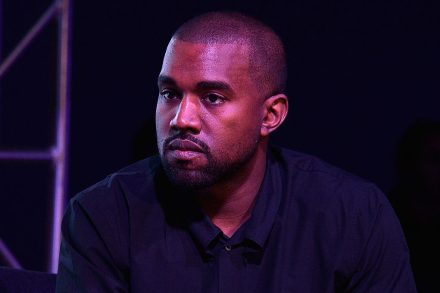
It’s impossible to sugarcoat what Ye, The Artist Formerly Known as Kanye West, said that got him in hot water late in 2022. You can’t announce you are going to “go death con 3 ON JEWISH PEOPLE” and then act surprised when your conduct sparks a firestorm. After getting kicked off Twitter (though Elon Musk would later reinstate him), Ye was subsequently suspended from Instagram for posting an image of a message he sent to Russell Simmons in which he said, “I gotta get the Jewish business people to make the contracts fair.” Given the magnitude of Ye’s superstardom and his history of erratic behavior, this would have been a globe-spanning media event in any case.

Jews

Elon Musk loudly booed on stage at Dave Chappelle gig

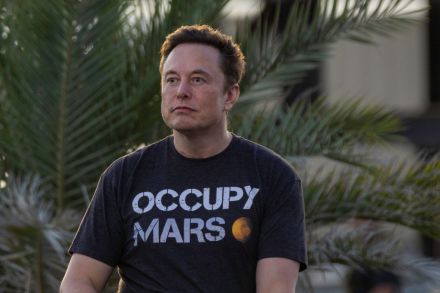
Is Elon Musk losing his appeal? Cockburn concedes that being the richest man in the world must be pretty sweet. But, what if you were phenomenally unpopular at the same time? That’s Elon Musk. The Dave Chappelle show last night in San Francisco proved that. The comedian invited Twitter boss Musk to join him on stage. “Ladies and gentlemen, make some noise for the richest man in the world,” Chappelle said near the end of his set at the Chase Center. And the crowd did — most of them opting to loudly boo the billionaire. The booing only intensified as Musk wandered around onstage, pacing and waving, looking visibly embarrassed. The video, which was initially posted to Twitter, has since mysteriously been deleted. Ahem.  https://twitter.

elon musk

How Netflix saved comedy

Comedy has been absorbed into Twitter’s zeitgeist tornado: a whirling panopticon inhabited by 23 percent of the most humorless and opinionated denizens of the internet (and the top 25 percent of them produce almost all the tweets, according to a study by Pew Research Center). Twitter’s superusers are journalists who have never left the eye of the storm; Twitter has become their “ultimate editor.” It has what the New York Times calls an “outsized role in shaping narratives around the world.” But what kind of comedy clicks for these dopamine-addicted trend chasers?

Netflix

Ricky Gervais, Netflix and clickbait controversy

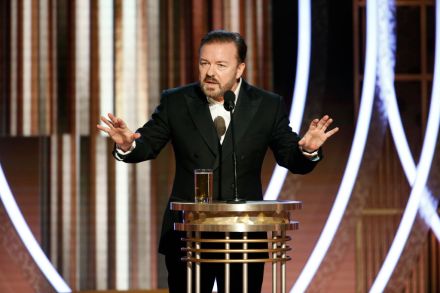
Ricky Gervais has caused a stir. This is not, perhaps, the least expected thing you could hear about the sixty-year-old British comedian, but his new Netflix show, SuperNature, has attracted an unusual amount of opprobrium for what people have perceived as anti-trans jokes. In the show, Gervais makes a distinction between “the old-fashioned women, the ones with wombs” and “the new women... with beards and cocks.” He calls upon the latter to “lose the cock,” and the audience laughs along with him hysterically.

ricky gervais

Netflix changes woke course after Chappelle attack

Cockburn has always said that when the going gets tough, the tough gets going…to a bar. But when the going gets tough for giant corporations — in this case, “tough” meaning $50 billion in lost subscriptions for Netflix — companies tend to get going in whatever direction will induce the mob to keep paying for their goods and services. Netflix has done just that by updating its “corporate culture memo” to let employees know they may have to work on material that triggers them. And letting them know if they don’t like it, they can leave. Over the course of the last several months, as he kept searching in a stupor for The Crown in the wee hours, Cockburn began to notice an increase in the amount of Netflix programming featuring in-your-face progressive messaging.

When ‘words are violence’ turns to actual violence

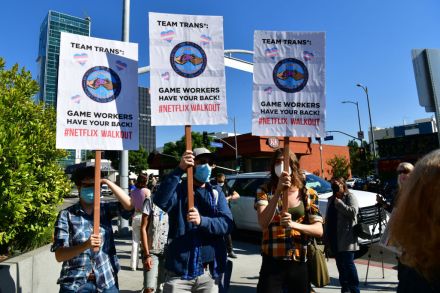
In the wake of comedian Dave Chappelle’s Netflix special The Closer, activists both online and off warned that Chappelle’s jokes about the trans community would lead to real-world harm, even murder. Instead the trans community has struck first by attacking Chappelle onstage. In his special, Chappelle tells the story of a trans person and friend who defended his stand-up material. Chappelle offered his friend career help by having her open for him on stage. Yet after being bullied by the trans mob for supporting Chappelle, his friend committed suicide. Earlier this week, Chappelle himself was physically attacked at the Hollywood Bowl in Los Angeles, during a comedy set that saw many famous faces, including Elon Musk and Chris Rock, in the audience.

Netflix’s Chappelle of hate

The difference between what I call accuracy and right-side norms within newsrooms is simple. Accuracy norms require journalists to get to the truth. Right-side norms require journalists to prove they’re on the “right” side of controversies. If this includes obscuring or spinning certain facts, so be it. For reasons ranging from politicization to the gutting of smaller and traditional outlets, most American journalism now adheres to right-side norms. Consider the Dave Chappelle controversy. If you don’t yet have an opinion about the jokes Chappelle makes about transgender people in his Netflix special, The Closer, watch it to get them in full context. There’s been enough bloviating about the jokes themselves.

Netflix

The rush to cancel old Halloween costumes

I'm holding a Polaroid taken at a Halloween party at one of my early State Department assignments in the 1980s. One of my diplomatic colleagues is in blackface. He’s done up to look like the minstrel player who was on the "Darkie" toothpaste boxes then for sale in every drugstore in Asia. You can see a photo of the packaging: the white teeth against the minstrel player's face were supposed to show how good the toothpaste was. My other colleague is dressed as the Frito Bandito, a caricature of Mexicans used to sell corn chips. The costume theme for the night was advertising icons. In the 1980s, these were acceptable ways to advertise and acceptable costumes for Halloween. Looking at the photo now, I realize it is a weapon.

The PR campaign at the heart of the war on Netflix

What remains unsaid about The Closer? In the past two weeks, countless thinkpieces have tackled the controversy around Dave Chappelle’s new special by trying to determine where its content falls on the line between funny and offensive, provocative and hateful, punching up versus punching down. Some analysis has been thoughtful; some has been shallow and reactionary. But virtually all of it centers on the question of whether Netflix should have removed or censored the special for being “harmful” to vulnerable people. That notion is one that Netflix executive Ted Sarandos summarily rejected in a statement sent to employees, writing that “while some employees disagree, we have a strong belief that content on screen doesn’t directly translate to real-world harm.

chappelle netflix

Dave Chappelle’s last special is no masterpiece

Dave Chappelle is a member of a dying breed — a remnant of an age that has been drifting into history. That’s right. Dave Chappelle is a comedian who does not have a podcast. I do not begrudge comedians their podcasts. (After all, I am a writer with a Substack.) As a comedian who has not blessed us with his every thought and memory, though, Chappelle has maintained his mystique. His specials are events, and his last special, The Closer, is doubly so. Critics and reporters have been focusing on its allegedly offensive jokes at the expense of trans people. I would like to shove these subjects to one side for a moment and ask the most vital questions. Is it funny? Yes. Is it very funny? No. Chappelle is a tremendous performer.

dave chappelle

Rotten Tomatoes and the cultural gap between critics and audiences

Comedian Dave Chappelle’s Netflix special, The Closer, has drawn praise from audiences and social media, while eliciting scorn from reviewers and professional critics over its jokes about the LGBTQ and trans communities. Members of the press have even gone so far as to label the stand-up special 'a betrayal' on Chappelle’s part. But how far does this divide extend between what appears to be mass audience approval and universal critic disapproval? Rotten Tomatoes, the film critic aggregation site that averages reviews of visual media in film, television and streaming, has become the latest tool to measure this. Rotten Tomatoes has a user review system, which it measures against the media critics.

dave

Louis C.K. pulls it off

‘You are so lucky that I don’t know your thing. Do you understand how lucky you are?’ comic Louis C.K. tells his comeback show audience. ‘Everybody knows my fucking thing, now. Obama knows my thing. Do you understand how that feels? To know that Obama was like “Good Lord!”’ It’s a good point well made. Everyone who knows anything about the world of comedy does indeed know Louis C.K.’s thing. In 2017, when #MeToo exploded, C.K. was ranked by Rolling Stone number four among the 50 best stand-up comics of all time. His sexual proclivity was publicly exposed, he lost numerous television deals and movie contracts and he suddenly found himself cast into outer darkness. All in all, it cost him an estimated $35 million in lost income.

louis c.k.

The mythic rise of the celebrity dissident

Celebrity is a remarkably enduring and powerful form of prestige. Who can imagine a world without it? Celebrities begin as people, become brands, then expand into empires. We have celebrity restaurateurs who become celebrity chefs and celebrity chefs who become restaurateurs. We have celebrity spin doctors and celebrity CIA analysts. We have celebrity comedians and celebrity revolutionaries; they’re often interviewed by celebrity journalists. We have celebrity architects, celebrity tycoons and celebrity statesmen. We have celebrity children of celebrities; celebrity ballerinas; celebrity vegans; celebrity plumbers; celebrity murderers. For decades celebrity told society stories about itself, some ennobling, some disgraceful.

celebrity

Dave Chappelle plumbs new depths of tastelessness in his new Netflix special

'You Can Definitely Skip Dave Chappelle's New Netflix Special,' says VICE. And if that's not recommendation enough, here's one from me: Sticks & Stones is the most, offensive, foul-mouthed, racist, misogynistic, homophobic, transphobic comedy set you're likely to see on TV this year. Chappelle, I must confess, was new to me. Yes, I know, I know, all you American readers: he's a comedy institution, ranked no. 9 in Rolling Stone's '50 Best Stand Up Comics of All Time' with numerous awards and a career going right back to his 1993 movie debut in Mel Brooks's Robin Hood: Men In Tights. But when you're English and you get to a certain age, you find yourself taking a certain perverse pride in not knowing anything whatsoever about icons who are really huge in the US.

dave chappelle