Data

Datageddon: Britain’s stats have become dangerously unreliable

From our UK edition

There were cheers in the Treasury last month as the nation’s statisticians discovered a spare £3 billion down the back of the sofa. The Office for National Statistics (ONS) admitted that VAT receipts had been under-reported by £1 billion last year and £2 billion this year. The newly found cash will go some way to filling the Chancellor’s £30 billion fiscal black hole, but not everyone was celebrating. Just 150 miles west along the M4, at the home of the ONS in Newport, Wales, the mood was grim. The embattled agency was splashed across the papers for the wrong reasons. This error was just the latest in a long line of data disasters. That’s because the quality of Britain’s official data, like much of British life, has deteriorated to the point of being dangerously unreliable.


Why can’t we agree on data?

From our UK edition

12 min listen

John O’Neill and Sam McPhail, the Spectator’s research and data team, join economics editor Michael Simmons to re-introduce listeners to the Spectator’s data hub. They take us through the process between the data hub and how their work feeds into the weekly magazine. From crime to migration, which statistics are the most controversial? Why can’t we agree on data? Plus – whose data is presented better, the Americans or the French? For more from the Spectator’s data hub – which may, or may not look like the thumbnail photo – go to: data.spectator.co.uk Produced by Patrick Gibbons and Megan McElroy.

How many criminal convictions are overturned? 

From our UK edition

Power play The former energy minister Chris Skidmore resigned in protest at a bill to issue more licences for oil and gas extraction in the North Sea. What are other countries doing? – US oil production hit a record 13.3m barrels a day last month, up from 10.8m five years ago. – Qatar is investing $150 billion toincrease oil production by 50% to 5m barrels per day by 2027. – Brazil plans to increase oil production from 3.1m barrels per day in 2022 to5.4m barrels per day by 2029. – Canada increased oil production by 375,000 barrels per day between 2021 and last year. Judgment call The Criminal Cases Review Commission (CCRC) has called the Post Office scandal the ‘most widespread miscarriage of justice in UK history’.

What was banned this week?

From our UK edition

For the love of dog XL Bully dogs were banned in England from this week, although there is an exemption for animals which are neutered, registered, insured and kept on leads and muzzled in public. Some other things that have been banned this week: – Parking on the pavement in Edinburgh. – Importing disposable vapes in Australia. – Selling new homes with gas boilers in the Australian state of Victoria. – Displaying toys in Californian shops under male and female sections. A gender neutral section must now be included. – English councils trying to charge for disposing of waste from DIY projects. – Withdrawals in dollars from banks in Iraq. – Imports of Russian diamonds to G7 countries.

Do 20mph speed limits really save lives?

From our UK edition

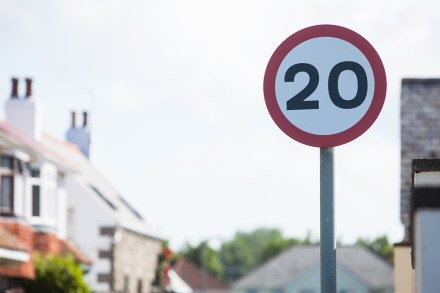
Within limits Do 20mph speed limits save lives?– A 2018 report by Atkins/AECOM/UCL found that 51% of motorists conformed to the new limit (47% in residential areas and 65% in city centres). – When a 20mph zone replaced a 30mph one the median speed fell by 0.7mph in residential areas and 0.9mph in city centres. It was found that there was insufficient evidence to judge whether the 20mph limit reduced casualties: while accident rates had tended to fall within the zones, the same was true of comparator zones which had remained at 30mph. – Only one area of 20mph zones (in Brighton) had seen a significant fall in casualties compared with comparable 30mph zones, with overall casualties falling by 19% and pedestrian casualties by 29%.

How many Britons smoke?

From our UK edition

Puffed up Just 12.9% of Britons smoke cigarettes, figures out this week showed – the lowest on record. How does the UK compare? – The highest smoking rate is in Nauru (48.5%), the lowest is in Ghana (3.5%). – 24.5% of people in France are daily smokers compared with 11.5% in the US. – In Germany, the overall smoking rate is 34%, an increase from 26.5% in March 2020. For young Germans aged between 14 and 17, this has almost doubled between 2021 and last year, from 8.7% to 15.9%. – Maybe it’s the price of a pack. The average cost of 20 cigarettes in the UK hit £14.47 after the Budget in March. In France it’s £8.70, in Germany it’s even lower, at £5.68. Winning touch The Rugby World Cup is starting. Who do the bookies think will win?

America’s undersea lifelines

It is out of sight and usually out of mind, but recent events are forcing Americans to focus on the security of a vast network of undersea cables that the nation depends upon. In early February 2022, cables connecting Taiwan to its Matsu Islands off the coast of China were cut in what appears to be an act of sabotage that Taipei later ascribed to Chinese vessels. It took nearly two months for the internet to be up and running again, highlighting the importance of a largely ignored element of a country’s critical infrastructure.  According to TeleGeography, a telecommunications research and consulting firm, there are around 552 undersea cables, connecting almost every inhabited landmass. Most are fiberoptic, utilizing light to transmit massive quantities of data.

cables

How the CDC misled America about vaccination rates

According to the calculations of the Centers for Disease Control and Prevention (CDC), 92.2 percent of American adults have received at least one dose of the Covid-19 vaccine. But a new report published this month found that as many as one in four Americans have never received a shot. The finding casts doubt on the role that vaccines played in getting the pandemic under control, and further incriminates the CDC’s pandemic response, undermining its trustworthiness. The report was prepared by the Covid States Project, a joint initiative of Northeastern University, Harvard University, Rutgers University, and Northwestern University. They surveyed almost 25,000 people across all fifty states and DC with state-level representative quotas for sex, age, and race.

rochelle walensky mask

The New York Times would like you to have more sex, please

America isn’t having enough sex. Phew. Cockburn thought it was just him — but now the New York Times is issuing a call-to-arms: Americans need to bump uglies more! In the national paper of record, Magdalene J. Taylor wrote a guest essay in favor of sex, arguing that it is a "critical part of our social wellbeing, not an indulgence or an afterthought" and explaining “across almost every demographic group, American adults old and young, single and coupled, rich and poor are having less sex than they have had at any point in at least the past three decades.” She goes on to say that, “In the 1990s, about half of Americans were having sex weekly or more — that figure is now under 40 percent. For many who are having sex, the frequency has dropped precipitously.

Gaitskill sex pill sex

Pouria Hadjibagheri and the UK’s abandoned open data revolution

From our UK edition

With a new year comes the New Year’s Honours and I’m struck to see an MBE given to Pouria Hadjibagheri. He’s the technical lead of a civil service team whose drive and creativity led to the Coronavirus data hub. It was a breakthrough in the democratisation of public data. He and his team saw to it that information and metrics were not the secret preserve of a Whitehall cabal, cherry-picked to make a certain point, but available to everyone. This transformed the debate about the virus and the need for lockdown, allowing for new perspectives and new projects. The Spectator’s data hub was one of them. If you were pleased we avoided lockdown in December last year, you have Hadjibagheri’s team to thank – they made the debate possible.

Is Truss in trouble?

From our UK edition

The history of political popularity shows things go in one direction: down. John Major entered office with a net satisfaction of +15 and left it having lost 42 points. Blair moved into Downing Street a whopping 60 points in the positive. When he left he’d fallen to -27. And so the story goes – even the Maybot started quite popular with a +35. Where you start can make all the difference. If things are only going to go one way, you want as handsome a margin as possible. That’s why today’s political monitor poll from Ipsos Mori could spell trouble for Truss. She’s beginning her term in office on minus two. She joins Boris Johnson as the only prime ministers since 1982 to start on a negative rating.

No, 44 percent of pregnant women didn’t miscarry after the Pfizer shot

Feminist author "Dr." Naomi Wolf is making the rounds with a bombastic new claim that nearly half of pregnant women in a Pfizer vaccine trial miscarried. It's not true. Several media outlets have touted Wolf and her analysis, with her blog being shared all over social media. The doctor (of English literature) claims she has 2,500 volunteers and hundreds of lawyers combing recently released Pfizer documents. This makes it even more astounding that they so wildly misinterpreted the data available to them. Wolf's egregious claims center on the document linked here — a report of adverse effects in subjects who took the Pfizer vaccines prior to March 2021.

Naomi Wolf (Getty Images)

The myth of the typical Brexit voter

From our UK edition

In Jake’s Thing, Kingsley Amis gave it a name: he called it ‘the inverted pyramid of piss’: ‘One of [Geoffrey Mabbott’s] specialities was the inverted pyramid of piss, a great parcel of attitudes, rules and catchwords resting on one tiny (if you looked long and hard enough) point. Thus it was established beyond any real doubt that his settled antipathy to all things Indian, from books and films about the Raj, to Mrs Gandhi… was rooted in Alcestis’s second husband’s mild fondness for curries.’ It’s high time this phrase was revived, because piss pyramids are everywhere. We assumed more data would help humanity settle its differences: in reality it often exacerbates them.

Covid statistics and the era of hyper-scrutiny

From our UK edition

Amanda Pritchard, the new NHS England chief executive, has had quite a week. She wrote an article for the Health Service Journal about the pressures on the NHS and followed up with a Sky News interview where she had this to say: Where did she get that 14 times figure from? By using statistics in a strange way, highlighted by Kate Andrews fairly shortly afterwards. By ‘have had’ she was technically correct insofar as this was the peak ratio. But comparing a wave to a non-wave, and presenting a peak value as somehow representing the current situation is fundamentally misleading. The actual picture for Covid hospitalisations is here. I won’t republish the graphs as this blog is about a broader point.

Delay, data and the need for transparency

From our UK edition

Boris Johnson delayed 21 June, he said, because the data did not merit a full reopening. The specific data government is tracking to make these decisions remains unknown, so we are left to guess. But it’s hard to imagine the decision was disconnected from the rising Covid infection rate across the UK, due to the Indian variant’s increased transmissibility. The UK has gone from having some of the lowest Covid rates in Europe to now having the highest in just a matter of weeks. But is the story that simple? Data from areas hit hardest and fastest by the Indian variant suggest some reasons to be optimistic. In Bolton, the seven-day average for Covid cases leveled off (and started falling) weeks before the government settled on a 21 June delay.

My medical embarrassments are my business and no one else’s

From our UK edition

While we were looking forward to Freedom Day, the National Health Service was busy planning something extra special to coincide with it almost exactly. From 23 June, our medical records can be given by our GPs to other agencies and third parties for the purpose of that most ambiguous of all state activities, ‘planning’. While you thought they were busy planning Freedom Day, they were, in fact, planning Freedom of Your Information Day, in which everything you have ever told your doctor would become only marginally more secure than the information about your shopping habits that your loyalty card is collecting for the supermarket giants.

The coming stitch-up

To look upon a freshly painted wall is to behold a smooth surface; to look at it through a magnifier is to see a rough and irregular landscape — but turn the magnification up sufficiently and see it become regular again, a geometric matrix of atoms held in molecular bonds. Keep magnifying and you enter the unimaginably messy realm of the subatomic, a weird place of eldritch geometries and smeared-out, probabilistic motion. The world is smooth and rough, orderly and messy, all at once, depending on how closely you look.

tangled web

The Economist should be more like Walt Whitman

America is complicated. It’s hard to predict what it’ll do next, despite all the time and money spent observing it. Not without reason is Walt Whitman — with his long beard, loose morals and love of ambiguity — its national poet. In an election year, plumbing the country’s mood is especially crucial. But that doesn’t make it any easier. Once bitten in 2016, the liberal portion of America’s establishment is twice shy, and terrified about slipping into the same complacency over Biden’s chances as it did over Clinton’s. While not an American institution, the Economist fits neatly into the same footloose, cosmopolitan club as the more neoliberal-minded of Democrats.

economist