Dante Alighieri

Florence with Dante

The trouble with Florence, says Ricardo, a local journalist, is that we’re just living off our past glories. “Aren’t we all?” I reply. Florence could perhaps be forgiven when it has accumulated such vast cultural and physical capital, built up over centuries. Signs remind you that it’s 700 years since the death of its most famous son, Dante, father of the Italian language. I must admit I’ve always been too intimidated to read his epic, The Divine Comedy, which T.S. Eliot said was “as great as poetry ever gets.” To prepare for my assault on the summit, I have been reading about Dante himself. I hadn’t known he had no more than a passing acquaintance with his great love, Beatrice.
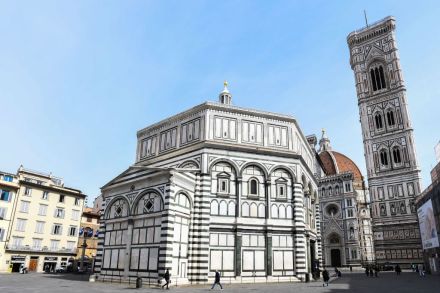
florence

A Scottish Paradise

As every Italian schoolchild knows, The Divine Comedy opens in a supernatural dark wood just before sunrise on Good Friday, 1300. Dante Alighieri, a figure in his own work, has lost his way in middle age and is alone and frightened in the darkness. The ghost of the Roman poet Virgil is about to show him Hell: ‘Midway in the journey of our life I found myself in a dark wood, for the right path was lost.’ Begun in the early 14th century, Dante’s poem is, for many, the greatest single work of western literature. With its dramatic chiaroscuro of hellish fuming mists and paradisal stellar regions, the poem is ‘awful’ in the archaic sense of the word (still valid in the Italian terribile), meaning to inspire awe.

dante paradise