D-day

Max Hastings Live: D-Day, Trial by Battle

From our UK edition

32 min listen

Sam Leith's guest for this week's Book Club podcast is Max Hastings. Max joined Sam earlier this year for a live recording to discuss his new book Sword: D-Day, trial by battle, which tells the story of the individual stories who risked their lives as part of Operation Overlord. The discussion was arranged to mark the 80th anniversary of D-Day. On the podcast Max tells Sam about why he was drawn to chronicle war, why it is important to remember all victims and not just the ‘traditional heroes’, and whether there was an alternative to D-Day at the time. Plus, how serious a moment does he think we face today, compared with 1945?

How the myth of Paris liberating itself was born

From our UK edition

The liberation of Paris in August 1944, two months after D-Day, was one of the most highly publicised victories of the second world war, although it was of no military importance. General Eisenhower, the supreme Allied commander, originally planned to bypass the city altogether but was persuaded by General de Gaulle to allow the tanks of the French 2nd armoured division (the famous Deuxième Division Blindée – 2eDB) to lead a diversion into the city, backed by American infantry. De Gaulle claimed that he was concerned to avoid the danger of a bloody insurrection led by the communist Resistance. His real concern was less about bloodshed than his future political control of France.

Letters from Spectator readers, July 2024

The cunning of the Democrats’ lawfare On the right flank the aristocrats of the conservative intelligentsia dominated by the likes of Max Boot, David Frum, David French, Bill Kristol and George Will would rather compromise than soil their false pride; the haughty intellectual snobs are thus perfect targets for Alinsky’s “Make the enemy live up to its own book of rules” — aristocratic intellectual elites that would rather die than support a judicial and policy juggernaut with bad table manners. As Victor Davis Hanson observed, Marquess of Queensberry Republicans would rather lose nobly than win ugly. — Adler Pfingsten Will Cherelle Parker become the next ‘America’s mayor’ in Philadelphia?

letters

Joe Biden’s D-Day performance is evidence of his mental unfitness

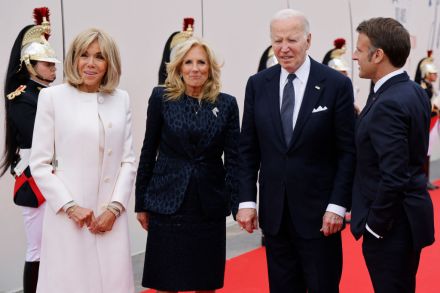
President Joe Biden spoke in Normandy on the eightieth anniversary of D-Day Thursday — and only slightly made a fool of himself. As he entered the event, it looked as if he entirely missed where he was supposed to sit, but played it off with a nice salute to a veteran. In the middle of a rousing speech, he talked about how many Russians died in Ukraine... for mysterious reasons. He did a bit of a squat in an invisible chair as the speaker Lloyd J. Austin III was introduced. The debacle ended with Dr. Jill Biden leading Joe away as the president of France, Emmanuel Macron, nimbly ran to greet D-Day veterans. And we can’t forget Biden’s subtle double fist pump after the jets flew over the ceremony.

d-day
west hunter biden

If the West is to stay the same, a lot will have to change

My favorite line in Giuseppe di Lampedusa’s novel The Leopard comes midway through the first chapter. The times are unsettled. The Risorgimento is sweeping Sicily. Prince Tancredi, the idealistic young nephew of the book’s protagonist Prince Fabrizo, is bantering about the political situation with his uncle. He suddenly waxes serious: “If we want things to stay as they are, everything will have to change” (Se vogliamo che tutto rimanga come è, bisogna che tutto cambi). Most readers will understand that the whiff of paradox points not to a contradiction but to a profound truth. There are plenty of historical situations in which fundamental assumptions about society are disrupted and can be restored only by something like revolution.

macron d-day

On D-Day, Macron has learned nothing and forgotten everything

No one wants to hear a lecture on ‘liberty and democracy’ from a finance guy turned technocrat. Especially not at a service commemorating the dead of the D-Day landings. In the last 30 years, finance guys and technocrats have enriched themselves at the voters’ expense, abused the notion of economic liberty, and wrecked social contracts across the West. Thank you for your service, as the voters never say. The 75th anniversary of D-Day should be a time for remembering the true meaning of freedom and democracy — and for honoring the thousands of young men who died in foreign fields so that we might inherit those privileges. Instead, we got Emmanuel Macron’s side-eyed hectoring of Donald Trump at Thursday’s memorial service.

This Memorial Day, reflect on your freedom

Last summer, I spent some time in and about Port-en-Bessin-Huppain in Normandy. The little fishing village and its surrounding towns on the English Channel (“La Manche,” “the sleeve” en français) is delightfully picturesque in that rugged, elemental way that proceeds from the collision of tempestuous sea and commanding headland. Expansive fields of corn and other crops ripened fast, orderly in their serried, midsummer ranks. Orange-red poppies punctuated the grassy, flower-strewn verge and complicated the landscape, heavy with age and history. Poppies are for remembrance — and there’s a lot to remember in these parts.

d-day memorial day

On D-Day at eighty

Traveling to Normandy fourteen years ago, we encountered a rare guide. He was a middle-aged Frenchman native to the neighborhood. I do not recall how long he had been at it, but he had learned something important about the guide business that was evident the day he shepherded us, and another American woman and her teenaged daughter, about the places made famous before any of us were born. He knew when to show, when to tell and when to relate something from his own experience that would enlighten ours. He took things in a certain order, which was not the order I would have guessed. First we stopped at the German cemetery at La Cambe, where 21,200 of the some-80,000 German soldiers who died in Normandy are interred. I remember few other visitors.

Normandy

Eighty years on, the planning of Operation Neptune remains awesome

From our UK edition

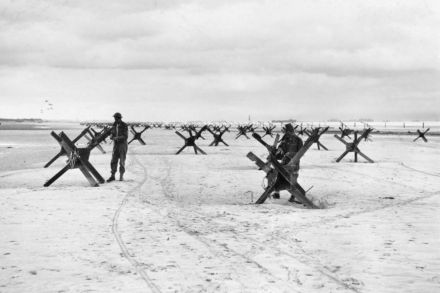
In December last year, the last surviving D-Day veteran of my old regiment, the 13th/18th Royal Hussars, died peacefully in his care home. On 6 June 1944, 20-year-old Trooper Lawrence Burn had been the gunner in a specially adapted Sherman tank which, along with others of the regiment, had driven down the ramps of their landing craft 5,000 yards off Sword Beach and swum for almost an hour through the high swell to land a few minutes ahead of the assaulting infantry in order to suppress the defenders’ fire. Years later, Burn was still in awe of the scale and execution of the Normandy landings: ‘I don’t know who planned it – a committee, I suppose,’ he told a journalist on his 90th birthday, ‘but it was wonderfully, wonderfully done.

The difficulties of writing historical fiction

I was dozing, a little hungover, on the morning flight from Prague to London, when I saw them for the first time. Ten men on a beach, dragging a landing craft up the sands. Where? Can’t tell yet. When? The fourteenth century. Who? Don’t know, but they look like trouble. I woke up. Through my AirPods I heard the Blur singer Damon Albarn growling the final song from their 1997 album Blur. “In these towns, the English army grinds their teeth into glass / You know you’ll get a kicking tonight...” I opened my laptop and started making notes. The men came surprisingly well-formed. They were soldiers of fortune in the Hundred Years’ War. They already had names. Faces. Talents. Foibles. Yearnings. Secrets. I wrote down as much as they could tell me before the plane landed.

historical fiction

Eighty years later, World War Two is fading from historical memory

With worries about inflation, the war in Ukraine, and tension over Taiwan, it's easy for Americans to forget that we are now deep into the four-year period marking the eightieth anniversary of World War Two. Last December marked eighty years since the day of infamy at Pearl Harbor, while this June passed the date of the critical victory at Midway. In a little less than two years, it will be eight decades since the greatest invasion in history, on D-Day. Soon after will follow commemorations of Hiroshima and Nagasaki and both VE and VJ Days. Each year, living memory of that global struggle continues to fade, with the passage of both time and the Greatest Generation.

world war two

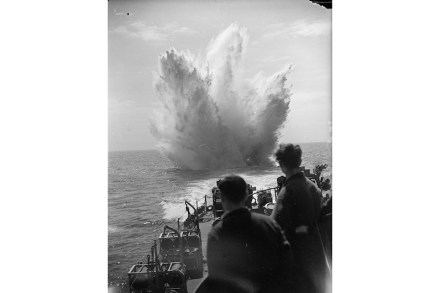
A very British coup: SBS – Silent Warriors reviewed

From our UK edition

The vast majority of the British public, and even military historians, have never heard of them. COPPists — a combination of naval navigators and submariners with SBS (Special Boat Service) swimmers — played a key role in the planning and execution of Operation Overlord, the D-Day invasion of Europe. Admiral Ramsay, the architect of the naval element, said: ‘On their operations depended to a very great extent the final success of Operation Overlord.’ Who were these people, and what exactly did they do? Saul David provides the answers in a detailed analysis of the development of seaborne special forces formed in Britain’s darkest hour to take the offensive against the seemingly invincible German war machine.