Czech republic

The Regime is bad eastern European pastiche

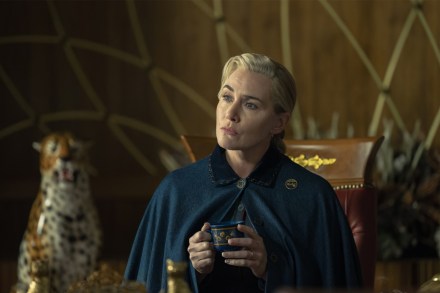
When you tire of trying to find the humor in The Regime, HBO’s new satire set in an unnamed “middle European” country, you can keep yourself occupied by trying to identify all of the historical references. The series was shot in Austria and the interiors have a dilapidated imperial feel, so perhaps we’re meant to think of one of the Visegrád countries — Czechia, Slovakia, Poland and Hungary — that inherited the heartlands of the Habsburg monarchy. The government, however, is led by a capricious and occasionally brutal authoritarian. Alexander Lukashenko of Belarus, often called Europe’s last dictator, immediately comes to mind. Chancellor Elena Vernham, played by Kate Winslet, is said to have studied medicine in Paris.

regime

How many refugees can Eastern Europe take?

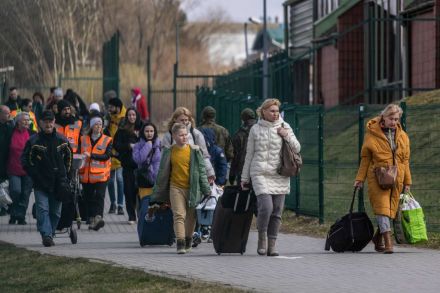
Hundreds of thousands of Ukrainian refugees have already streamed into Slovakia, Hungary and the Czech Republic. Head north to Poland, and the numbers go from the unprecedented to the jaw-dropping: two and a half million refugees have entered the country with a total population of 38 million since the war in Ukraine began. In the Czech Republic, where I live, official estimates put the current number of refugees at over 300,000, a figure expected to rise to between 500,000 and 600,000 in the coming months. In a country of less than eleven million, that’s five percent of the population. In Poland, a proportion closer to ten percent is possible. At the moment, most of the Czech Republic’s refugees are concentrated in Prague.

Prague by design

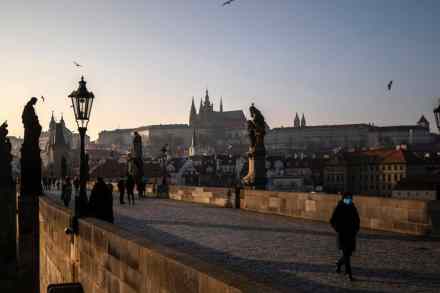
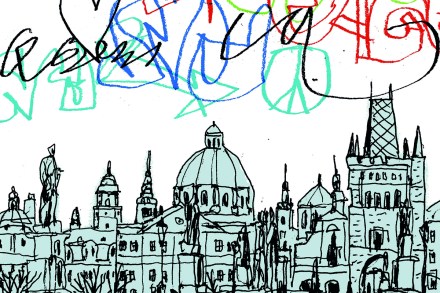
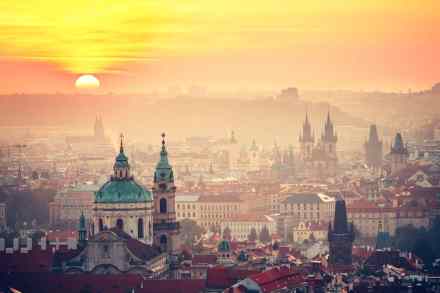
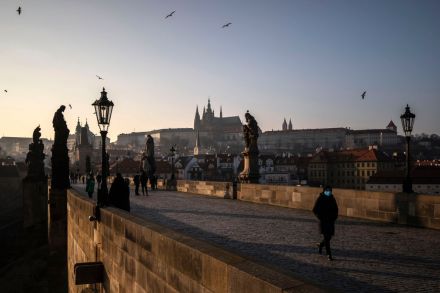
Prague has a graffiti problem. This becomes apparent as the train pulls towards the nineteenth-century Masarykovo Nadrazi station, through the old industrial east of the city. Huge derelict warehouses, some from the communist era, others much older, are covered top to bottom in scrawls and daubs amidst collapsed roofs and glassless windows. It’s unlikely to stay this way for long, though; Prague’s answer to gentrification is swiftly transforming previously rundown areas of the city, making it worth a venture off the beaten track. For all the genteel architecture at its heart, the graffiti is a sign of a city unafraid to show discontent. Trapped behind the Iron Curtain for so long, progress was, for decades, conducted at the whim of communist governments.

prague