Cryptocurrency

El Salvador’s crackpot currency switch

If you’re reading this in El Salvador, you’re probably taking a break from street protests against President Nayib Bukele’s adoption of bitcoin as legal tender, enacted last week. This small, heavily indebted Central American republic abandoned its own currency, the colón, 20 years ago in favor of using the US dollar — and has enjoyed relative financial stability ever since. The populist right-wing president’s insistence on shifting to the unregulated, ultra-volatile virtual currency favored by gamblers and money-launderers will supposedly bring savings of $400 million a year in commissions on the remittances from expatriate workers on which his economy depends.

el salvador

Crypto casino

When I was in high school, I worked at an ice rink in the winter and a swimming pool in the summer. My friends toiled at Target and gofered at golf courses, making minimum wage and spending it on gas and low-rise jeans from Abercrombie: it was 2008, after all. These days, gas may still cost $4 per gallon, but now the jeans are high-waisted and the teens are more ambitious. My youngest brother Ted is 18. He spent the summer before his first year in college working in a cheese shop, sweeping floors and straining ricotta: a classic summer job, tedious and stress-free. Yet some of his friends are taking a different route. Ted’s buddy Tom just cashed out $3,000 in bitcoin winnings to buy a weeklong Airbnb in Ocean City, Maryland for all his friends.

crypto

The heist: nobody is safe from Russia’s digital pirates

From our UK edition

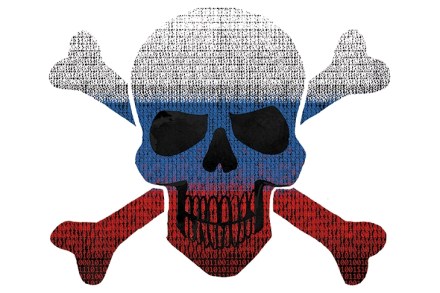
In April, the Harris network of London schools was held to ransom by hackers. ‘The first thing I did was panic,’ said Sir Dan Moynihan, the chief executive. It wasn’t simply that their computers didn’t work; many of the 50 schools couldn’t function. Some couldn’t open because their internet-controlled doors were jammed shut. A demand for £3 million arrived. Moynihan pointed out this was a ‘completely insane’ amount for an educational charity to pay — but his pleas through an intermediary were ignored. The hackers insisted that unless Harris paid up, the schools would continue to be locked out of their networks, and sensitive data would be leaked online too.

Into the Darknet Diaries

Do you ever get the sense that no one in legacy media knows any weirdos? And, given how deeply strange our world has gotten lately, how that might be a problem? From the New York Times’s inability to find any Trump voters to talk to until they were literally storming the Capitol to the widespread media panic about incels, to the total ignorance of QAnon until the conspiracy theory movement had gobbled up thousands of people’s brains, it just feels like if our reporters were in touch with the malcontents and drifters and losers, they would understand the world a bit better. Nowhere does the gap between coverage and reality seem bigger than in the field of technology and the internet.

darknet

Suddenly used cars are hot property

From our UK edition

Companies should willingly pay tax wherever they generate profits — this column has long argued — because it’s fair they should contribute to the cost of the public services on which all business ultimately relies, and because the reputation of capitalism as a whole is tainted when corporate tax bills are reduced to absurdly low levels by the use of offshore domiciles and spurious royalty payments that most governments lack the willpower to challenge. So I welcome at least one half of the G7 finance ministers’ agreement last weekend on a new global corporate tax regime. The half I’m ready to praise is the proposal that all countries should have the right to tax some of the locally generated profits of the world’s largest multinationals.

Comedy gold: the economics of internet irony

From our UK edition

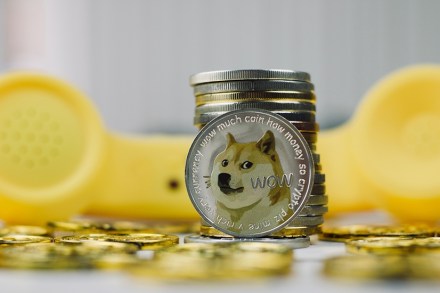
If you’re looking for proof we live in a computer simulation, consider the farcical story of dogecoin. Named after an internet meme about a talking dog, the joke currency was created as a parody of bitcoin. Dogecoin has no practical uses, yet online investors have ploughed billions into it. ‘We thought it would just make the viral rounds on social media,’ said founder Jackson Palmer. Last week the valuation passed $68 billion — more than Kraft Heinz and Ford. Palmer is now worth several hundred million dollars. Not bad for a Twitter gag. Although it’s seven years old, dogecoin wasn’t a big deal until a few months ago, when supportive tweets from Elon Musk, the world’s richest man, fuelled an explosion in popularity.

The problem with investing in cryptocurrency

From our UK edition

'This time next year Rodney, we will be millionaires.' If Only Fools and Horses was still being made I imagine the scriptwriters would have got Del Boy disastrously deep into cryptocurrencies. Dodgy, Get Rich Quick schemes, skirting around the law always were his forte. And that is how I view cryptocurrencies.  The bulls will cry, Louise you are wrong! The price of Bitcoin has doubled since the start of the year and up over 500 per cent in a year. The value of rival cryptocurrency Etherium has risen more than 1,500 per cent in the last twelve months. But cashing in depends on buying and selling at the right time and there's no telling when that will be. The price of Bitcoin and other cryptocurrencies is highly volatile. And that is why it is risky.

The true cost of make-believe money

From our UK edition

I like Bill Maher. He’s a rare practising left-wing comic who’s actually funny. But last week, his routine on cryptocurrency hit eerie harmonics. ‘I fully understand that our financial system isn’t perfect, but at least it’s real,’ he began. By contrast, crypto is ‘just Easter bunny cartoon cash. I’ve read articles about it. I’ve had it explained to me. I still don’t get it, and neither do you’. Bitcoin is ‘made up out of thin air’ and is comparable with ‘Monopoly money’. As for conventional legal tender: ‘We knew money had to originate from and be generated by something real, somewhere.

It’s almost touching that the NFT world sees itself as radical

From our UK edition

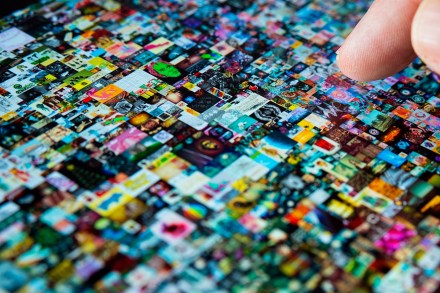
Some things are explained so many times that they become unexplainable: we can only relate to them as something complicated that needs to be explained. The global financial crisis was like this. Crypto-currencies were like this too. The newest thing that exists to be explained is the world of non-fungible tokens, or NFTs. NFTs are collectible digital objects. They are created with a technology called the blockchain, which unalterably and uniquely records their provenance. This means that if I mint an NFT of an image — a cartoon of Donald Trump, say, sitting naked astride the Capitol — I can prove definitive ownership of the image, no matter how many copies exist. In other words, NFTs can be authenticated, which means they can be sold.

Show us the money

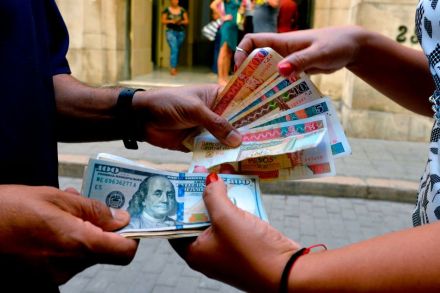
No one likes to waste a good crisis, and the digital-payments industry is certainly trying its hardest to spin the narrative that COVID-19 is about to deliver the coup de grâce to cash. Various lobbying efforts culminated in a recent CNBC report claiming we have all switched to payment apps to avoid catching the disease from dollar bills. A ‘cashless customer’, Heima Sritharan, supposedly speaks for the entire millennial generation: ‘Not that I was using cash that much before, but I find that during Covid especially, I just don’t want to use cash as much because of the germs aspect.’ The report quotes a figure from the Pew Research Center suggesting that 34 percent of consumers under the age of 50 went the previous week without making a single purchase with cash.

money cash cashless

Are cryptocurrency transactions the future?

From our UK edition

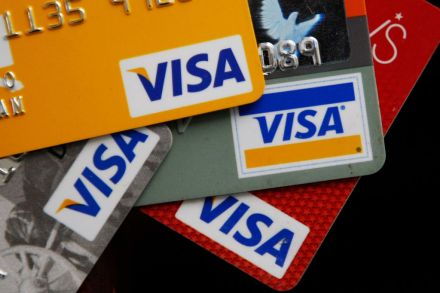
To most of us, cryptocurrencies remain an esoteric world, beloved by nerds and incomprehensible to the rest of us. Does Visa’s announcement this week that it will now process payments directly in a cryptocurrency called USDCoin change that, and hasten us to a day when we will all have cryptocurrency accounts which we use to do our day-to-day shopping? You don’t need to understand the mathematics of cryptocurrencies and blockchain to work out that the prospect of shopping with crypto is rather concerning for two reasons. Firstly, cryptocurrencies are an unregulated Wild West.

Should we fear Facebook’s cryptocurrency?

The cryptocurrency winter has turned to spring: having slumped from $20,000 in late 2017 to $3,200 a year later, bitcoin has lately risen like a rocket to $8,800. Though it doesn’t change my negative opinion, I admit that if I had bought a fistful of these wacky gaming chips last October when I gave the crypto concept a kicking at our Spectator conference on the subject, I’d be up almost 40 percent. Evidently, hints from the US Federal Reserve and the European Central Bank that further bouts of ultra-low interest rates and quantitative easing may be in the offing have spurred what the FT calls ‘a rally in riskier assets’. Crypto is the new gold for those who distrust central banks and seek stores of wealth that governments can’t reach.

cryptocurrency

The nightmare after crypto

What’s worse to lose – your keys or your wallet? That’s the question more than 100,000 angry investors who used the QuadrigaCX exchange to purchase cryptocurrency now contemplate. The apparent sudden death in December of Canadian Gerald Cotten, the exchange’s 30-year-old founder, has without warning left them in a $250 million-shaped hole. Mr Cotten, who had Crohn’s disease, is said to have died while on honeymoon in India after his bowel became perforated during what is reported to have looked at first like a bad case of Delhi belly. With him, we are led to believe, went the only crypto key to the place in which QuadrigaCX investor money is stored – repositories known as offline ‘wallets’.

gerald cotten quadrigaCX