Cruelty

A grandmother’s twisted mind: The Passage of Roses, by Tie Ning, reviewed

From our UK edition

At first glance, Tie Ning’s The Passage of Roses appears to be yet another Chinese novel set during the Cultural Revolution in which bourgeois families and pre-1949 intellectuals are purged and banished. But the unnerving characters of Si Yiwen and her granddaughter Mei, whom Si cares for, influences and later harms, soon promise something different. Born into wealth in Old China, Si survives under the new regime as a marginal housewife, insignificant enough to avoid persecution. Yet it is precisely this insignificance that piques her desire for recognition. From an early age, she was denied love with a young revolutionary and was then ignored by her husband and in-laws. Now she finds herself drawn to the political fervour like a moth to a flame.
The agonies of an abandoned wife: Mrs Dickens, by Emily Howes, reviewed

From our UK edition

For every smog-spitting chimney in Victorian London there was a woman tasked with keeping the hearth clean, both physically and morally. This ‘angel in the house’, as Coventry Patmore dubbed her, lived entirely for her family, but above all for her husband. With her organs tightly compressed beneath a whalebone corset, she ministered to his every need and forgave him all his worldly sins. She was, in short, not a real woman but an ideal. In Mrs Dickens, Emily Howes exercises the novelist’s prerogative to flesh out an ideal, to show how the real woman beneath her halo of thorns suffered.

Mapping the Emerald Isle: Land, by Maggie O’Farrell, reviewed

From our UK edition

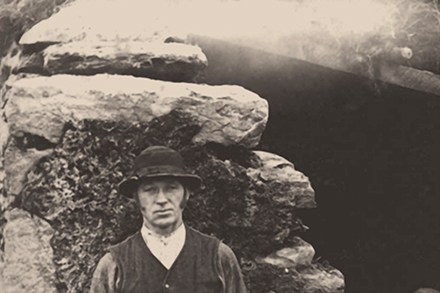
Maggie O’Farrell’s two previous historical novels, Hamnet and The Marriage Portrait, made her a household name. Land marks a return to her Irish roots: ‘Every family has its myths and ours was that my great-great-grandfather had worked on the early maps of Ireland.’ The year is 1865 and 31-year-old Tomás, a mapmaker, accompanied by his ten-year-old son Liam, is in the employ of the English redcoats and tasked with surveying and mapping Ireland from top to bottom, rocky outcrop to drumlin.

Seeking forgiveness for gluttony, sloth and other deadly sins

From our UK edition

Professor Guy Leschziner writes that he was raised in a secular household that was ‘entirely irreligious’ yet with ‘a strong sense of morality, of right and wrong’. As an eminent neurologist and a rational atheist, it’s striking that his study of the extremes of human behaviour should reach for such Biblical terms. Is there an element of ghoulishness here? Seven Deadly Sins has a structure of which David Fincher, director of the gruesome film Seven, might approve.  To zero in on the sins is undoubtedly a darkly entertaining approach, if not for the squeamish. Having been a consultant at Guy’s hospital for more than 25 years, Leschziner has seen ‘the full spectrum of human morality’: inexplicable altruism, generosity, kindness, love.

Mounting suspicion: The Fate of Mary Rose, by Caroline Blackwood, reviewed

From our UK edition

‘She was dead even before I became aware of her existence.’ The menacing opening line of this gripping novel is not about the title’s Mary Rose but about another six-year-old girl, Margaret Sutton, who has been abducted, raped and murdered in the Kent woods. The story is told from the perspective of Mary Rose’s father, Rowan Anderson, who spends most of his time in London, writing a biography of the scientist Hertha Ayrton and feuding with his possessive girlfriend, Gloria. He periodically visits his daughter and his wife, Cressida, in their country cottage.

The cruelty really is the point

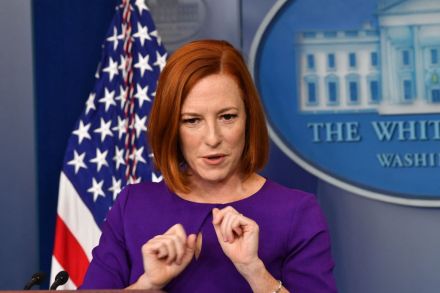
Earlier this week, Politico ran a piece called “Inflation’s biting. Roe’s fraying. Dems are still trying to connect with voters.” The crux of the article is that while congressional Democrats have plans to counter rising inflation, they are having a hard time selling their command of the situation to voters. It’s no wonder. The star of the piece is Representative Katie Porter. Porter, a member of her party’s progressive wing, is portrayed as more aware of the impacts of inflation than her colleagues. The story describes an instance in which Porter had to put a package of bacon back on the shelf because, to her surprise, it was up to $9.99 per pound.

A broken nation: Chronicles from the Land of the Happiest People on Earth, by Wole Soyinka, reviewed

From our UK edition

One of the best episodes in Wole Soyinka’s third novel (his first since 1973) takes place not in Nigeria but in Salzburg. An engineer-turned-entrepreneur has died in hospital there after a bomb attack back home. His grasping clan descends from Lagos to parade their last respects — and stake their claims. The drive to the cemetery triggers a ‘torrent of eulogies to Austrian horticulture’. In a ‘concerted sibling gush’, plutocratic relatives swoon over the contrast between these clean, green vistas and the choking inferno of Lagos — an urban nightmare aggravated by their own mercenary scams. Soyinka’s characters often hide behind such ‘straw masks’ of pretentiousness, hypocrisy and fakery.

A macabre meditation on psoriasis

From our UK edition

Obsessed with purity and pain, the boundaries of blame and innocence, Skin is a fascinating meditation on psoriasis, the long-lasting chronic skin condition. Sergio del Molino, a Spanish writer and journalist, slowly guides us into his world of intense physical discomfort (most treatments of psoriasis only deal with its symptoms, rather than healing its immunological causes), but combines this private hell with provocative reflections on fellow sufferers. It’s a surprise to learn that Stalin shared something with Cyndi Lauper, John Updike, Pablo Escobar and Vladimir Nabokov.

Good luck enjoying eating salmon ever again

From our UK edition

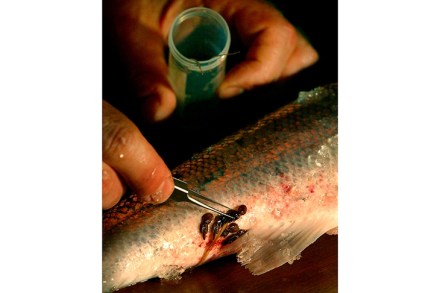
‘I saw the best minds of my generation destroyed by cat videos,’ begins Henry Mance’s How to Love Animals, winningly. That is the paradox he sets out to unpick in this densely factual and intermittently horrifying book: how a world in thrall to cuteness, endlessly compelled to click on videos of kittens and owls having a special friendship, can remain indifferent to the suffering of almost all other animals, whether farmed, in captivity or in the wild. That’s a tough brief. I’m not sure it’s a book I would choose off the shelf, because the subject matter is deeply unpalatable.

My mother’s secret life was a Dickensian horror story

From our UK edition

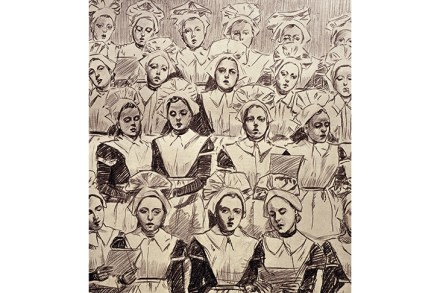
What happens to a child raised without love? This is the agonising question that the American lawyer Justine Cowan braces herself to address in a memoir that seeks to explain her relationship with Eileen, her monster of a mother. As her parent’s gaunt figure lay in hospital, vanishing within the fog of a disease that had robbed her of ‘a few words here, a memory there’, Justine forced herself to say the words that she thought her mother wanted to hear. However, long devoid of empathy for someone whose behaviour had baffled, undermined and almost destroyed her, Justine knew a false expression of love was ‘balm for a dying old woman’.

Shock and awe — what should we make of our Viking ancestors?

From our UK edition

In June 793, a raiding force arrived by boat at the island monastery of Lindisfarne, on the Northumbrian coast. The attack that followed was shockingly brutal. The English cleric Alcuin wrote: ‘Never before has such terror appeared in Britain… Behold, the church of St Cuthbert spattered with the blood of the priests of God, despoiled of all its ornaments.’ It was the first recorded Viking raid on Britain. Many others were to follow, and the image of the axe-wielding raiding party remains the stereotypical view of the Viking horde. The question that this dark, brilliantly written and absorbing book asks is: who were these people and where did all that violence come from?

How kind is humankind?

From our UK edition

Augustine had it that ‘no one is free from sin, not even an infant’. Machiavelli deemed that humans are ‘ungrateful, fickle hypocrites’, and even the founding father John Adams, the paragon of American democracy, was sure that all men would be tyrants if they could. Thucydides, Luther, Calvin, Burke, Bentham, Nietzsche, Freud — all were wrong about our natures. So was William Golding, creator of Lord of the Flies, himself a child-beater* and a drunk. For a treatise on human kindness, Rutger Bregman’s new book Humankind has surprisingly many villains. Here’s ‘a radical idea… a mind-bending drug... denied by religions and ideologies’, we’re told. Humans are not evil. Deep down, at least most of us are pretty decent.

The Raven – bird of ill omen

With bird books the more personal the better. Joe Shute was once a crime correspondent and is today a Telegraph senior staff feature writer. It is his investigative journalism, a series of meetings with people who deal with ravens first-hand, which provides novelty. Historical, mythological and other diversions add ballast.In the prologue he writes: ‘I was born in 1984, making me the flag-bearer of a strange generation.’ Raised comfortably and lovingly in London, his future seemed serene. Then ‘came the financial crash of 2007; and with it the collapse of all the misplaced entitlement of my youth… Rather than better, it was going to get far worse’.At this juncture, he found solace in birds in the Yorkshire countryside.