Cricket

Can the long game survive?

From our UK edition

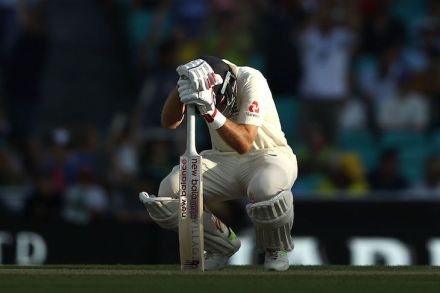
So will the sight of poor Joe Root at Sydney, pale as a ghost and barely able to stand, heroically facing 90mph bowling in a totally doomed cause, all the while racked with a tummy bug, mark the beginning of a rethink for traditional long-form cricket? Make no mistake, like millions I love the Ashes, but this was a dull series with a lot of very repetitive cricket, whether you were there — as I was for a few Tests — or one of an ever-dwindling band of late-night viewers in front of the BT coverage. And just because I can remember huddling round a small black-and- white telly as a kid to watch Kenny Barrington inch his way to 85 not out at the end of a full day’s play doesn’t mean such memories matter a fig to anyone in the future.

In test cricket, there’s no place like home

From our UK edition

It has been a pretty ghastly winter and the best that may be said of it is that by far the worst of it is now in the past. The sooner England can get the hell out of Australia the better. It is true that few people, I think, viewed this tour with any kind of inflated optimism; nevertheless the manner of England’s defeats - after an initial promising two days in Brisbane - has been grindingly dispiriting. When even Glenn McGrath is reduced to saying, in effect, ‘Cheer up cobbers, you were more competitive than last time you ventured here’ you know the game is up.  True, Steve Smith enjoyed a halcyon summer and, in Australia, David Warner is a formidable batsman. True, too, that Australia’s attack hunted well together.

Why Stokes should be picked for Perth

From our UK edition

And so to a cloudy, chilly Adelaide, more like London in October than Australia in the early days of high summer, for one of the most thrilling Ashes Tests of modern times. Now the key moments in the fate of these Ashes are becoming very clear. Forget Joe Root putting Australia in, or Steve Smith’s unimaginative reluctance to give his bowlers more work and enforce the follow-on on the third day under the lights. Forget that rousing final session for England as the pink ball seamed and darted and hooped as if it were on crystal meth, and the Aussies were reduced to 53 for four. Forget even that extraordinary fightback led by Root that, for a tantalising few hours, allowed us to dream of a miraculous victory.

Let young Foakes sweep out the Ashes

From our UK edition

So the Ashes has finally got over the line, and not a minute too soon. At the time of writing we don’t know what happened in the first day but it’s a fair bet that it hasn’t turned out well for England — they haven’t won in Brisbane since 1986. Steve Harmison’s first-ball delivery to second slip heralded the 2006-07 whitewash and Mitchell Johnson’s merciless spells on the second day set up another 5-0 Ashes wipeout in 2013-14, as well as ending the careers of a few England players. Which is what Nathan Lyon wants this time too, but you can’t get that worked up about Aussie trash talk, especially from an off-spinner generally agreed to be a thoroughly nice guy. The English policy of keeping shtum seems more sensible.

Football needs more Pep talks

From our UK edition

So West Ham took the least surprising option and sent for David Moyes. Same old same old. I have a feeling that if Theresa May fell on her, or anyone else’s, sword, we’d send for David Moyes and that familiar figure would be shuffling up Downing Street with his wrinkly-eyed grin, proclaiming outside No. 10: ‘We’re in a relegation battle here.’ He wouldn’t be wrong either. Looking at West Ham’s lacklustre performances, with players sometimes putting on a bit of a reluctant jog in vague pursuit of opponents sprinting past, it’s easy to imagine them in the dressing room with a fag and some of owner David Sullivan’s old top-shelf magazines.

Death hovers over the scrum

From our UK edition

Rugby’s autumn internationals are almost upon us and dark thoughts hover over lovers of the sport. One day soon a professional rugby player will die playing the game. The players are fitter, bigger, stronger, faster and too powerful and it is no longer a 15-man game. It is a 23-man game: more than half the team gets replaced so the intensity and impact never subsides. Rule changes around the breakdown to encourage attack have had the opposite effect, meaning that defences line up across the pitch, no space is created and every game is 80 minutes of unsustainable collisions. Seasons go on longer, players get no rest and they keep smashing into each other.

Playing it safe | 5 October 2017

From our UK edition

BBC1’s latest Sunday-night drama The Last Post, about a British military base in Aden in 1965, feels like a programme on a mission: that mission being to avoid getting shouted at by either the Guardian or the Daily Mail. To this (possibly doomed) end, it goes about its business very gingerly, with an almost pathological devotion to balance, and a safety-first reliance on the trusty methods of the well-made play, where each scene makes a single discrete point and the characters are as carefully differentiated as the members of a boy band. The first episode opened with the base’s new captain landing at Aden airport with his wife. ‘It must be a hundred degrees,’ she said scene-settingly as they descended from the plane.

The Spectator Podcast: Brexit Wars

From our UK edition

On this week's Spectator Podcast we look at the final Brexit war amongst the Conservatives. We also discuss the maverick politician taking Ukraine by storm, and get on the blower with Blowers. First up, with a 4,000 word intervention by Boris Johnson doing the rounds this week, ahead of Theresa May's pivotal Brexit speech in Florence, the Conservatives look more divided than ever on the European question. Will it be EEA minus or CETA plus? Or are we headed for an even more mongrel departure? These are the questions James Forsyth asks in this week's cover piece, and he joins the podcast along with Henry Newman, director of Open Europe. As James writes: "The time for choosing is fast approaching for Theresa May.

Close of play | 21 September 2017

From our UK edition

This retiring is a hectic business. When I said in June that it was going to be my last year with Test Match Special, it never occurred to me that I would have to do much more than float quietly into the sunset. Yet I suddenly became a much greater object of interest than I had managed to be in my previous 46 years behind the microphone. In no time at all, I found myself sitting on Andrew Marr’s sofa, before shifting to Piers Morgan’s boudoir for Good Morning Britain. And on it went. I flitted from studio to studio and on the journeys in between I was bombarded with calls from local radio stations as far apart as Radio Cornwall and Radio Norfolk. On one such journey, a remarkable coincidence occurred.

Swagger and squalor

From our UK edition

This is a monumental but inevitably selective survey of all that occurred in Britain, for better or worse, in the late 19th and early 20th centuries. It is certainly a useful summary, with much illuminating detail to carry the story forward: describing the opulence that was so much in evidence, Simon Heffer mentions the diamond which adorned Lord Randolph Churchill’s cigarette holder. He kicks off with Queen Victoria’s Jubilee of 1877, and Disraeli’s proclamation of her as Empress of India. At home, swagger and squalor went side by side, and living conditions, both rural and urban, were often appalling. The population increased from 35 million in 1881 to over 40 million by 1906.

Which way will Lord’s leap?

From our UK edition

In the rarefied circles of the sporting establishment a decision will soon be made affecting not just the future of 17 of the most hallowed acres in the land, but the very game of cricket itself. The MCC has been conducting a debate about Lord’s, primarily its redevelopment, with a nod to future expansion of the limited-overs game. This has boiled down to a binary choice for members: the MCC committee’s overwhelming recommendation, unsurprisingly, is for its own ‘Masterplan’, against the outsider, known as the Morley-Rifkind plan. It’s a rum sort of club, the MCC. Primarily devoted, it seems, to keeping people out, it has people on the inside who don’t want much to change.

Cricket’s traditionalists should embrace the day-night Test

From our UK edition

Stereotypes die hard. Consider the summer game, for instance. It is axiomatic to complain that cricket is a desperately conservative game, run by fuddy-duddies, inimitably hostile to reform or change or modernity.  If anything the pad is on the other leg; there are times when cricket’s rush to attract new audiences leaves one suspecting that the game’s presiding officers think the sport’s current audience is part of the problem. If you like things the way they are and have been you’re an obstacle to progress. Sometimes, at least in darker moments, you think cricket’s administrators are so caught up in and obsessed with the need to attract new fans they’d happily jettison the game’s existing admirers if that was the price of success.

England’s new heroes were real Test Match specials

From our UK edition

The weather forecast last Saturday promised 100 per cent likelihood of rain. I like that formulation: it doesn’t leave much wiggle room. And so it turned out as I pitched up at the Oval just as the players trooped off in the wet. Even so, at the halfway stage, there was still a 100 per cent likelihood of an England victory; 250 odd runs ahead, nine wickets remaining, and a fragile South African batting side. This has been an odd series: three intensely uncompetitive matches but some thrilling Test cricket. England may have stumbled upon the best side for the Ashes and that tricky first morning in Brisbane. Of the three England newcomers at the Oval I like the look of Tom Westley most. Could England have found a proper no. 3 at last? He hit a half-century on his Test debut at no.

What stopped Stoppard?

From our UK edition

Two programmes this week presented two radically different world views, or rather ways of life. Aditya Chakrabortty’s series for Radio 4, Decoding the News, looked at five words or phrases which have come to characterise how politics, finance and business operate in the UK. We entered a world of policy wonks and pundits, of words used not to enlighten or explain but to calculate and confuse. A world in which those who tell stories get all the attention, while those who insist on sticking to the facts are ignored or on occasion ridiculed. It made for chilling listening as, for instance, Chakrabortty deconstructed the meaning of that slippery term, ‘shareholder value’.

Rog apart, Wimbledon 2017 was a disgrace

From our UK edition

For obvious reasons this column always welcomes ‘King Roger Rules The World’ headlines on the back pages. And the front too. So warm congrats from one Rog to the greatest Rog of all. Is Federer the best sportsman ever? Pelé? Ali? Bradman? Maybe, but it’s hard to challenge Rog. Look at this year: two grand slams at 35 and four children under seven to tire him out, too. What odds on the two sets of Federer twins for the mixed doubles in 2040? Their dad will probably still be reaching the quarter-finals. Though just a word Rog: maybe you were slightly overdoing the whole Von Trapp shtick with the younger twins in their little suits and you in floods of tears. I mean I know you’re Swiss, but baby blue?

Test of time

From our UK edition

I first walked into the Oval as a small boy in the early 1950s. My family home was in Brixton, only a few minutes from the ground. More than 60 years later, those early memories are still vivid. I sat on what were then very uncomfortable wooden benches with sandwiches, an apple and a bottle of Tizer. On my lap was a schoolboy scorebook in which I recorded every run. The Surrey team that won the championship for seven years in a row held me transfixed. I still believe they were the greatest county side of all time — although Yorkshire would dispute this vigorously. The team’s supreme bowling attack was led by Alec Bedser — stately as a galleon as he ran up to the crease. His opening partner Peter Loader was as thin as a rail and fast as a whippet.

English cricket is too glass half-empty for its own good

From our UK edition

There is, let us be honest, a certain kind of England supporter who derives some cheerful satisfaction from disaster and weak-minded capitulation. Many England cricket supporters - for it is summer and time to put away minor matters such as Brexit and concentrate instead on more substantial civilisational matters - are naturally crepuscular, forever looking forward to the dying of the light. And why not? There is much to be said for being an Eeyore, especially if - as sometimes seems to be the case - being a Tigger is the only available alternative. Nevertheless, it is always a mistake to take things too far. Today’s miserable collapse at Trent Bridge, where England have been beaten by 340 runs, losing twenty wickets inside 100 overs, is a case in point.

High life | 6 July 2017

From our UK edition

A funny thing happened on my way to lunch last week. I opened the Daily Mail and read a few snippets about the Camilla–Charles saga by Penny Junor, stuff to make strong men weep with boredom. But then a certain item caught my eye: ‘Camilla and the Queen finally met in the summer of 2000, when Charles threw a 60th birthday party at Highgrove for his cousin King Constantine of Greece… They shook hands, smiled at one another, Camilla curtseyed, and they had a moment or two of small talk before going to different tables for lunch.’ Hey, wait a minute, I told myself. You were there, for God’s sake, and had much too much firewater. It had obviously slipped my mind, 17 years and 5,000 booze-ups later. Thinking back, I remember it well.

The keys to the kingdom await

From our UK edition

Give them all peerages as far as I’m concerned: if you can pick up a gong for bunging a few quid to a political party, you surely deserve something if Sonny Bill Williams practically tears your head off. This marvellous, heroic British and Irish Lions tour of New Zealand has been one for the ages, whatever happens on Saturday. It’s the much maligned North going head to head with the cocky champions of the South — and holding our own. It says to all those snippy Kiwis: stop dissing the Six Nations (and how much can we look forward to that now!) What is so heartening about that victory last weekend to level the series was quite how badly we played in some areas.

Pakistan and the power of redemption

From our UK edition

The Pakistan supporter was festooned in cream and green, and carried a chalkboard round his neck with the legend: ‘My wives think I’m at the mosque.’ By the end of the day he was a very happy man, along with millions of others both here and on the subcontinent. Pakistan’s astounding victory in cricket’s Champions Trophy was redemption on an epic scale, both for the team and its most lethal player. In a field of eight they qualified in last place. Shortly after just making the cut in 2015 they lost to Zimbabwe: had that defeat come a few days earlier it would have been West Indies rather than Pakistan in the tournament. And you can bet your life West Indies would have come nowhere near the final, let alone winning it.