Cricket

Ashes to Ashes, Dust to Dust, if Pietersen don’t get ya, the ICC must.

From our UK edition

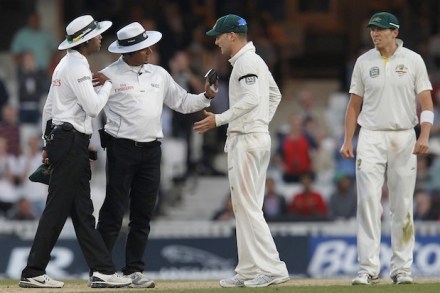
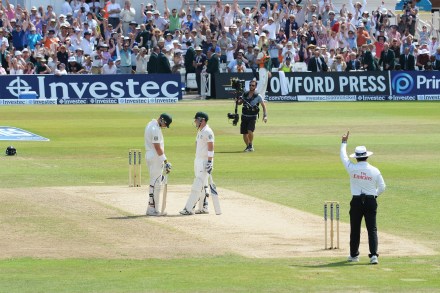
It was pretty dark. Darker, in fact, than it had been when the players were hauled off for bad light earlier in the test. Darker, too, than it had been in Manchester when Michael Clarke objected to the umpire's decision to halt play on account of the light. But so what? Was there any evidence that continuing to play would constitute an "obvious and foreseeable risk to the safety of any player or umpire, so that it would be unreasonable or dangerous for play to take place"? That is what the laws demand; it remains a mystery why this is not the standard umpires actually use. The England batsmen did not think conditions dangerous. We have all seen test cricket played in murkier conditions than those pertaining in south London last night.

Suddenly, the future of British golf looks bright

From our UK edition

Were you still up, as they used to say about Portillo in the 1997 election, for Hedwall? It was well past midnight on Sunday, the sort of hour when all good Spectator readers should be tucked up in bed — or when the really good ones are thinking about heading home — that Caroline Hedwall, a young Swedish golfer, made a birdie at the 18th hole of Colorado Golf Club that meant two unprecedented things. For the first time on American soil, Europe could not lose the Solheim Cup, the women’s version of the Ryder Cup, and Hedwall had become the first player to win five matches out of five in the competition. Never mind the Ashes or the Lions tour, which were both against fairly weak Australian opposition, this was the outstanding team performance of the year.

Australia are just New Zealand in disguise (plus Michael Clarke and Ryan Harris)

From our UK edition

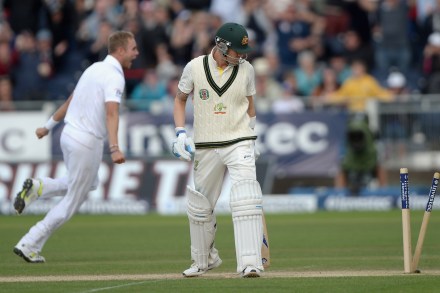
Thumping Australia is grand; thumping Australia without playing well almost feels like cheating. But in a good way. This is where England find themselves today. The Ashes are safe for another few months and England have not had to be very good to keep them. Which is just as well, frankly, since even though they are unbeaten in 12 tests England are not quite as good a side as they like to think they are. They are good enough to defeat these hapless Australians, however. The Australians are basically New Zealand in disguise. Like New Zealand they are a side good enough to get themselves into good positions but not a side good enough to take advantage of those good positions.

Can anyone save Aussie cricket?

From our UK edition

Insomniacs, invalids and cricket obsessives (step forward yours truly) were probably the only people who stumbled on it, but BBC4 put out a cracking drama from Down Under the other day called Howzat! It was subtitled ‘Kerry Packer’s War’ and was a rumbustious retelling of how the Australian media millionaire put a bomb under the sport with World Series Cricket, complete with Boogie Nights moustaches, preposterous hairstyles and tight, tight shorts.

Two riveting journeys to the heart of India and Pakistan

From our UK edition

50 summers have passed since C.L.R. James asked, ‘What do they know of cricket who only cricket know?’ James’s belief, that this quaint game reveals profound truths of those who play and love it, is alive and well: evident in The Great Tamasha by James Astill, which describes India, and Cricket Cauldron by Shaharyar M. Khan, which fumigates Pakistan. Astill, who is a Raja at The Economist, tells the story of India’s turbulent rise with reference to the history of cricket in India, where the sport is a form of entertainment – or tamasha, as numerous sub-continental languages have it. Astill is a self-confessed ‘cricket tragic’ but he is good company nonetheless, with an eye for an anecdote and an ear for a joke.

Timeless TMS is keeping all its wits about it

From our UK edition

Michael Henderson has written a rather brave piece for this week's Spectator in which he brands Test Match Special 'Radio Halfwit' and argues that it has lost its edge. This is braver even than admitting that you don't #lovethenhs because TMS is an institution even more beloved and revered the world around. Perhaps Danny Boyle missed a trick in the Olympic opening ceremony by not projecting a giant light-up image of 'Boycott Bingo' onto the floor of the stadium. Criticism is hard to take, especially when it is aimed at our most loved institution. I adore TMS, and during tests in different time zones, frequently go to sleep with the radio buzzing gently throughout the night.

Has Test Match Special lost its wits?

From our UK edition

There’s a 13th man at the table at Lord’s this week as England resume the Ashes contest with Australia, which began so thrillingly at Trent Bridge, where England prevailed by 14 runs. For the first time in half a -century, -Christopher Martin-Jenkins is not present to renew one of the great rituals of the English summer. ‘CMJ’, who passed away on New Year’s Day at the less than grand age of 67, was always going to be missed and listeners to Test Match Special, the programme he adorned with his balanced commentaries, are cursing Time for being so vicious in his reaping. The graveyard, it is said, overflows with people once thought to be irreplaceable.

Capitalism smashes the unions for six

From our UK edition

Forget the Ashes, this is the cricket news you have been waiting for: the Confederation of British Industry vanquished the Trades Union Congress at their annual match last night. Chasing 114 to win, the CBI recovered from 5 for 4 to win with a boundary from the last ball of the game. The venal capitalists' last gasp triumph will come as a bitter blow to the Brothers. But this is a long war and there will be countless other battles.

What kind of Englishman is embarrassed by beating Australia?

From our UK edition

Four months ago I wondered if this might be the worst Australian side in history. Previous contenders for that badge of shame were weakened by political disputes at home. Michael Clarke's XI is the best available or, rather, the best available in the view of the Australian selectors. There are no excuses. No Packer disruption, no Chappell retreating to his tent, no nothing. And little that happened at Trent Bridge has caused me to change that view. Many of us suspected Australia were likely to perform more strongly in England than in India but that does not make Clarke's XI a vintage Australian side. Recalls for Chris Rogers and Brad Haddin have stiffened the team; they have not transformed it.

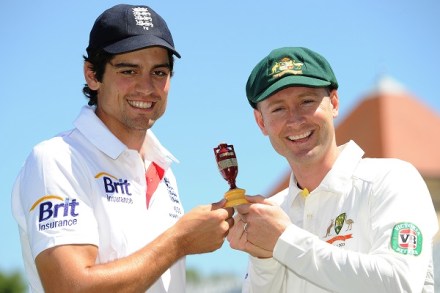
The Ashes are here

From our UK edition

Mr Steerpike is still a boy at heart: I feel giddy with anticipation on the first morning of an Ashes series. England versus Australia. 5 Test matches. A golden summer in the offing. There’s nothing like this rivalry in sport, at least to those for whom it matters. And perhaps it matters most to those who’ve played for the Ashes. I bumped into Ted Dexter a few days ago. The former England captain is 78, but he had lost none of the dash, sparkle and elegance that made old mother Steerpike swoon for him in his ‘60s heyday. Dexter towered above me, ramrod straight at 6’2 (or thereabouts), as he gave me his tuppence worth about this summer’s hostilities. [caption id="attachment_8559631" align="alignnone" width="516"] Ted Dexter photographed in 1961.

Why do words and cricket go together?

From our UK edition

‘Words and cricket,’ wrote Beryl Bainbridge, ‘seem to go together.’ Why should this be? The Ashes series starting next week might not be the most eagerly anticipated of recent times, due mainly to the Aussies having developed a taste for self-destruction rivalling that of Frank Spencer. But still the words come. Broadsheets and blogs alike are bubbling with pieces about the urn. There are new books too, such as Simon Hughes’s Cricket’s Greatest Rivalry: A History of the Ashes in 10 Matches. It’s just as entertaining and informative as the ex-Middlesex bowler’s previous books, displaying his customary eye for the memorable detail.

There’s no feud like an old feud, especially in sport

From our UK edition

Many years ago, when I used to work for the Guardian, Germaine Greer, who was then a columnist for the paper, wrote a vicious little piece for the op-ed pages slagging off Suzanne Moore, who was also a columnist. Even in the shell-shocked state that goes with the territory of trying to handle egos like that, I realised this could be a problem, so I rang up Ms Greer to wonder whether she felt like toning it down a tad, dropping the reference to ‘fuck-me shoes’ and suchlike. She snorted with laughter: ‘Stay out of this, dear; this is a mud fight.’ Happy days, and a nice fore-runner of the current spat between Serena Williams and Maria Sharapova, who have been cheerfully knocking seven bells out of each other. Prepare to duck if you see them in the same Wimbledon bar.

Amateur fantasies and professional realities

From our UK edition

As was to be expected, it rained. Drizzle was in the air at times yesterday when the Authors XI turned out to mark 150 years of The Wisden Cricketers’ Almanack (the latest edition of which the Spectator reviewed here). Sebastian Faulks, Ed Smith and Kamila Shamsie were among the players, all of whom were dressed in Victorian garb and wore joyous grins. The Author’s XI has a book out; an account of their tour recent of England. It is a gently beguiling book, revealing something of life, the writers and, of course, cricket. It’s a perfect match. As Sebastian Faulks puts it in the foreword: ‘Amateur cricketers tend to be vain, anecdotal, passionate, knowledgeable, neurotic and given to fantasy. So do writers.

Steerpike: Murdoch ruined Dave’s holiday

From our UK edition

  So did Dave enjoy his brief break in Ibiza? Not if Rupert Murdoch could help it. Rupe declared on Twitter that the Woolwich atrocity would be a personal test of Cameron’s leadership. ‘Could save him or finish him if he mishandles.’ Three days later the Aussie ref flourished a yellow card. ‘With UK on terror alert, Cameron on holiday. Unbelievable.’ The following morning, by an extraordinary coincidence, the Sun splashed on a picture of a tanned and smirking Cameron next to the headline. ‘Crisis? I’m off to Ibiza.’ Rupert’s quest for revenge goes on.   Poor old Dimbers has lost the plot. First, as a BBC hack, David Dimbleby is required to keep his comments about elected politicians impartial.

The Sweet Sorrow of following Somerset Cricket

From our UK edition

Marcus Trescothick. Nick Compton. Alviro Petersen. James Hildreth. Craig Kieswetter. Jos Buttler. When all troops are fit and available Somerset enjoy a batting line-up one might compare favourably to this summer's visiting New Zealanders. Today they were dismissed by Sussex for 76. At Horsham. Granted, Compton and Kieswetter were absent but, even so, this was a dismal showing.  Somerset, damn it, won the toss and chose (rightly!) to bat. At the time of typing Sussex are 241/7. The best that may be said of it is that this year the Wurzels are not teasing their supporters. A season that began with hopes that - at last! - the Cider Men might become Champions of All England is already doomed.

On the retirement of Sir Alex Ferguson, and on cricket’s new boy wonder, Joe Root

From our UK edition

The tear-flecked coverage and forests of newsprint devoted to the departure of Sir Alex Ferguson have made the resignation of Pope Benedict and the appointment of his successor look as big a deal as trying to find an ink monitor. And rightly so: Suralex is not just one of the most significant figures in world football, but in also in all of British public life. Besides his jaw-dropping success, he was just about the only top-flight manager to really bring on young English players. We’ll see what David Moyes does: so far he’s brought on several Scottish players, which doesn’t seem to have gone that well for Scotland’s woeful national team.

Spectator sport: Here’s hoping Sachin Tendulkar has an Indian summer after 40

From our UK edition

Sachin Tendulkar did not have the happiest of 40th birthdays last week. The man who has been worshipped as a god in India for most of his career lasted only six balls, playing for Mumbai in the Indian Premier League, before being clean bowled by a young West Indian off-spinner who was only a year old when Tendulkar made his international debut. His dismissal silenced the huge crowd who had turned out for him in Calcutta, disappointed the TV executives who know that Tendulkar at the wicket means higher ratings, and left him plenty of time to eat some of the 40lb chocolate birthday cake presented to him before the match. His longevity is remarkable.

Cricket is more than a game

From our UK edition

Does this advert ring a bell? It showed a handsome young man hitting a cricket ball far into the distance. It appeared on the Tube last spring. The tagline read: ‘How far can you hit it, Rory?’ The advert said that the young man was Rory Hamilton-Brown, captain of Surrey County Cricket Club. It urged commuters to watch his team play. It suggested glamour and clamour; neither of which is associated with stolid county cricket. Something was afoot. Hamilton-Brown had been appointed three years earlier, aged 22, to rejuvenate Surrey, a once great club wandering in the wilderness. He was the youngest captain in the country, and one of the most famous, despite not having played for England – the traditional mark of success.

Mike Denness and an All-Time Scottish Cricket XI

From our UK edition

Mike Denness, who died yesterday, could credibly claim to be the finest Scots-reared cricketer of the past 50 years. That is not, at least not quite, as small a claim as you may think. Cricket in Scotland is a game of perseverance played on the edge of possibility. Even the most devoted flanneled-fool sometimes wonders if all the shivering and frustration is really worth it. In a nation scarcely over-freighted with sunshine of either the figurative or literal variety, cricketers cannot avoid being optimists. The climate and, it must be said, the culture is against them. Few things vex the Scottish cricketer more than the accusation that there is something suspicious about being a cricketer in Scotland.

Wisden finally merits the epithet ‘Cricket Bible’

From our UK edition

The man who christened Wisden ‘The Cricket Bible’ had little religion. Wisden is an unprepossessing sight: a 1,500 page tome surrounded by a flame-yellow dust jacket covered in mud brown lettering. The book’s content often matches its artless appearance; thousands of statistics and scorecards that read like the turgid genealogical passages of Genesis. Abraham begat Isaac; Jack Hobbs scored 61,760 runs. A record of the chosen people is important; but it does not inspire belief. The record tells you nothing of how Abraham raised Isaac; neither do Hobbs’ stats tell you how he scored his runs. Bald facts contain little mystery, and what do those know of God who know nothing of mystery? The 150th edition of Wisden defers to its forbears, at least in appearance.