Countryside

Let teenage boys discover the English countryside

When I was four, the progressive teachers at my primary school thought it would be wise to teach us how to type on a keyboard. When it was my turn to key out the phrase ‘Biff and Chip’ on the computer, they discovered, to their horror, that I was already capable of effortless touch typing. I have been using computers, and by extension the internet, since before my earliest memories were formed. Not only did I grow up online, I did so during the early 2000s when there were virtually no safeguards or restrictions on what children could access. I pirated my first film, Star Wars: Episode III – Revenge of the Sith, at the age of seven and bought my first (sadly wasted) bitcoin at 13.

How teetotal is Britain?

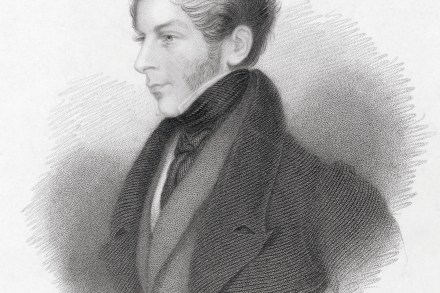
Royal removals The King has had more success in stripping Andrew Mountbatten-Windsor of his royal titles than George IV had in removing the title of his Queen, Caroline of Brunswick-Wolfenbuttel. George, then Prince of Wales, and Caroline married in 1795 having got engaged before they actually met. On their wedding night, both found each other physically disgusting – although they did manage to conceive a daughter. Caroline went on to have a string of affairs, prompting delicate royal investigations, even though George was hardly a picture of fidelity himself. She later left England and set up with an Italian manservant, Bartolomeo Pergami, but returned to England when George ascended to the throne in 1820. His efforts to dethrone her via a Pains and Penalties Bill failed.

Leave the countryside alone

I used to volunteer at a wildlife sanctuary, counting sheep and goats on an agreeable patch of chalk downland in Kent. On hot days the goats would hide in the dense, cool woodland and it could take a long time to find them. Occasionally they broke out of the reserve because our gates were of poor quality, so I was delighted to see one morning that new gates had been installed, shiny metal ones. When I got up close, though, there was a surprise in store. All of the new gates were adorned with a picture of a woman in a burka and an injunction to abide by the Countryside Code. This struck me as peculiar, not to say borderline Islamophobic. We had never experienced trouble with Muslim women ignoring the Countryside Code.

Suburbanites vs the countryside

‘Same old boring Sunday morning, old men out, washing their cars.’ So begins the punk anthem ‘The Sound of the Suburbs’ by the Members. There are plenty of cars being washed (and waxed) on my road on any Sunday morning and the strimmers are buzzing, despite this being peak breeding season for insects. But here’s the thing. We live in deepest north Norfolk, not the achingly suburban Surrey town of Camberley that so provoked punk angst. When we bolted from south London after the lockdowns, our checklist included no streetlights, motorways (the nearest is 98 miles away), new-builds or nearby neighbours. To secure the rambling farmhouse we wanted, we had to compromise on the last of these. But we were moving to the English equivalent of la France profonde.

For better, for worse: confessions of a rural wedding venue owner

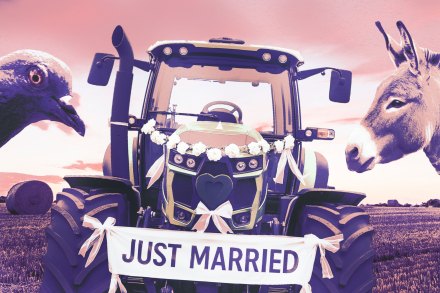
Employing a marksman to shoot pigeons inside our wedding barn on the morning of a ceremony was not something included in the venue-owner’s manual. For the animal-loving bride, blood-splattered dead birds were preferable to her guests being splattered later that day – an understandable moral sacrifice on her behalf. The birds had sneaked in via an open owl hole window in the roof, something we hadn’t spotted until the unwelcome visitors caused a flap. It was one of the many challenges we faced owning and running a rural wedding venue, a high-pressure business where expectations are enormous and responsibilities seemingly endless.

Who lives in the countryside?

The recession relationship There are fears that the US and UK may both be heading for a recession. Has the US ever suffered a recession which did not spread to Britain? Since the Great Depression of the early 1930s there have been 16 identifiable periods in which the US met the usual definition of a recession (two consecutive quarters of negative growth), the most recent being in 2022. Britain has seen only ten such periods – even though its economy has grown by less overall. Periods when the US saw a recession but Britain did not include 1937-38, when the US economy shrank by 18 per cent over a year, 1945, 1949, 1953, 1958, 1969-70, 2001 and 2022. The UK suffered recessions not shared by the US in 1956 and 2023.

Illegal rewilders are taking over the countryside

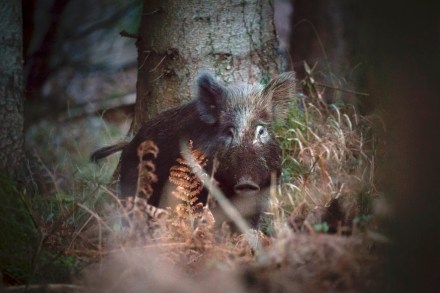
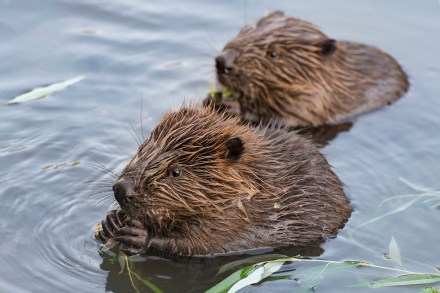
Hardly a month goes by without a report of guerrilla rewilders at work. Lynx released in the Cairngorms, wild boar on Dartmoor, beavers everywhere and, no doubt, before long, wolves and bears – if neo-Rousseauist guerrillas can find a ready supply and achieve it without being bitten.  Usually, these illegal releases of formerly indigenous-but-no-longer-native animals are in national parks, reinforcing my view that national parks give people a state-sponsored sense of entitlement to behave as they please on private land. The fact that the vast majority of farmers are against such reintroductions seems to give added incentive to the rewilding guerrillas. The extinction of family farms at the hands of Rachel from Customer Complaints is bad enough.

Why is there no campaign to free novelist Boualem Sansal?

Paris What possible crime has the award-winning novelist Boualem Sansal committed that merits being locked away for three months now by the Algerian police? Listen to the Algerian government – and its cheerleaders on social media – and theanswer appears to be that he is at best a stooge for the French far right, at worst an outright traitor. Friends of the man paint another picture: a gently spoken free-thinker with the courage to speak his mind. Sansal, who is 80 and suffers from cancer, was arrested at Algiers airport on 16 November as he got off a plane from Paris. He has been in an Algiers prison ever since, with visits to hospital for treatment. His Parisian lawyer, François Zimeray, has still not been given a visa, so the charges are unclear.

My neighbour has kidnapped my beavers

My beavers have been kidnapped. A few months ago there were five of them living on my family’s farm on Bodmin Moor. Now there are none. I know where they are and I have received proof of life from their kidnapper, but he will not release them back to me or allow me to collect them and bring them home. I miss them and often walk along their stretch of river and past their dams with a tear in my eye. I miss them and often walk along their stretch of river and past their dams with a tear in my eye I was quite early to the beaver game.

The National Trust took the knee

In a recent interview, Hilary McGrady, the director-general of the National Trust, complains that ‘The culture wars we’re trying to grapple with are never something I supported’. I do believe her: she is not a political warrior. But what she does not acknowledge – or possibly does not understand – is that it was the wokeists within the National Trust’s staff, and the outsiders they commissioned to help them, who started the fight. There would have been no unhappiness among members if, to improve historical understanding of Trust properties, more attention had been given to the origins – good, bad or something in between – of the money which built them.

The Christian case for hunting

When I was a teenager, my closest friend, Henry, would vanish into the Shropshire Hills over the hunting season’s weekends. When he returned, it was with a wind-beaten face, wearing the traditional beagler’s white breeks and green socks, with a leather hunting whip slung over his shoulder. I knew nothing of this world, until one late autumnal Saturday he invited me to join him. As I watched the beagle pack race across the landscape, I realised I had stepped into a magical event, a hunting scene from a medieval tapestry brought to life. I was hooked. To this day, many sporting Christians throughout Europe honour St Hubert with songs and prayers after a hunt Beagling was my entry into field sports, but soon the door might be closed to others.

My mission to save the elm

Ophiostoma novo-ulmi is not an expression that sits easily at the head of a Christmas Spectator column, so I’ll return later to the unpleasant fungus and disobliging beetle that over my lifetime have been devastating the English elm, and turn instead to one of our most beloved poets offering his own personal homage to his most beloved tree: Old Elm that murmured in our chimney topThe sweetest anthem autumn ever made. John Clare wrote ‘To a Fallen Elm’ in the 1830s: a poem that was partly a lament inspired by his boyhood memories of the English agricultural enclosures. Thoust heard the knave abusing those in powerBawl freedom loud and then oppress the freeThoust sheltered hypocrites in many an hourThat when in power would never shelter thee.

Which birds are doing best in Britain?

The last straw Farmers are threatening to strike over the government’s changes to inheritance tax in what is being described as a first in Britain. Besides France, where farmers regularly protest, India witnessed a farmers’ strike in 2020, which was eventually settled after the government dropped proposed new laws. But one of the earliest farmers’ strikes was conducted by the Farmers’ Holiday Association in Iowa in 1932, by farmers protesting at consistently low prices for their products. The idea was that farmers would go on ‘holiday’, refusing to sell any of their produce. Few, however, joined, leading to pickets blocking rural roads with telegraph poles. One policeman was killed, but in an accidental discharge of his gun. The action died down after a few months.

Letters: How to support the dying

Life support Sir: If the Terminally Ill (End of Life) Bill is passed into law we will have crossed the Rubicon. As the second reading vote on 29 November approaches, it is astonishing that we are hearing less debate than on the loss of the winter fuel payment. There should be the mother of all debates. The issues surrounding assisted dying are immensely complicated and the arguments for and against are powerful. On the one hand it may shorten and ease a dreadful death and on the other it may put pressure on the dying and be deficient in its application. However, the trite adage that hard cases make bad law has great weight, especially if the law is made too quickly and without the fullest informed consideration.

Trump’s comeback, Labour’s rural divide, and World of Warcraft

37 min listen

This week: King of the HillYou can’t ignore what could be the political comeback of the century: Donald Trump’s remarkable win in this week’s US election. The magazine this week carries analysis about why Trump won, and why the Democrats lost, from Freddy Gray, Niall Ferguson and Yascha Mounk, amongst others. To make sense of how Trump became only the second President in history to win non-consecutive terms, we’re joined by the journalist Jacqueline Sweet and Cliff Young, president of polling at Ipsos (00:58).Next: is Labour blind to rural communities? The changes to inheritance tax for farmers are one of the measures from Labour’s budget that has attracted the most attention.

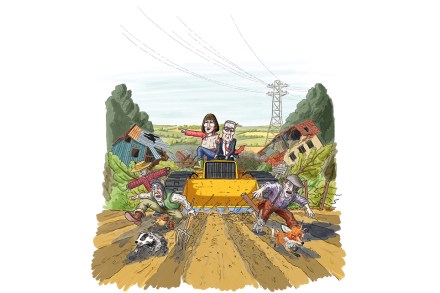
Labour’s war on the countryside

Two miles from where I am writing, the neighbouring village is plastered with posters demanding ‘Say No to Pylons’. The object of loathing is a 112-mile power line from Norwich to Tilbury that would carry wind-generated electricity from the North Sea to a supposed 1.5 million homes. As a concession to the famous landscape of Dedham Vale on the Essex-Suffolk border, the cabling will run underground for 3.3 miles. But because of John Constable’s inexplicable failure to paint the rest of the route, people living near the other 108.7 miles must have their vistas ruined by 160ft pylons. The developers claim it is twice as expensive to bury power lines than to hoist them on great metal towers. Objectors disagree and demand more consultations.

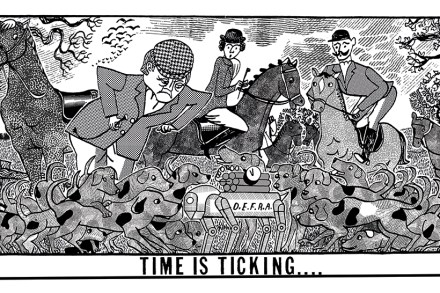
It may be too late to save trail hunting

There’s a grumble, often repeated among country folk, that ‘hunting people got hunting banned’. What they mean (I think) is that a combination of complacency, arrogance and the failure to get the public onside is what did for hunting. It’s not really fair: arguably, without the disaster of the Iraq war, Tony Blair may not have felt he needed to chuck a piece of legislation at his backbenchers, like a juicy bone to a pack of hungry hounds. The hunting ban never was about animal welfare, but class hatred, Dennis Skinner declaring that the bill was ‘for the miners’. The ban, Blair later admitted, was ‘one of the domestic legislative measures I most regret’.

Starmer’s double standards

Sir Keir Starmer’s readiness to do ‘whatever it takes’ to support Ukraine seems to be qualified by his fear of offending the Biden administration. He wants to let Ukraine use British Storm Shadow missiles inside Russia but dares not, for fear of the White House. Surely if the special relationship were really strong, its junior partner would be confident enough to diverge occasionally. Think of Mrs Thatcher saying to George Bush senior, at the time of the first Gulf war, ‘This is no time to go wobbly’. In fact, however, Sir Keir is not even consistent: he is prepared to annoy the United States by making the worthless gesture of an embargo on tiny, selective arms-related sales to Israel, but not on missiles which could work decisively against Vladimir Putin.

The science behind Olivia Colman’s left-wing face

The new hunting year formally began last week. Should I resubscribe? Politically, the outlook is bleak. In February, Steve Reed, the shadow environment secretary, announced that Labour would implement a ‘full ban on trail and drag hunting’, on the grounds that there were ‘loopholes’ in Labour’s hunting ban. This even though, when advocating the original ban, Labour said it favoured drag hunting (trail hunting had not then been invented) and was worried only about live quarry. Mr Reed included his ban promise in a speech in which he announced that his party would treat rural voters with ‘greater respect’. His two aims conflict.